The website www.roche.com has restricted access for certain IP addresses using Cloudflare, resulting in an error message (Error 1005) that blocks access based on the user's autonomous system number (ASN).
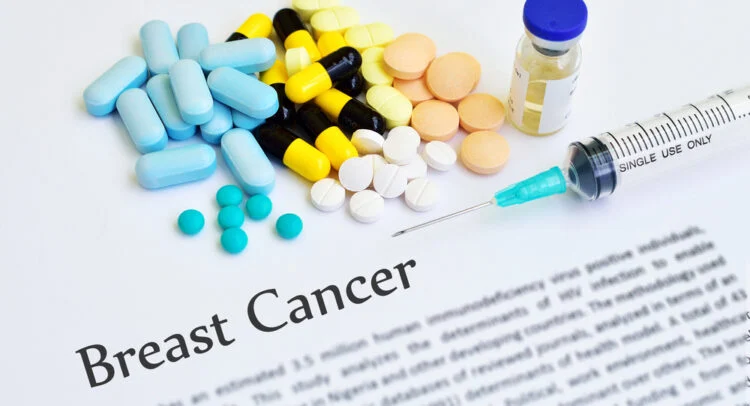
Major pharmaceutical companies Gilead, AstraZeneca, and Roche reported promising new study results for cancer treatments, particularly in breast cancer, leading to stock price increases for Gilead and AstraZeneca, while Roche's shares declined slightly. The studies highlight advancements in drug efficacy and potential growth in the cancer drug market, with implications for future sales and industry competition.
A new antibiotic called zosurabalpin, developed by Roche, is entering late-stage human trials and could be the first new class of antibiotics in 50 years to combat the deadly drug-resistant bacteria Acinetobacter baumannii, offering hope in the fight against superbugs and antibiotic resistance.
Roche is advancing its experimental antibiotic zosurabalpin into Phase 3 clinical trials to combat drug-resistant acinetobacter baumannii, a bacteria causing serious hospital infections, using a novel mode of action to which bacteria have not yet developed resistance.
Roche is advancing a new antibiotic, zosurabalpin, into late-stage clinical trials to combat resistant Gram-negative bacteria like acinetobacter, which cause severe infections and have become difficult to treat, marking a potential breakthrough after over 50 years.
Roche has agreed to acquire Poseida Therapeutics for $1.5 billion, integrating Poseida's CAR-T therapies and manufacturing capabilities into its Pharmaceuticals Division. The deal includes a tender offer for Poseida's shares at $9 each, with potential milestone payments. The acquisition, approved by both companies' boards, is expected to close in Q1 2025, enhancing Roche's cell therapy development in oncology, immunology, and neurology.
Eli Lilly and Novo Nordisk stocks fell after Roche's Genentech unit reported positive early-stage data for its oral weight-loss drug, CT-996, which led to 6% weight loss in four weeks. This new development poses competition to Eli Lilly and Novo Nordisk's injectable treatments. Viking Therapeutics and Amgen, also developing oral weight-loss drugs, saw their stocks decline as well.
Shares of Novo Nordisk and Eli Lilly fell after Roche announced promising early-stage trial data for its new obesity drug candidate, CT-996, which showed significant weight loss in obese patients. Roche's shares rose, while other companies in the obesity treatment market, including Zealand Pharma, also saw declines. Roche's new drug could offer a competitive alternative to injectable treatments, though it may take years to become widely available.
Eli Lilly's Alzheimer's treatment, donanemab, faces setbacks as the FDA delays its approval decision and plans to hold an advisory committee meeting to discuss the drug. Competitors like Biogen and Roche are also making strides in Alzheimer's treatments, with a focus on under-the-skin shots and precision medicine. Despite the setbacks, experts believe it's an exciting time in the fight against Alzheimer's disease, with unprecedented diversity in Phase 3 clinical trials offering hope for more treatment options. However, challenges remain, including safety concerns and the need for more personalized approaches to treatment.
The latest trailer for Final Fantasy 7 Rebirth confirms the return of Roche, a standout character from the Remake, hinting at a more expanded role for the elite SOLDIER forces and potentially adding new story elements for Rufus Shinra. The inclusion of Roche and other characters from the Remake trilogy in Rebirth reinforces the idea of a cohesive experience split into a trilogy, with the game set to release on February 29 for PlayStation 5.
Swiss pharmaceutical company Roche is set to acquire anti-obesity drug developer Carmot Therapeutics for $2.7 billion in cash, with the potential for an additional $400 million based on milestones. Roche aims to challenge the dominance of Novo Nordisk and Eli Lilly in the global weight loss drugs market. However, the drugs developed by Carmot are still in the early stages, and Roche's CEO expects they may not be available until 2030 or later. The acquisition will provide Roche access to Carmot's research and development portfolio, including promising drug candidates such as CT-388, a once-weekly injection, and CT-996, a once-daily oral candidate. The obesity drugs market is estimated to be worth $200 billion in the next decade, attracting new entrants while established players struggle to meet demand.
Swiss drugmaker Roche has agreed to acquire obesity drug developer Carmot Therapeutics for $2.7 billion upfront, joining the race to challenge weight-loss drug leaders Novo Nordisk and Eli Lilly. Carmot's lead drug candidate, a once-a-week injection called CT-388, is a dual GLP-1/GIP receptor agonist. Roche aims to develop CT-388 as the best obesity drug in the GLP-1 class, either alone or in combination with other compounds. The weight-loss market is estimated to reach $100 billion, and Roche's move signals its ambition to become a major player in this field.
Roche has agreed to acquire obesity-drug developer Carmot Therapeutics for up to $3.1 billion, gaining access to Carmot's portfolio of trial-stage GLP-1 agonists. The deal reflects the growing interest of top drugmakers in the booming market for weight-loss drugs, driven by the success of Novo Nordisk's Ozempic. Roche's acquisition aims to capitalize on the expanding market, which is projected to be worth $100 billion annually by 2030. The move comes as pharmaceutical companies race to develop GLP-1 agonists that can rival Novo Nordisk's blockbuster medicines. Roche's shares rose 2% following the announcement.
Roche has presented preliminary data at the Clinical Trials on Alzheimer's Disease conference for a new antibody based on gantenerumab, which has been modified to more easily cross the protective blood-brain barrier. This comes after the previous failure of gantenerumab to slow cognitive decline in a pivotal study due to unexpectedly low amyloid removal. Roche remains committed to finding a treatment for Alzheimer's disease.
Swiss pharmaceutical company Roche has announced its acquisition of Telavant, an immunology company developing a potential treatment for inflammatory bowel disease, in a deal worth over $7 billion. The deal grants Roche the rights to develop and commercialize Telavant's experimental antibody therapy, RVT-3101, in the United States and Japan. Roche plans to conduct Phase 3 clinical trials for the therapy and collaborate with Pfizer to develop a "next generation" antibody therapy for inflammatory bowel disease. The acquisition aims to strengthen Roche's drug pipeline following several late-stage failures in 2020.