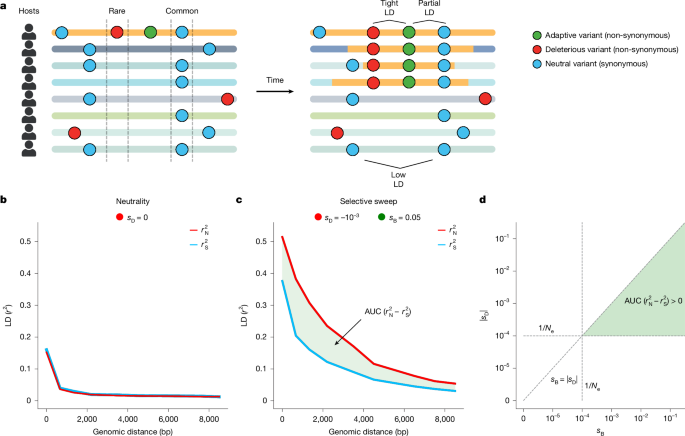
The study reveals that gene-specific selective sweeps are widespread across human gut microbiomes, driven by homologous recombination and horizontal gene transfer, with implications for understanding microbial adaptation to host diets and lifestyles worldwide.
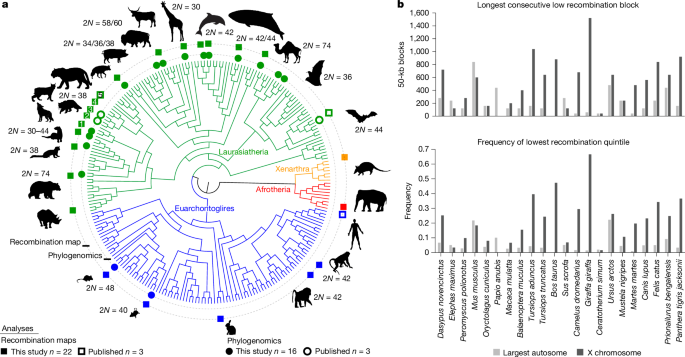
The article discusses the discovery of an ancient recombination desert acting as a supergene that influences speciation in placental mammals, highlighting the role of genomic architecture and introgression in evolutionary processes.
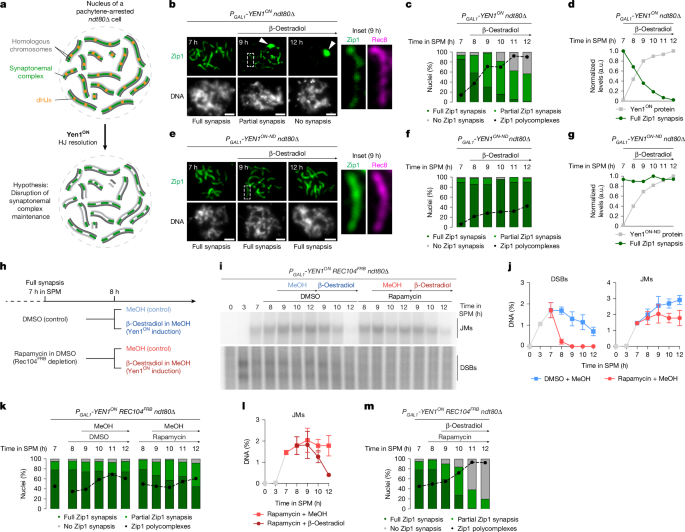
The study reveals a feedback mechanism where double Holliday junctions (dHJs) and ZMM proteins work together to maintain the synaptonemal complex (SC) during meiosis, ensuring crossover formation and suppressing new DNA double-strand breaks, thereby coordinating meiotic progression and crossover assurance.
Light in the universe's early moments was initially trapped in a dense, hot environment after the Big Bang, but around 380,000 years later, cooling allowed photons to escape, creating the cosmic microwave background and marking the universe's first light, which paved the way for star and galaxy formation.
The Nimbus COVID-19 variant, a recombinant strain under monitoring, has been detected in multiple countries and may contribute to a summer surge of cases due to its increased transmissibility and immune evasion, though it is not yet linked to more severe illness. Current vaccines remain effective against it, but concerns about vaccine access and evolving guidelines could impact future protection efforts.
This review article explores the mechanisms that generate genetic variation in SARS-CoV-2, underlying the within-host and population-level processes that underpin these events. The article examines the selective forces that likely drove the evolution of higher transmissibility and, in some cases, higher severity during the first year of the pandemic and the role of antigenic evolution during the second and third years, together with the implications of immune escape and reinfections, and the increasing evidence for and potential relevance of recombination. The article also evaluates uncertainties and outlines scenarios for the possible future evolutionary trajectories of SARS-CoV-2.