A Nature study analyzing IVF embryo genetics links specific maternal gene variants to higher risk of aneuploidy—chromosomal errors that often cause miscarriage—showing the same genes governing crossover recombination also influence pregnancy loss risk, with implications for future risk prediction and therapies.
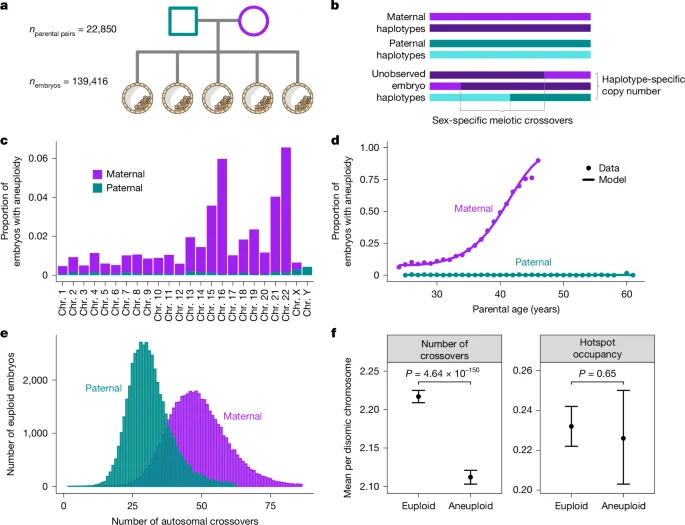
A Nature study analyzing 139,416 IVF embryos from 22,850 parental sets links maternal genetic variants to increased risk of embryonic chromosomal abnormalities (aneuploidy) that cause miscarriage; strongest ties involve meiotic genes such as SMC1B and others (C14orf39, CCNB1IP1, RNF212). While larger sample sizes clarify how inherited differences in meiosis influence risk, predicting individual outcomes remains difficult due to multiple factors beyond genetics. The work may inform reproductive genetics and drug development.
A large IVF-PGT analysis (139,416 embryos, 22,850 parental sets) maps crossovers and meiotic aneuploidy at scale and finds a common non-coding haplotype in SMC1B that associates with both lower maternal recombination and higher maternal meiotic aneuploidy, supported by functional assays and TWAS implicating C14orf39 and ubiquitin ligases CCNB1IP1/RNF212. SNP heritability for aneuploidy is negligible, suggesting environmental and rare-variant effects, while an inverse link between recombination rate and aneuploidy emerges. Evolutionary modelling suggests the risk allele is ancient and common, with complex fitness dynamics that can maintain it in populations. The work reveals a shared genetic basis for recombination and aneuploidy, with implications for fertility and genome evolution.
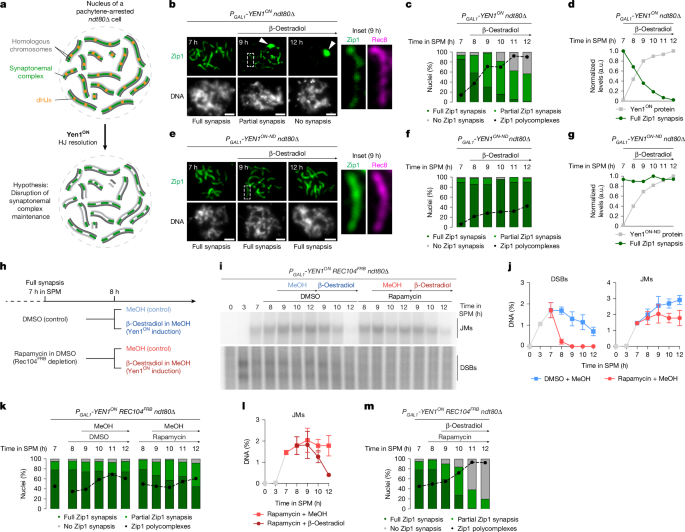
The study reveals a feedback mechanism where double Holliday junctions (dHJs) and ZMM proteins work together to maintain the synaptonemal complex (SC) during meiosis, ensuring crossover formation and suppressing new DNA double-strand breaks, thereby coordinating meiotic progression and crossover assurance.
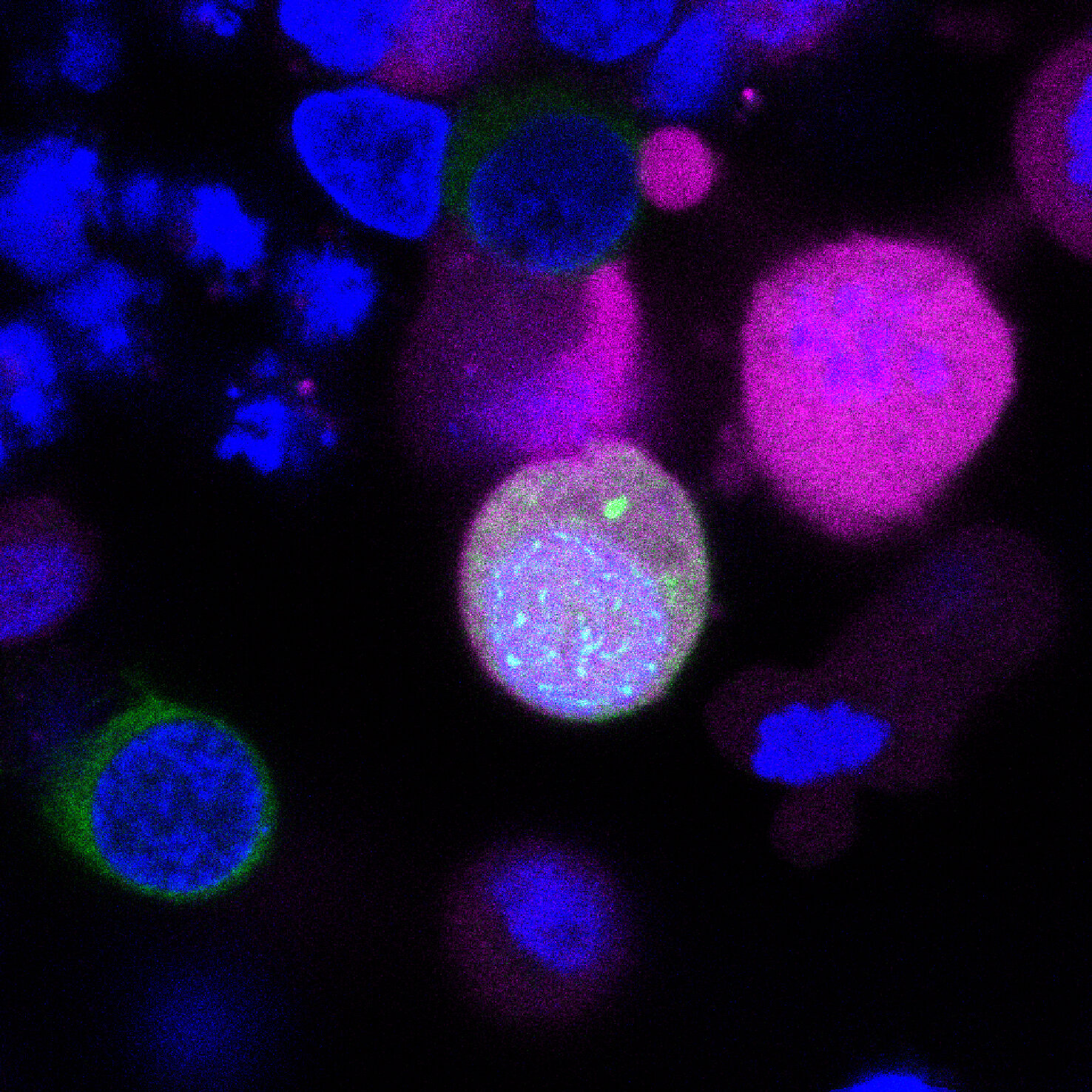
Researchers at Harvard's Wyss Institute have developed a method to induce human induced pluripotent stem cells to initiate meiosis outside the body, a key step toward creating healthy eggs and sperm in vitro, which could help address infertility issues.
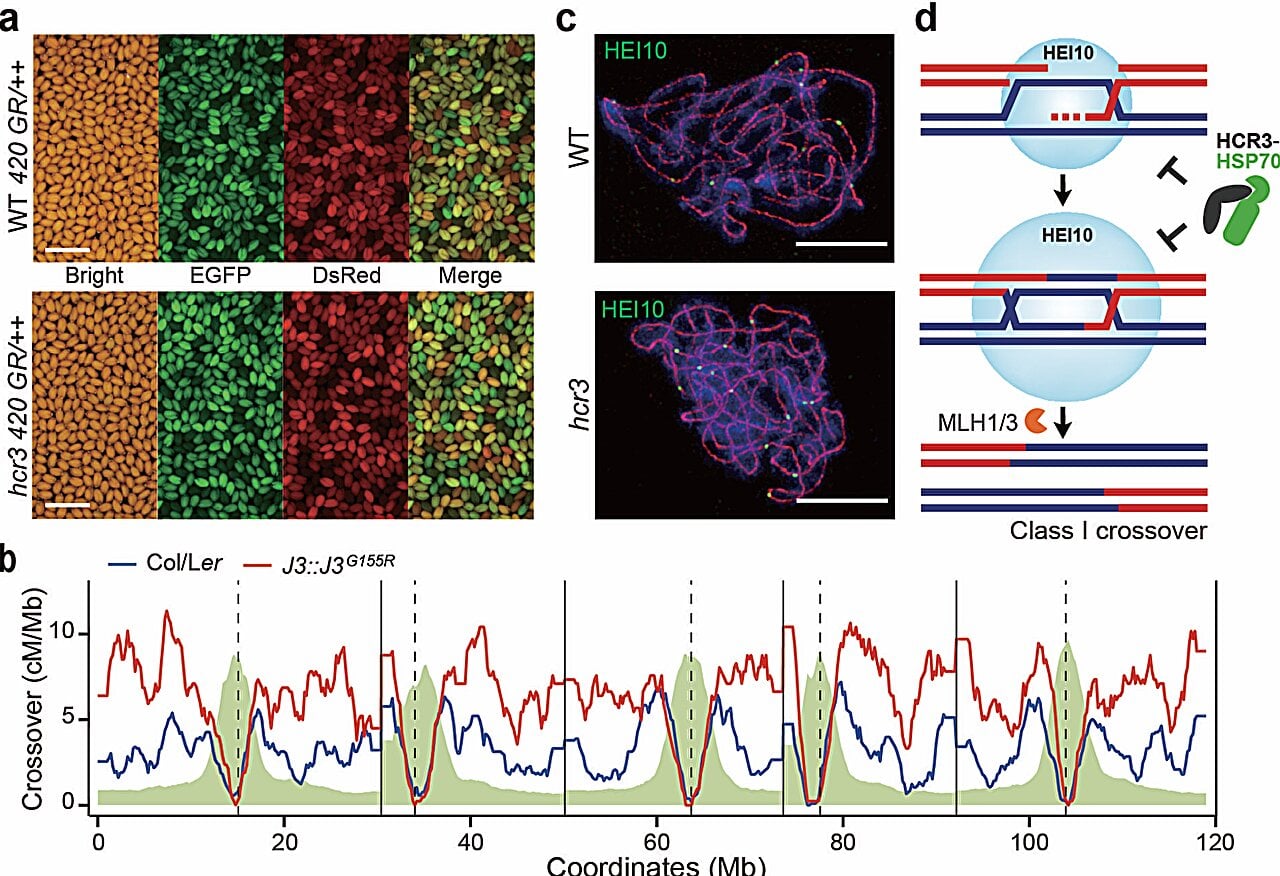
A research team at POSTECH has uncovered the molecular mechanism responsible for crossover interference during meiosis, a biological pattern at the chromosome level, by identifying a mutant named hcr3 (high crossover rate3) that exhibited an increased crossover rate at the genomic level in Arabidopsis plants. The elevated crossovers in hcr3 were attributed to a point mutation in the J3 gene, which encodes a co-chaperone related to HSP40 protein, demonstrating that a network involving HCR3/J3/HSP40 co-chaperone and the chaperone HSP70 controls crossover interference and localization by facilitating the degradation of the pro-crossover protein, HEI10 ubiquitin E3 ligase. This research has significant implications in breeding and agriculture, potentially enabling the rapid accumulation of beneficial traits and contributing to the breeding of new varieties and identification of useful natural variations responsible for desirable traits.
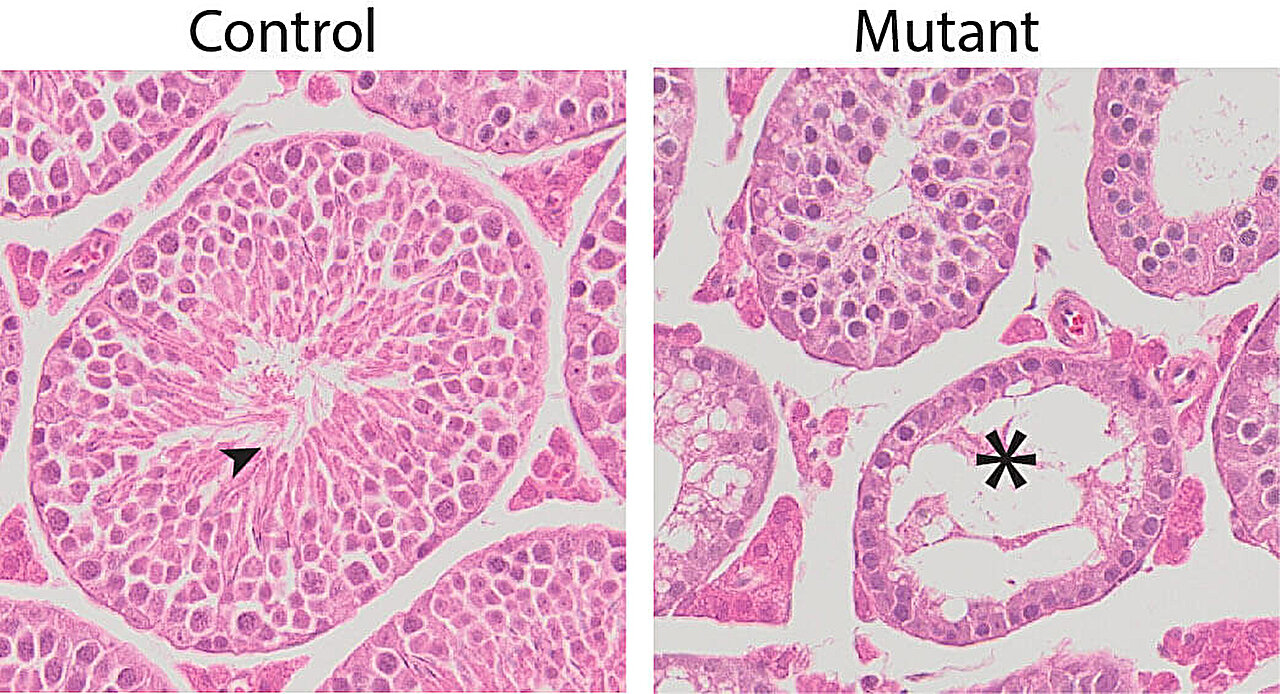
Scientists from the Stowers Institute for Medical Research and the Wellcome Center for Cell Biology have identified a potential underlying cause of male infertility. The researchers discovered that a specific mutation in a protein involved in the formation of the synaptonemal complex, a critical structure in the process of sperm and egg cell production, led to infertility in mice. This finding may shed light on similar problems with meiosis in humans and could pave the way for potential treatments.