A research team led by Rice University confirmed the existence of emergent photons and fractionalized spin excitations in the quantum spin liquid material Ce2Zr2O7, providing a significant breakthrough in understanding this exotic state of matter with potential applications in quantum computing and energy transmission.
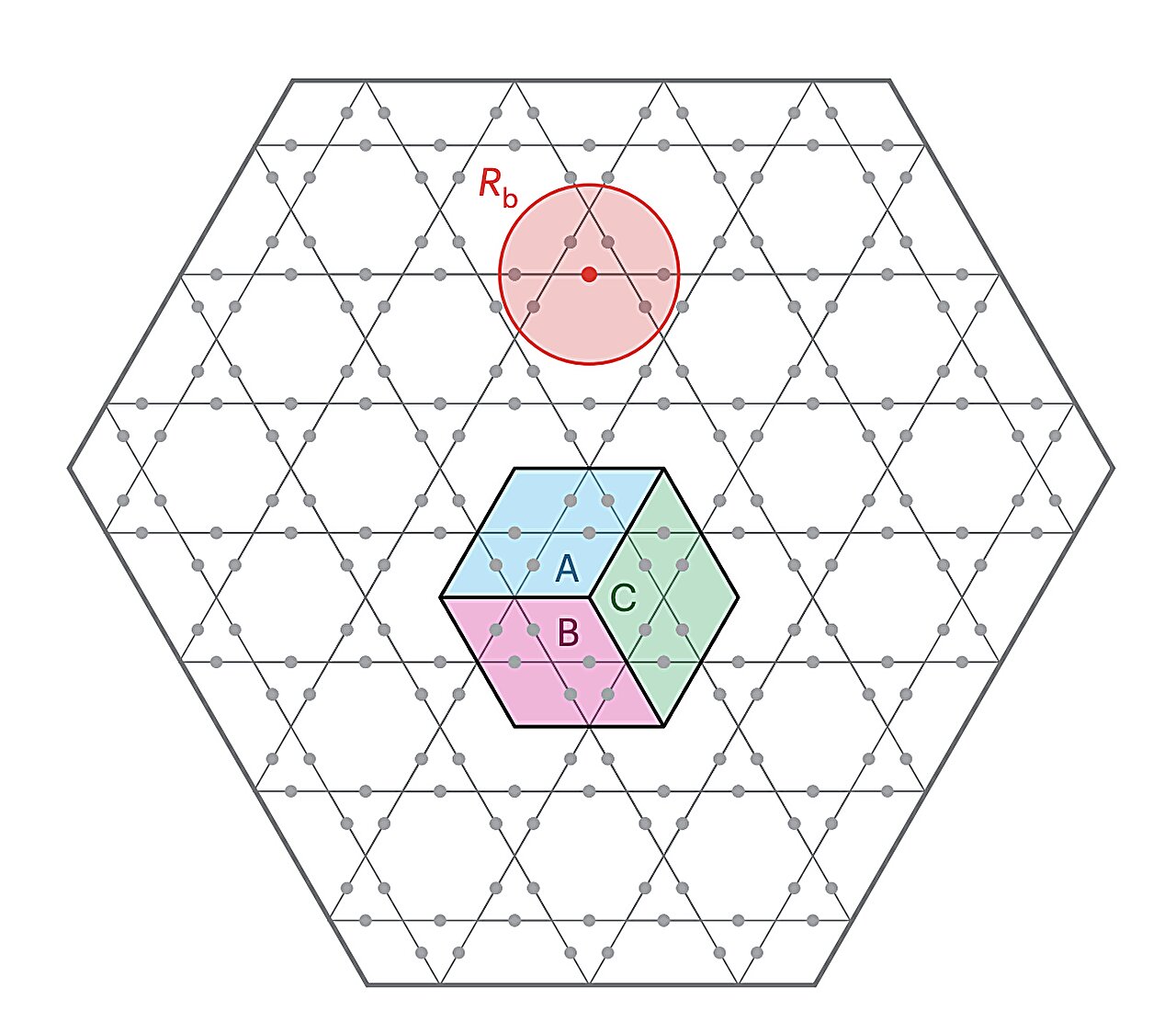
Researchers at EPFL developed a new numerical approach using Rydberg atom lattices to simulate and predict the properties of quantum spin liquids, including topological entanglement entropy, enabling better understanding of these complex quantum states without relying on approximations.
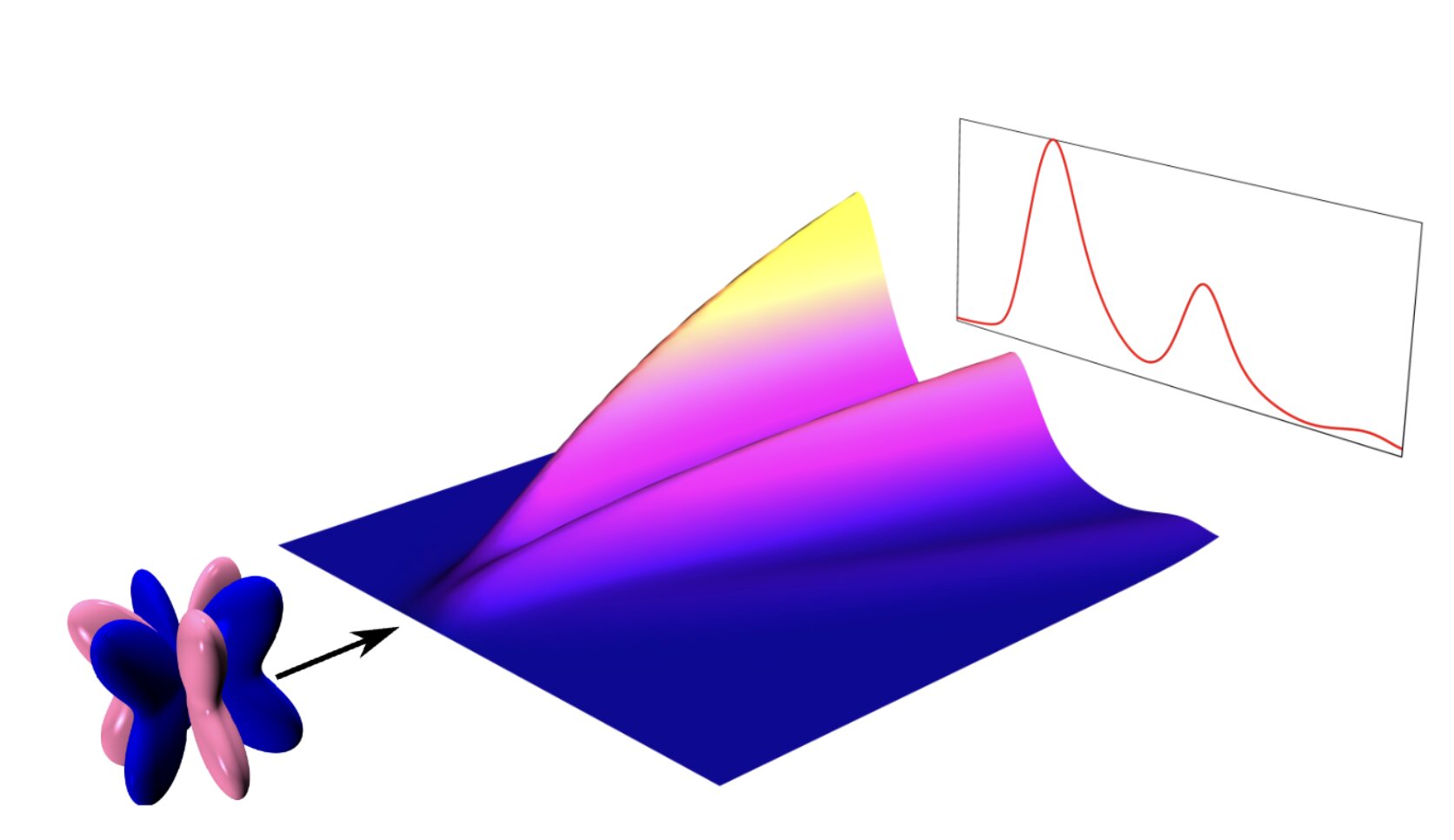
Researchers at the University of Toronto have introduced a framework to facilitate the experimental observation of a new 3D quantum spin liquid known as π-flux octupolar quantum spin ice (π-O-QSI). Their study predicts distinctive spectroscopic signatures of this system, which could be measured in future experiments. The researchers hope that their predictions will help confirm the presence of this exotic state, and they plan to build on their study to gather increasingly detailed predictions.
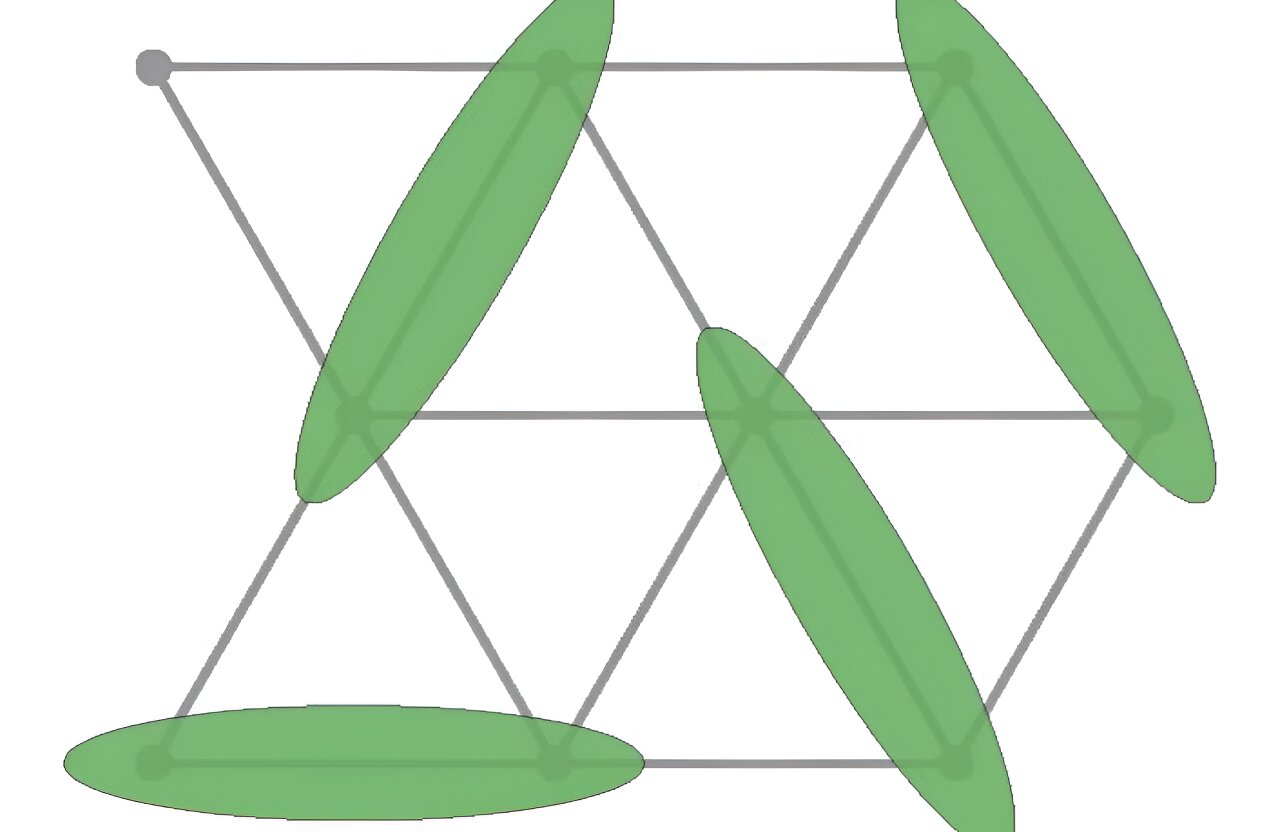
Researchers have confirmed the presence of quantum spin liquid (QSL) behavior in a new material called KYbSe2, which has a layered triangular lattice structure. QSLs are a unique state of matter controlled by interactions among entangled magnetic atoms called spins. The discovery of QSL behavior in KYbSe2 opens up possibilities for the development of high-quality superconductors and quantum computing components. The researchers used a combination of theoretical, experimental, and computational techniques to observe the hallmarks of QSLs in the material. While KYbSe2 is not a true QSL, it has the potential to become one with slight alterations to its structure or exposure to external pressure. The findings provide a protocol that can be applied to study other systems and accelerate the search for genuine QSLs.
Researchers at Brown University have conducted a study on the compound H3LiIr2O6 to understand the role of disorder in quantum spin liquids. Contrary to standard magnets, quantum spin liquids remain in a state of flux instead of solidifying as temperatures decrease. The study found that disorder significantly alters the quantum liquid state but does not mimic or destroy it. The research provides insights into how disorder affects quantum systems and has implications for the development of quantum technologies, particularly in quantum computing.
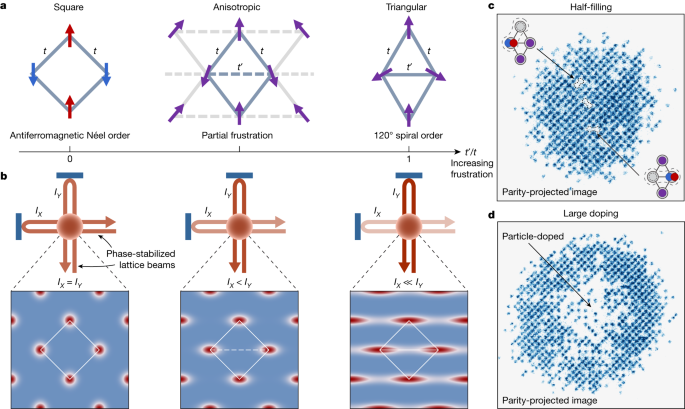
Researchers have used a Fermi-Hubbard simulator to study frustration- and doping-induced magnetism, specifically in the context of quantum spin liquids. By creating a triangular optical lattice and loading ultracold fermions into it, the researchers were able to observe and manipulate the spin correlations between the atoms. This experimental setup provides a platform for investigating the behavior of frustrated magnetic systems and exploring the effects of doping on their magnetic properties. The findings contribute to our understanding of quantum spin liquids and could have implications for the development of new materials with unique magnetic properties.