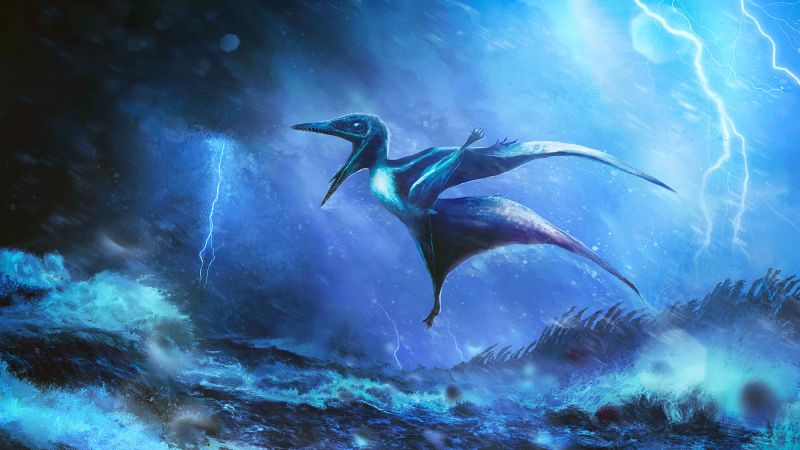
Researchers discovered well-preserved fossils of two juvenile pterosaurs from 150 million years ago, likely killed by a storm that caused them to fall into a lagoon and drown, providing rare insights into their death and fossilization processes, as well as the bias towards finding small pterosaur fossils in the region.
Scientists have revised their understanding of pterosaur evolution by identifying their closest relatives, lagerpetids, and analyzing fossil distributions and climate models, suggesting that early pterosaurs lived in warmer, more diverse habitats than previously thought, and that their origins may date back earlier than the first fossils indicate.
Paleontologists in Brazil have discovered the remains of an ancient reptile, named Venetorapter gassenae, that lived around 230 million years ago during the Triassic period. Resembling Edward Scissorhands, the reptile had massive hands and long, sword-like claws, which may have been used for catching prey or climbing trees. It had a large beak for consuming insects, fruits, and small animals. The unique skeletal features suggest that Venetorapter gassenae represents a transition from lagerpetids to pterosaurs, indicating that lagerpetids were more diverse than previously thought. Further discoveries of this creature may provide more insights into its diet, appearance, and habitat.