Tag

Planetary Collision

All articles tagged with #planetary collision

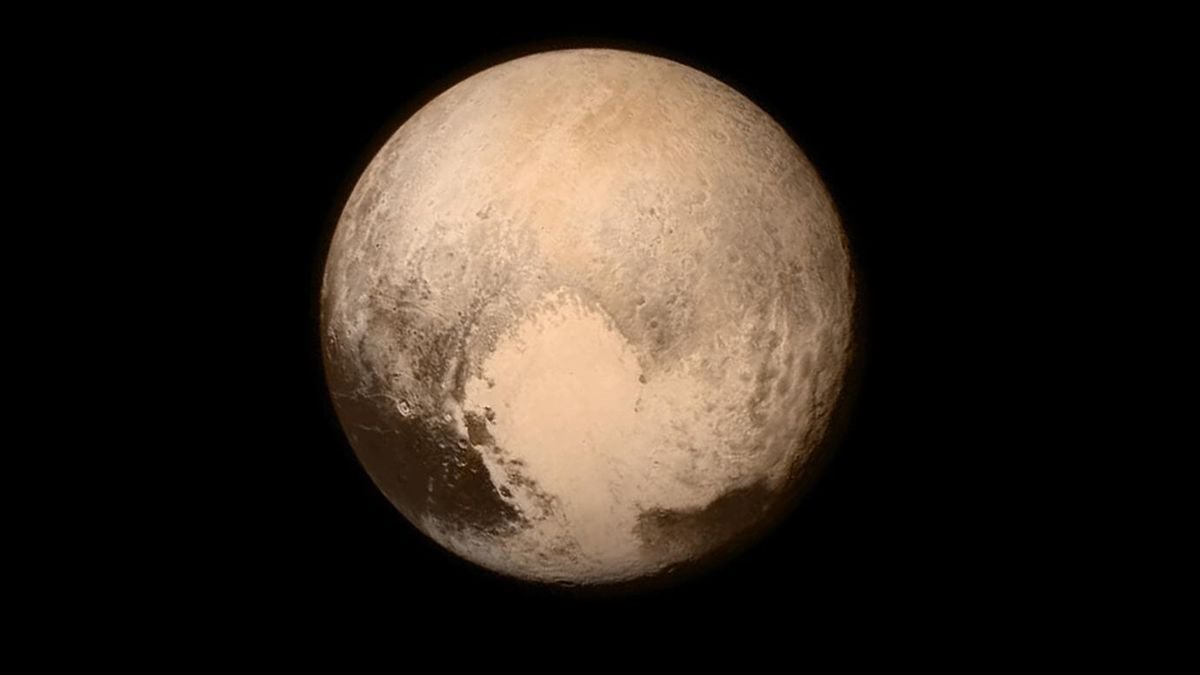
"The Cataclysmic Event Behind Pluto's Heart"

Originally Published 1 year ago — by CNN

Featured image for "The Cataclysmic Event Behind Pluto's Heart"
Source: CNN

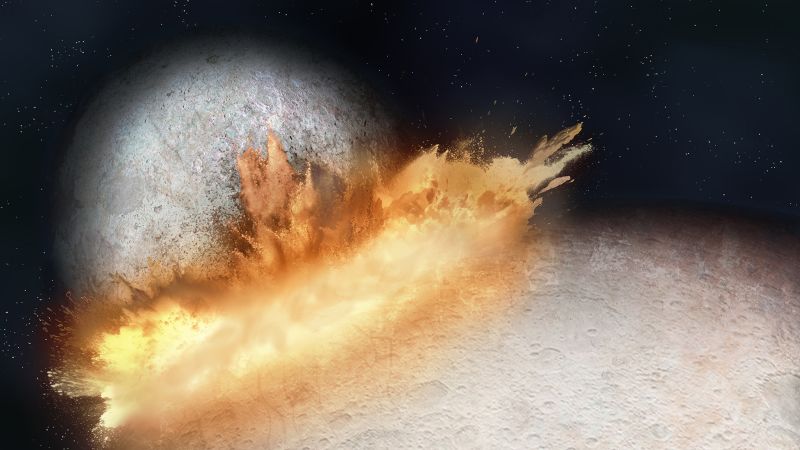
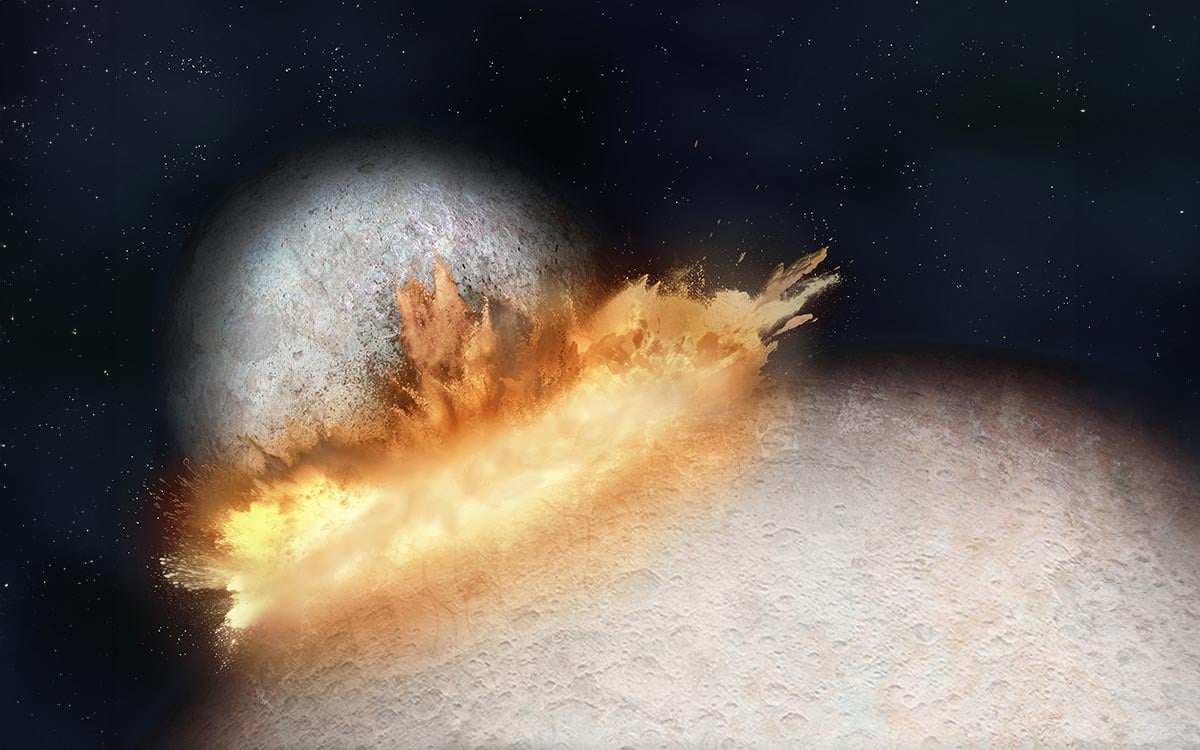
Researchers believe that a cataclysmic collision with a planetary body early in Pluto's history created the distinctive heart-shaped feature on its surface, known as Tombaugh Regio. The impact formed a deep basin called Sputnik Planitia, which is home to much of Pluto's nitrogen ice. The collision likely involved a planetary body about 435 miles in diameter and resulted in a teardrop shape due to the frigidity of Pluto's core and the impact's relatively low velocity. This new theory sheds light on how Pluto formed and could provide insights into its mysterious origins on the edge of the solar system.

"The Violent Origins of Pluto's Heart: Astrophysicists Uncover Cosmic Collision"

Originally Published 1 year ago — by SciTechDaily

Featured image for "The Violent Origins of Pluto's Heart: Astrophysicists Uncover Cosmic Collision"
Source: SciTechDaily

An international team of astrophysicists has solved the mystery of Pluto's heart-shaped feature, attributing it to a giant and slow oblique-angle impact with a planetary body over 400 miles in diameter. The impact formed Sputnik Planitia, a region predominantly filled with nitrogen ice, and the study suggests that Pluto's inner structure is different from previous assumptions, indicating no subsurface ocean. The findings shed new light on Pluto's early history and offer a novel origin hypothesis for its unique surface feature.

"The Violent Origins of Pluto's Mysterious Heart Revealed by Astrophysicists"

Originally Published 1 year ago — by Livescience.com

Featured image for "The Violent Origins of Pluto's Mysterious Heart Revealed by Astrophysicists"
Source: Livescience.com

A new study suggests that the heart-shaped formation on Pluto's surface, known as Tombaugh Regio, was likely formed in a slow-motion, glancing collision with an icy rock wider than Kansas is long. Using computer simulations, researchers determined that the impact likely originated from an oblique collision, leading to its elongated shape, and did not result in the melting of Pluto's icy core. The study also suggests that Pluto's heart does not require a subsurface ocean to explain its position near the equator.

"Alien Planet's Remains Found Buried at Earth's Core"

Originally Published 1 year ago — by BroBible

Featured image for "Alien Planet's Remains Found Buried at Earth's Core"
Source: BroBible

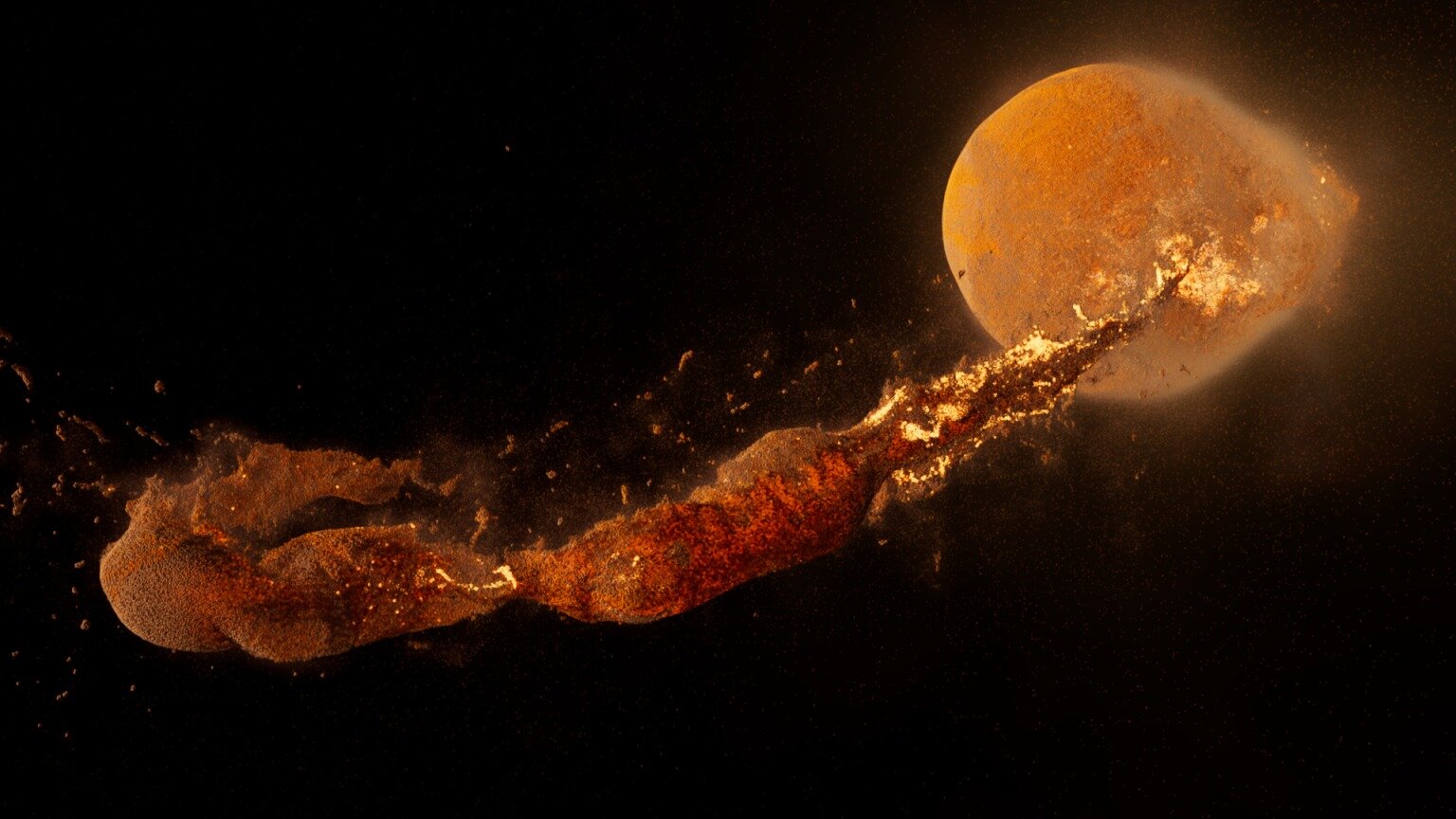
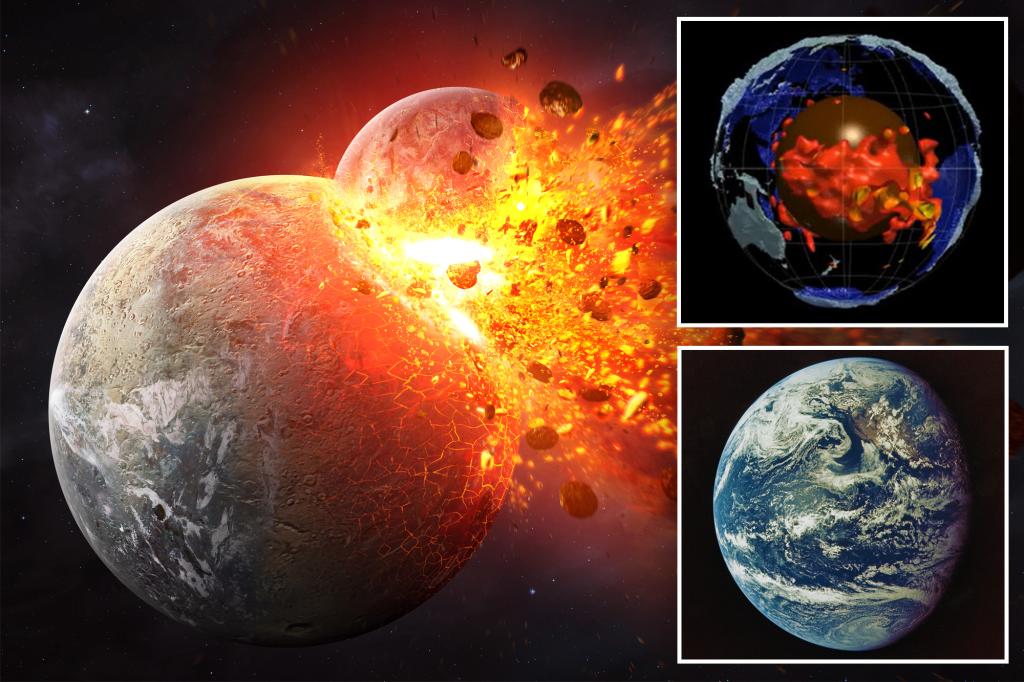
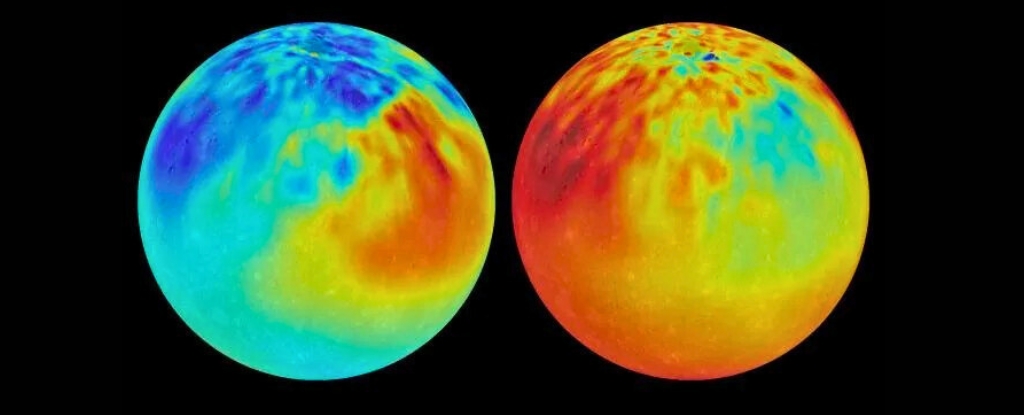
The remains of a planet called Theia, which collided with Earth billions of years ago, are believed to be buried near the Earth's core, forming Large Low-Velocity Provinces (LLVPs) in the mantle. These LLVPs are denser than the surrounding material and are thought to have resulted from the collision, which also created the Moon. Recent studies have used seismic wave measurements and simulations to confirm that the LLVPs are remnants of Theia, and researchers are now investigating their impact on Earth's early evolution.

"Alien Origins: Earth's Mantle Holds Traces of a Long-Lost World"

Originally Published 2 years ago — by Yahoo Entertainment

Featured image for "Alien Origins: Earth's Mantle Holds Traces of a Long-Lost World"
Source: Yahoo Entertainment

Scientists propose that the Earth's mantle contains two extra-dense blobs, known as large low-velocity provinces (LLVPs), which may have been leftover from a collision between Earth and a protoplanet called Theia 4.5 billion years ago. Seismic wave behavior suggests that these blobs are compositionally different and made of denser material than the surrounding mantle. Simulations suggest that during the collision, molten material from Theia mixed with the Earth's upper liquid layer, while denser solid material sank and embedded itself in the solid layer below. Further research will involve comparing rock samples from the Earth's mantle with samples from the Moon to support this hypothesis.

"Unveiling Surprising Discoveries: Moon Origins, Rat Whimsy, Microgravity Orientation, and Starfish Revelation"

Originally Published 2 years ago — by Phys.org

Featured image for "Unveiling Surprising Discoveries: Moon Origins, Rat Whimsy, Microgravity Orientation, and Starfish Revelation"
Source: Phys.org

Researchers have made intriguing discoveries in various scientific fields. A study suggests that starfish lack torso and tail sections, challenging previous assumptions about their anatomy. Another study proposes that the Earth's moon may contain material from the collision with a Mars-sized object called Theia, which sank into the Earth's mantle. Scientists are also testing wearable devices that vibrate to provide spatial orientation cues for astronauts in microgravity environments. Additionally, researchers have found that rats can imagine distant locations, as demonstrated through brain-computer interface experiments.

Earth's Hidden Secret: Evidence of an Ancient Alien World Buried Within

Originally Published 2 years ago — by New York Post

Featured image for Earth's Hidden Secret: Evidence of an Ancient Alien World Buried Within
Source: New York Post

Scientists at the California Institute of Technology believe that the planet, Theia, which collided with Earth billions of years ago, could still be inside Earth and may have led to the formation of the Moon. Dense material detected under large parts of Africa and the Pacific Ocean, known as large low-velocity provinces (LLVPs), is believed to be remnants of Theia. The LLVPs contain high levels of iron and react differently to seismic waves than surrounding solids. Further research is needed to understand why the remnants of Theia are grouped around Earth's mantle.

New study reveals moon is 40 million years older than believed

Originally Published 2 years ago — by New York Post

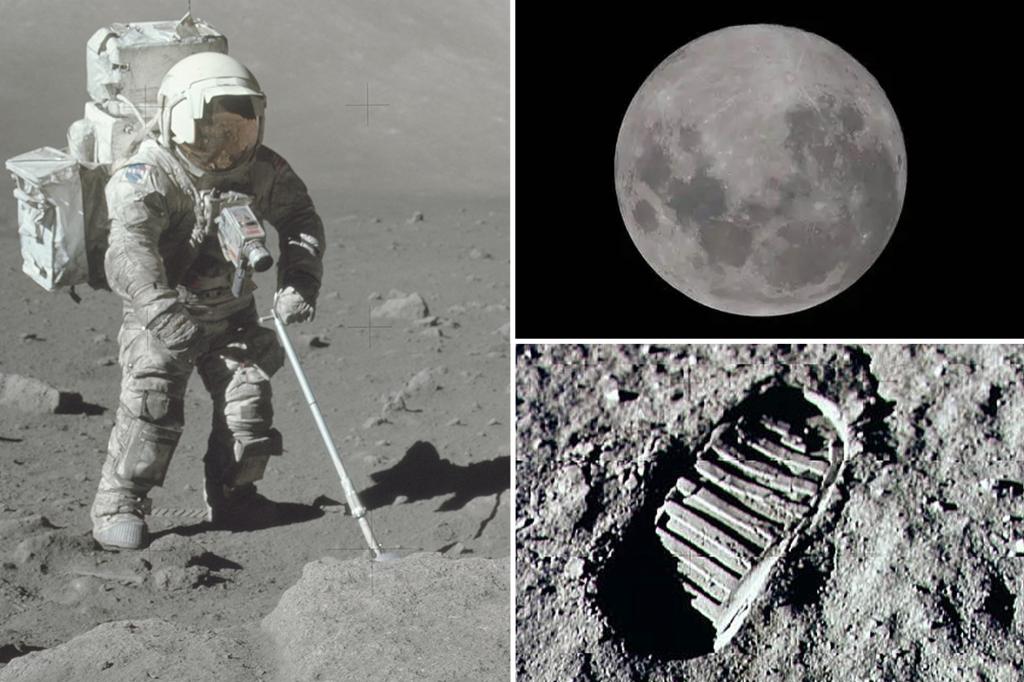
Featured image for New study reveals moon is 40 million years older than believed
Source: New York Post

A recent analysis of lunar dirt brought back by the final Apollo mission in 1972 has revealed that the moon is 4.46 billion years old, approximately 40 million years older than previously believed. Researchers from The Field Museum of Chicago determined that the moon originated from a Mars-sized object that collided with Earth and never left its orbit. By studying lunar crystals, scientists were able to establish the age of the moon and gain insights into its formation. Understanding the moon's role in stabilizing Earth's rotational axis and influencing tides is crucial for comprehending our natural system.

Unprecedented Discovery: Collision of Giant Ice Planets Unveiled 1850 Light-Years Away

Originally Published 2 years ago — by Big Think

Featured image for Unprecedented Discovery: Collision of Giant Ice Planets Unveiled 1850 Light-Years Away
Source: Big Think

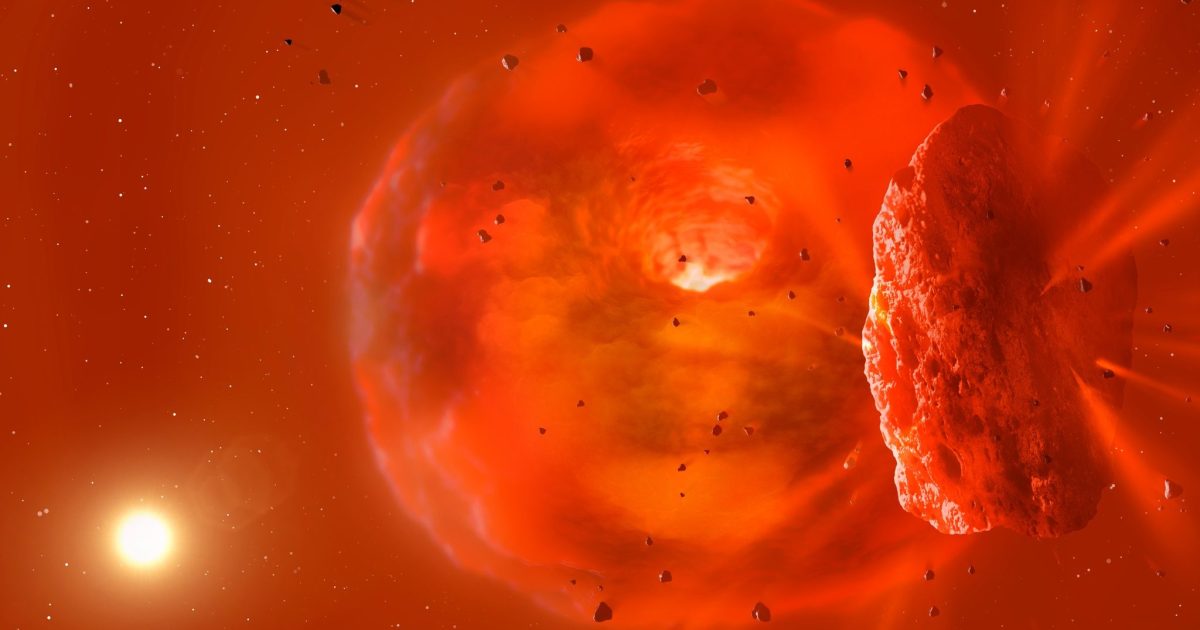
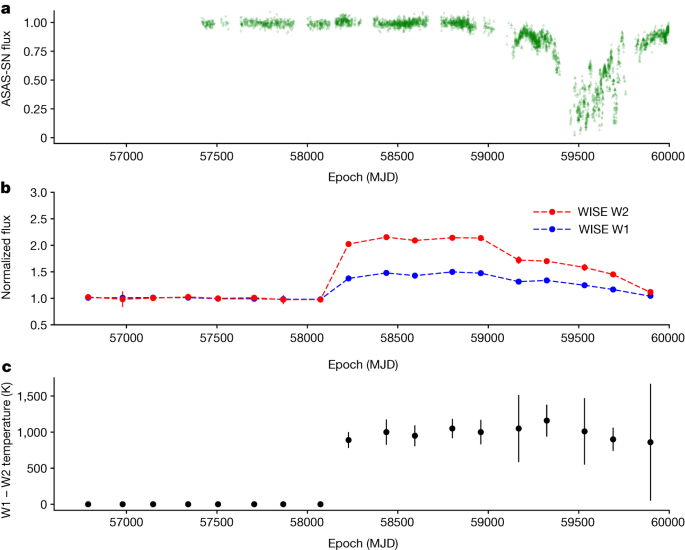
Scientists have observed a rare event: the aftermath of a massive planetary collision around a star located 1850 light-years away. The collision likely involved two Neptune/mini-Neptune exoplanets, creating a synestia, a puffy ring of debris around a joint planetary core. The resulting debris cloud periodically blocks the parent star's light, causing dimming events. The infrared afterglow from the synestia is expected to persist for centuries. Over time, a single giant world with a rich lunar system is expected to emerge from this collision.

Capturing the Aftermath: Witnessing the Afterglow of a Planetary Collision

Originally Published 2 years ago — by Nature.com

Featured image for Capturing the Aftermath: Witnessing the Afterglow of a Planetary Collision
Source: Nature.com

A recent study has explored the aftermath of a planetary collision and the transit of the resulting debris cloud. The collision, which occurred around a solar-analog star, has provided insights into the era of terrestrial planet formation. The study highlights the extreme variability of debris disks and the formation of star-sized impact-produced dust clumps. Understanding the structure, composition, and evolution of protoplanetary disks and debris disks is crucial in unraveling the mysteries of planetary formation and the dynamics of impact events.

"Stunning Discovery: Afterglow of Exoplanet Collision Captured 1,800 Light-Years Away"

Originally Published 2 years ago — by Daily Mail

Featured image for "Stunning Discovery: Afterglow of Exoplanet Collision Captured 1,800 Light-Years Away"
Source: Daily Mail

Astronomers have captured the afterglow of a planetary collision for the first time, as two icy exoplanets collided 1,800 light-years away. The collision created a blaze of light and enormous plumes of dust, which was detected by an amateur astronomer who noticed a quirk in a social media post. The fading of a star's brightness was caused by the dust cloud generated by the collision. Scientists believe that the dust cloud will eventually thin out and may form a retinue of moons orbiting the parent star. The discovery was published in the journal Nature.