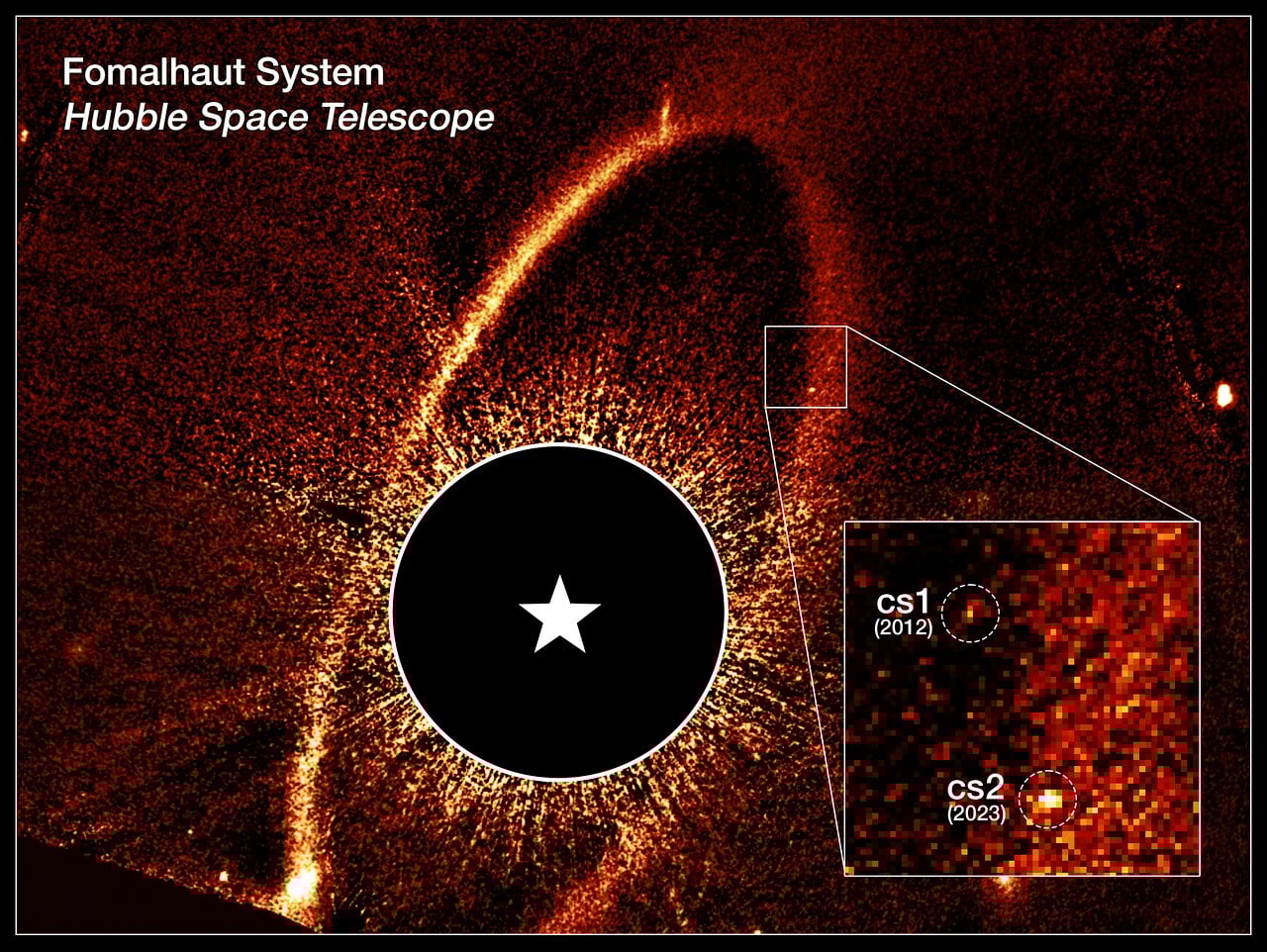
Astronomers using the Hubble Space Telescope observed the first direct evidence of asteroid collisions in a nearby star system, Fomalhaut, revealing dynamic planetary activity and raising caution for future exoplanet imaging efforts.
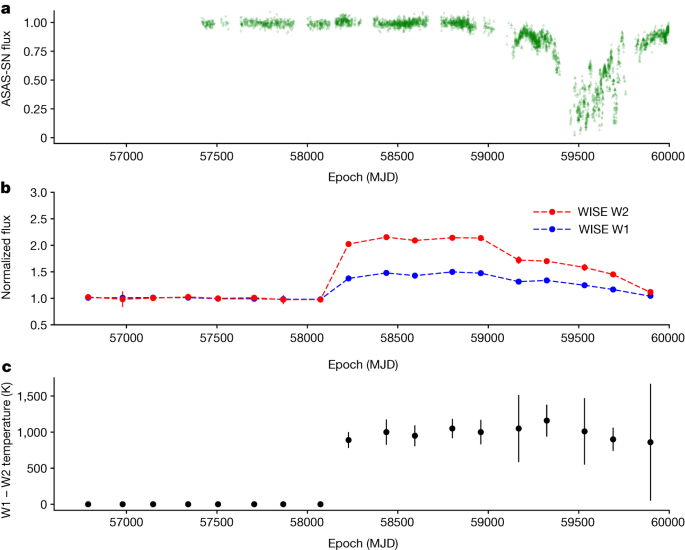
A recent study has explored the aftermath of a planetary collision and the transit of the resulting debris cloud. The collision, which occurred around a solar-analog star, has provided insights into the era of terrestrial planet formation. The study highlights the extreme variability of debris disks and the formation of star-sized impact-produced dust clumps. Understanding the structure, composition, and evolution of protoplanetary disks and debris disks is crucial in unraveling the mysteries of planetary formation and the dynamics of impact events.
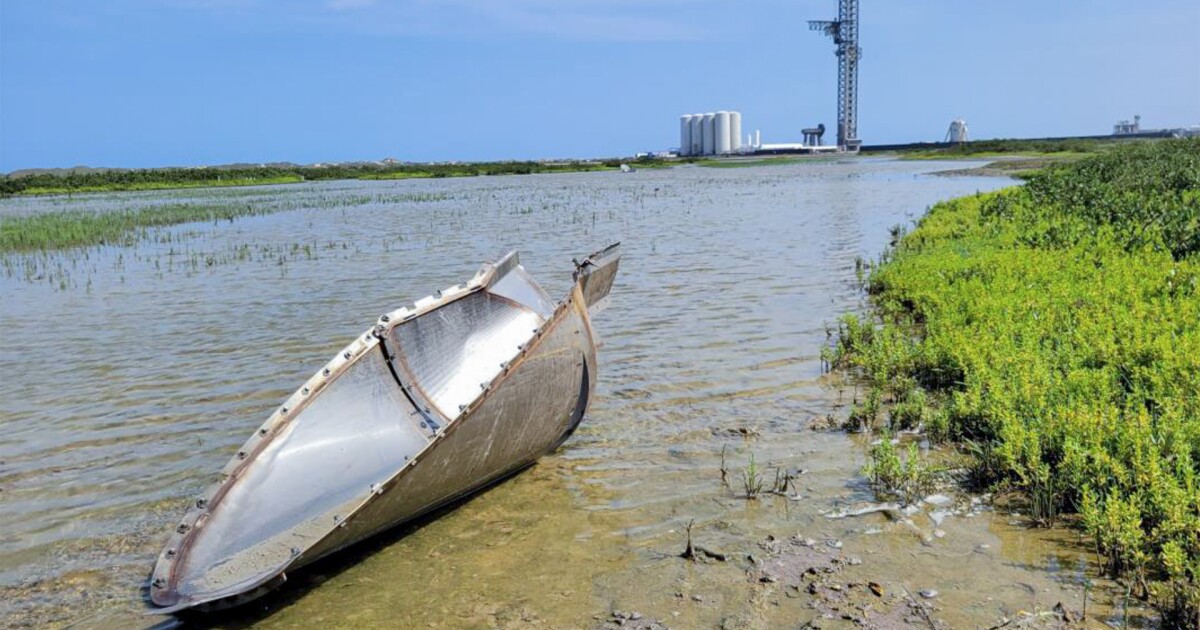
SpaceX's Starship rocket exploded during its first orbital launch, causing extensive environmental damage to the launch pad and surrounding areas. The explosion spread concrete up to three-quarters of a mile away, with some debris reaching as far as six-and-a-half miles north of the launch pad. The U.S. Fish and Wildlife Service documented that the debris cloud was made of pulverized concrete, and some pieces hit the ground so hard they were submerged in the sand. SpaceX's video of the launch confirmed the extent of the debris spread, showing some concrete launching into the Gulf of Mexico.
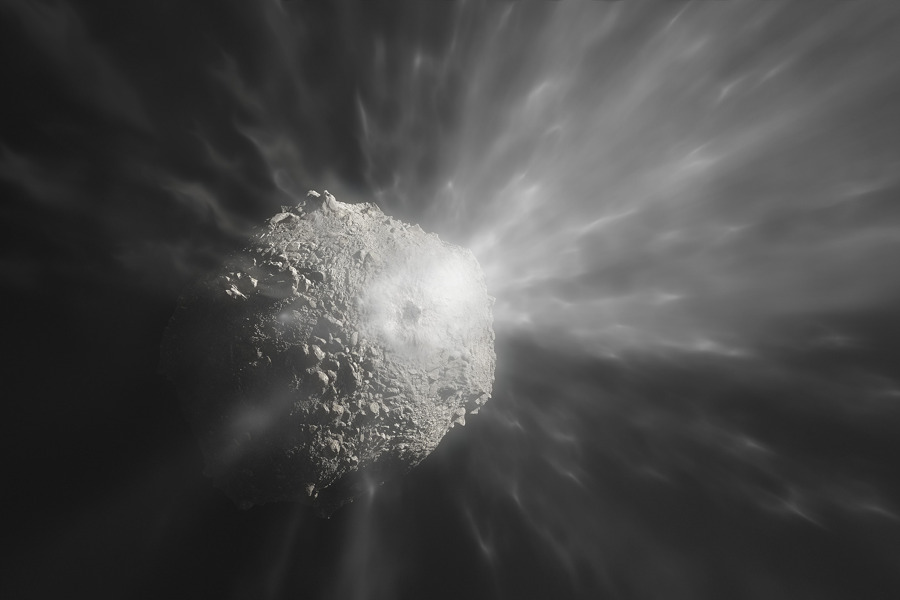
NASA's Double Asteroid Redirect Test (DART) spacecraft intentionally crashed into the asteroid Dimorphos at 13,000 miles per hour in September 2022, successfully changing its orbital period around Didymos by 33 minutes. The collision also created a debris cloud that was tracked by astronomers for a month using the European Southern Observatory's Very Large Telescope in Chile. The debris cloud initially appeared to be made of fine particles, but later revealed clumps and spirals of larger particles, as well as a long cometlike tail streaming behind the asteroid. The DART impact demonstrated how kinetic impact technology could be used to deflect asteroids that may pose a threat to Earth.
NASA's DART spacecraft successfully altered the orbit of the asteroid Dimorphos by slamming into it at 13,000 miles per hour, creating a debris cloud that was studied by astronomers using the European Southern Observatory's Very Large Telescope. The impact changed Dimorphos' orbital period around the larger asteroid it orbits, named Didymos, by 33 minutes. The test showed how kinetic impact technology could be used to deflect asteroids that may pose a threat to Earth. The debris cloud was tracked for a month, revealing clumps and spirals of larger particles, as well as a long cometlike tail streaming behind the asteroid.