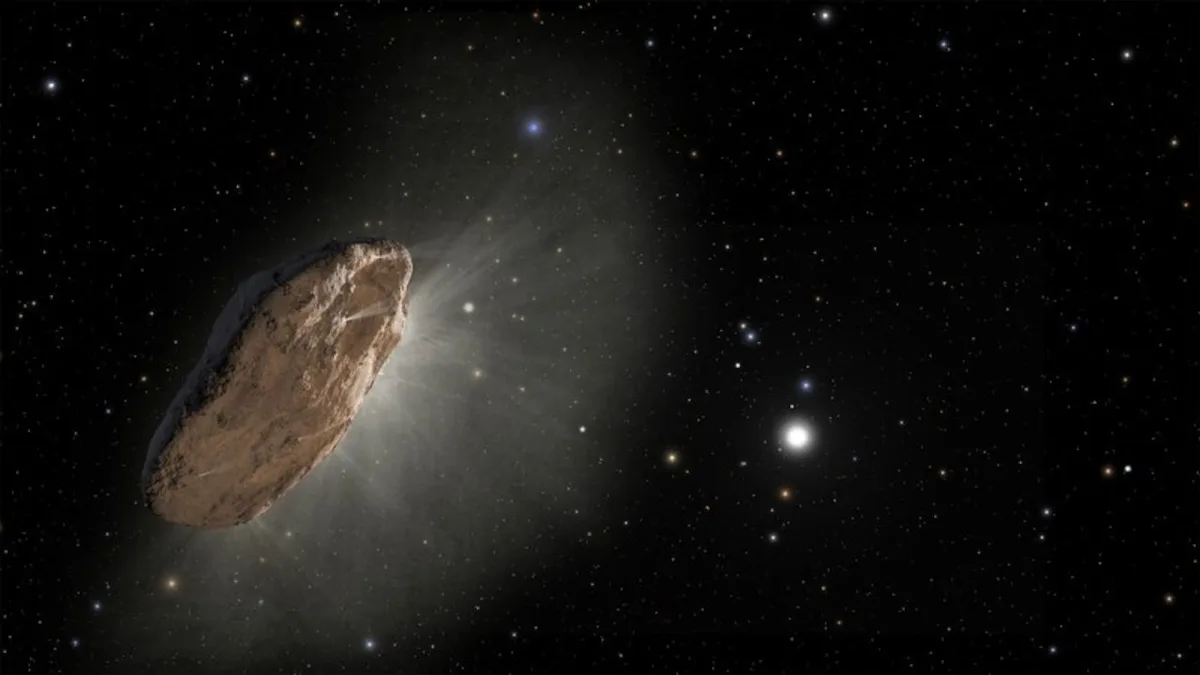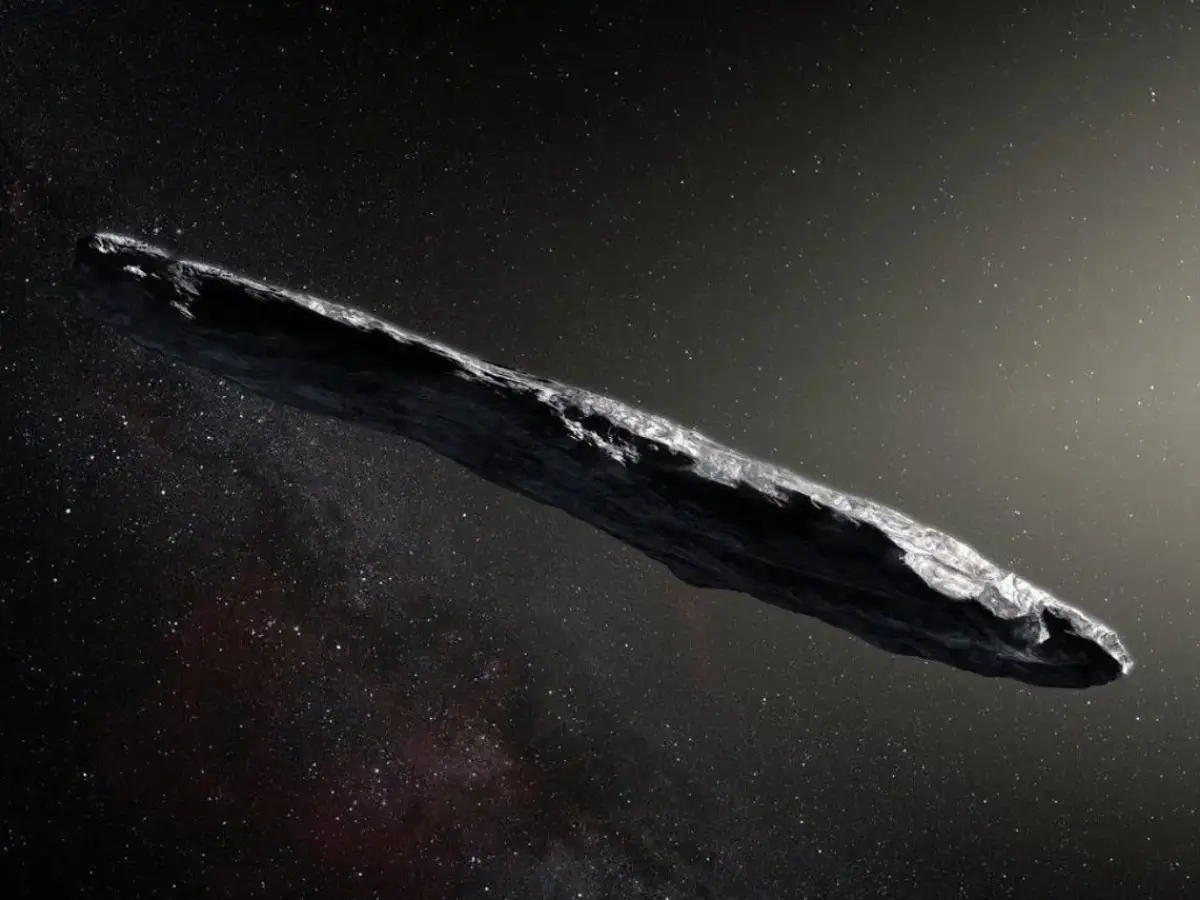
Scientists now believe 'Oumuamua is a fragment of an ancient Pluto-like body ejected from the solar system, composed mainly of nitrogen ice, and not a typical comet, providing new insights into the chaotic early history of our solar system.
Research suggests that 'Oumuamua, the first known interstellar visitor, may be a fragment of an icy exoplanet similar to Pluto, composed mainly of nitrogen ice, and represents a new class of celestial objects called 'exo-Plutos,' indicating such objects might be more common than previously thought.
Scientists suggest that 'Oumuamua, the first known interstellar object, is a fragment of an icy exoplanet, specifically an 'exo-Pluto' composed mainly of nitrogen ice, representing a new class of objects that may be more common than previously thought.
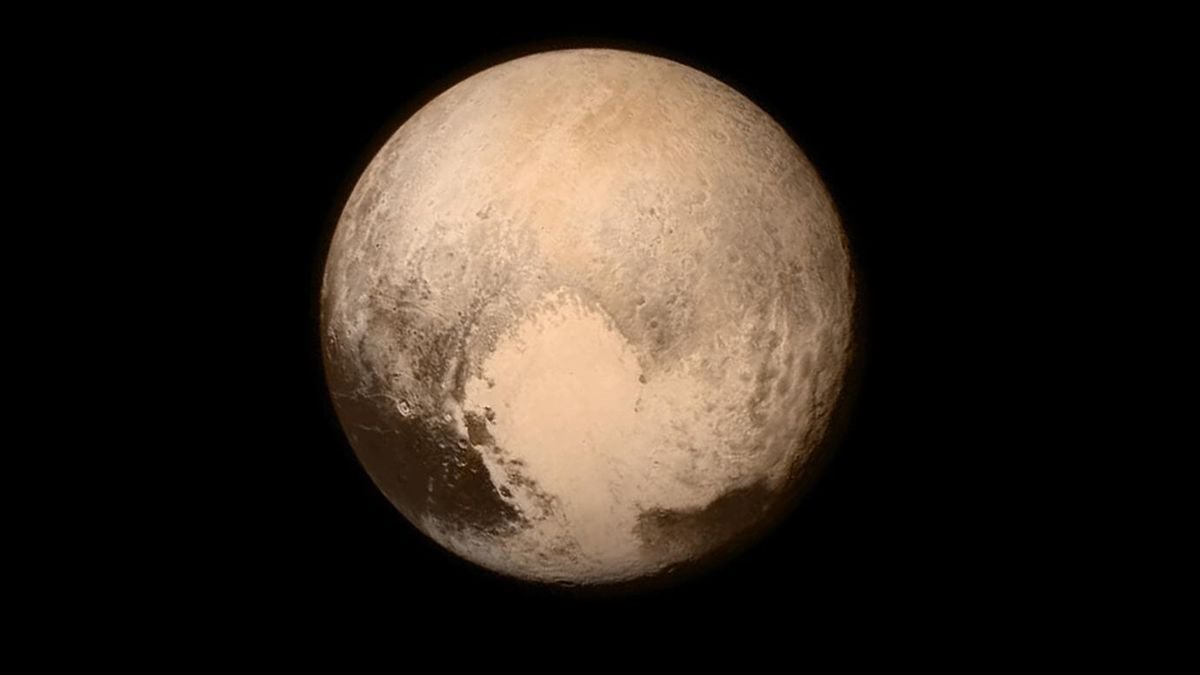
A new study suggests that the heart-shaped formation on Pluto's surface, known as Tombaugh Regio, was likely formed in a slow-motion, glancing collision with an icy rock wider than Kansas is long. Using computer simulations, researchers determined that the impact likely originated from an oblique collision, leading to its elongated shape, and did not result in the melting of Pluto's icy core. The study also suggests that Pluto's heart does not require a subsurface ocean to explain its position near the equator.