Tag

Microelectronics

All articles tagged with #microelectronics

science-and-technology1 year ago

Revolutionary Magnetism Class Paves Way for Advanced Digital Memory

Researchers at the University of Nottingham have imaged a new class of magnetism called altermagnetism, which could revolutionize digital memory by significantly increasing operation speeds and efficiency. Altermagnets combine properties of ferromagnets and antiferromagnets, potentially reducing reliance on rare elements and lowering carbon emissions. The study, published in Nature, demonstrates the practical application of altermagnetic materials, offering a promising path for future technological advancements.


science-and-technology1 year ago

"Study Confirms Quantum Paths for Electron Movement"

Researchers, including Professor Jong Han, have published a study in Nature Communications exploring the physics behind insulator-to-metal transitions. They propose that a relatively small electric field can collapse the gap between energy bands in materials, creating a quantum pathway for electrons to transition freely. This insight into the behavior of novel nanomaterials at low temperatures could have implications for future microelectronic technologies, such as compact memories for data-intensive applications like artificial intelligence. Further research is needed to understand the precise conditions required for this quantum avalanche phenomenon to occur.

science-and-technology2 years ago

"2023: A Year of Breakthroughs and Controversies in Science and Tech"

The article highlights the top 23 scientific and tech developments of 2023, including India's Chandrayaan-3 Moon Landing and advancements in microelectronics. It also mentions the suspenseful disappearance of OceanGate's Titan submersible during a dive to the Titanic, showcasing the range of significant achievements and events in the past year. These developments are expected to impact the future, with some continuing to be influential in 2024 and beyond.

technology2 years ago

Pentagon Invests $238M in CHIPS and Science Act to Boost US Chip Industry

Deputy Secretary of Defense Kathleen Hicks has announced the award of $238 million in funding for the establishment of eight Microelectronics Commons regional innovation hubs. These hubs, funded under President Biden's CHIPS and Science Act, aim to accelerate the development and production of microelectronics in the United States. Over 360 organizations from over 30 states will participate in the program, focusing on critical technology areas such as secure edge computing, 5G/6G, AI hardware, quantum technology, electromagnetic warfare, and commercial leap ahead technologies. The hubs will help mitigate supply chain risks and expedite access to cutting-edge microchips for the military.

science-and-technology2 years ago

"Unleashing the Power of Quantum Avalanche: A Game-Changer for Microelectronics and Supercomputing"

A new study on insulator-to-metal transitions, known as resistive switching, has uncovered discrepancies in the traditional Landau-Zener formula and shed light on the quantum mechanics involved. By using computer simulations, researchers found that a relatively small electric field can trigger a collapse of the energy gap between the lower and upper bands of an insulator, allowing electrons to move between them. This insight could have potential applications in microelectronics and neuromorphic computing. The study also suggests that electronic and thermal switching can occur simultaneously, challenging the notion that they are exclusive mechanisms.

science-and-technology2 years ago

Unraveling the Mystery: Nonconductors Transformed into Conductors through 'Quantum Avalanche'

A new study led by University at Buffalo physics professor Jong Han offers insights into the process of resistive switching, where insulators can transition into conductors under an electric field. The study proposes a "quantum avalanche" mechanism, where a relatively small electric field can trigger a collapse of the energy gap between the lower and upper bands of an insulator, allowing electrons to move between them. This finding challenges the long-standing Landau-Zener formula and provides clarity on the debate surrounding insulator-to-metal transitions. The research has implications for microelectronics and could contribute to the development of compact memories and neuromorphic computing technologies.

defense2 years ago

Lockheed Martin and GlobalFoundries join forces for secure chip production.

Lockheed Martin has partnered with New York-based semiconductor manufacturer GlobalFoundries to produce chips critical to national security systems. The partnership will give GlobalFoundries an edge when applying for grants through the Chips Act, which sets aside $2 billion in grants specifically for microelectronics in defense systems. The Pentagon already awarded GlobalFoundries $117 million in Defense Production Act funding last year to produce 45-nanometer semiconductors in New York. The subsidies and tax incentives for microelectronics companies in the Chips Act are largely geared toward onshoring semiconductor production amid concerns China could disrupt the global supply chain.

military-technology2 years ago

Foreign Military Tech Relies on U.S. Chip Components: Industry's Open Secret.

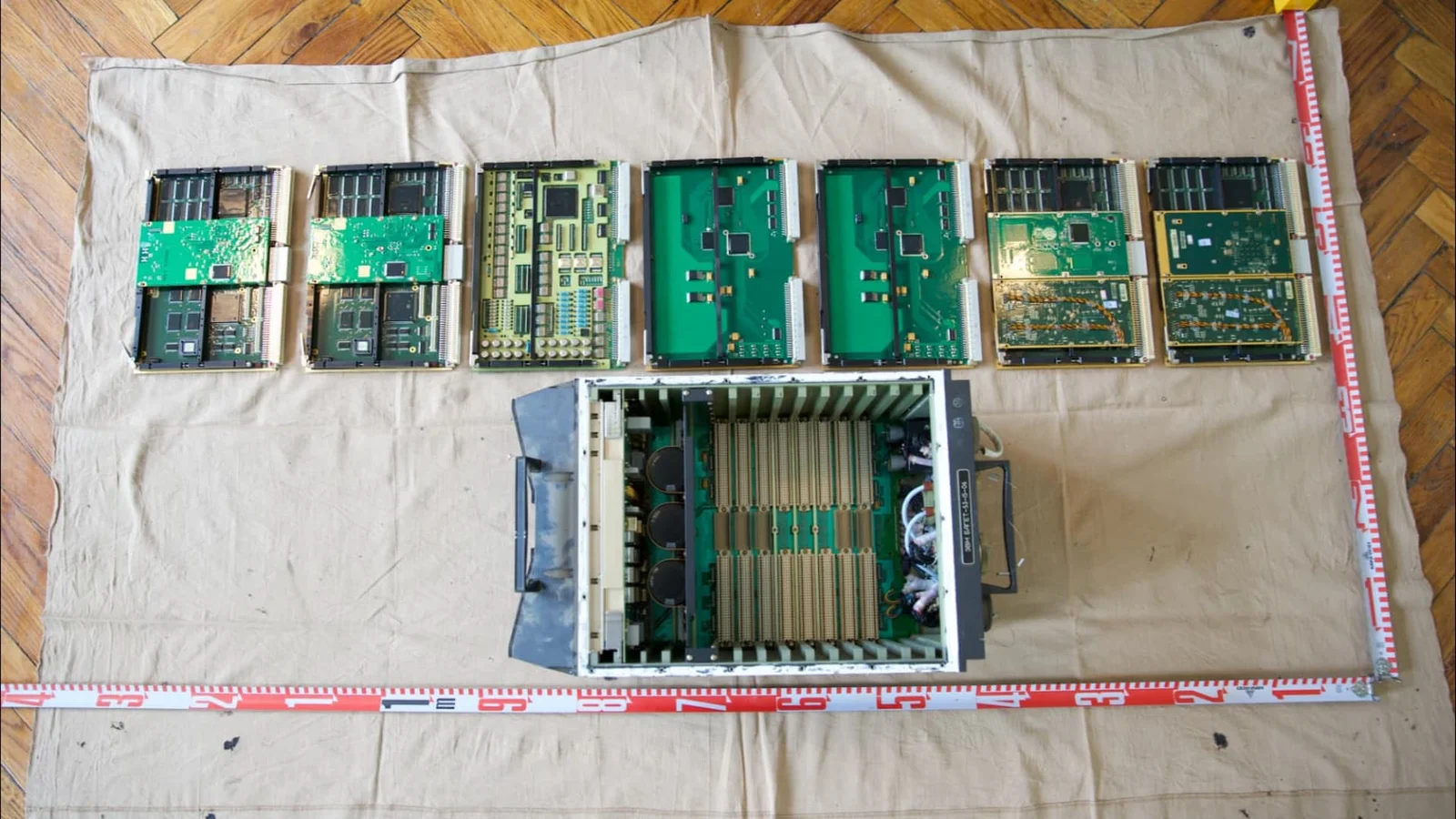
Research from the British academic journal Royal United Services Institute and the nonprofit research group Conflict Armament Research found that key components from more than a dozen Western countries, including the US, have been found in the military equipment used by Russian forces in Ukraine and Iranian-made drones used by Russia in Ukraine. The research calls into question the two countries' domestic capabilities when it comes to microelectronics manufacturing and demonstrates the illicit procurement and misuse of semiconductors by overseas entities. The discovered components are classified as dual-use goods, with what are called Export Control Classification Numbers on the Commerce Control List, which means that a chip could be sold legally to a country for consumer or commercial use, only to then be resold to a company in a different country on the secondary market for military use.