Scientists have discovered a new phase of ice, called ice XXI, formed by rapidly compressing water at room temperature, revealing new insights into ice's diverse crystalline structures and potential implications for understanding icy moons.
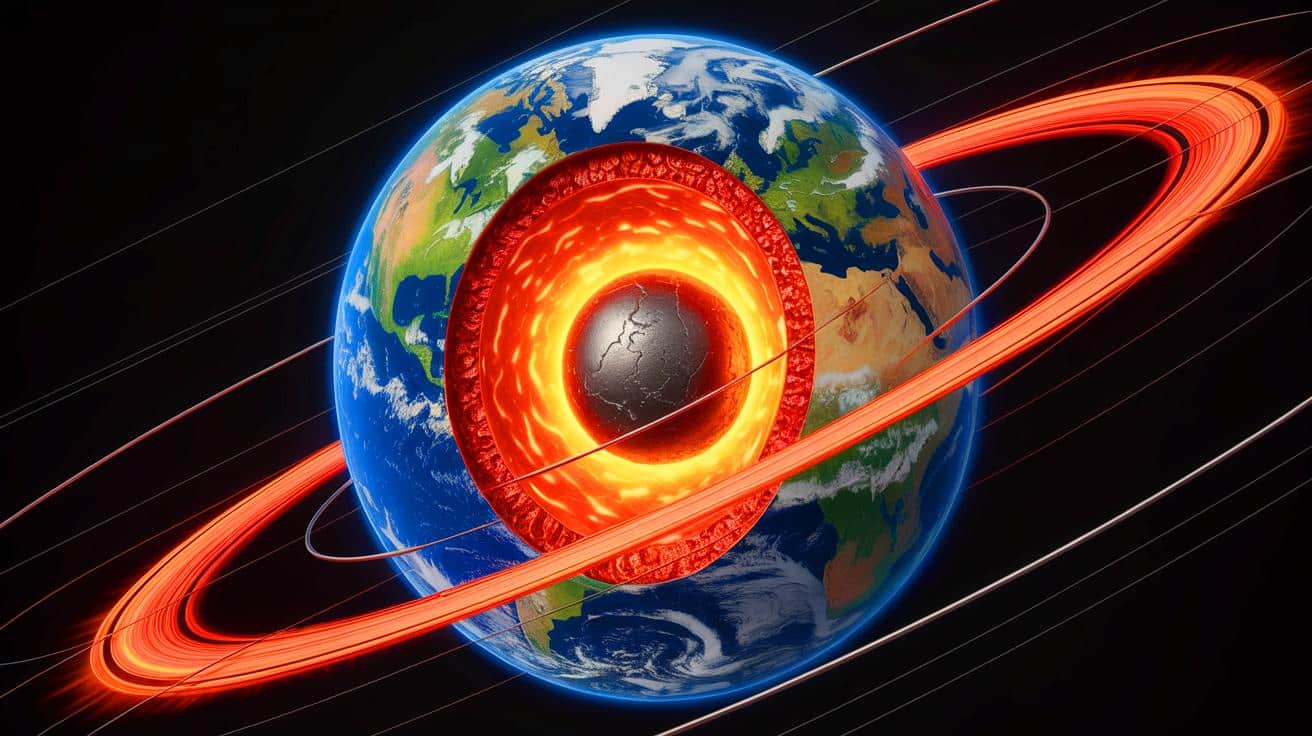
Scientists from Oxford, Leeds, and UCL discovered that carbon played a crucial role in Earth's inner core formation, reducing supercooling requirements and potentially more abundant than previously thought, which impacts our understanding of Earth's magnetic field and interior dynamics.
New research reveals that space ice, previously thought to be completely disordered, contains both crystalline and amorphous regions, showing it is neither entirely ordered nor chaotic.
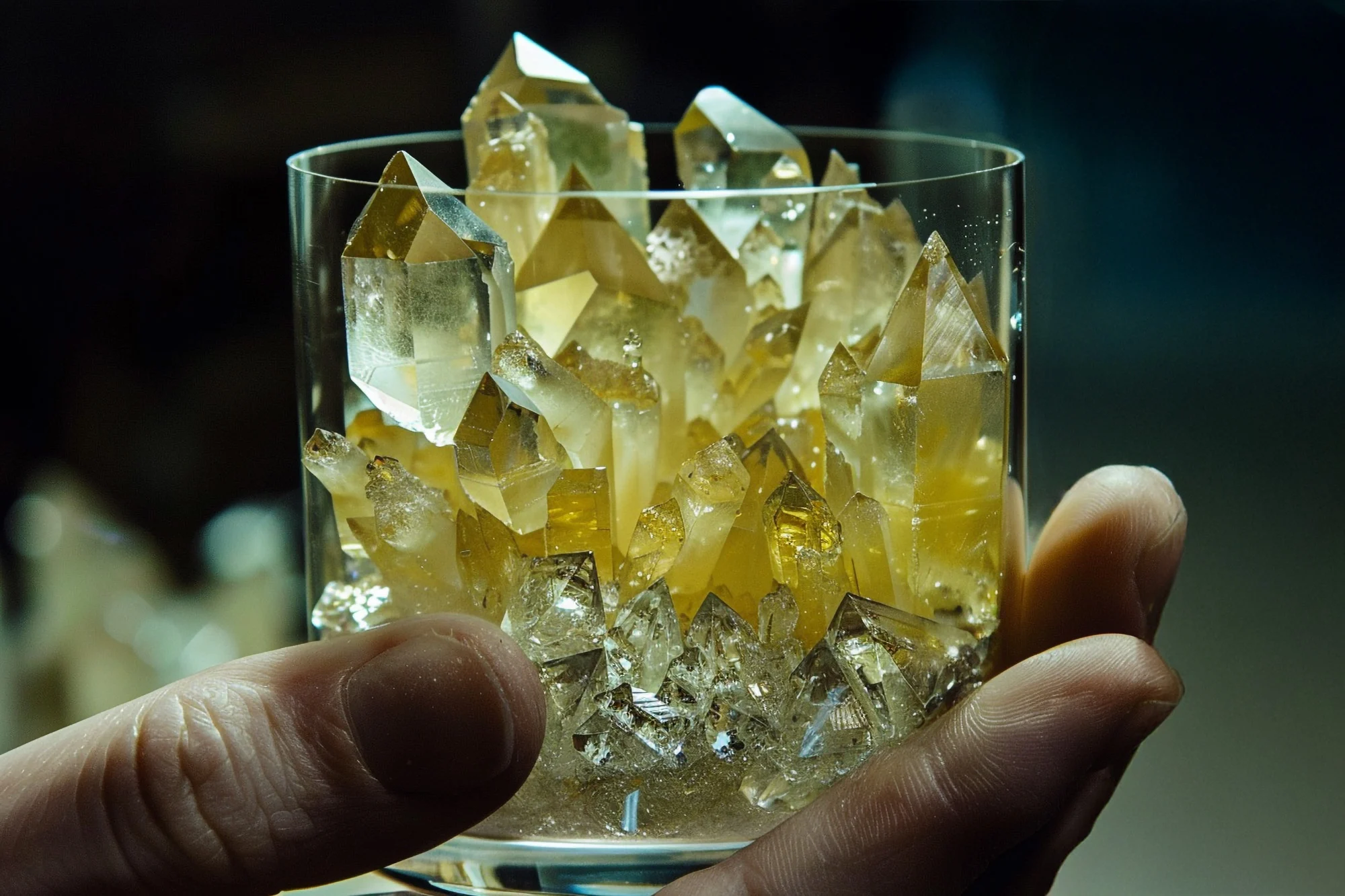
A new theory in crystallization suggests that the solvent, rather than the solute, plays the primary role in crystal formation. This challenges traditional views and has implications for fields like medicine and technology. The theory, developed by James Martin, describes crystallization as a two-step process involving a melt-like intermediate that organizes into a crystal structure. This approach could improve predictions of crystal growth and help in applications such as drug development and preventing kidney stones.
Scientists from Friedrich Schiller University Jena and Friedrich Alexander University Erlangen-Nuremberg have developed nanomaterials using a bottom-up approach, exploiting the directional growth of crystals during crystallization. The resulting nanostructures, which consist of worm-like rods with embedded nanoparticles, have potential applications in various fields, including information processing and catalysis. The researchers used individual silicon dioxide particles and grafted polymer molecules to control the building-up process. The collaboration between the two universities and the use of computer simulations were crucial in understanding the complex molecular processes involved in the formation of these nanostructures.
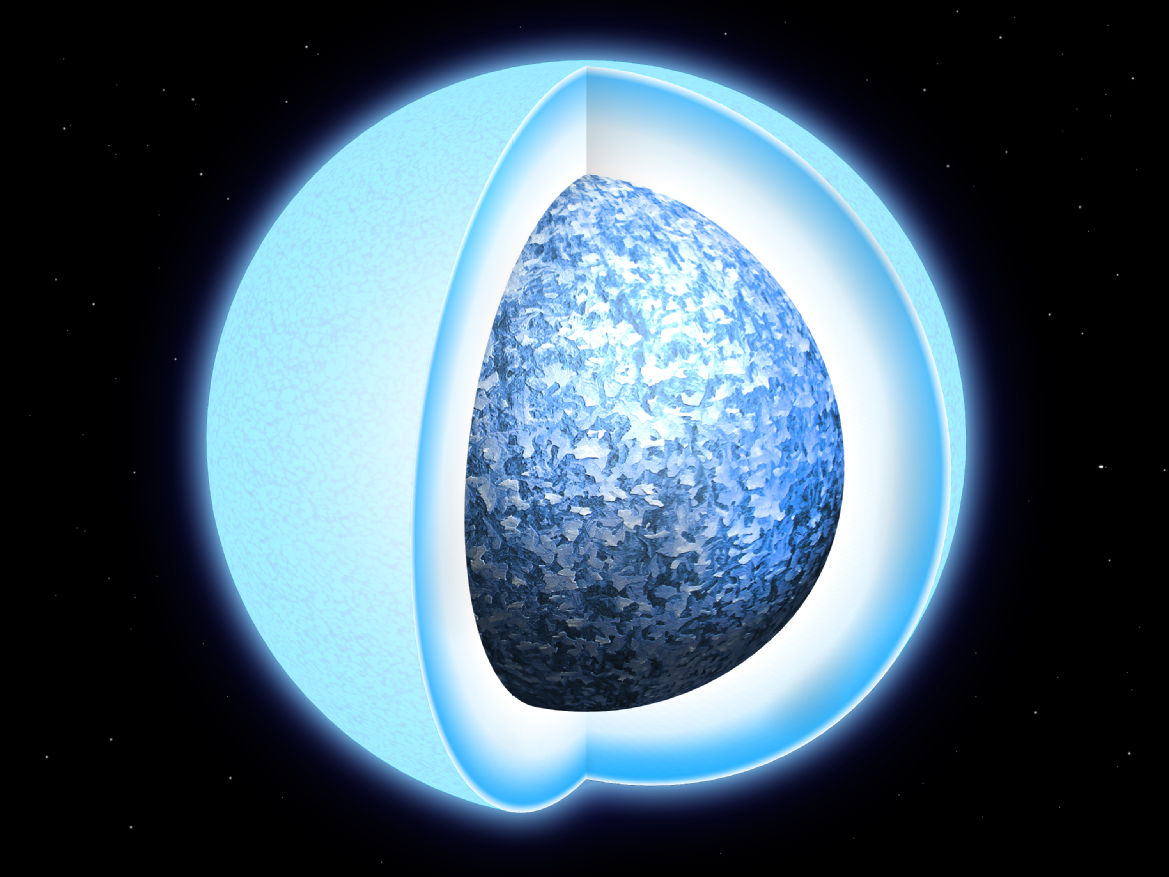
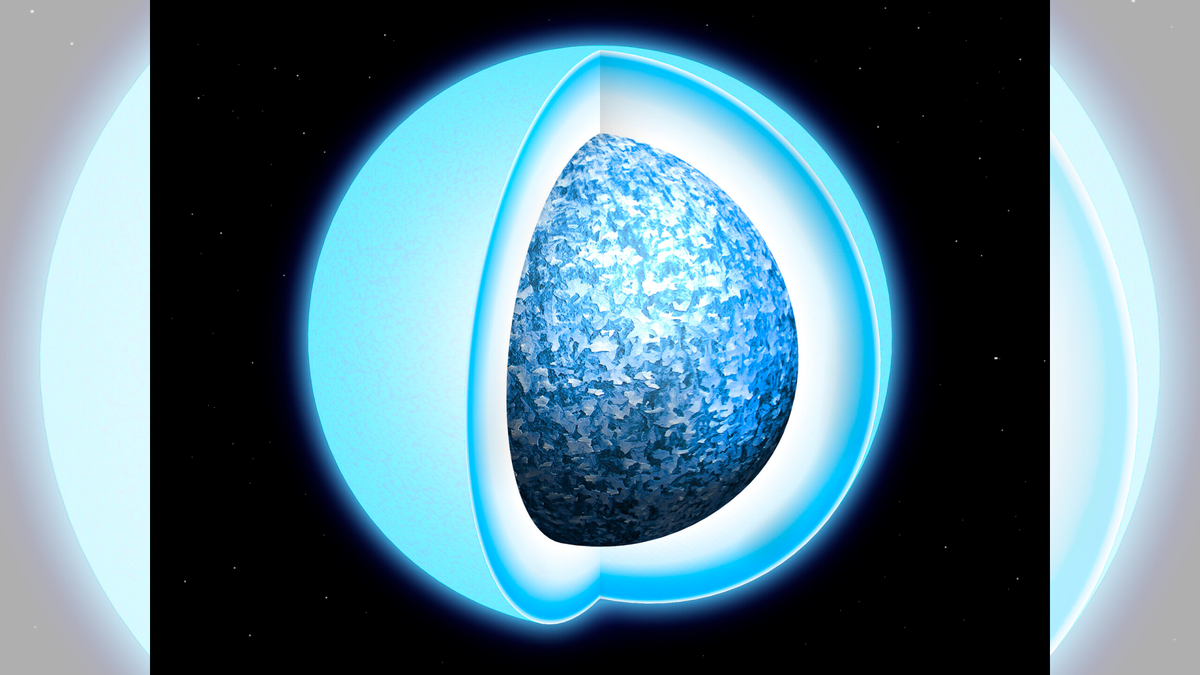
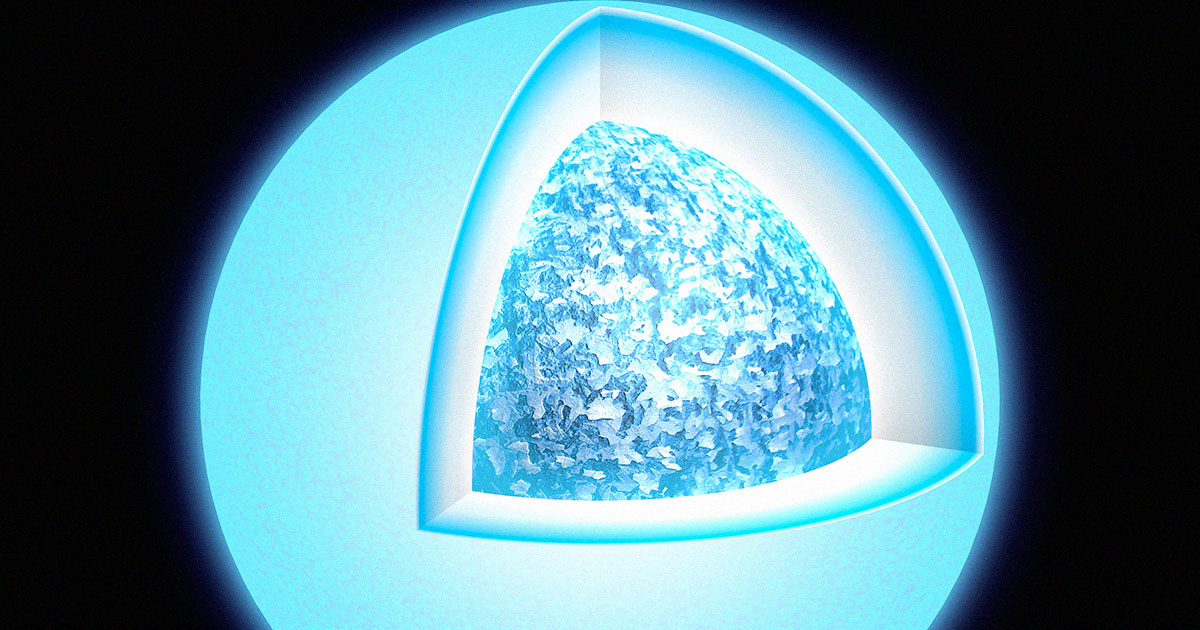
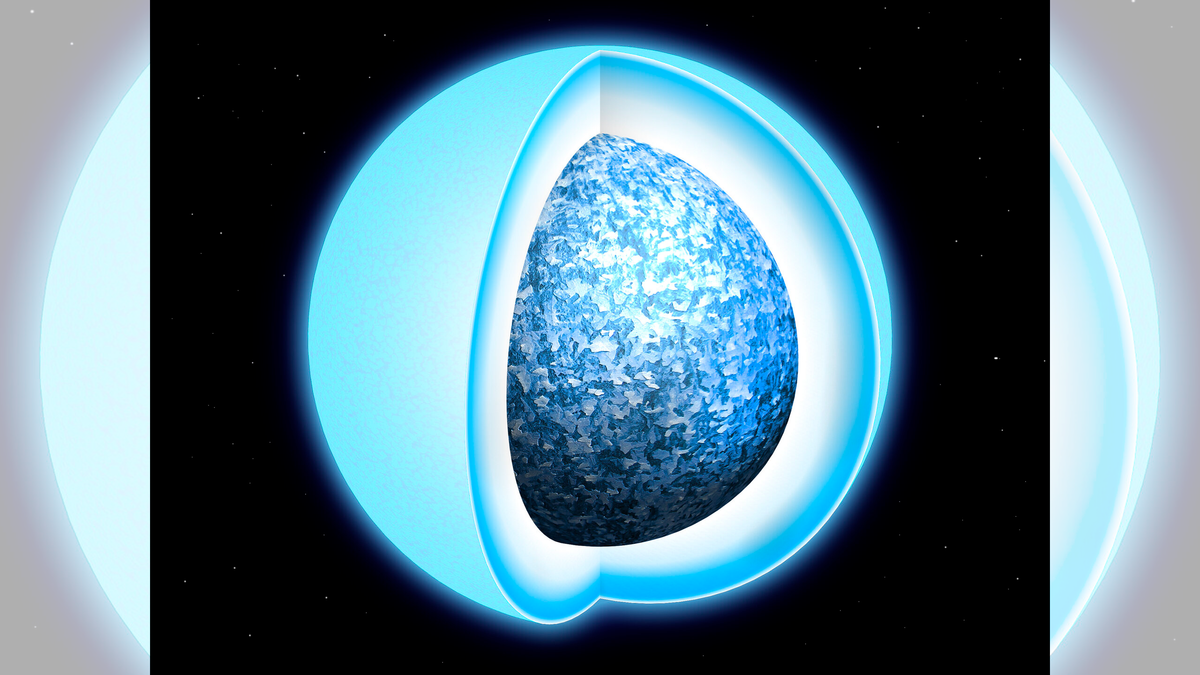
Astronomers have discovered a white dwarf star, HD 190412 C, that is gradually transforming into a massive diamond. This process takes roughly a quadrillion years, shedding new light on the evolution of stars over time. As the universe is 13.6 billion years old, no star has ever fully crystallized.
Astrophysicists have found a white dwarf in the process of crystallizing, which will help them understand how and when this phenomenon occurs. The white dwarf is in a system with other main-sequence stars, making it easier to determine its age. The researchers estimate its age to be 7.3 billion years, but they say it could be an underestimation. The white dwarf is the first confirmed crystallizing white dwarf in a Sirius-like system, and its location in a system with other stars will make it easier to study white dwarf crystallization.
Scientists have discovered a white dwarf star, HD 190412 C, that is in the early stages of crystallizing into a celestial diamond. The star's temperature and metal core composition put it in the range of a crystallizing white dwarf, and its age was calculated to be about 4.2 billion years. The star is part of a quadruple star system called HD 190412, and its distance from Earth was determined using data from the Gaia Mission. This is the first known case of a crystallizing white dwarf with a known age, and other similar systems may exist nearby.
Scientists are studying a white dwarf star, HD 190412 C, that appears to be turning into a "cosmic diamond" as it slowly crystallizes. This particular star offers a unique opportunity to study the cooling process of white dwarves and how long it could take before they crystallize into what could resemble a diamond. The star is around 4.2 billion years old, and scientists predict this process could take a quadrillion years.
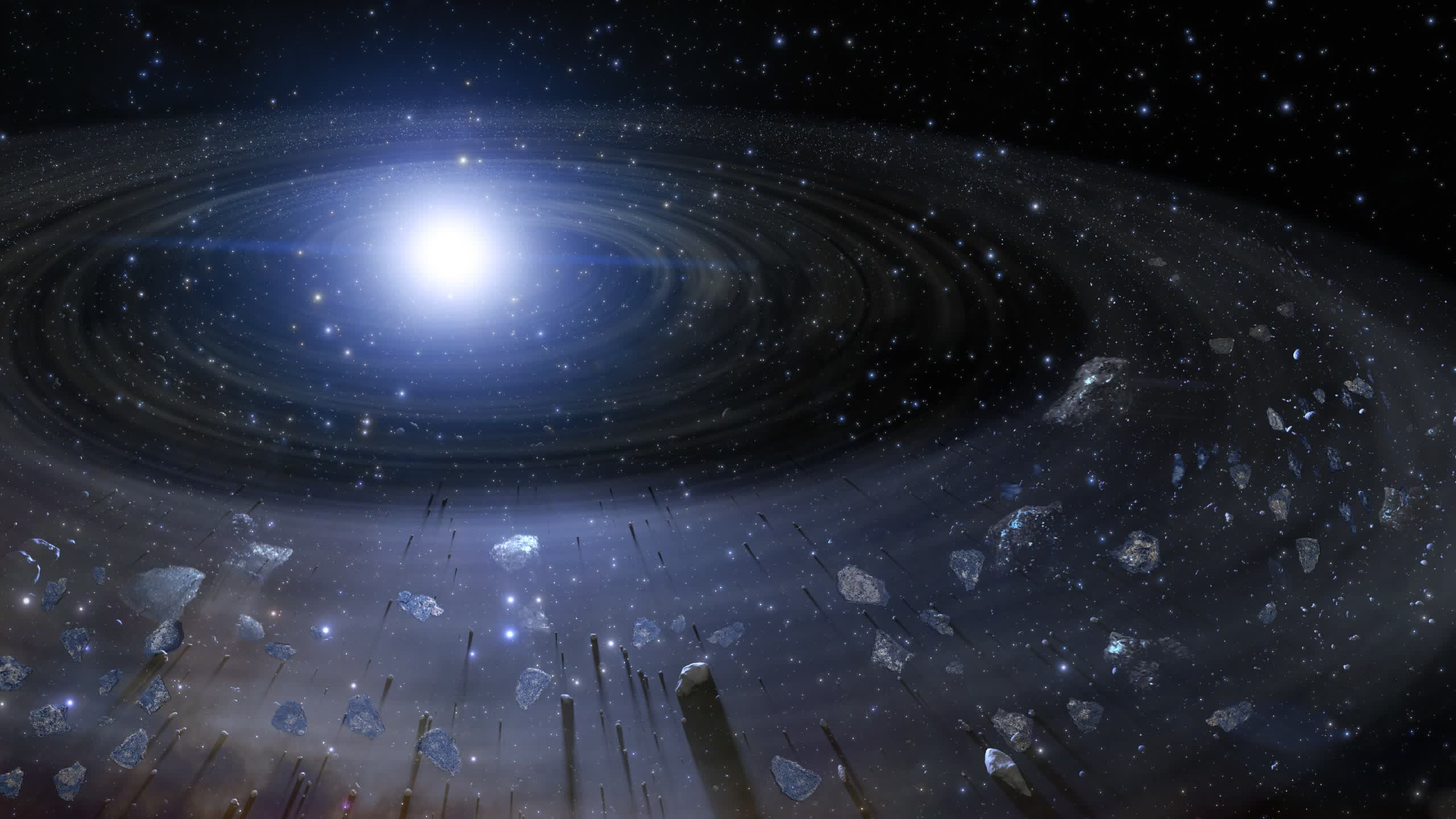
Astronomers have discovered a white dwarf star about 104 lightyears from Earth that is slowly crystalizing into a diamond the size of a planet. The white dwarf is part of a quadruple-star system called HD 190412, and data suggests it could be around 4.2 billion years old. White dwarfs are the final state of about 97 percent of the Milky Way galaxy's stars, including the Sun, and will eventually become cold, dark, diamond-like objects called black dwarfs. The discovery of a star undergoing crystallization so close to our solar system will help astronomers better understand its course and how common such stars are.
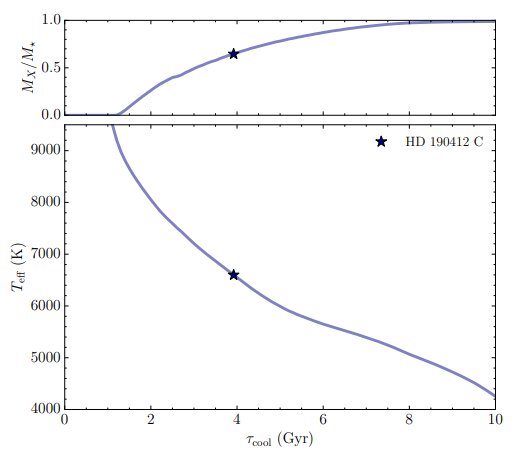
Scientists have discovered a white dwarf star, HD 190412 C, that is in the process of crystallizing into a celestial diamond. The star is about 104 light-years away in a quadruple star system called HD 190412. The researchers calculated the star's temperature, which puts it into the range of a crystallizing white dwarf. With this information, the team modeled the white dwarf’s cooling over time, confirming the first case of a crystallizing white dwarf with a known age.
A group of space scientists have discovered a white dwarf star, HD 190412 C, that appears to be in the beginning stages of crystallizing into a celestial diamond. The white dwarf, located approximately 104 light years away, is made mostly of metallic oxygen and is part of a quadruple system called HD 190412. The researchers have been studying the cooling delay in the star due to the crystallization process to determine how far along it is on its path to becoming a celestial diamond.
Astronomers have discovered a white dwarf star, located just 104 light-years away, that is gradually hardening and crystallizing, turning into a dense, hard, 'cosmic diamond' made up of crystallized carbon and oxygen. The discovery is detailed in a paper accepted into the Monthly Notices of the Royal Astronomical Society. The white dwarf is part of a quadruple system, and its properties suggest that it's undergoing the crystallization process. The system's age is around 7.3 billion years, and the white dwarf's age appears to be around 4.2 billion years, suggesting that the crystallization rate has slowed the cooling rate of the white dwarf by approximately 1 billion years.