A new hypothesis suggests that damage to the brainstem caused by viral infections like COVID-19 may underlie symptoms of Long COVID and ME/CFS, potentially explaining their multi-system effects and guiding future research and treatments.
Scientists have developed a highly accurate (96%) blood test for diagnosing Chronic Fatigue Syndrome (ME/CFS) using DNA folding technology, which could improve diagnosis and treatment, and may also aid in diagnosing long Covid.
Scientists have developed a highly accurate blood test using 3D genomic technology that can diagnose Chronic Fatigue Syndrome (ME/CFS) with 96% accuracy, potentially transforming diagnosis and paving the way for similar tests for Long COVID.
Scientists have developed the first blood test to diagnose chronic fatigue syndrome (ME/CFS) with high sensitivity and specificity, potentially enabling earlier and more accurate diagnosis, though further validation is needed before clinical use.
The article highlights the significant rise in Myalgic Encephalomyelitis/Chronic Fatigue Syndrome (ME/CFS) cases in the US due to COVID-19, estimating around 5.7 million affected individuals with substantial economic costs ranging from $225 billion to $305 billion annually, emphasizing the urgent need for increased research, healthcare infrastructure, and public health strategies.
A large UK genetic study called DecodeME identified eight genetic signals associated with chronic fatigue syndrome (ME/CFS), providing biological evidence for the disease's origins and potentially guiding future treatments, though further research is needed to fully understand these findings.
A large genetic study called DecodeME identified eight new genetic regions linked to ME/CFS, providing the first robust evidence of genetic contributions to the syndrome, which affects millions worldwide and involves immune and nervous system dysfunction. The study analyzed over 15,000 patients of European ancestry, highlighting potential biological pathways involved in the disease, though further research is needed to develop diagnostics or treatments.
A large genetic study of 15,500 people with chronic fatigue syndrome (ME/CFS) identified eight genetic signals related to immune and nervous system functions, offering potential for future diagnostics and treatments, though more research is needed to understand the disease fully.
A new study proposes that viruses like COVID-19 induce endothelial cell senescence, leading to blood clotting, reduced blood flow, and symptoms like brain fog and fatigue in long-COVID and ME/CFS patients. The research aims to develop diagnostic tools and targeted therapies by identifying 'zombie' blood vessel cells, potentially improving treatment for these chronic conditions.
A groundbreaking AI study reveals that ME/CFS disrupts key interactions between the gut microbiome, immune system, and metabolism, with 90% accuracy in diagnosis using BioMapAI, paving the way for personalized treatments and validation of the disease's biological basis, especially relevant for long COVID.
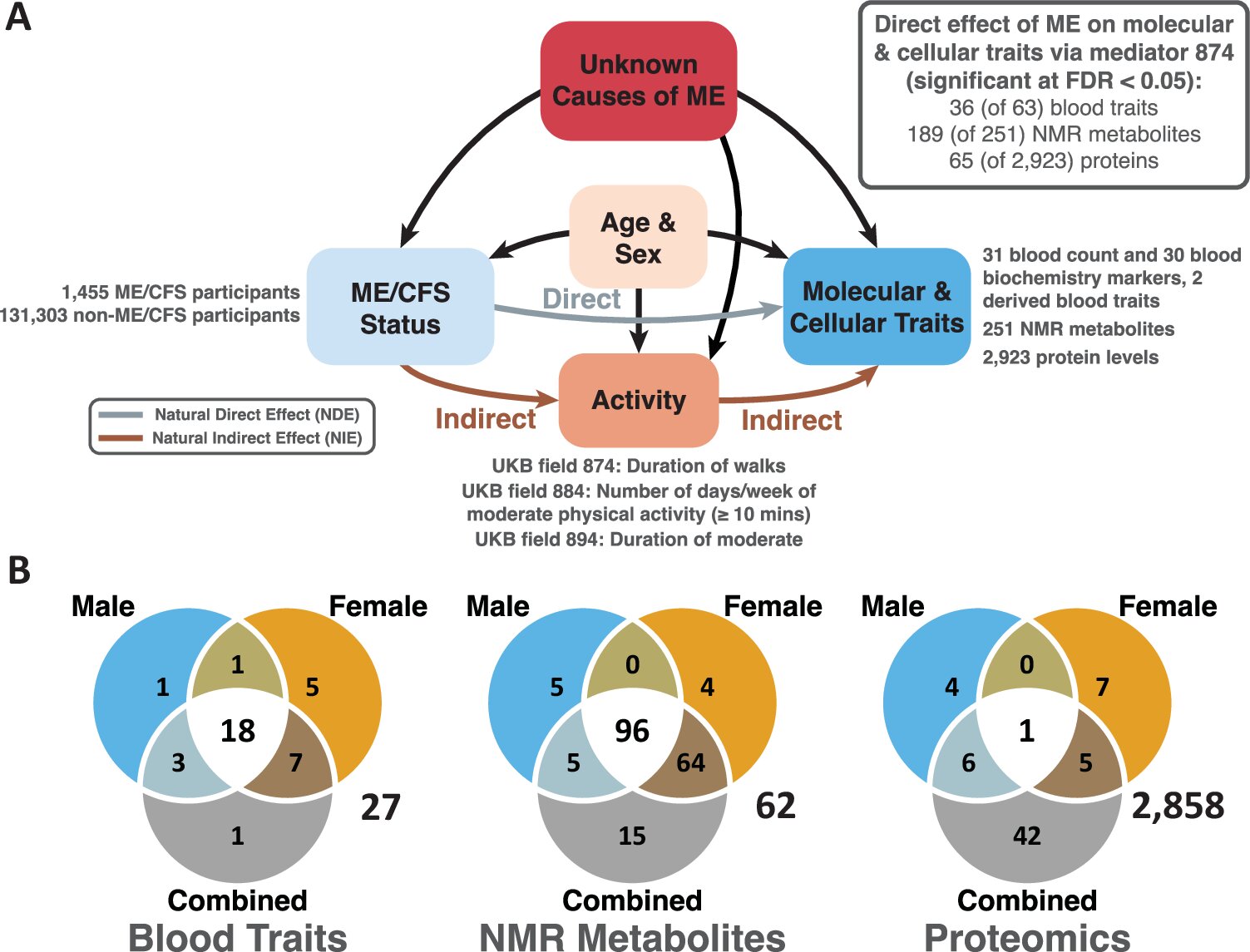
A large-scale study has identified consistent blood differences in ME/CFS patients compared to healthy individuals, highlighting potential biomarkers for diagnosis and dispelling misconceptions that the illness is purely psychological or due to deconditioning.
Researchers from the University of Edinburgh found significant blood differences in ME/CFS patients compared to healthy individuals, supporting the development of a blood test for diagnosis and challenging the misconception that the condition is psychological.
ME/CFS is a complex neurological disorder characterized by severe fatigue, post-exertional malaise, and a range of other symptoms, affecting multiple body systems. It is often misunderstood as a psychological condition, but scientific evidence confirms its biological basis. Diagnosis is challenging due to varying criteria, and current treatments like graded exercise therapy are controversial. Emerging guidelines aim to improve diagnosis and management, emphasizing pacing and rest to manage symptoms effectively.
A landmark study by the US National Institutes of Health confirms that chronic fatigue syndrome (CFS), also known as myalgic encephalomyelitis (ME/CFS), is unambiguously biological, with distinct biological differences found in a small group of 17 people who developed ME/CFS after an infection compared to healthy controls. The study reveals that ME/CFS is a systemic disease affecting multiple organ systems, with findings suggesting a physiological focal point for fatigue in this population. While the study has been welcomed, some ME/CFS advocacy groups have questioned certain aspects of the research, and further research is needed to determine if the changes detected in these 17 patients translate to a broader population with ME/CFS.
A landmark NIH study published in Nature Communications reveals distinct differences in the bodies of people with myalgic encephalomyelitis/chronic fatigue syndrome (ME/CFS) compared to those without it, shedding light on the biological causes of the condition. The study found differences in brain function and the immune system, offering potential insights for future treatments. However, the study took years to complete, partly due to disruptions caused by the COVID-19 pandemic, and more research is needed before treatments can be developed. Participants hope the study will lead to validation of ME/CFS and expedited treatment trials, as the condition significantly impacts their quality of life.