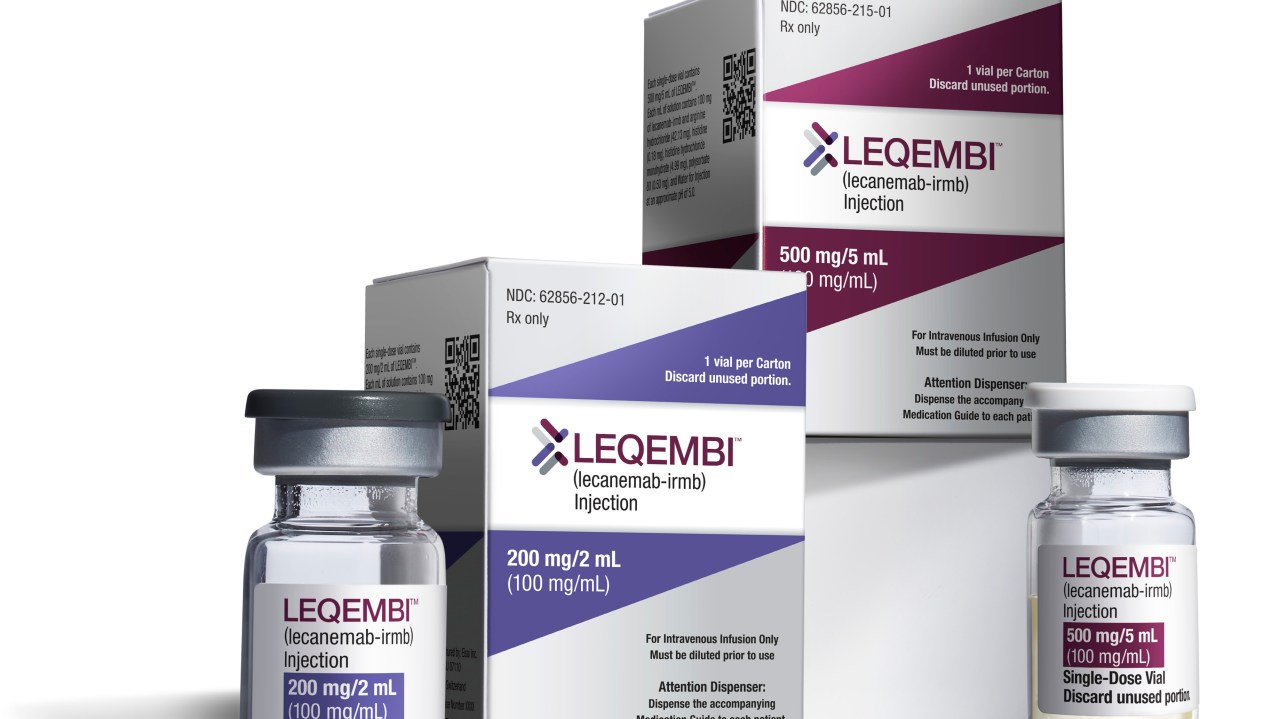
Research from Osaka Metropolitan University shows that while the Alzheimer's drug lecanemab reduces amyloid plaques, it does not improve the brain's waste clearance system in the short term, highlighting the disease's complexity and the need for multi-targeted therapies.
New research indicates that brain volume loss observed in Alzheimer's patients undergoing immunotherapy, such as with lecanemab, is due to the removal of amyloid plaques rather than neuronal damage. This phenomenon, termed "amyloid-removal-related pseudo-atrophy" (ARPA), suggests that volume changes are a sign of treatment effectiveness and not harmful. The study, published in Lancet Neurology, emphasizes the need for better reporting and understanding of these changes as such therapies become more common.
The European Medicines Agency has approved Lecanemab, a drug targeting the cause of Alzheimer's disease, marking a potential turning point in its treatment. Developed by BioArctic and Eisai, Lecanemab aims to delay Alzheimer's progression by removing beta-amyloid plaques in the brain. While it offers hope, the drug's benefits are limited, delaying symptoms by about five months, and it poses risks like brain hemorrhages. The approval highlights the ongoing challenges and potential of antibody therapies in Alzheimer's treatment, with further research and infrastructure needed for widespread application.
The European Medicines Agency's Committee for Medicinal Products for Human Use has reversed its earlier decision and now recommends approval of the Alzheimer's drug lecanemab, known as Leqembi in the U.S., for early-stage treatment. This comes after initial concerns about side effects like brain swelling and bleeding. Developed by Eisai and co-marketed with Biogen, the drug has shown to slow cognitive decline in Alzheimer's patients. The European Commission is expected to make a final decision on marketing authorization soon.
Two recent studies reveal that mild cognitive impairment, an early stage of dementia, is significantly underdiagnosed in people aged 65 and older, with only 8% of expected cases being diagnosed. This underdiagnosis deprives millions of patients of the opportunity to receive treatment and slow disease progression. Mild cognitive impairment can be caused by various factors, including medication side effects and vitamin deficiencies, and shares risk factors with cardiovascular disease. The FDA has approved lecanemab as the first disease-modifying treatment for Alzheimer's disease, which can reduce the progression of early-stage Alzheimer's. However, these drugs must be used in the early stages of the disease. Factors contributing to underdiagnosis include subtle symptoms and limited time during doctor's visits. Vigilance about cognitive decline and formal assessments are crucial, and utilizing Medicare's yearly "wellness" visit is recommended.
Atrium Health Wake Forest Baptist in Winston-Salem has treated its first patient with the FDA-approved Alzheimer's medication, Lecanemab, marking the first Alzheimer's drug approval in over 20 years. The medication slows the progression of the disease by removing amyloid, a protein in the brain believed to contribute to memory loss. However, it is only effective for those with mild cognitive impairment or mild dementia due to Alzheimer's, and not for those with more advanced dementia.
Experts have raised concerns about the potential approval of Alzheimer's drugs donanemab and lecanemab, which have shown to slow the progression of the disease but may also cause brain shrinkage in patients. Trial results indicate that a significant percentage of participants experienced brain swelling or bleeding, leading to warnings about potential serious side effects. While the drugs offer potential benefits, the observed brain volume loss has raised doubts about their overall safety and efficacy.
University Hospitals Brain Health & Memory Center has started treating Alzheimer’s disease patients with the drug lecanemab, the first FDA-approved treatment targeting the underlying biology of Alzheimer’s for those in the early stages of the disease. Lecanemab, administered through IV infusion every two weeks for a year, targets the amyloid-beta protein that accumulates in the brains of Alzheimer’s patients. While it doesn't cure the disease, it has shown to slow its progression, with Medicare now covering its cost for patients enrolled in a registry. Lifestyle changes can also impact the disease's progression, and the therapy is available for those with early symptoms and confirmed beta-amyloid plaques in the brain.
Ohio State University researchers are conducting a drug trial for Lecanemab, a drug that slows the progression of Alzheimer's symptoms, to see if it can prevent the disease from developing in high-risk individuals. NBC4 Anchor Colleen Marshall, at high risk due to her family history, volunteered for the study but did not qualify due to low amyloid levels. The drug is currently approved for those with mild Alzheimer's, and researchers are exploring its potential for high-risk individuals before symptoms appear.
Researchers have published postmortem data from a woman who died after receiving three doses of the anti-amyloid antibody lecanemab, showing extensive vascular inflammation and numerous ruptured blood vessels throughout her brain. The autopsy revealed that she likely died of complications from lecanemab treatment due to her previously unrecognized risk factors, including being an APOE4 homozygote with severe cerebral amyloid angiopathy. The findings suggest that careful screening for signs of cerebral amyloid angiopathy is crucial for potential immunotherapy patients to avoid similar outcomes. The study also highlights the need for more rigorous baseline evaluation and close monitoring during treatment to prevent severe amyloid-related imaging abnormalities (ARIA).
The Alzheimer's Association released estimates showing that 110,900 seniors in Wisconsin have Alzheimer's, with Milwaukee County having the highest rate at 12.5%. The U.S. could see a doubling of Alzheimer's cases by 2060 without a cure or prevention breakthrough. The FDA-approved drug lecanemab, costing $26,500 annually, is the first to treat the disease's early stages and slow its progression. High treatment costs may limit access for low-income individuals, who are already at higher risk. The U.S. faces a shortage of elder and memory care specialists, which could worsen care in areas with high Alzheimer's rates.
The AHEAD Study is conducting an investigational trial of lecanemab, an FDA-approved medication, to test whether starting the drug in individuals with amyloid plaques before symptoms of Alzheimer's disease appear can help prevent cognitive decline. The study is seeking volunteers to participate in clinical trials, as clinical trial volunteers are crucial for developing better treatments, prevention strategies, and a future cure for Alzheimer's disease. In addition to the AHEAD Study, the Alzheimer's Association offers TrialMatch, a free service connecting people to clinical trials.
Promising clinical drug trials are seeking volunteers to test treatments for Alzheimer's disease before symptoms appear. The AHEAD Study is investigating the use of lecanemab, an FDA-approved medication, to prevent cognitive decline in individuals with amyloid plaques. With brain changes occurring up to 20 years before symptoms, early intervention is crucial. The Alzheimer's Association also offers TrialMatch, connecting people to various clinical trials. Volunteers are essential for developing better treatments, prevention strategies, and a potential cure for Alzheimer's disease.
The first patient to receive the new Alzheimer's drug, lecanemab, was treated at Harborview Medical Center in Seattle. Lecanemab, approved by the FDA, has shown to reduce cognitive decline in patients with early Alzheimer's disease. Although the benefits are modest, with a 27% slowing of cognitive decline over 18 months, it is considered a step in the right direction. The drug is approved for use by patients with amyloid plaques and mild cognitive impairment or very mild Alzheimer's dementia.
Manufacturers of Alzheimer's drugs, such as lecanemab, need to be more transparent about the potential side effects, specifically brain swelling and bleeding known as amyloid-related imaging abnormalities (ARIA). While the benefits of these drugs have been highlighted, the common side effects have received less attention. Clinical trials have shown that ARIA occurred in 12%-35% of treated patients compared to 3%-13% in those receiving a placebo. Serious symptoms such as seizures, impaired speech, and vision problems have been reported in 1-2% of patients. The lack of transparency and timely reporting of adverse events by drug manufacturers hinders the ability to learn from these cases and protect future patients. Physicians and regulators should insist on full disclosure of adverse events and require timely reporting and data sharing from clinical trials.