The article explores the scientific, cultural, and technological pursuits to extend human lifespan, discussing natural limits, the role of social connections, advances in biomedical research, and the ambitious efforts of tech billionaires aiming for immortality, while highlighting ethical and societal implications.
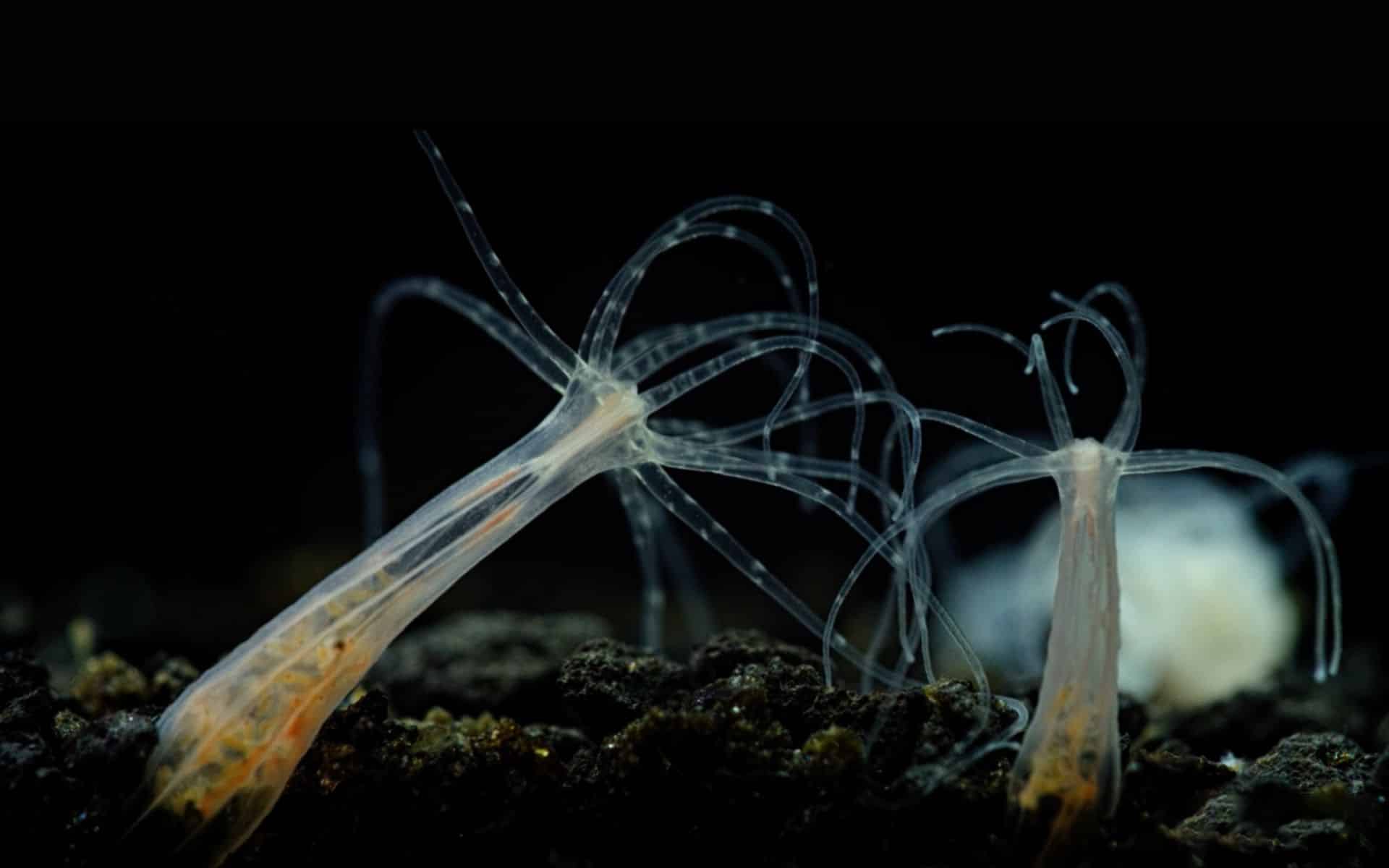
A 600-million-year-old sea anemone, capable of regenerating entire body parts and potentially bypassing aging, has been studied for its unique multipotent stem cells and key genes, offering promising insights into human aging and regenerative medicine.
Reuters withdrew a video showing Putin and Xi discussing human immortality after China's legal objections, citing misuse of footage and editorial issues, while affirming its commitment to accurate journalism amidst geopolitical tensions and military displays.
Russian President Vladimir Putin and other autocrats like Xi Jinping and Kim Jong-un are reportedly exploring advanced scientific methods, including organ transplants and gene-based medicines, to extend their lifespans and potentially achieve immortality, reflecting a long-standing human obsession with eternal life and power preservation.
During a military parade in Beijing, Xi Jinping and Vladimir Putin discussed advancements in biotechnology, including life-prolonging organ transplants and the possibility of human immortality, highlighting their countries' ambitions to challenge the global order and promote a multipolar world.
Russian President Vladimir Putin reportedly discussed with Chinese leader Xi Jinping the possibility that organ transplants could offer a path to immortality, highlighting a conversation that touches on advanced medical technologies and their potential implications.
During a military parade in Beijing, Putin and Xi Jinping were caught on a hot mic discussing the potential of organ transplants and biotechnology to achieve immortality and extend human lifespan, reflecting their interest in longevity science and their desire to maintain power. The event also highlighted China's military display and geopolitical stance.
NASA's Voyager 2 spacecraft was designed for eternal travel, with durable titanium shielding, nuclear power sources, and a legacy record, enabling it to outlast humanity and potentially drift through the galaxy for billions of years, symbolizing human resilience and curiosity beyond our lifespan.
Bryan Johnson, a proponent of extreme longevity efforts, invests heavily in treatments, supplements, and AI to extend life, but the article hints at the inevitable reality of mortality, symbolized by the rotting fruit in his kitchen. The story explores the paradox of striving for immortality while confronting human mortality.
Researcher Joao Pedro de Magalhaes suggests that understanding and reprogramming the mechanisms of ageing, such as DNA repair, could potentially extend human life expectancy to thousands of years in the future, with current progress in medicine and compounds like rapamycin offering promising avenues for longevity research.
Neuroscientist Dr. Ariel Zeleznikow-Johnston advocates for brain preservation as a means to potentially achieve immortality, arguing that current technology could allow us to pause biological processes until future medical advancements can cure terminal conditions. His book, "The Future Loves You," explores the possibility of using techniques like aldehyde-stabilised cryopreservation to preserve brain structures, with the hope of future revival through advanced technologies such as nanomedicine or mind-uploading. While controversial, Zeleznikow-Johnston believes this approach could offer a new perspective on life and death.
A study published in Nature Aging suggests that human lifespan may be nearing its biological limit, with a maximum achievable age between 115 and 120 years. While life expectancy has increased due to healthcare advancements, its growth is slowing, and immortality remains unlikely. Countries like Hong Kong and South Korea have seen life expectancy rise due to effective public health policies, while the U.S. faces declines due to issues like the opioid crisis. The focus of medical research may need to shift from extending lifespan to improving the quality of life for the elderly.
Scientists have discovered a comb jellyfish, Mnemiopsis leidyi, that can reverse its aging process by reverting from its adult form back to its larval stage, effectively "time traveling" biologically. This discovery, made by Dr. Joan J. Soto-Angel and Dr. Pawel Burkhardt, could revolutionize our understanding of life cycle plasticity and has potential implications for regenerative medicine. While this "immortality" is not yet applicable to humans, it opens new avenues for research into aging and rejuvenation.
A recent study reveals that the warty comb jelly, Mnemiopsis leidyi, can reverse its age by reverting to its larval stage after experiencing stress or trauma, such as starvation or physical injury. This de-aging process, observed by researchers Joan J. Soto-Angel and Pawel Burkhardt, highlights the jelly's unique survival mechanism and opens up potential avenues for understanding the molecular mechanisms behind reverse development, with implications for broader biological research on aging and regeneration.
Nobel Prize-winning scientist Venki Ramakrishnan discusses the science of aging and the quest for immortality in his new book, "Why We Die." Aging is the accumulation of chemical damage to cells, leading to eventual death, and human lifespan is influenced by genetics and evolutionary resource allocation. While some believe in the possibility of extending lifespan, Ramakrishnan is less optimistic about the feasibility of such interventions. He also highlights the societal costs and inequities associated with efforts to cheat aging and death, emphasizing the importance of accepting the natural cycle of life and death.