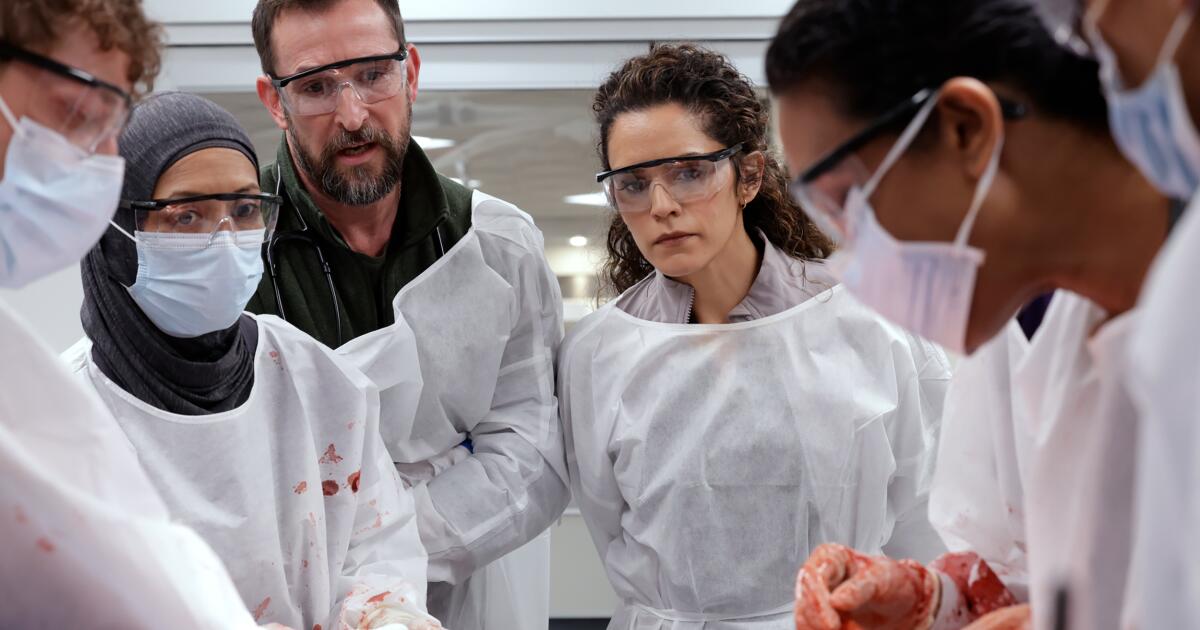
R. Scott Gemmill discusses the success and direction of 'The Pitt' Season 2, highlighting its focus on AI, healthcare costs, character development, and the show's renewal for a third season, while reflecting on the challenges of maintaining authenticity and storytelling in a medical drama.
In 2025, AI was widely adopted across various sectors including healthcare, legal, employment, education, and agriculture, transforming how services are delivered, improving efficiency, and fostering innovation worldwide.
The article highlights positive developments in 2025, including the large-scale production of compostable plastics made from sugar cane, innovative programs creating 'pop-up' wetlands to aid migratory birds, new methods to improve disagreement resolution, and advances in AI that are transforming healthcare diagnostics, all contributing to a more hopeful outlook for the year.
By 2026, advances in AI and aging science will enable precision medical forecasting, allowing for early prediction and prevention of major age-related diseases like cancer, cardiovascular, and neurodegenerative conditions through comprehensive data analysis and personalized interventions.
Pope Leo XIV emphasizes the importance of ensuring that AI in healthcare enhances human dignity and relationships, warning against technology replacing personal care and urging responsible use and international collaboration.
The article explores the scientific, cultural, and technological pursuits to extend human lifespan, discussing natural limits, the role of social connections, advances in biomedical research, and the ambitious efforts of tech billionaires aiming for immortality, while highlighting ethical and societal implications.
Doctors are increasingly using ChatGPT for second opinions in medical diagnoses, as illustrated by cases where AI correctly identified a rare disease and warned about toxic substance ingestion, but there are concerns about relying on AI for health advice due to potential risks and inaccuracies.
In a small Greek town, Dr. Thomas Tzimas exemplifies how AI is already integrated into healthcare, aiding in diagnosis, communication, and even surgery, while emphasizing the importance of setting parameters like 'temperature' to prevent AI hallucinations. His experience suggests that AI adoption in medicine is progressing even in remote areas, potentially narrowing the gap between tech haves and have-nots.
A London patient received a false diabetes diagnosis due to an AI-generated medical record error, highlighting risks and oversight challenges of AI tools in healthcare, despite their potential to improve efficiency and care.
As vaccine rates decline, old diseases like measles and polio are resurging, prompting medical schools to update training with AI tools and new modules to better identify and treat these illnesses, highlighting the importance of vaccination and vigilance in public health.
Originally Published 7 months ago — by Hacker News
The article discusses the challenges in diagnosing and treating endometriosis, highlighting systemic issues like doctor shortages, systemic inefficiencies, and gender biases, while suggesting that AI and increased healthcare funding could improve patient outcomes and diagnosis accuracy.
Eric Topol's book 'Super Agers' emphasizes that a strong immune system, personalized medical testing, nourishing the gut-brain axis, optimal sleep, and cautious use of AI are key strategies for aging healthily and feeling youthful into old age.
Britain plans a £2bn increase in defense spending, focusing on drones and military tactics, while also expanding the army and submarine fleet. Meanwhile, a renewed search for Madeleine McCann is underway in Portugal, and UK political debates include AI advancements and religious freedom issues. The Israel-Gaza conflict continues to impact global headlines.
A study by Mass General Brigham suggests that 22.8% of Americans may have long COVID, significantly higher than the CDC's 6.9% estimate. Using an AI tool, researchers analyzed electronic records from nearly 300,000 patients to identify symptoms like fatigue and brain fog. The study, published in Med, highlights the challenges in diagnosing long COVID, especially in marginalized communities. The AI tool aims to improve diagnosis and treatment, with potential applications for other conditions like diabetes and COPD.
A new study suggests that long COVID may be more prevalent than previously thought, with an AI algorithm estimating that 22.8% of COVID-19 patients meet the criteria for long COVID, compared to the CDC's 6.9% estimate. The research, conducted by a team at Mass General Brigham, used AI to analyze electronic health records, but some experts question the findings due to the challenges in defining long COVID. The study highlights disparities in diagnosis and aims to refine treatment plans and further research on the condition.