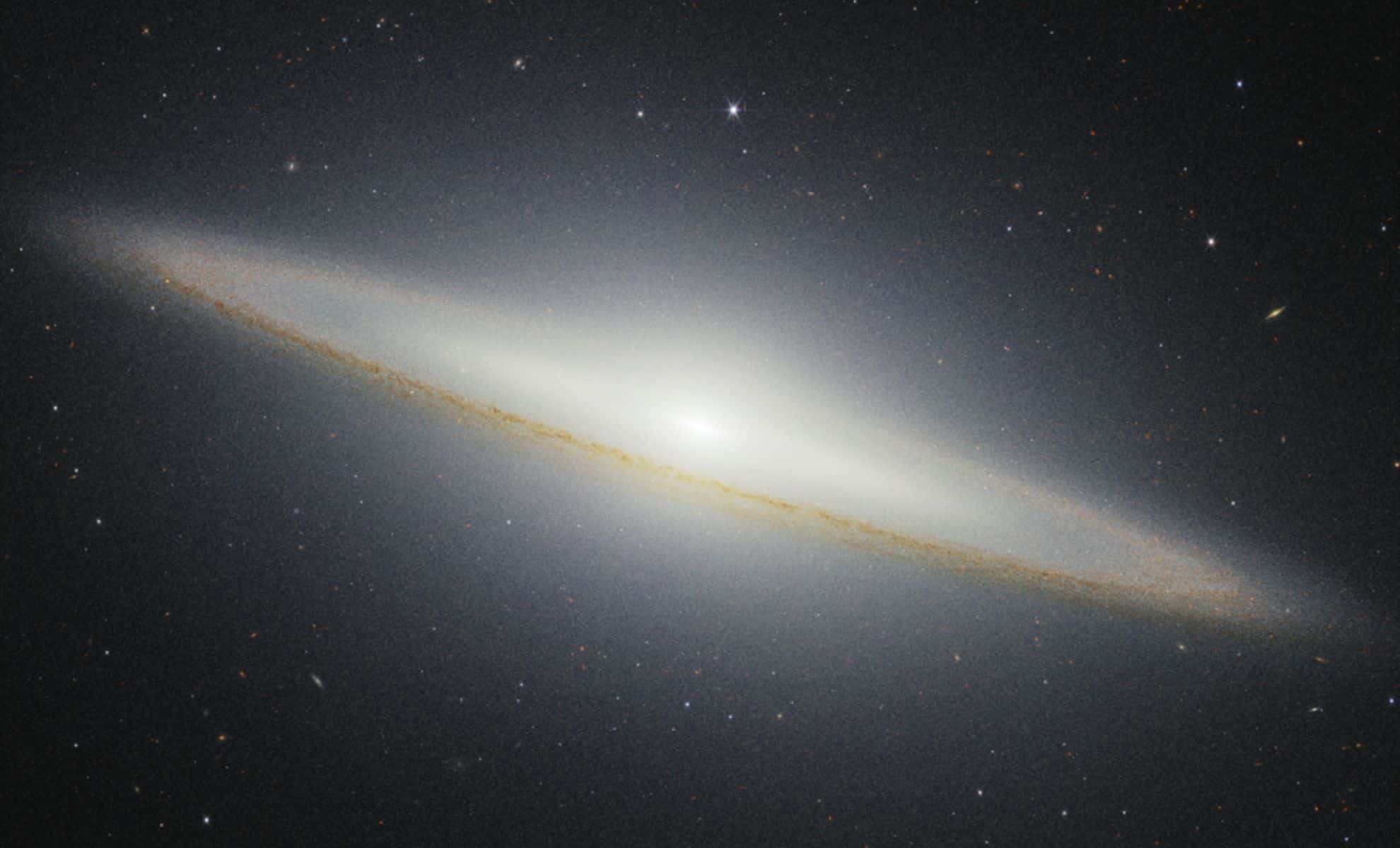
NASA's James Webb Space Telescope has captured detailed near-infrared images of the Sombrero Galaxy, revealing its dense star bulge, dust lanes, and evidence of a turbulent past involving galaxy mergers, while also showcasing individual stars and distant galaxies in unprecedented detail.
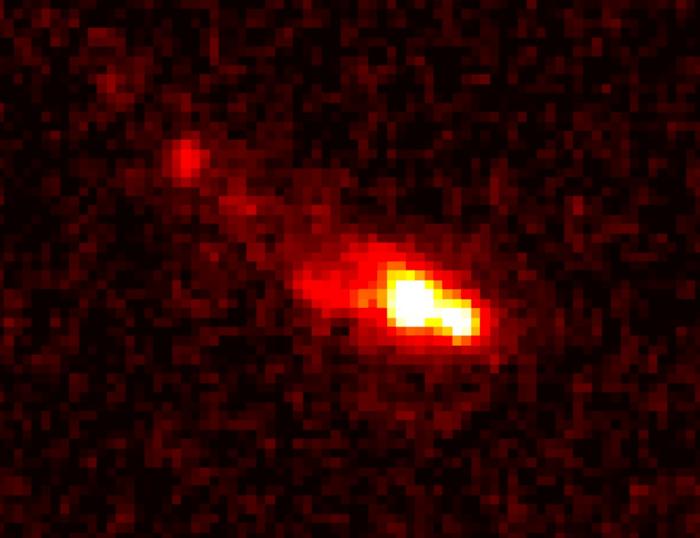
Using the Webb telescope, astronomers have discovered a massive galactic merger, Gz9p3, occurring about half a million years after the Big Bang, making it one of the earliest and most distant mergers ever observed. This finding challenges previous understanding of how quickly galaxies formed in the early Universe and suggests that stars in those galaxies evolved faster than expected. The merger, still in progress, has provided insights into the formation of new stars and the dynamics of galactic mergers in the early Universe, prompting astronomers to reevaluate their models of star birth and galaxy formation.
A new study suggests that the bar shape of the Milky Way, a barred spiral galaxy, may have been caused by a collision with another galaxy, specifically the Gaia Sausage, which occurred about 8-11 billion years ago. Computer simulations show that without this collision, there could have been a 2 billion-year delay in the formation of the bar. While the study doesn't prove a direct causal relationship, it strongly implies that the collision triggered the formation of the Milky Way's bar structure. Further research and sky surveys will help us better understand the dynamics of our galactic structure.
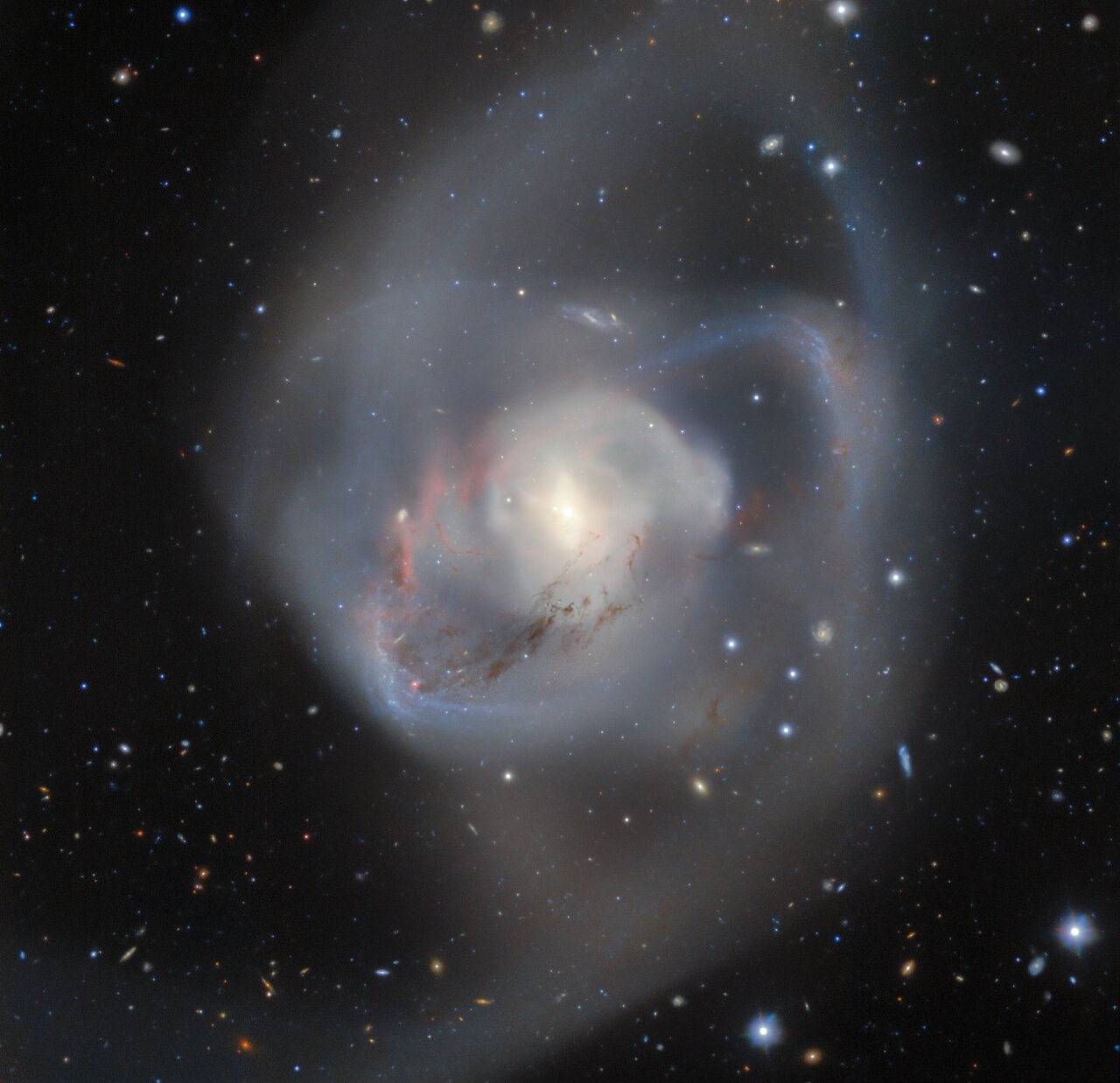
A new picture captured by the Gemini South Observatory shows NGC 7727, a peculiar galaxy in Aquarius, which provides a glimpse of what the future merger between the Milky Way and Andromeda galaxies might look like. The collision that created NGC 7727 began over a billion years ago and resulted in the formation of two black holes, which hold the records for being the closest supermassive black hole pair to Earth and the closest together pair ever seen. Astronomers estimate that these black holes will merge in about 250 million years, emitting violent ripples of gravitational waves. The merger will also lead to the formation of bright tidal tails filled with young stars and active stellar nurseries. While the Sun and the solar system will likely be flung into a different region of the galaxy, Earth is not in danger of being destroyed.
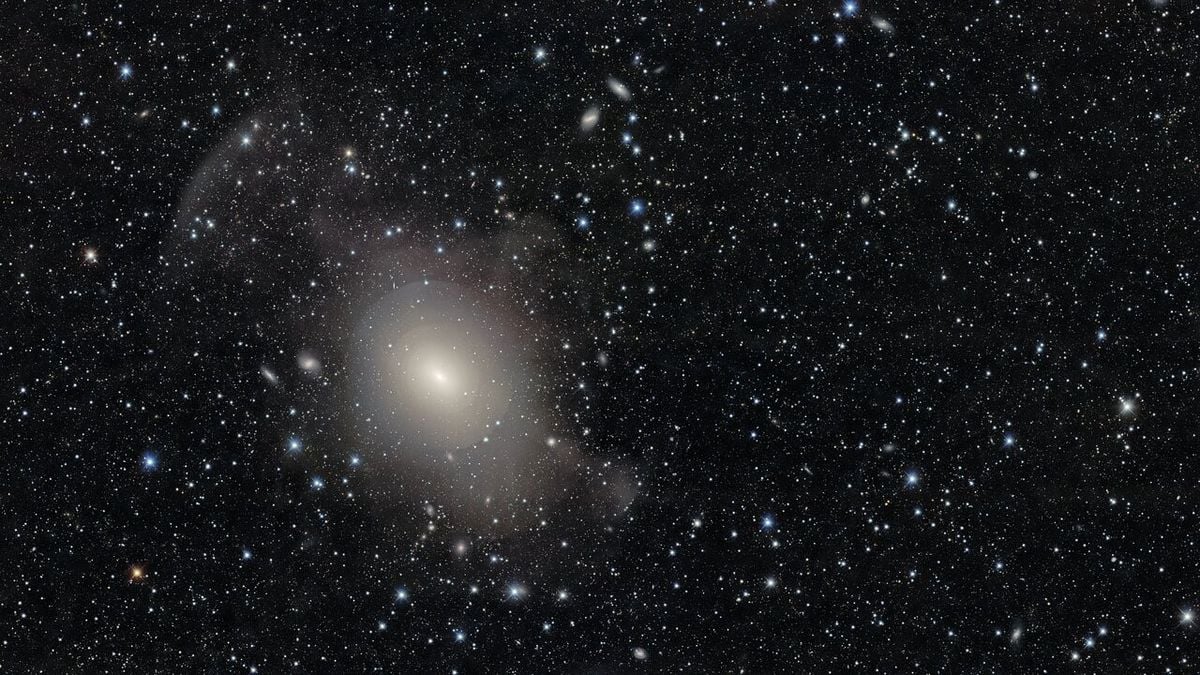
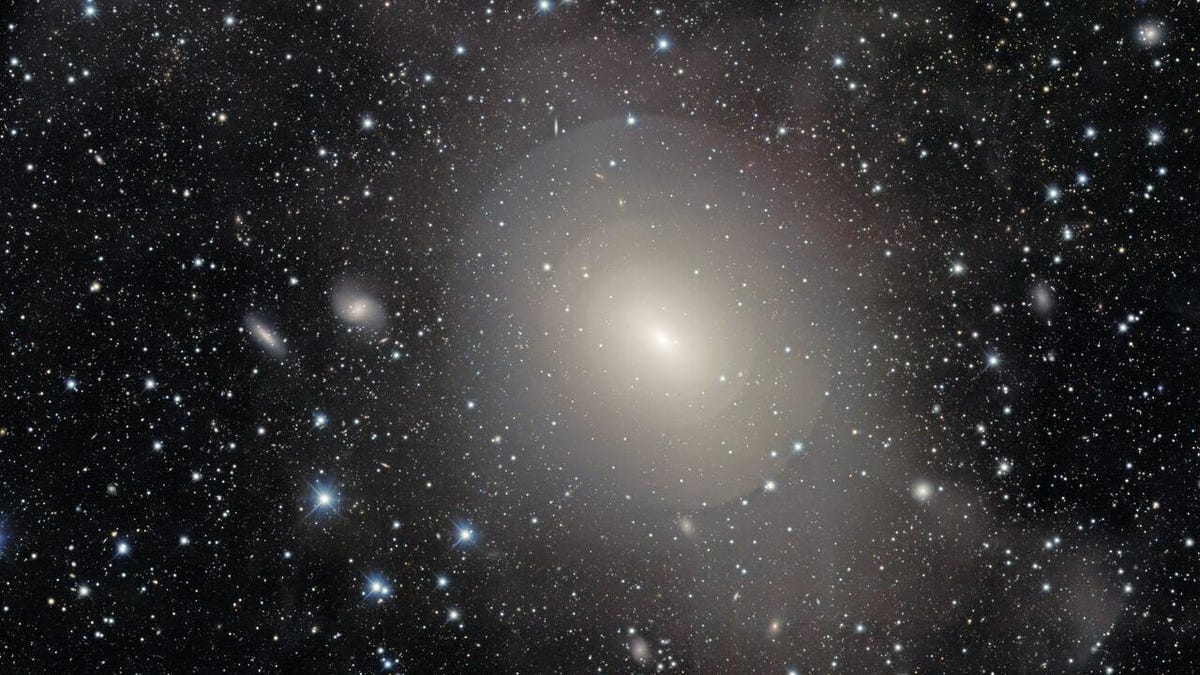
The Dark Energy Camera has captured an image of the shell galaxy NGC 3923, revealing its symmetrical, onion-like layers that extend 150,000 light-years into space. These layers are believed to have formed from a galactic merger, where a larger galaxy absorbed stars from a smaller spiral galaxy. NGC 3923 is exceptional due to its large number of shells and the ratio between the radii of the outermost and innermost shells. The image also shows other galaxies and a gravitational lens, which allows astronomers to study the nature of dark matter and the expansion of the universe.
The Dark Energy Camera has captured an image of the shell galaxy NGC 3923, revealing its onion-like layers of concentric rings within its galactic halo. Shell galaxies make up 10% of all elliptical galaxies and NGC 3923 is about 50% larger than the Milky Way, with the largest known shells. The image also features a gravitational lens around the galaxy cluster PLCK G287.0+32.9, which bends light and magnifies distant objects. Gravitational lenses have been used to spot ancient light and provide evidence for dark matter.
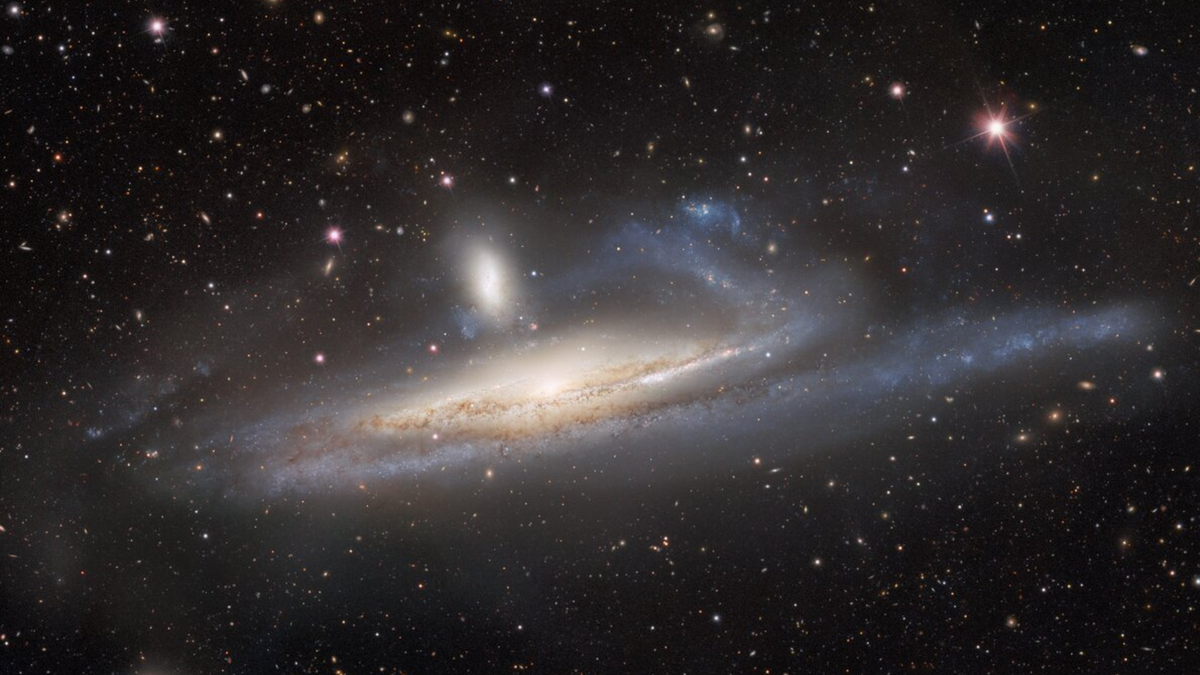
The Dark Energy Camera (DECam) has captured a stunning image of the spiral galaxy NGC 1532 and its smaller companion, the dwarf galaxy NGC 1531, engaged in a gravitational tug of war. This image showcases the process of galactic growth and evolution as larger galaxies absorb and merge with smaller ones. The DECam's wide-field imaging capabilities provide detailed views of these interactions, revealing the distortions in the spiral arms and the bridges of stellar matter between the galaxies. This cosmic dance of gravitational influence triggers bursts of star formation and offers insights into the future merger of the Milky Way with the Andromeda Galaxy.
Astronomers have captured an image of a cosmic tug of war between a massive galaxy, NGC 1532, and its smaller dwarf galaxy neighbor, NGC 1531. The smaller galaxy is being dragged towards its larger counterpart and will eventually merge with it, resembling an act of cosmic cannibalism. The image, taken by the Dark Energy Camera, reveals the distorted spiral arms of NGC 1532 and a bridge of gas and dust connecting the two galaxies. This observation provides insights into how galaxies grow by merging with smaller companions. The Milky Way, too, has cannibalized smaller dwarf galaxies and is currently surrounded by satellite dwarf galaxies, some of which are being digested. In the future, the Milky Way is expected to merge with the Andromeda galaxy, resulting in the merger of their central supermassive black holes.
The Dark Energy Camera (DECam) has captured an image of the spiral galaxy NGC 1532 engaged in a lopsided tug of war with its smaller neighbor, the dwarf galaxy NGC 1531. This interaction showcases the mutual gravitational influences of a massive- and dwarf-galaxy merger, providing a glimpse into the early stages of galactic growth. The image reveals distorted spiral arms, plumes of gas and dust, and bursts of star formation triggered by the gravitational forces between the two galaxies. DECam's wide-field imaging capabilities and sensitivity make it a valuable tool for studying galactic interactions and tracing the influence of dark matter on galaxies.
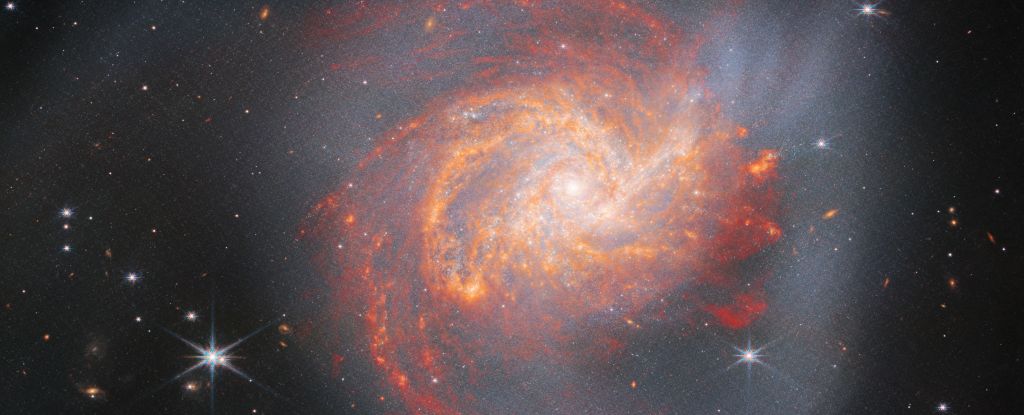
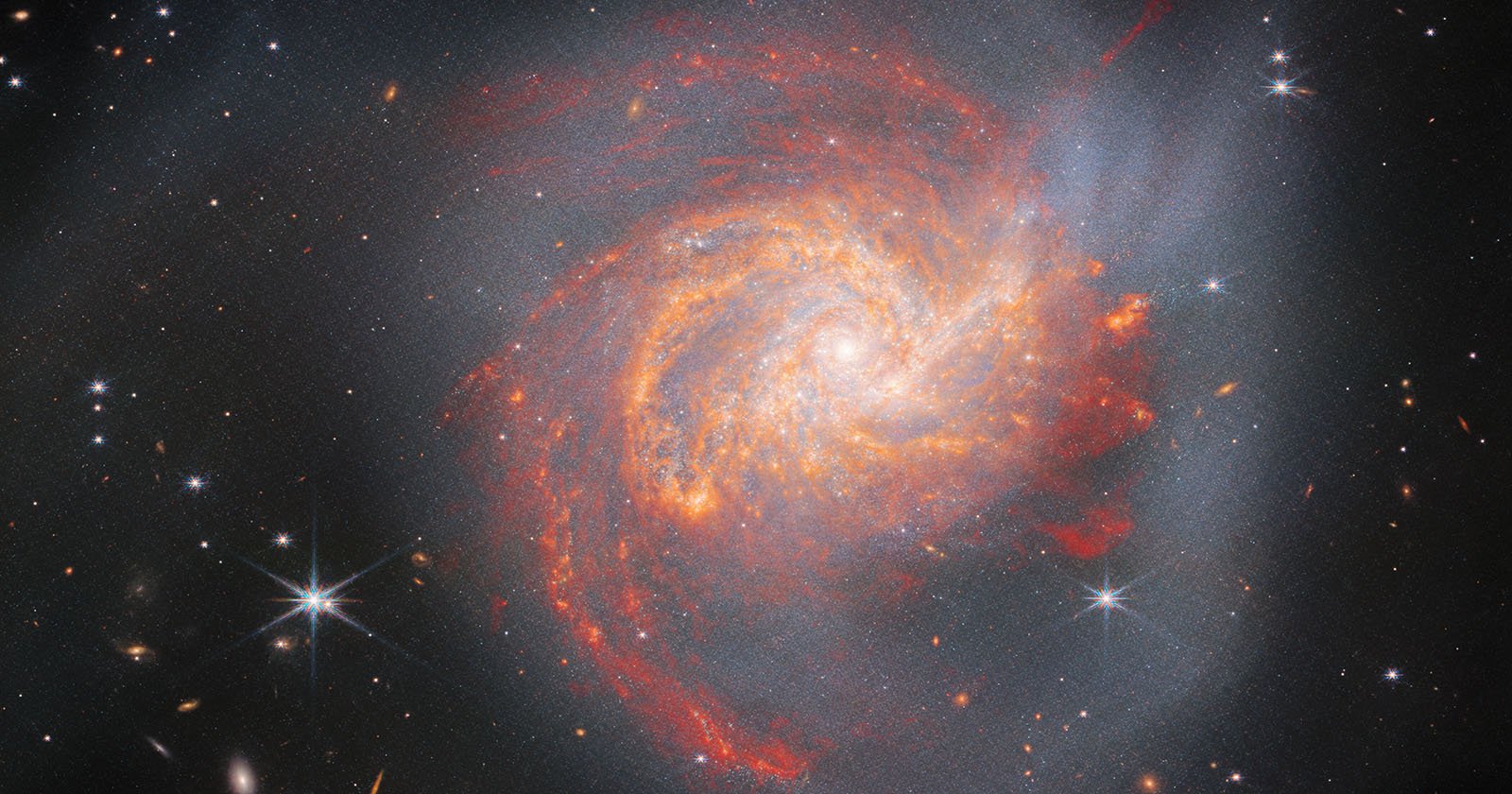
The James Webb Space Telescope (JWST) has captured a stunning image of NGC 3256, a spiral galaxy with a violent past resulting from a collision and merger between two galaxies. The image reveals long tails of material pulled out during the gravitational dance of the galaxies, as well as intense star formation. JWST's infrared capabilities allow it to detect star formation obscured by dust clouds, making NGC 3256 a starburst galaxy. The galaxy is still in the process of merging and provides a unique opportunity to study the evolution of colossal galactic mergers.
The James Webb Space Telescope captured a stunning image of the aftermath of a galactic collision in the peculiar galaxy NGC 3256, located 120 million light-years away. The collision, which occurred around 500 million years ago, triggered a burst of star formation, resulting in vibrant red and orange regions in the galaxy. The image, taken in infrared wavelengths, reveals details that the Hubble Space Telescope cannot see. The study of galactic mergers provides insights into stellar populations, star formations, galactic growth, and the mass of supermassive black holes at the center of galaxies.
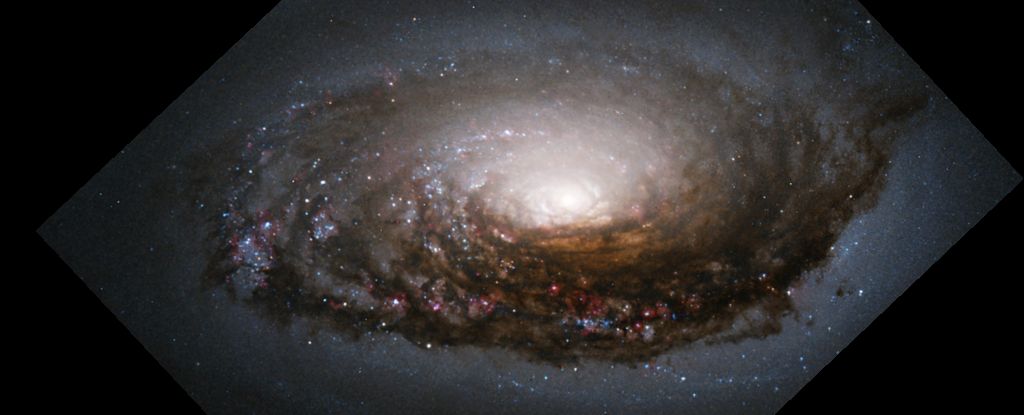
Astronomers have discovered that the outer disk of the Evil Eye galaxy, also known as M64, came from a smaller, gas-rich satellite dwarf galaxy that M64 recently cannibalized and wrapped itself in. The discovery could give us a glimpse into the future of our own Milky Way galaxy, as estimates of the mass and contents of the shredded satellite suggest that it was remarkably similar to the Small Magellanic Cloud, a Milky Way satellite dwarf galaxy that will one day be subsumed into the larger mass. The findings suggest that M64's unique counter-rotating disk was a recent merger with a gas-rich satellite very similar to the Small Magellanic Cloud.
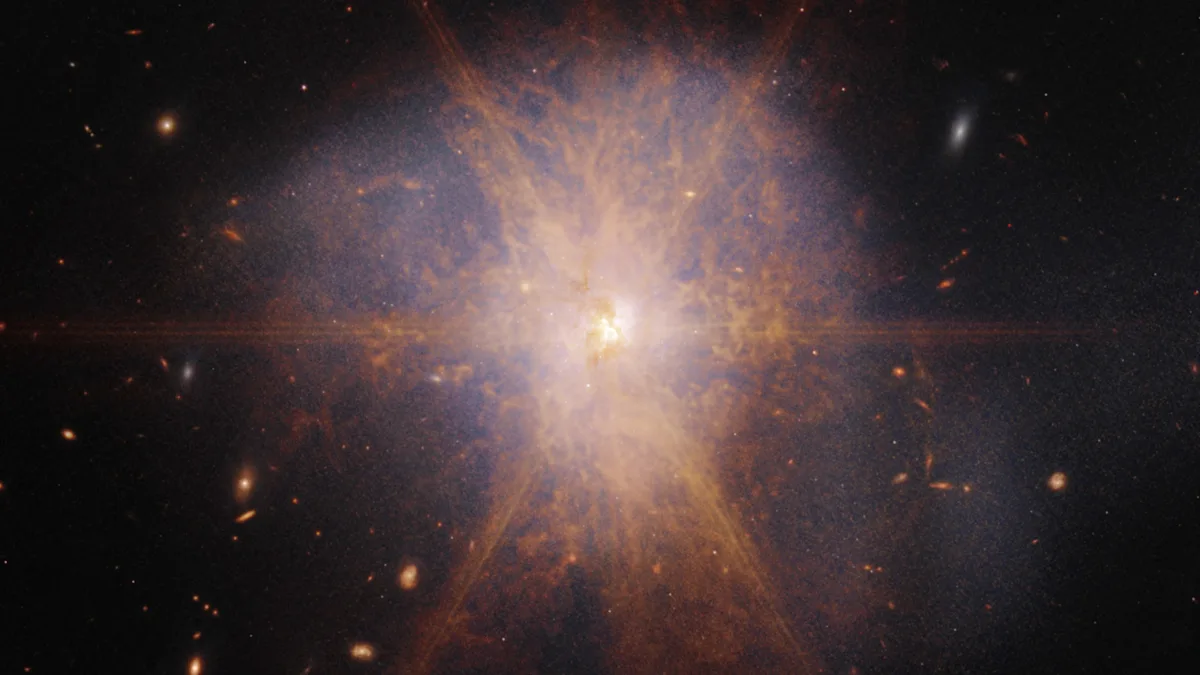
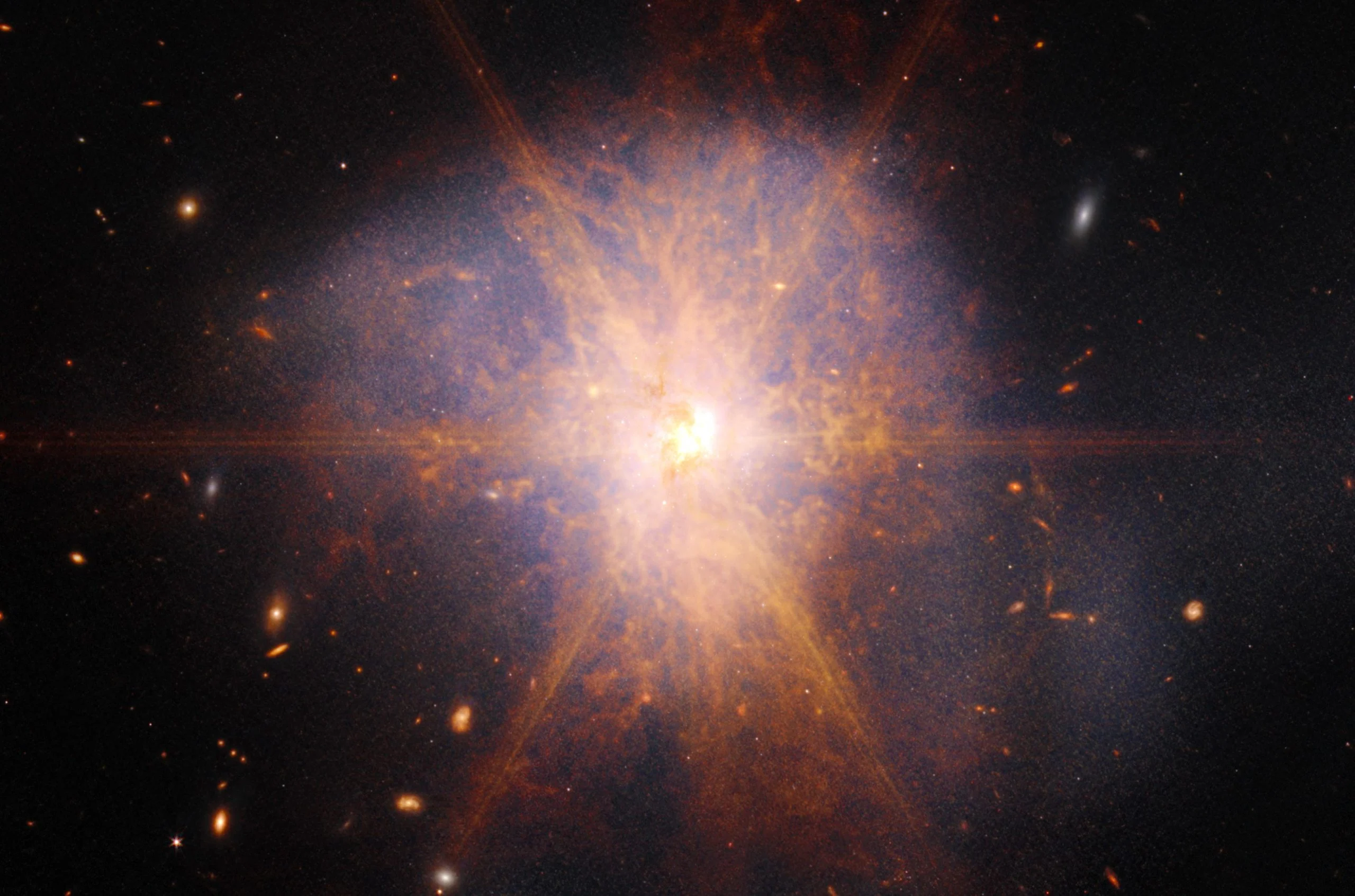
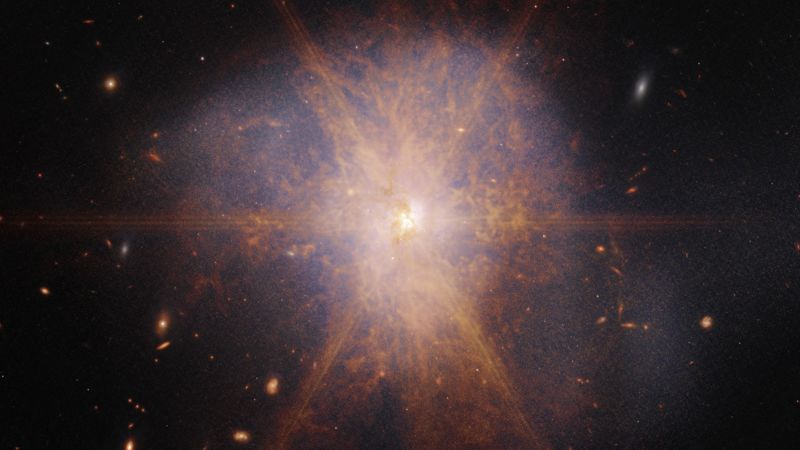
The James Webb space telescope has captured an image of the galactic merger ARP 220, which is currently shining with the light of a trillion suns, making it much brighter than our own Milky Way galaxy. The merger is located over 250 million light-years away and most likely began some 700 million years ago, sparking an outrageous burst of star formation. The image showcases dense gas, including a region that is 5,000 light-year across, where over 200 colossal star clusters reside. The galactic merger ARP 220 will undoubtedly provide researchers with helpful information about these galactic evolutions.
The James Webb Space Telescope captured a stunning image of Arp 220, an ultra-luminous infrared galaxy formed by the merging of two spiral galaxies. The collision sparked a massive star formation, with about 200 huge star clusters in a compact, dusty region containing gas equal to the entire Milky Way. The telescope revealed the parent galaxies’ cores, each with a rotating, star-forming ring responsible for the striking infrared light. The image also shows faint tidal tails and organic material as evidence of the ongoing galactic merger.
The James Webb Space Telescope has captured a bright burst of star formation triggered by two spiral galaxies colliding into one another, known collectively as Arp 220. The colliding galaxies generated an infrared glow that contains the light of more than 1 trillion suns. The scintillating light show from the ultra-luminous infrared galaxy is the spiked starburst feature at the center of the new Webb image. The telescope’s Near-Infrared Camera and Mid-Infrared Instrument captured the composite image. Arp 220 is located 250 million light-years away in the Serpens constellation, and it’s the brightest of the three galactic mergers closest to Earth.