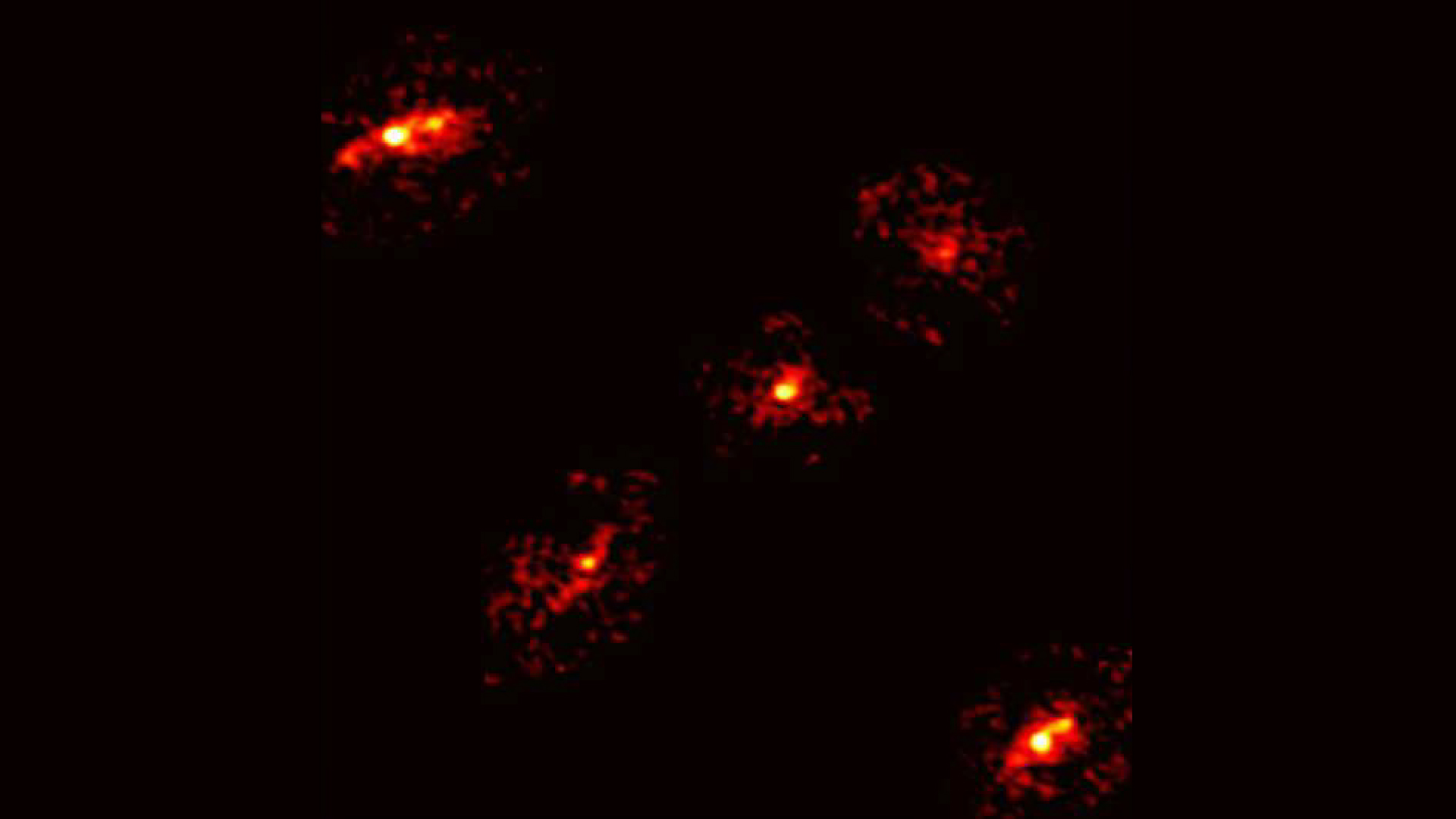
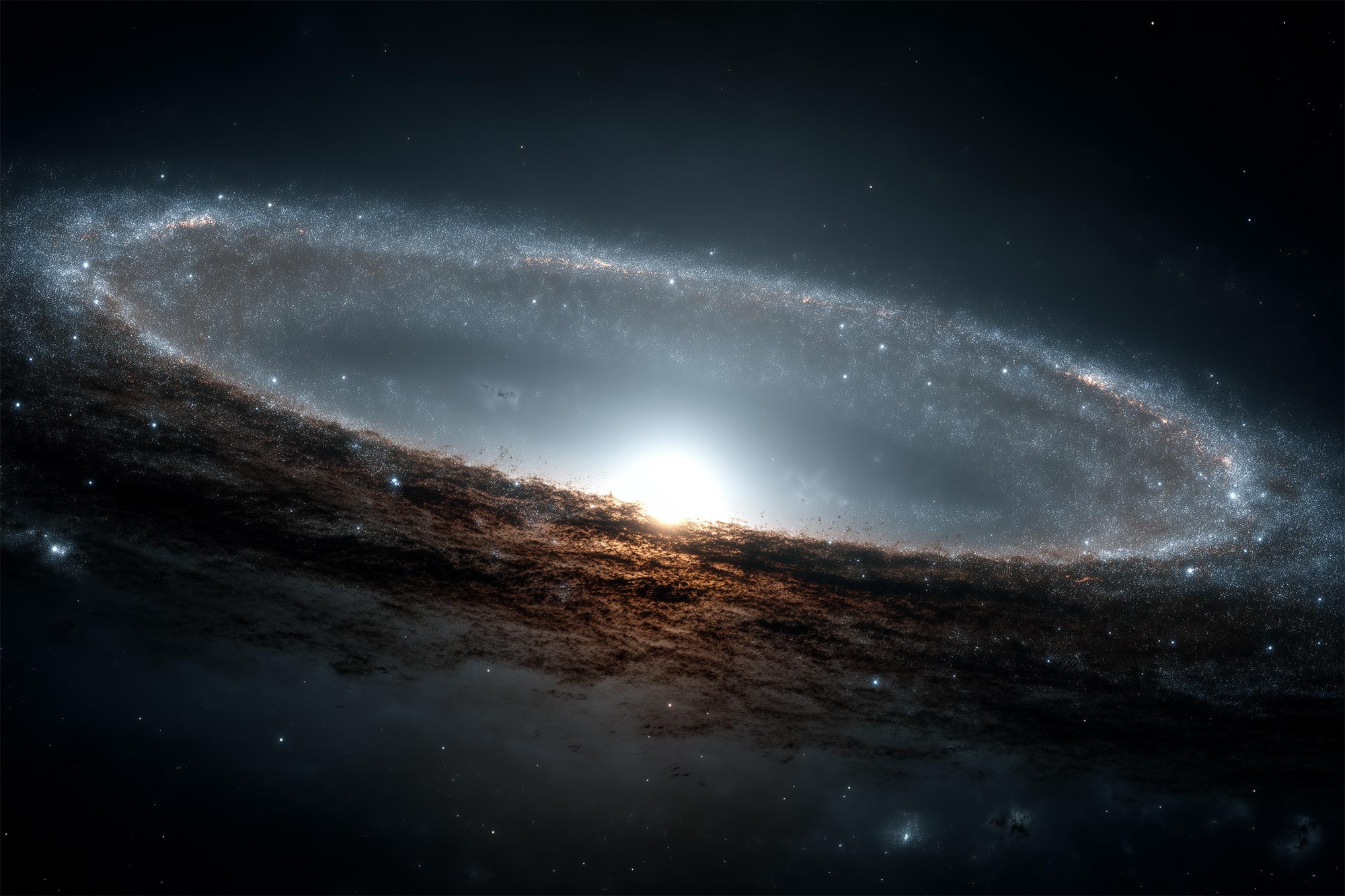
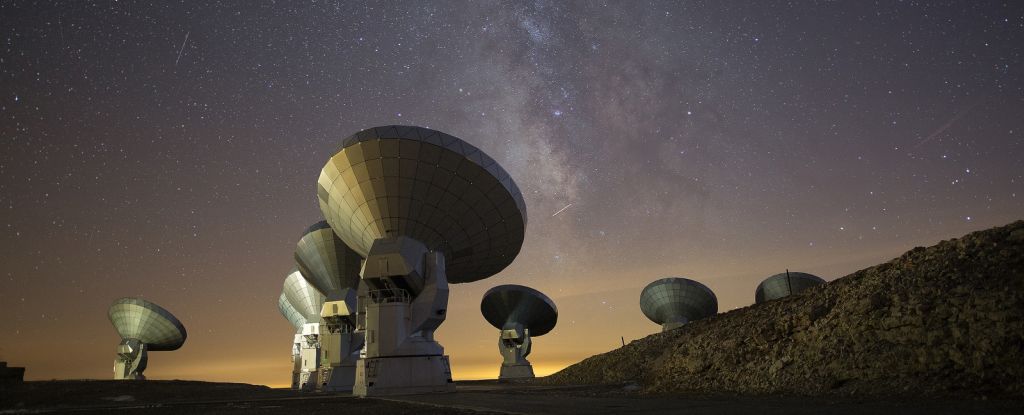
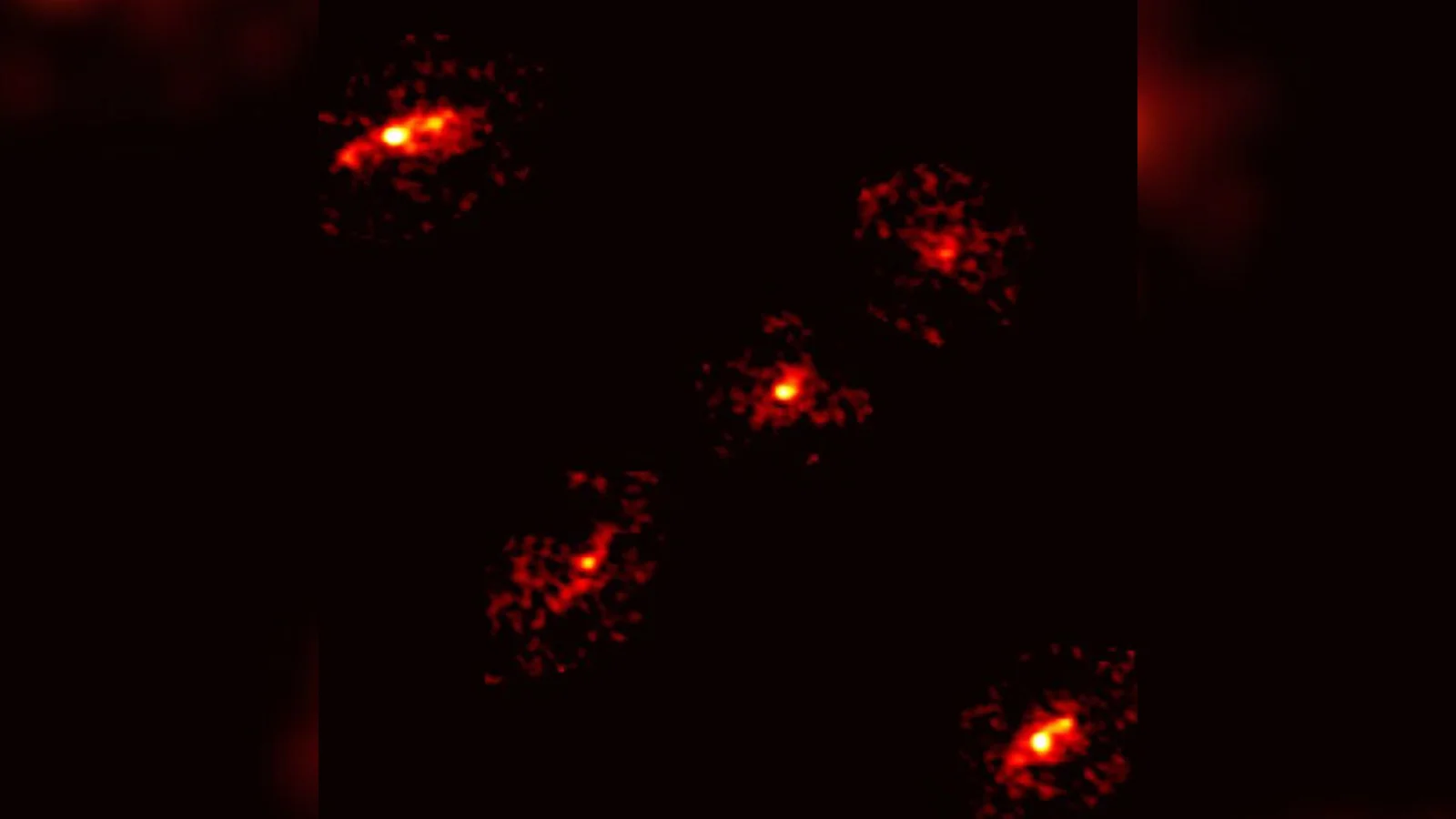
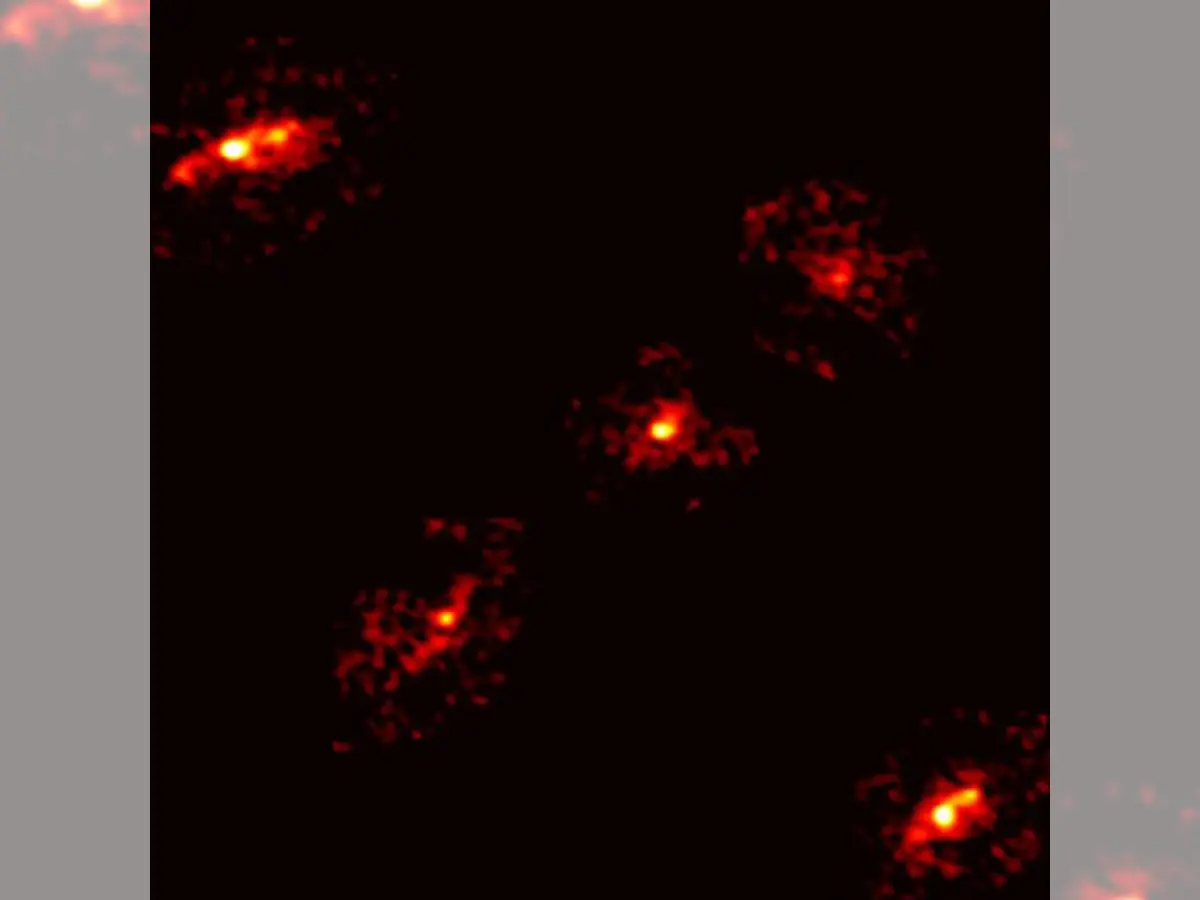
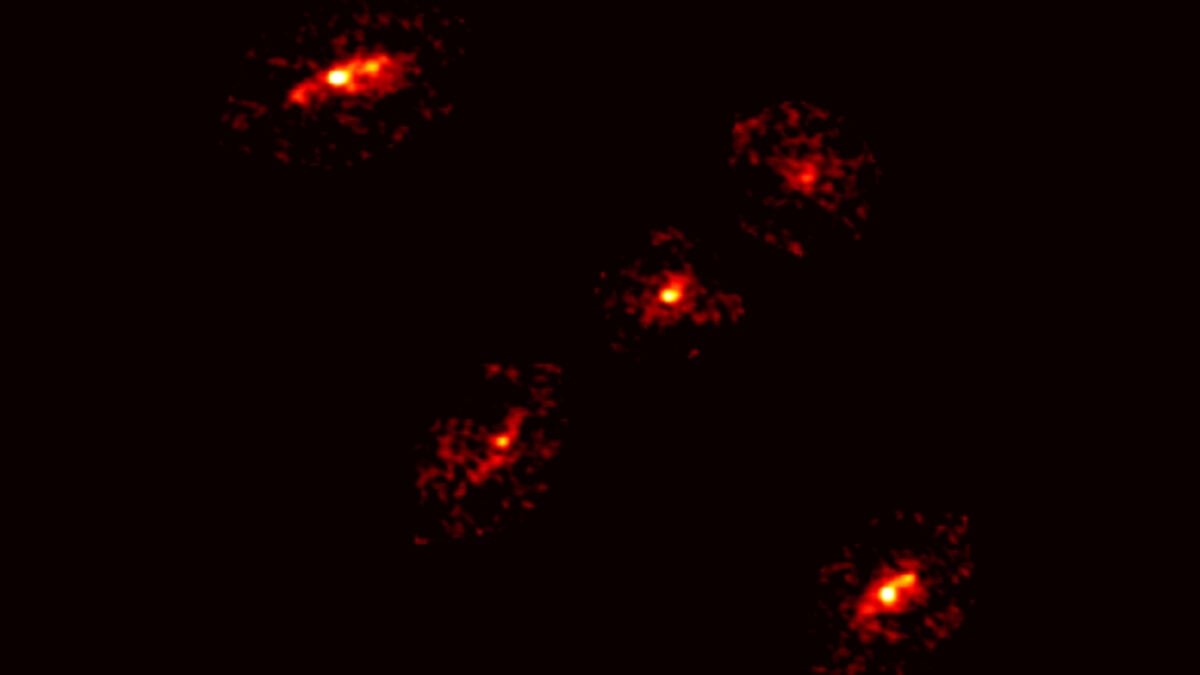
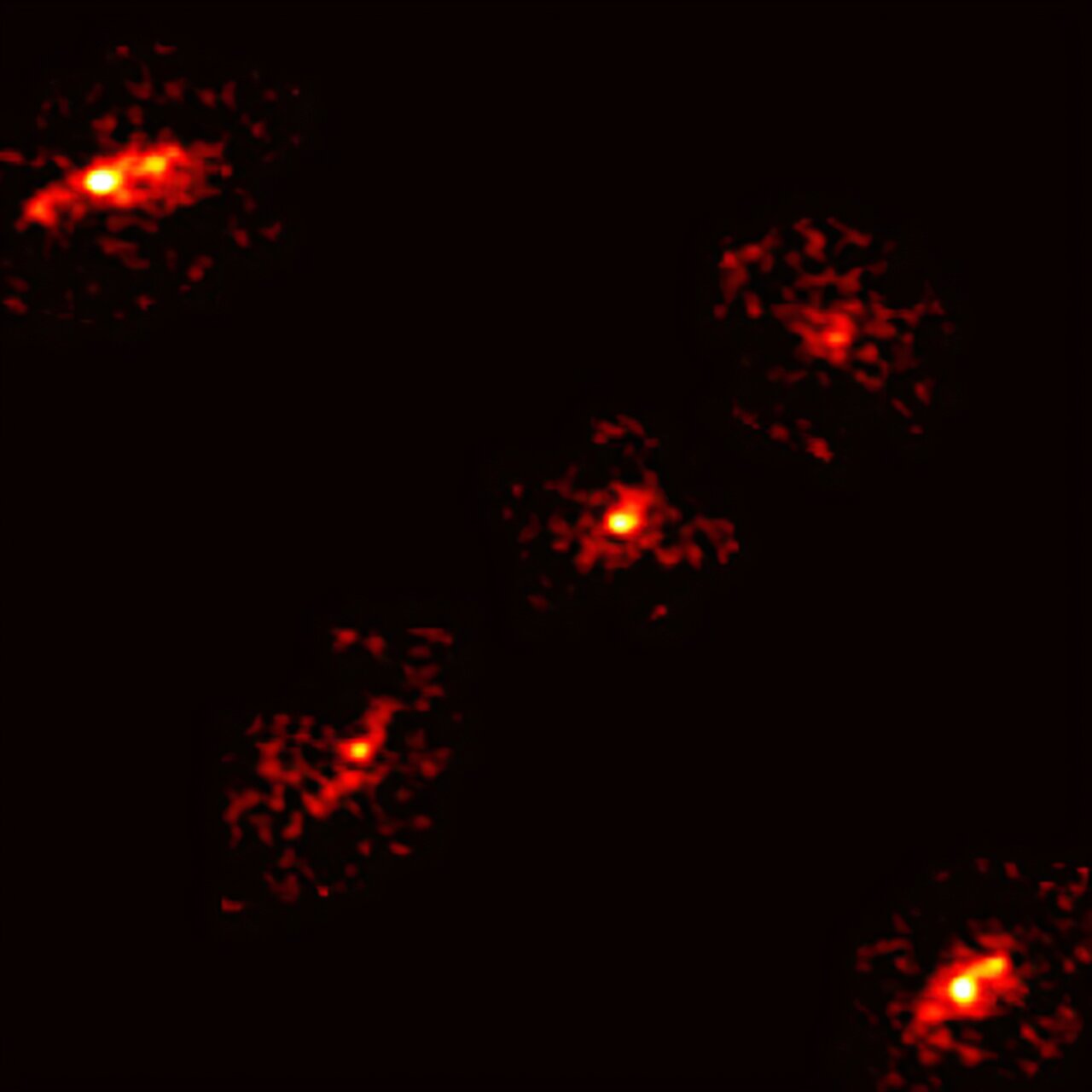
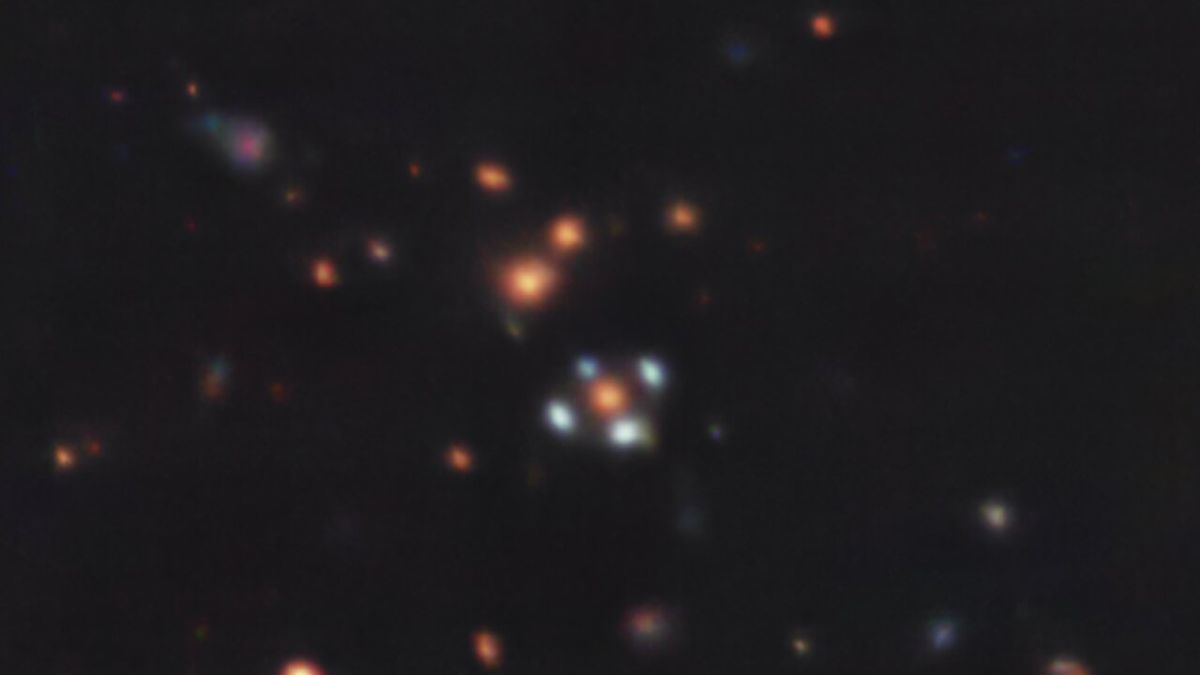
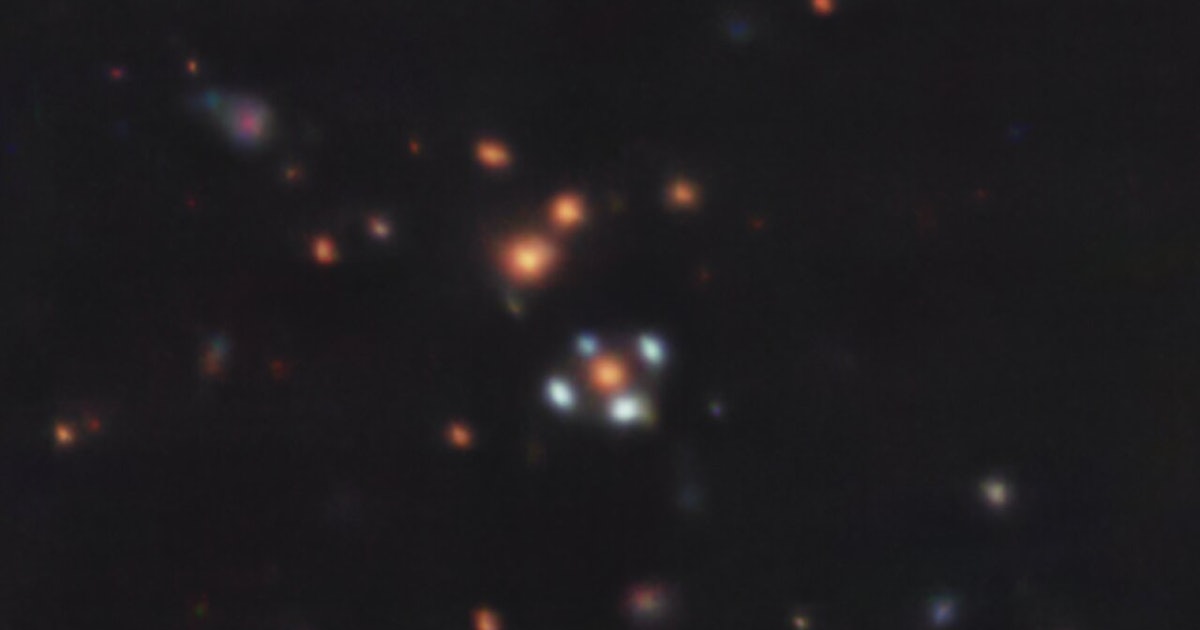
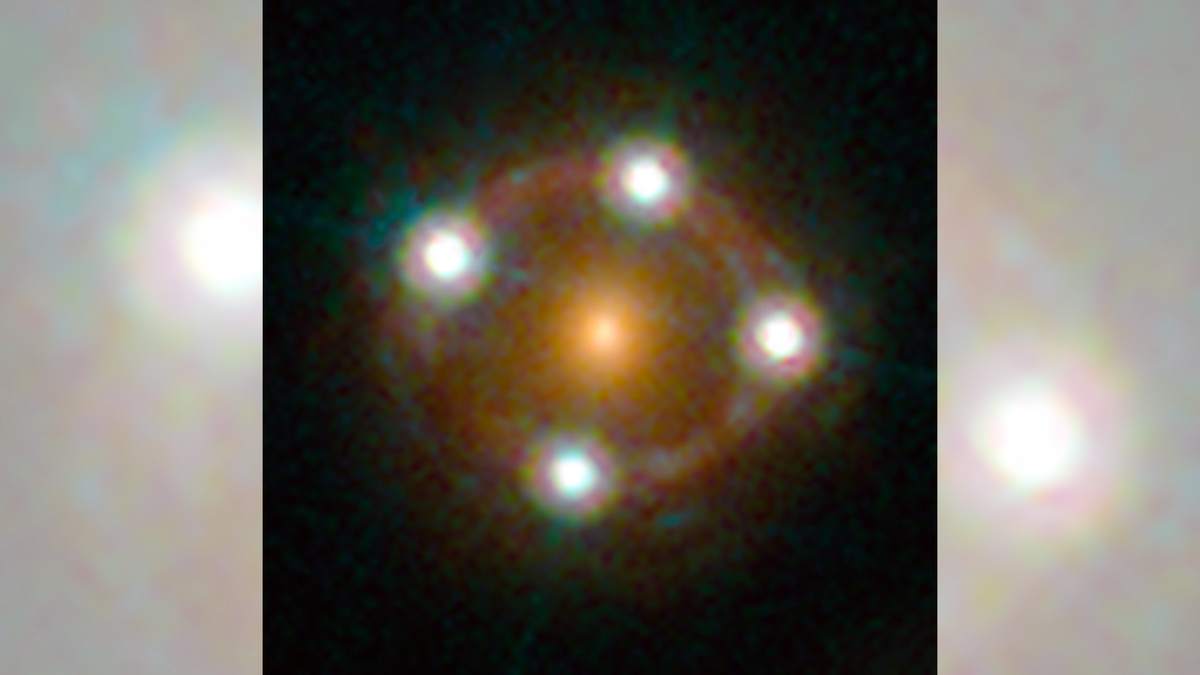
Scientists observed a rare Einstein cross with an unexpected fifth light point, which, through computer modeling, was attributed to a large dark matter halo bending the light from galaxy HerS-3, offering new insights into dark matter's role in the universe.
Astronomers discovered an unusual fifth image in a rare Einstein Cross, revealing a massive, hidden dark matter halo that bends light and provides a unique opportunity to study dark matter and distant galaxies in detail.
Astronomers observed a rare Einstein cross, HerS-3, with an unusual fifth central image caused by a dark matter halo, providing new insights into dark matter distribution and the structure of distant galaxies.
Astronomers observed a rare Einstein Cross with five images instead of four, which they explained by modeling a massive, invisible dark matter halo that bends light from a distant galaxy, revealing insights into dark matter's role in the universe.
Scientists discovered a unique Einstein Cross with an unexpected fifth image at its center, likely caused by a dark matter halo, providing new insights into dark matter's role in cosmic structures.
Astronomers discovered an unusual Einstein Cross with a fifth, unexplained image caused by a massive dark matter halo, revealing new insights into dark matter and gravitational lensing, and highlighting the universe's hidden structures.
Astronomers have discovered a rare Einstein Cross with five images instead of four, revealing a hidden dark matter halo through advanced computer modeling, providing new insights into dark matter's role in the universe.
The European Southern Observatory's Very Large Telescope has captured evidence of an "Einstein Cross," a phenomenon predicted by Albert Einstein but believed to be unobservable. The Einstein Cross occurs when gravitational lensing, the object being observed, and the viewer's perspective align perfectly, resulting in a mirroring effect that makes it appear as if multiple objects are surrounding each other. This discovery confirms the existence of the Einstein Cross and highlights the importance of proving theories in our understanding of the universe.
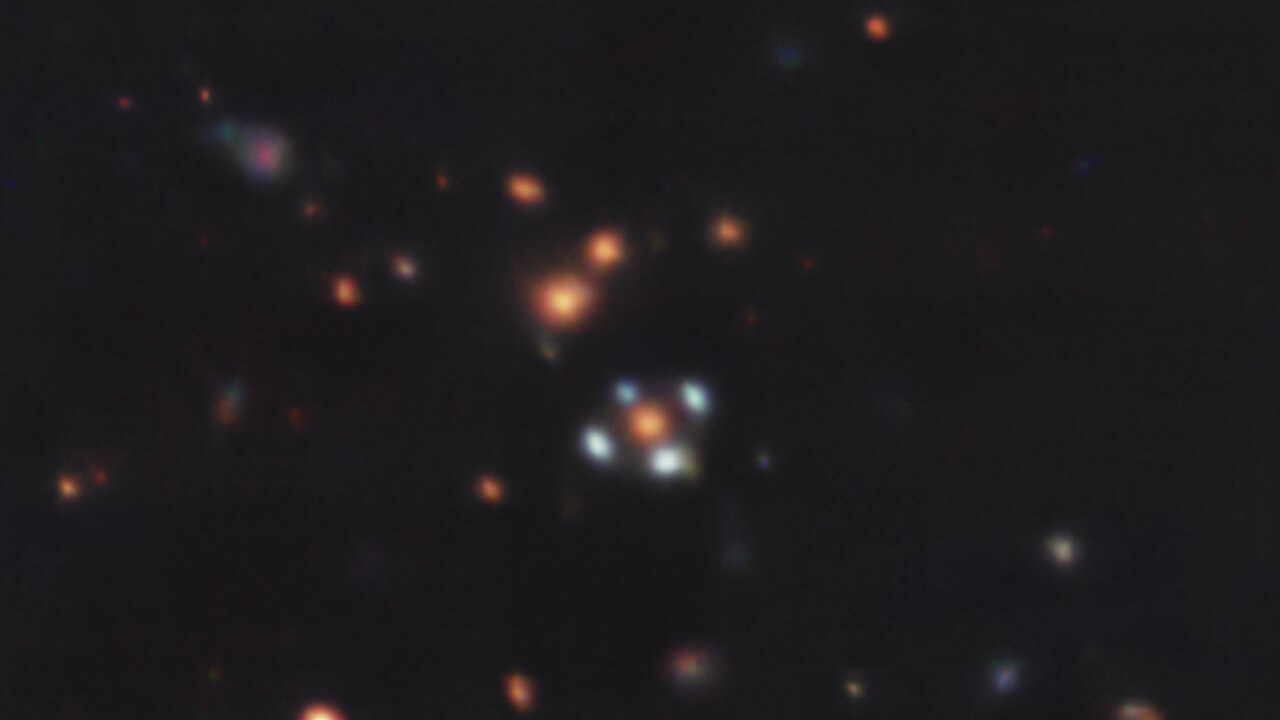
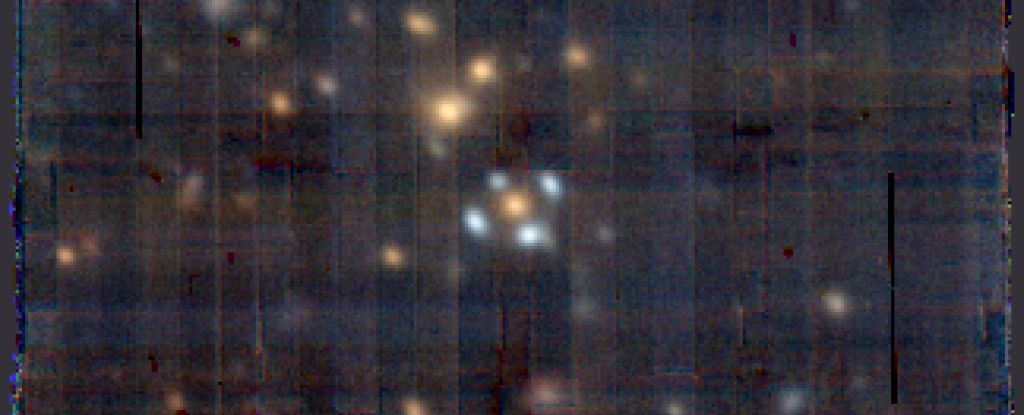
Astronomers using the European Southern Observatory's Very Large Telescope (VLT) have captured an image of a distant galaxy surrounded by four light-blue "petals," forming an Einstein Cross. The central galaxy acts as a gravitational lens, bending and magnifying light from a hidden galaxy behind it, creating duplicate images. The foreground galaxy splits the light from the background galaxy into four smudges of blue light, revealing clues about galaxy formation in the early universe. The observations were made using the Multi Unit Spectroscopic Explorer (MUSE) instrument on the VLT.
Astronomers have observed a rare phenomenon called an Einstein cross, which was predicted by Albert Einstein but thought to be impossible to see. The phenomenon occurs when a massive object bends the fabric of spacetime, causing light to follow curved paths around it. In this case, four images of the same galaxy were projected by a gravitational lens, allowing astronomers to study galaxies that would normally be too faint and far away to see. The discovery provides valuable information about the ages and chemical makeup of the galaxies involved. This finding challenges Einstein's belief that such perfect alignments would never be observed, and more of these formations are expected to be discovered in the future with advanced telescopes.
Astronomers have discovered a rare "Einstein cross" phenomenon, where a foreground elliptical galaxy has split and magnified light from a background galaxy. This pattern, predicted by Albert Einstein, shows four smudges of blue light haloed around the orange of the foreground galaxy. The background light likely comes from a quasar, a young galaxy with a supermassive black hole. The discovery will help scientists better understand the universe, as Einstein's theory of general relativity describes how massive objects warp space-time. Einstein rings, like this one, can enhance details in distant galaxies and act as a cosmic scale for gauging the masses of galaxies and black holes.
Astronomers have captured a stunning image of an "Einstein cross," where a foreground galaxy warps and splits the light from a background galaxy. This rare phenomenon, predicted by Albert Einstein's theory of general relativity, shows four smudges of blue light haloed around the orange of the foreground galaxy. The background light likely comes from a quasar, a young galaxy with a supermassive black hole. Einstein rings, like this one, provide valuable insights into the universe, allowing astronomers to study distant galaxies, gauge the masses of objects, and even detect dark entities such as black holes and exoplanets.
Astronomers have discovered a rare "Einstein Cross" using the Dark Energy Spectroscopic Instrument (DESI) at Kitt Peak National Observatory. The lensing system, called DESI-253.2534+26.8843, consists of a foreground elliptical galaxy that magnifies four blue images of a background galaxy, forming a perfect Einstein Cross pattern. This discovery provides valuable insights into the early universe and demonstrates the capabilities of the MUSE instrument and computer modeling in studying gravitational lensing systems. The team aims to use these systems as cosmological tools and plans to search for supernovae in hundreds of gravitational lens systems to measure Hubble's constant.
Astronomers have discovered a stunning example of an Einstein cross, a rare phenomenon where the curvature of space-time around a massive foreground object splits the light from a more distant galaxy into four points resembling a cross. The confirmation and analysis of this gravitational lens, named DESI-253.2534+26.8843, provide valuable insights into the properties of lensed galaxies in the distant Universe. Using modeling techniques, researchers were able to calculate the magnification and effects of the lens, demonstrating a significant improvement in speed and accuracy. This discovery contributes to our understanding of the warping of space-time and the study of distant celestial objects.
An international team of researchers has discovered a distant supernova, named SN Zwicky, using gravitational lensing. The supernova, located 4 billion light-years away, is a type Ia supernova, which is used as a "standard candle" to measure distances in space. The discovery was made at the Zwicky Transient Facility (ZTF) in California, and further observations at the Keck Observatory and the Hubble Space Telescope confirmed the presence of four distinct images of SN Zwicky. The arrival time of the four images at Earth was almost simultaneous, despite traveling along different gravitational paths. Future observations using NASA's James Webb Space Telescope are planned to gain a clearer view of this phenomenon.