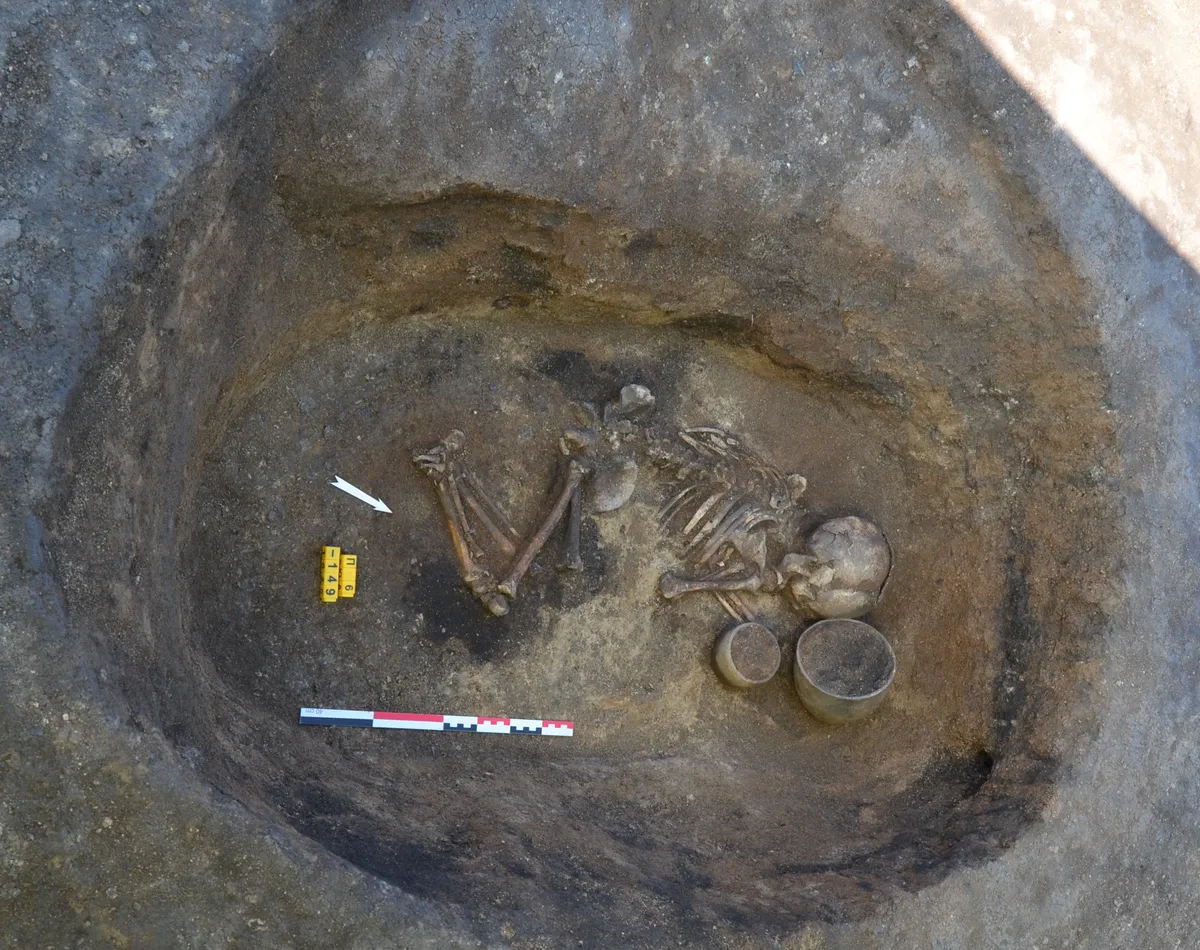
Researchers discovered 3,000-5,000-year-old wolf remains on a remote Swedish island, revealing complex prehistoric interactions with humans, including possible management or domestication, challenging traditional views of human-wolf relationships.
The World Health Organization and partners have announced the first recipients of nearly $2 million in grants from the International Pathogen Surveillance Network to enhance pathogen genomic surveillance in low- and middle-income countries. The funding aims to improve understanding of disease threats by analyzing the genetic codes of pathogens, aiding in the development of vaccines and treatments, and enabling faster public health responses. Supported by foundations like the Bill & Melinda Gates Foundation, the initiative seeks to expand equitable access to genomic tools globally.
A new study on magic mushrooms reveals that the Psilocybe genus, containing psychoactive compounds psilocybin and psilocin, originated around the time of the dinosaur extinction, challenging previous assumptions about its age. The study's genomic analysis of 52 Psilocybe specimens, including 39 never-before-sequenced species, sheds light on the evolution and potential therapeutic uses of these fungi. Researchers also identified two distinct gene orders within the gene cluster that produces psilocybin, indicating two independent acquisitions of the compound in the genus's evolutionary history. The study's findings open new avenues for understanding the therapeutic potential and evolutionary history of magic mushrooms.
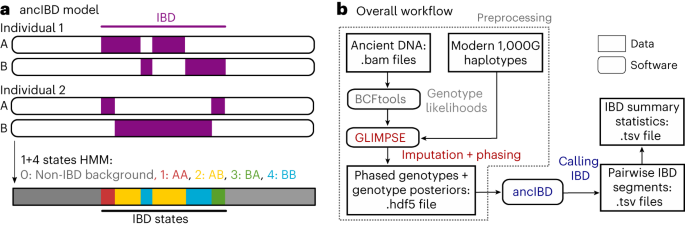
Researchers have developed a method called ancIBD to accurately detect identity-by-descent (IBD) segments in human ancient DNA (aDNA) data. IBD segments are long genomic segments that are co-inherited from a recent common ancestor and can provide valuable information about genealogical connections and demographic history. The ancIBD method utilizes phased genotype likelihoods imputed by GLIMPSE and a hidden Markov model (HMM) to infer IBD blocks. The researchers evaluated the performance of ancIBD on simulated and downsampled aDNA data, demonstrating its robustness in detecting IBD segments even at low coverage depths. They also used ancIBD to identify biological relatives and uncover genealogical connections among ancient Eurasian individuals, shedding light on ancient migration patterns and population interactions.
Paleogeneticists have analyzed the genomes of a Bronze Age family living 3,800 years ago in the Southern Urals, revealing a flexible approach to marriage. The oldest brother had two wives, while the other brothers likely lived monogamously. Most women buried in the family's burial mound were immigrants, indicating female marriage mobility to prevent inbreeding. The genomic diversity of the prehistoric women was higher than that of the men, suggesting they came from a larger area and were not related to each other. The study provides insights into the family structure and marriage practices of this ancient society.
Scientists have discovered new clues about the origin of complex life forms, including humans, plants, and animals. Research suggests that all eukaryotes, which are complex life forms with nuclei in their cells, can trace their roots back to a common ancestor among a group of microbes called the Asgard archaea. The Asgard archaea evolved over 2 billion years ago and appear to be the progenitors of eukaryotic organisms. This finding sheds light on the evolutionary step from microbes to eukaryotes and provides insights into the transition that led to the development of complex life on Earth.
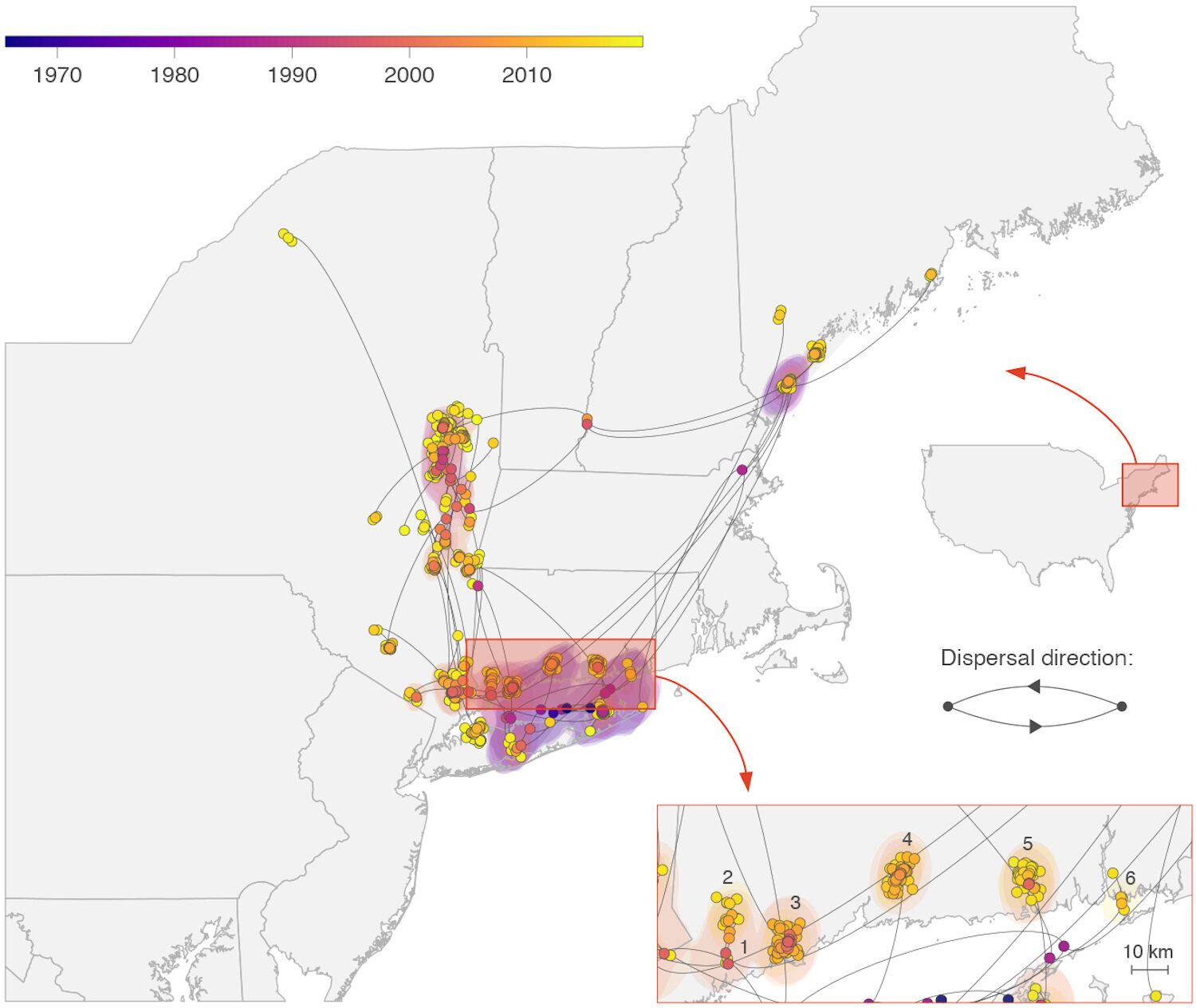
A new study by the Yale School of Public Health finds that the tick-borne Powassan virus is being transmitted in concentrated community clusters throughout New England. The virus now appears to be moving slowly or staying put, simmering in specific hotspots, and evolving independently in each one. This new information could help health officials to target hotspots—where Powassan is more likely to spill over into humans—for education and eradication efforts.
East Asian people are more likely to develop diffuse stomach cancer due to their higher likelihood of alcohol intolerance, according to a new study. The study collected cells from nearly 1,500 stomach cancer patients in Japan, China, South Korea, Singapore, and the U.S. and is the first extensive genomic analysis of gastric cancer. Populations in East Asia have long been disproportionately affected by stomach cancer compared to those of Western countries. Due to its relative infrequency in the West compared to other types, the United States does not routinely screen for gastric cancer.