
Decoding Ancient Bronze Age Family Structures: Insights from Paleogenetic Analysis
TL;DR Summary
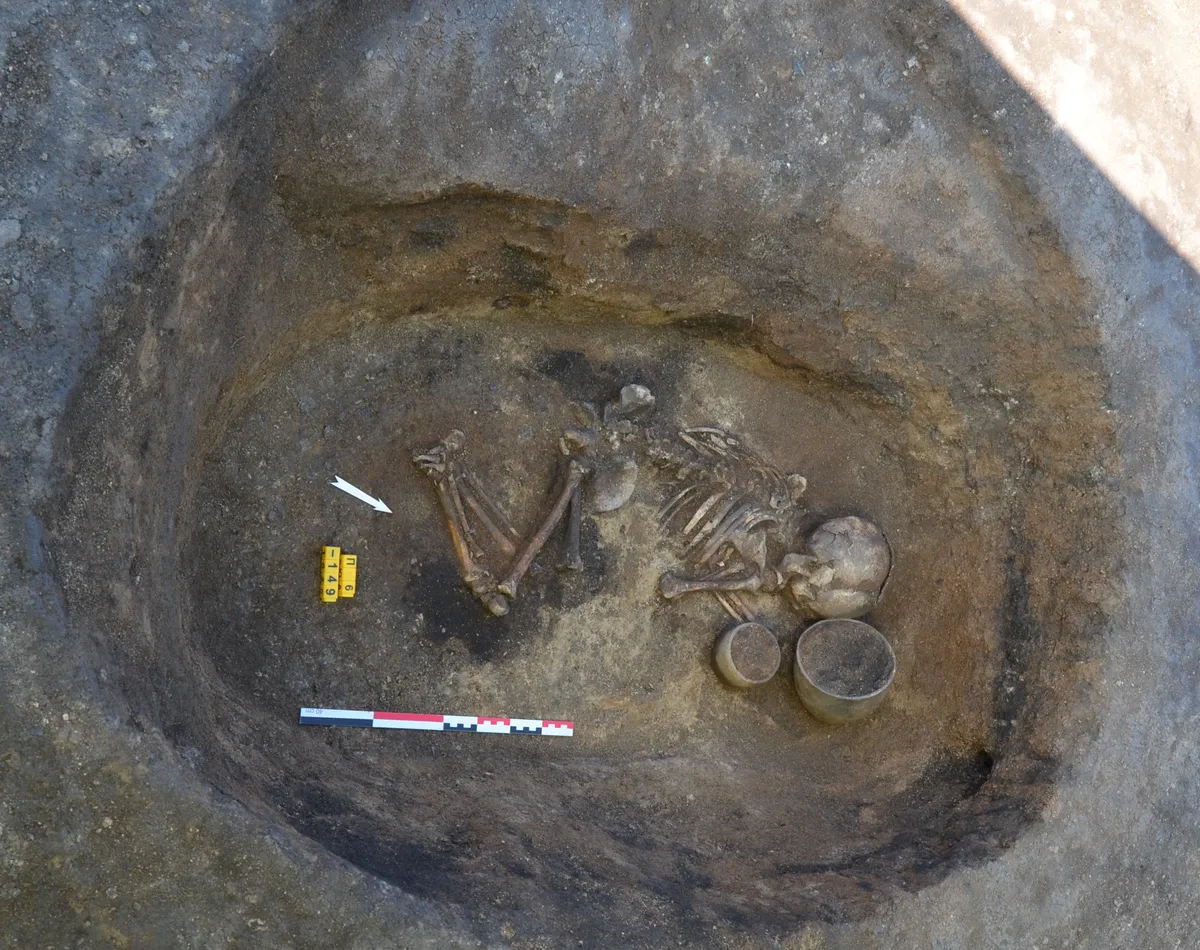
Paleogeneticists have analyzed the genomes of a Bronze Age family living 3,800 years ago in the Southern Urals, revealing a flexible approach to marriage. The oldest brother had two wives, while the other brothers likely lived monogamously. Most women buried in the family's burial mound were immigrants, indicating female marriage mobility to prevent inbreeding. The genomic diversity of the prehistoric women was higher than that of the men, suggesting they came from a larger area and were not related to each other. The study provides insights into the family structure and marriage practices of this ancient society.
Reading Insights
Total Reads
0
Unique Readers
6
Time Saved
3 min
vs 4 min read
Condensed
87%
736 → 97 words
Want the full story? Read the original article
Read on arkeonews