California's new Safe Homes grants program, starting in 2026, aims to assist low- and middle-income homeowners in high wildfire risk areas with funding for fire-resistant roofs and creating ember-resistant zones, with details on eligibility and funding still being finalized.
The U.S. Department of Education has awarded a record $256 million in Education Innovation and Research grants to improve literacy, with a focus on evidence-based instruction, expanding education choice, and empowering states, especially in rural areas, marking a significant increase in state-led initiatives and innovative approaches.
A federal judge ordered the Trump administration to restore $500 million in federal grants to UCLA, ruling that the government violated procedures by not providing specific reasons for suspending the funds, which were initially frozen over allegations related to civil rights and antisemitism.
The Education Department has redirected grants towards charter schools and other priorities of the Trump administration, reflecting a shift in funding focus.
President Donald Trump signed an executive order to curb wasteful federal grantmaking, increase oversight, and ensure taxpayer dollars fund projects that benefit Americans, while eliminating grants supporting controversial or harmful initiatives.
The Trump administration is planning to cancel $7 billion in federal grants for the Solar for All program, aimed at helping low- and moderate-income families install solar panels, escalating efforts to recover climate funds awarded under Biden's climate law, which has already seen significant grant cancellations leading to legal disputes.
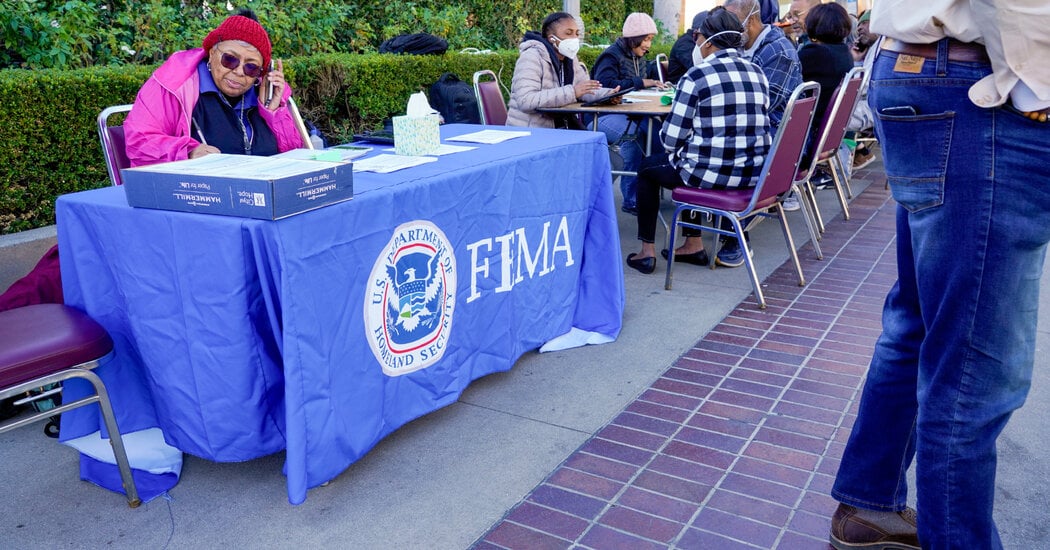
The Trump administration's FEMA will deny grants to states and cities that boycott Israeli companies, linking federal funding eligibility to policies against Israeli business relations, potentially affecting over $1.9 billion in emergency funds, though the move may be largely symbolic as few jurisdictions have such policies.
The Trump administration has delayed or may cancel approximately $140 million in federal grants intended for fentanyl overdose response efforts, causing concern among public health officials about setbacks in combating the opioid crisis, with potential impacts including program shutdowns and increased overdose deaths.
The Trump administration has temporarily withheld approximately $169 million in federal funds from North Carolina public schools pending a review of how the money is spent, citing concerns over misuse and a broader federal investigation into grant programs supporting various educational initiatives. The funds, which support teacher training, after-school programs, and services for immigrant and special needs students, are crucial for many districts, with some officials urging immediate release to avoid disruptions. The review has raised concerns among educators and organizations about potential impacts on student services and community programs.
A federal judge ruled that the EPA's termination of $600 million in environmental justice grants was unlawful, affirming that the agency exceeded its authority by ending funds designated for low-income and communities of color, and emphasizing that Congress intended these funds for environmental justice efforts.
The World Health Organization and partners have announced the first recipients of nearly $2 million in grants from the International Pathogen Surveillance Network to enhance pathogen genomic surveillance in low- and middle-income countries. The funding aims to improve understanding of disease threats by analyzing the genetic codes of pathogens, aiding in the development of vaccines and treatments, and enabling faster public health responses. Supported by foundations like the Bill & Melinda Gates Foundation, the initiative seeks to expand equitable access to genomic tools globally.
The U.S. government has reduced the grant amount initially promised to Intel for its chip manufacturing projects due to the company's recent operational setbacks. This decision reflects concerns over Intel's ability to meet project milestones and deliver on its commitments in the semiconductor industry.
Micron Technology Inc. is set to receive over $6 billion in grants from the Commerce Department to support domestic factory projects, as part of a push to bring semiconductor production back to the US. The announcement, expected next week, will also include loans as part of the award package, with the total value of the loans yet to be determined.
The Biden administration has awarded Samsung up to $6.4 billion in grants to support the construction of a new chip manufacturing hub in Taylor, Texas, and the expansion of an existing site in nearby Austin. This initiative is part of a larger effort to bolster domestic production of cutting-edge semiconductors and is funded by the CHIPS Act, which aims to strengthen the U.S. supply of semiconductors. The grants will help create a U.S. hub for the development and production of leading-edge semiconductors, with Samsung also planning to build a research and development facility and an advanced factory for packaging semiconductors in Taylor.
The US Department of Transportation is allocating nearly $830 million in grants to 80 projects across 39 states and territories to bolster infrastructure against climate change, including refurbishing bridges, expanding evacuation routes, and protecting coastal infrastructure. The funding, made available through the Bipartisan Infrastructure Law, aims to address the intensifying risks posed by climate change to the nation's transportation infrastructure, with a focus on resilience and adaptation. This initiative reflects a broader effort to invest in infrastructure that can withstand the impacts of climate change and extreme weather events.