A 2022 meta-analysis suggests that individuals with blood type A have a modestly higher risk of early-onset ischemic stroke, especially under age 60, due to factors like higher clotting protein levels, but lifestyle and other health factors play a more significant role in stroke risk. Maintaining healthy habits can help mitigate overall risk.

A study published in Science Advances suggests that a baby's sex is influenced by family-specific factors, maternal age, and genetics, challenging the notion that it is purely random, with some families more likely to have children of the same sex than expected by chance.
Alcohol use disorder affects over 10% of Americans, with rising death rates and significant links to mental health issues and genetics; despite its prevalence, most affected individuals do not receive adequate treatment, highlighting a critical public health challenge.
Alcohol use disorder affects over 10% of Americans, with rising death rates and significant links to mental health and genetics; despite its prevalence, most affected individuals do not receive adequate treatment, highlighting a critical public health issue.
A new study from the University of Michigan suggests that having children can positively impact a person's lifespan, with two children providing the greatest health benefit. The research, which analyzed data from 276,000 individuals in the UK, found that having children was associated with a higher likelihood of surviving to the age of 76. The study also revealed that having fewer or more children could actually lower a person's lifespan. The researchers suggested that the social interactions and sense of purpose that come with parenting contribute to the longevity advantage. Additionally, the study supported an evolutionary theory that genetic mutations promoting reproduction may shorten lifespan. However, the authors noted that genetic factors play a minor role compared to environmental factors in determining lifespan.
A recent analysis of data from the PRECISION-ALS project has identified genetic and clinical factors that can influence the progression of amyotrophic lateral sclerosis (ALS). Factors such as C9ORF72 genetic mutations, bulbar-onset disease, and faster functional declines were associated with shorter survival times. Variations were observed among different centers in the timing of interventions like feeding tube placement and noninvasive ventilation, highlighting the need for further investigation. The PRECISION-ALS project aims to better understand the natural history of ALS and improve outcomes for patients.
The relationship between red hair and pain sensitivity is complex and not fully understood. While some studies suggest that redheads may be more sensitive to certain types of pain and require more anesthesia, other studies have found no significant differences. The genetic mutation responsible for red hair, known as the MC1R gene, may play a role in altering pain thresholds and sensitivity to opioids. However, the exact mechanisms are still unclear. Further research is needed to fully understand the connection between red hair and pain perception.
A new study suggests that consuming caffeine, particularly in the form of tea and coffee, can significantly reduce the risk of developing Parkinson's disease in individuals who are genetically at higher risk. The study focused on Asian populations with specific gene variants associated with Parkinson's disease. Researchers found that regular caffeine consumption was associated with a four to eight times lower risk of developing the disease compared to those who did not consume caffeine. Lifestyle modifications, including diet, physical activity, stress management, social engagement, and quality sleep, were also highlighted as important factors in reducing the risk of Parkinson's disease.
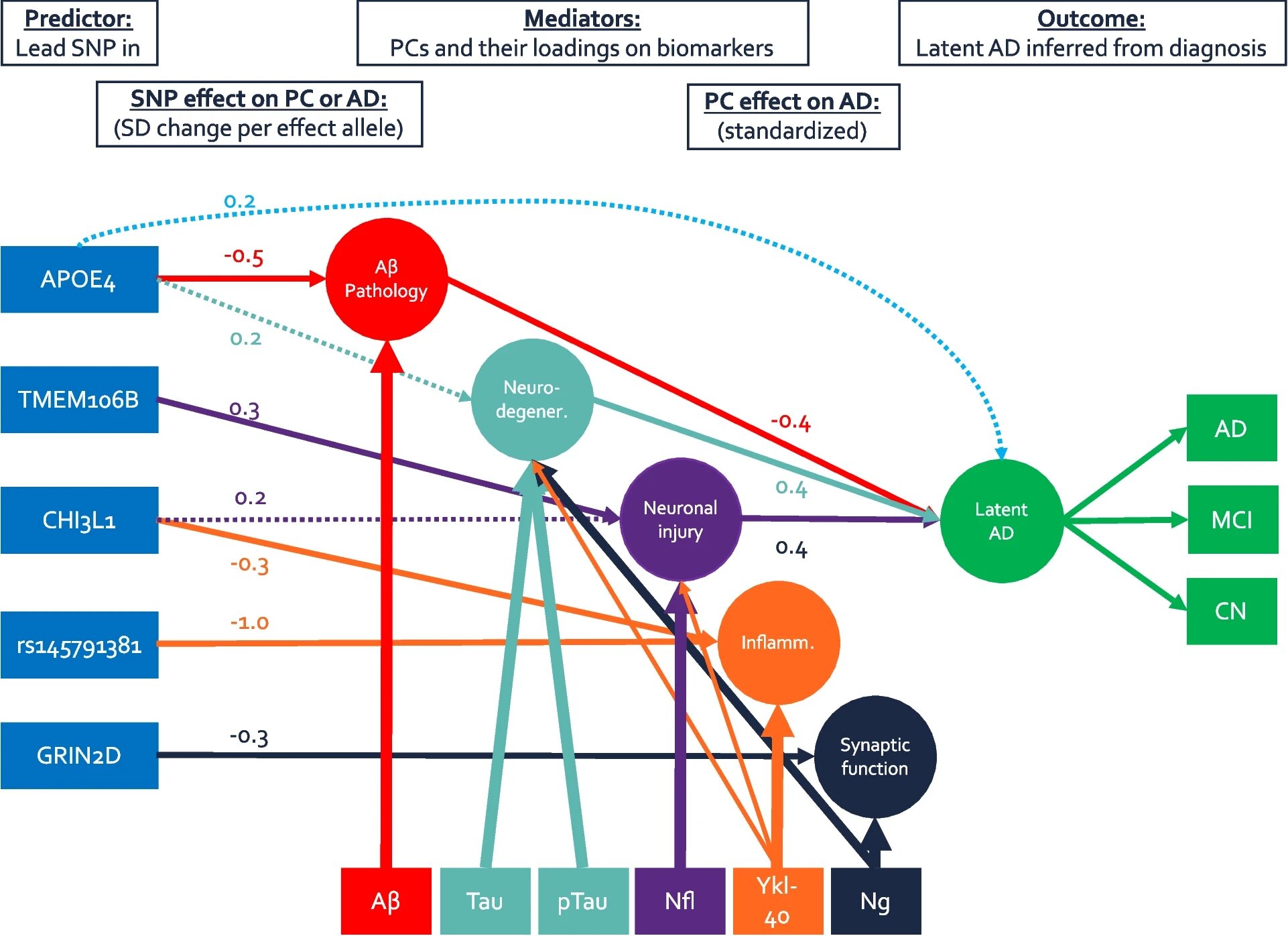
Researchers have identified new pathways involved in Alzheimer's disease by combining data from six different Alzheimer's biomarkers. The study suggests a reduced expression of GRIN2D, a receptor of the brain messenger glutamate, in Alzheimer's disease and other neuropsychiatric disorders, leading to impaired synaptic function. The analysis also revealed two main pathways involved in Alzheimer's disease: one related to amyloid and tau proteins mediated by the APOE gene, and another related to the immune system mediated by the genes TMEM106B and CHI3L1. The study also found sex-specific genetic effects on Alzheimer's biomarkers, providing insights into the difference in disease frequency between men and women. The findings offer new ways to understand the causes of Alzheimer's disease and potentially improve diagnosis and early detection.
Variations in immune responses to SARS-CoV-2 across populations are influenced by latent cytomegalovirus infection and human genetic factors shaped by natural selection, according to a study by researchers from the Institut Pasteur, CNRS, and the Collège de France. The study analyzed immune responses to the virus among populations in Central Africa, Western Europe, and East Asia, finding that differences in blood cellular composition and the expression of certain genes contribute to the varying severity levels of COVID-19. These findings could aid in improving patient management during future epidemics and pave the way for precision medicine strategies.
Building muscle involves a complex interplay of factors, including protein synthesis, muscle damage, and genetic factors. Resistance exercises like weightlifting stimulate muscle growth by triggering protein synthesis and muscle repair. However, excessive muscle damage can hinder growth. Muscle fibers, which cannot divide, rely on satellite cells to donate nuclei for growth. Genetic factors, such as muscle fiber type and ribosome composition, can also influence muscle growth. While some individuals may have genetic disadvantages, various strategies like resistance training and protein intake can help optimize muscle growth for everyone.
Michael J. Fox speculated that he may have done "some damage" during the height of his fame that contributed to his Parkinson's disease diagnosis. He also said that he doesn't expect to live past 80 years old and that living with Parkinson's disease is getting harder. Fox believes that his diagnosis is likely a combination of genetic and environmental factors. Parkinson's disease is a neurodegenerative disorder that mostly affects the dopamine-producing neurons in the brain.