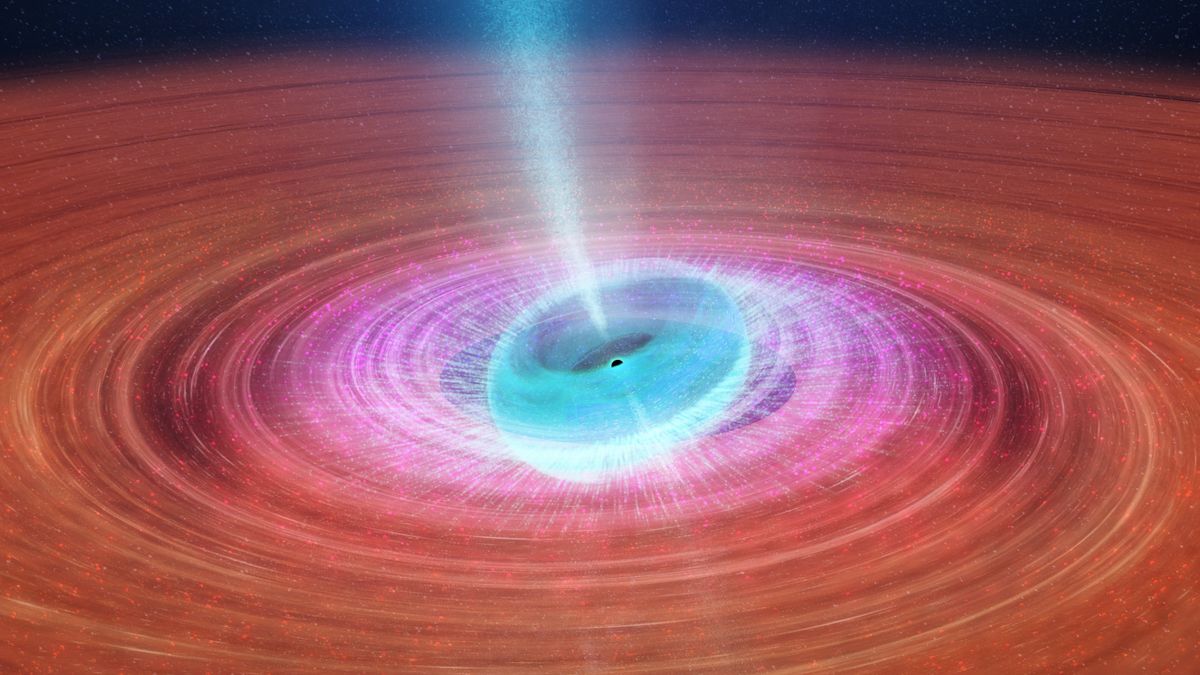
Astronomers observed a star being torn apart by a supermassive black hole in galaxy LEDA 145386, providing the most detailed evidence yet of frame-dragging, a prediction of general relativity, as the black hole's rotation twists spacetime around it.
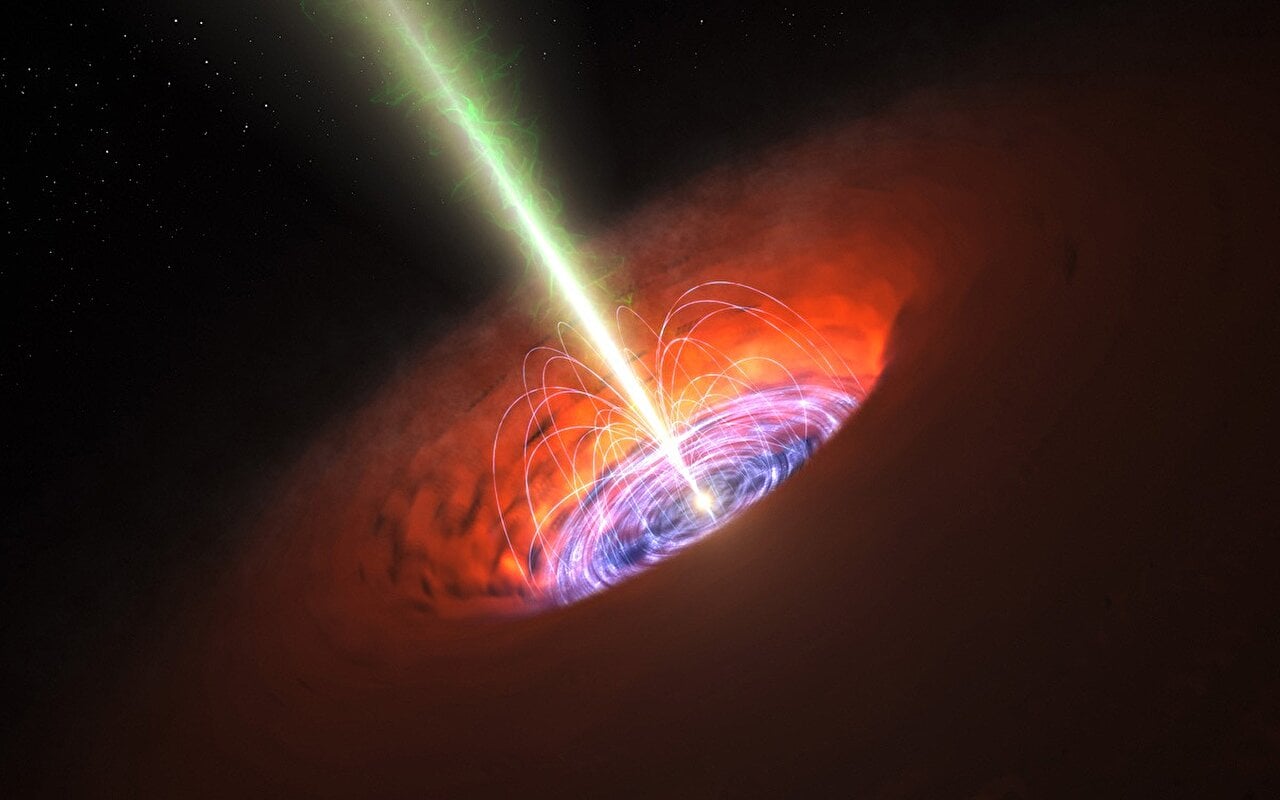
A recent study explores how the phenomenon of frame dragging around rotating black holes can transfer energy from their magnetic fields to nearby matter. This effect, which is more pronounced in supermassive black holes, can enhance the electromagnetic energy generated by the accretion disk's motion, potentially observable in quasars. The research highlights a new way to understand energy extraction from black holes through their magnetospheres.
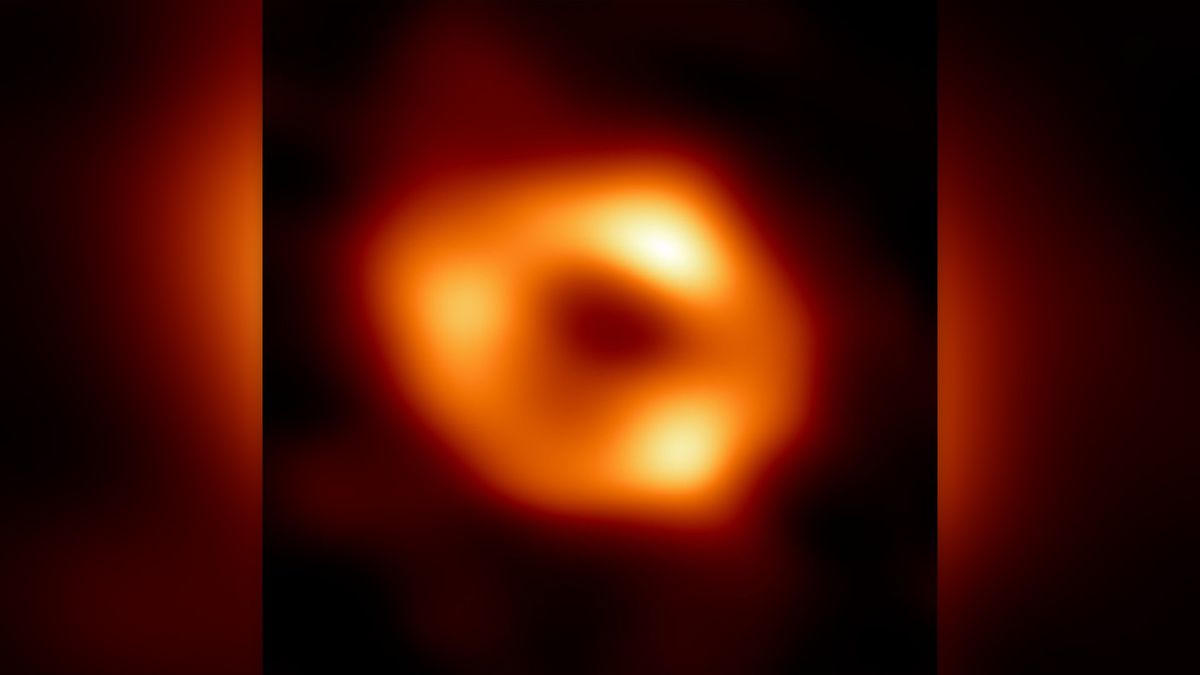
The supermassive black hole at the center of the Milky Way, known as Sagittarius A* (Sgr A*), is spinning close to its maximum speed, according to physicists. Using NASA's Chandra X-ray Observatory, researchers calculated the rotational speed of Sgr A* to be between 0.84 and 0.96, approaching the top limit defined by a black hole's width. This discovery has significant implications for our understanding of black hole formation and astrophysical processes. Black holes, unlike solid bodies, twist up the fabric of space-time and drag anything within their vicinity along, a phenomenon known as frame dragging.