A government shutdown is projected to cost the U.S. economy between $7 billion and $14 billion, with federal workers missing paychecks and food benefits for low-income Americans disrupted, leading to a 1-2% decrease in GDP in late 2025.
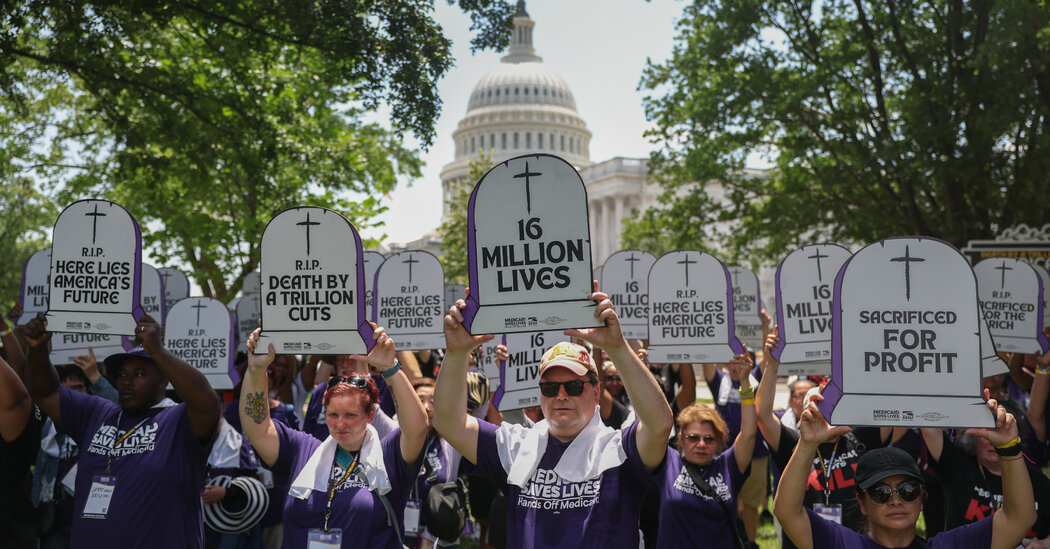
The Senate version of Trump's policy bill proposes deeper healthcare cuts than the House version, potentially leading to 11.8 million more Americans losing insurance by 2034, with over $1.1 trillion in reductions mainly from Medicaid, according to the Congressional Budget Office.
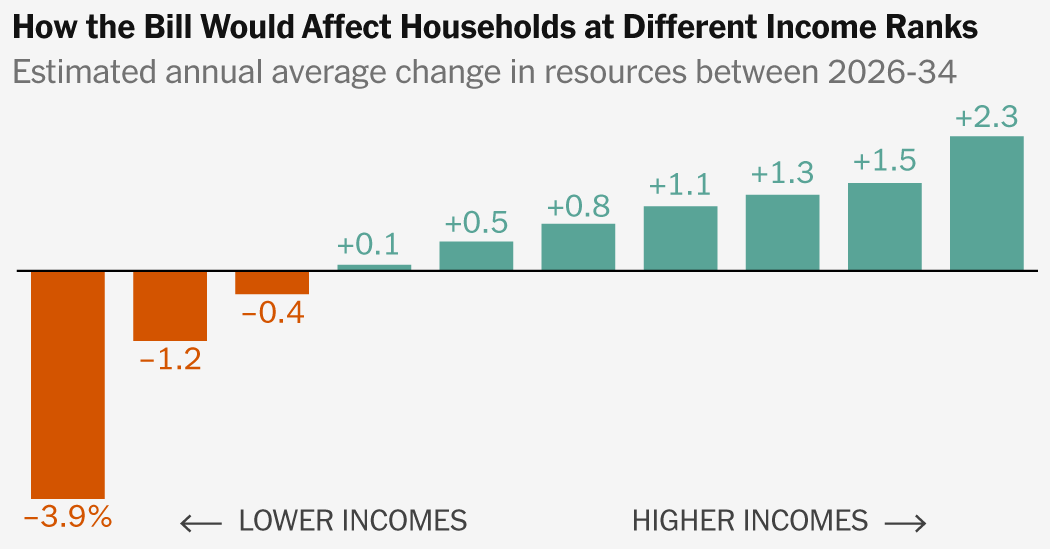
The proposed Republican bill would significantly increase inequality by cutting taxes for the wealthy and reducing benefits for the poor, making it more regressive than any major law in decades, according to the Congressional Budget Office.
A new CBO analysis shows the GOP's proposed $3 trillion tax and spending bill would mainly benefit the wealthy, with top earners gaining the most, while low-income families would face losses due to reduced benefits and modest tax savings.
The Congressional Budget Office (CBO), established in 1974 to provide Congress with objective budget impact analyses, faces criticism from Republicans who dispute its projections, especially regarding legislation's effect on deficits. Despite accusations of partisanship, the CBO maintains it is a nonpartisan agency designed to offer unbiased, expert analysis to aid legislative decision-making, though its forecasts are inherently challenging and sometimes controversial.
The Congressional Budget Office forecasts that President Trump's tariffs could reduce the US federal deficit by $2.8 trillion over the next decade if they remain in place, though there are significant uncertainties and potential economic impacts, including higher inflation and slower growth.
A new estimate from the Congressional Budget Office projects that the Republican bill for President Trump's domestic agenda will add $2.4 trillion to the national debt over 10 years, increase the number of uninsured by 10.9 million, and involves significant tax cuts and spending changes, with uncertain effects in the Senate.
The Congressional Budget Office revised its estimate, indicating that President Trump's tax-cut and spending bill will add approximately $2.4 trillion to the U.S. national debt, less than the earlier forecast of $3.8 trillion, amid ongoing debates within Congress and criticism from figures like Elon Musk.
The Congressional Budget Office predicts that the Landing Ship Medium program could cost between $6.2 billion and $7.8 billion for an 18-ship program, significantly higher than the U.S. Navy's estimate of $2.6 billion. Uncertainty surrounding the ship's role and design has led to discrepancies in cost estimates, with questions remaining about the ship's concept of operations and survivability standards. The cost will also depend on the number of ships the Navy ultimately buys and the standards used for design, with potential cost variations of $4 billion to $8 billion for an 18-ship program.
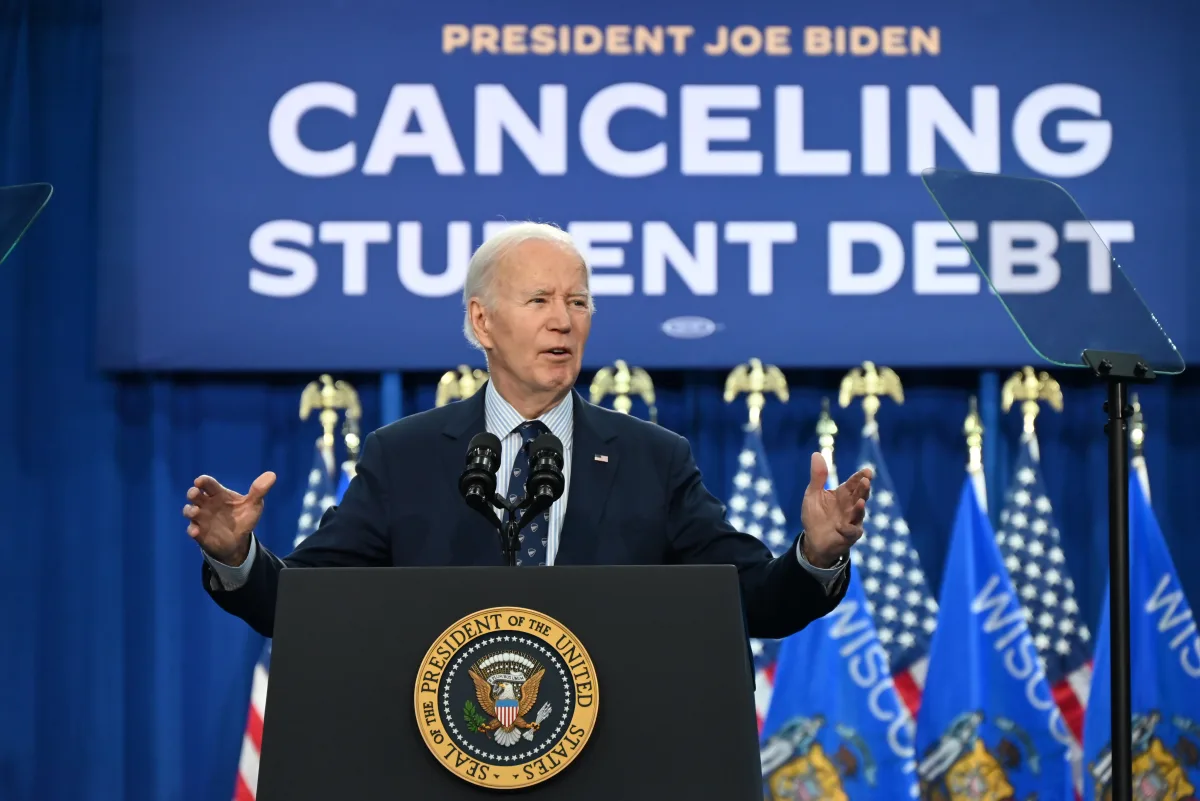
President Biden is attempting to cancel student loan debt for up to 25 million borrowers through a new plan that could write down balances by $5,000 to $20,000 per borrower, potentially costing the government billions in lost revenue. The plan targets people who have been paying their loans for 20 years or more, but faces challenges from both Republicans and Democrats. Critics argue that the relief primarily benefits higher-income individuals and lacks corresponding reforms to the student debt program, potentially leading to a return to prior debt levels within five years.
The head of the Congressional Budget Office warns that the unprecedented levels of US government borrowing could trigger a damaging market reaction, with federal debt projected to surpass World War II levels by 2029. Both Democrats and Republicans are blamed for fiscal profligacy, and economists are concerned about the potential impact of renewing the 2017 tax cut program. While Congress needs to act quickly to address the federal debt pile, cooperation from a divided Congress may be challenging, and a fiscal crisis could come as early as next year if there is no course correction.
The Congressional Budget Office projects US federal government debt to reach 116% of GDP by 2034, surpassing levels seen during World War II. However, using current market interest rate expectations and assuming the continuation of Trump's tax cuts, the debt-to-GDP ratio could rise to 123% by 2034, indicating a potentially more dire situation than projected.
The Congressional Budget Office projects that US federal government debt is on track to reach 116% of GDP by 2034, with potential for even higher levels. Bloomberg Economics' simulations show that in 88% of scenarios, the debt-to-GDP ratio is unsustainable. The Biden administration aims to address this through tax hikes, but bipartisan action from a divided Congress is necessary. Market participants are skeptical of the CBO's optimistic assumptions, and heavyweights across the political spectrum express concern about the nation's deficits. The US faces the risk of a debt crisis, which could have global repercussions.
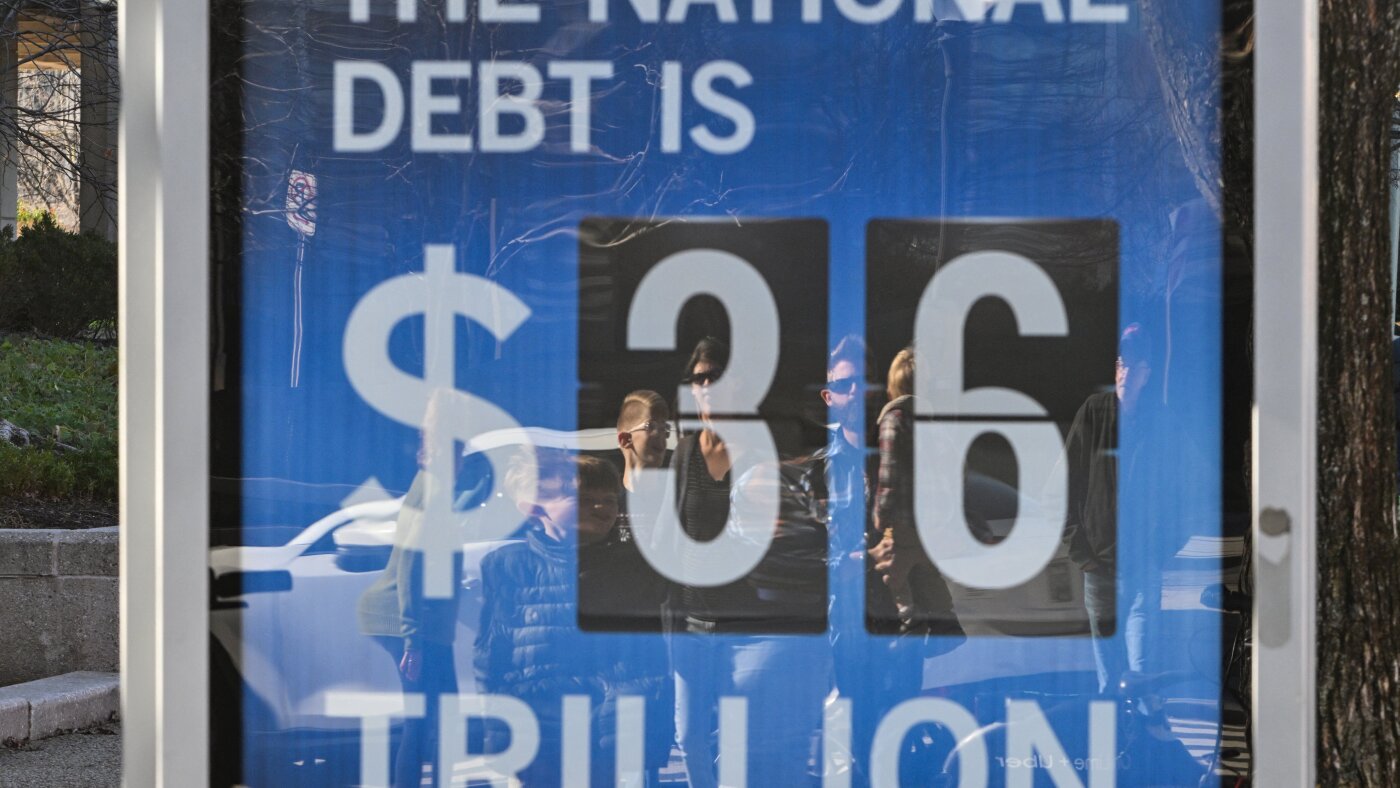
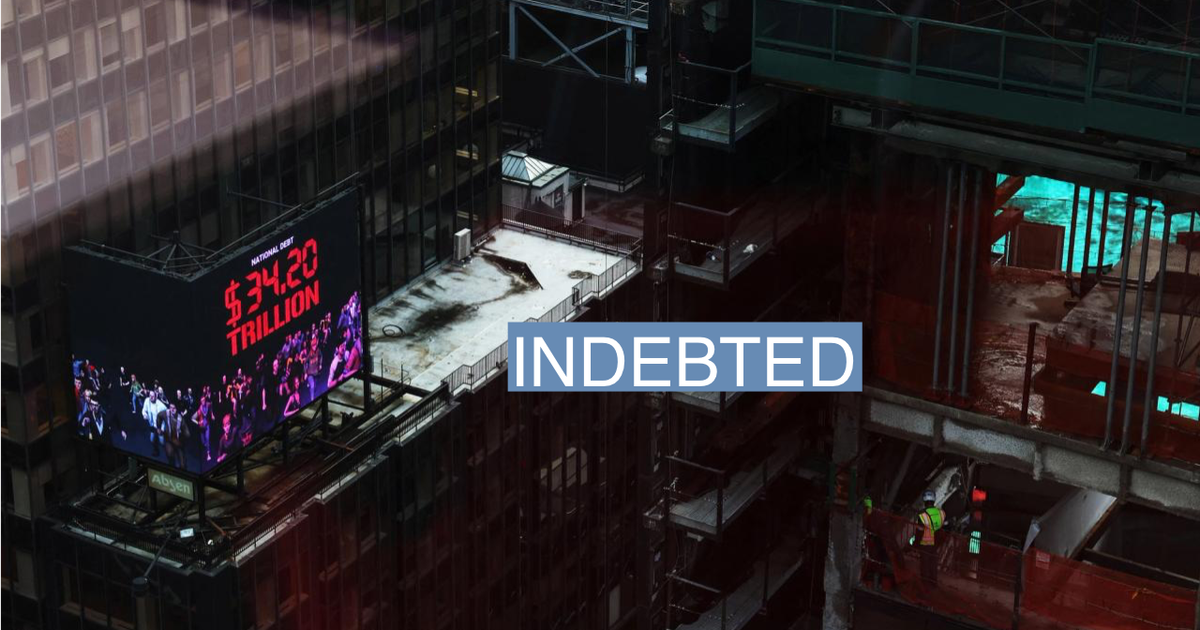
A report warns that the US national debt could reach $141 trillion by 2054, representing 166% of GDP, and leading to severe economic consequences including a financial crisis, higher interest payments, and risks to fiscal and economic outlook. Experts are divided on the urgency of the issue, with some calling for immediate action to prevent irreversible damage, while others believe that fiscal stimulus and productivity-enhancing measures could mitigate the impact of the growing debt.
A report from the Congressional Budget Office warns that the US national debt is projected to reach $141.1 trillion by 2054, representing 166% of GDP and posing significant risks to the fiscal and economic outlook. Experts, including Fed chairman Jerome Powell and CEOs from major financial institutions, are sounding the alarm on the pace of debt accumulation, predicting a future financial crisis and 10 years of economic stagnation if the issue is not addressed. While some economists believe a fiscal crisis is inevitable, others argue that public debt can be justified if invested in productivity-enhancing measures. Regardless, the consensus is that the public needs to be involved in the conversation, as the consequences of unchecked national debt will have lasting and severe effects on the economy and society.