The Congressional Budget Office reports that permanently expanding Obamacare credits could increase insurance coverage by 3.6 million people by 2030, with debates ongoing in Congress over extending these pandemic-era credits amid political tensions and potential cost implications.
The Congressional Budget Office predicts that due to Trump and GOP policies, US net immigration will be 1.6 million lower this year, potentially reducing federal spending but also decreasing tax revenue and economic growth. Meanwhile, Congress is actively debating issues like Russia sanctions, offshore wind projects, Epstein files, government funding, and judicial appointments, reflecting a highly contentious political environment.
The Congressional Budget Office reports that U.S. tariffs will reduce deficits by $4 trillion over the next decade, mainly through increased revenue, despite concerns about their negative impact on economic growth and investment.
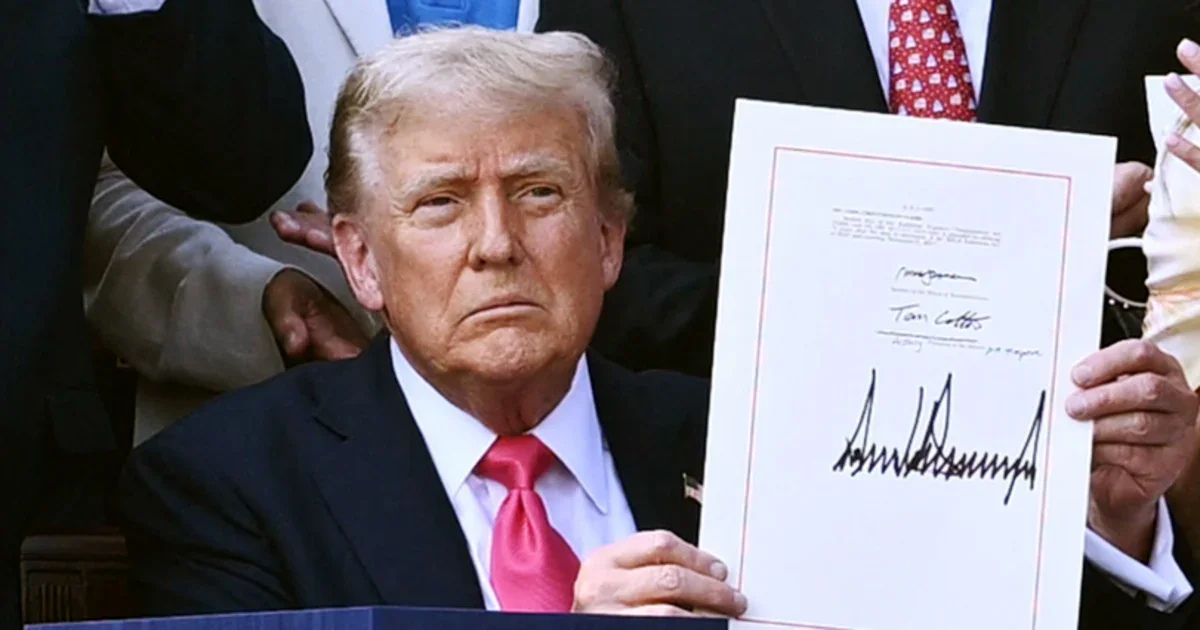
A recent report from the Congressional Budget Office estimates that President Trump's signed law will add $3.4 trillion to the US national debt over the next decade, increase the number of uninsured Americans by 10 million, and includes significant tax cuts, spending increases, and cuts to social programs, with mixed political reactions.
The Congressional Budget Office reports that the GOP megabill will add $3.4 trillion to the deficit, reduce the uninsured by fewer people than initially estimated (10 million instead of 11.8 million), partly due to the removal of a policy affecting undocumented immigrants, and includes a new accounting tactic that shows a smaller deficit increase of $366 billion under certain assumptions.
The Senate reconciliation package could add approximately $3.3 trillion to the national debt over 10 years, surpassing the House's estimate, and may result in nearly 12 million more uninsured Americans by 2034, according to the Congressional Budget Office.
The Republican reconciliation bill is projected by the CBO to increase the US deficit by nearly $3.3 trillion from 2025 to 2034, though Senate Republicans and the White House dispute this estimate, with the White House claiming it will reduce the deficit by $4.9 trillion over the next decade.
Senate Republicans are pushing a large tax and spending bill despite warnings from economists and the Congressional Budget Office that it would significantly increase the deficit and national debt, with some estimates suggesting it could add up to $2.8 trillion over a decade. GOP leaders rely on optimistic White House projections of economic growth to justify the bill, while critics argue these estimates are unrealistic and could lead to higher interest rates and borrowing costs.
The Congressional Budget Office (CBO), established in 1974 to provide Congress with objective budget impact analyses, faces criticism from Republicans who dispute its projections, especially regarding legislation's effect on deficits. Despite accusations of partisanship, the CBO maintains it is a nonpartisan agency designed to offer unbiased, expert analysis to aid legislative decision-making, though its forecasts are inherently challenging and sometimes controversial.
The Congressional Budget Office estimates that Trump's proposed 'One Big Beautiful Bill Act' could increase the deficit by $2.4 trillion over a decade and leave 11 million more Americans uninsured, mainly due to changes in Medicaid and healthcare enrollment rules, while also cutting taxes significantly.
The Congressional Budget Office reports that Trump's tariffs could reduce the federal deficit by nearly $3 trillion, while his tax cuts would significantly widen it by about $2.4 trillion over ten years. The tariffs are projected to increase inflation slightly and are subject to legal and political uncertainties, making their long-term fiscal impact uncertain.
The Congressional Budget Office (CBO) has warned of significant automatic cuts to nonmilitary federal spending if Congress fails to pass full-year government funding bills for 2024, as required by the Fiscal Responsibility Act (FRA). House Republicans, led by Speaker Mike Johnson, are pushing for lower spending levels and stringent anti-immigrant policies, risking cuts that would reduce nondefense spending from $777 billion to $736 billion, while military spending would slightly decrease from $860 billion to $850 billion. Democrats, including Rep. Brendan Boyle, criticize this approach as harmful and irresponsible, emphasizing the need for Congress to fulfill its duty to pass appropriate funding bills and avoid unnecessary austerity measures.