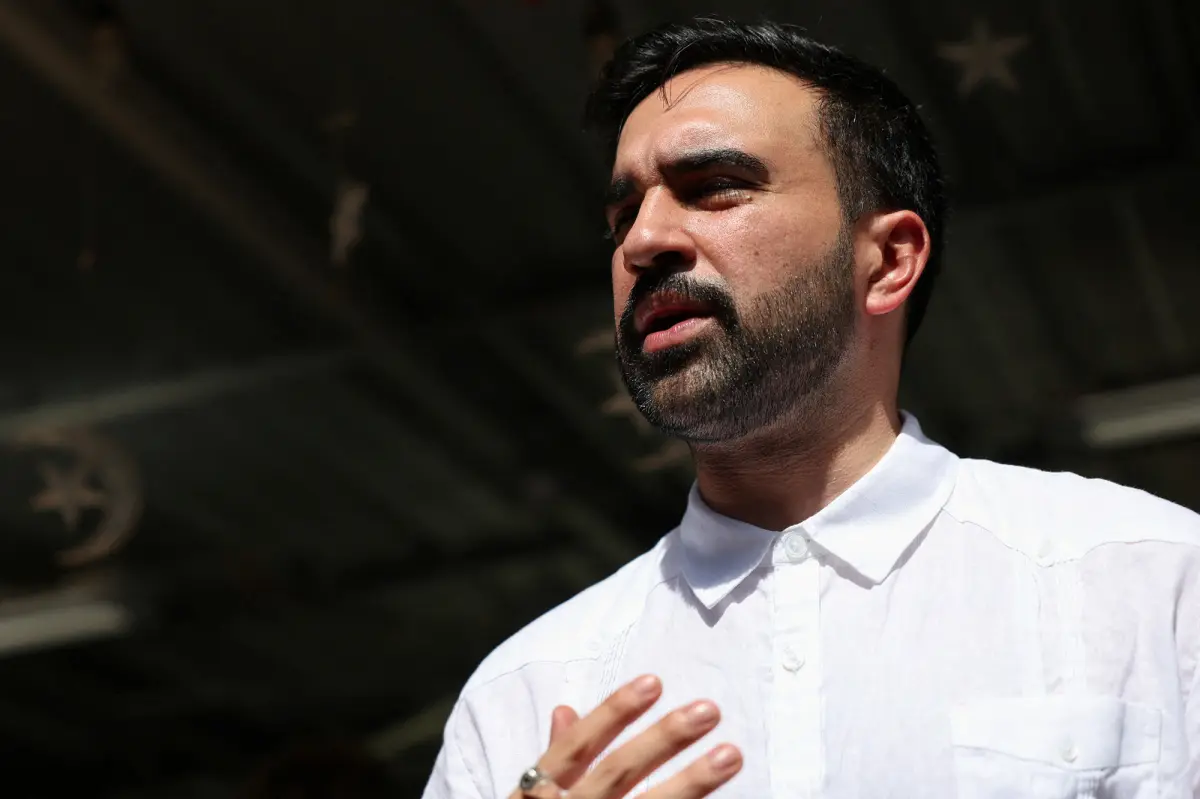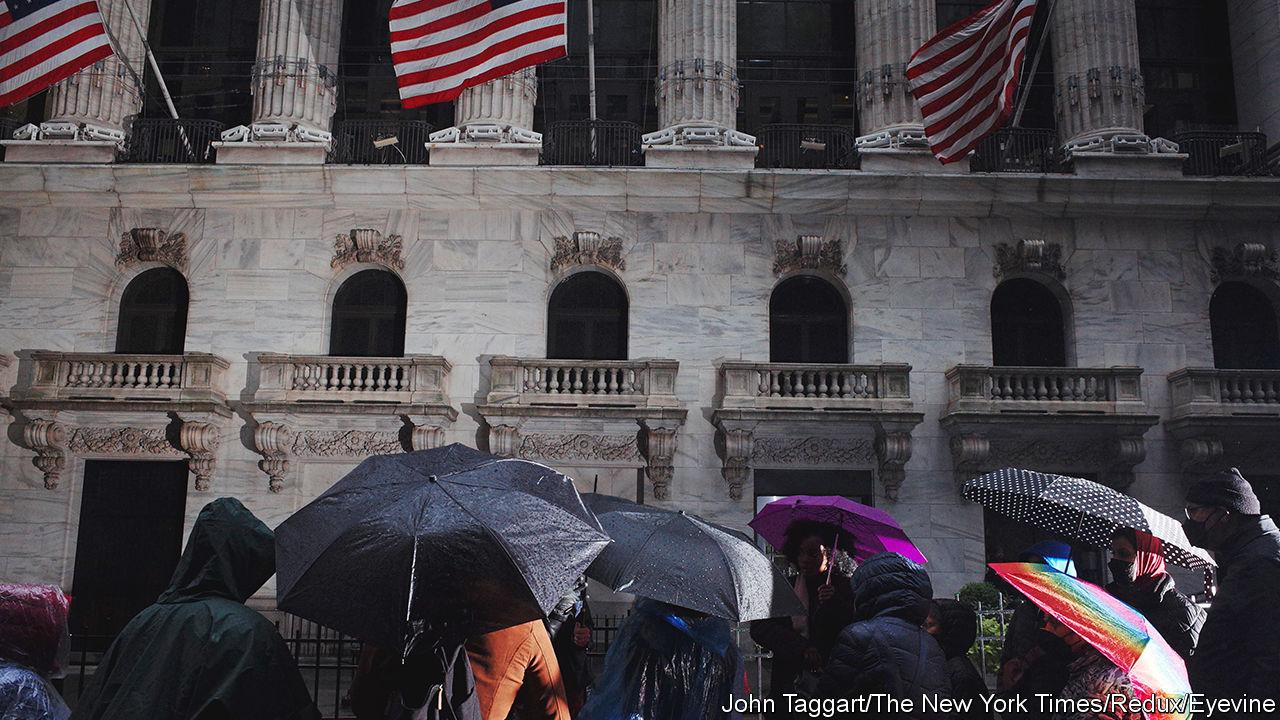
The article criticizes Mayor-elect Mamdani's socialist rhetoric and highlights New York City's strict financial laws, like the 1975 Financial Emergency Act, which prevent the city from implementing radical socialist policies. It emphasizes the city's existing fiscal challenges, high taxes, and legal safeguards that limit Mamdani's ability to drastically alter the city's financial landscape, warning of potential budget crises and economic consequences.
America's government shutdown has become the second-longest on record, surpassing the 1995-96 shutdown, highlighting ongoing political conflicts over government funding and social welfare cuts.
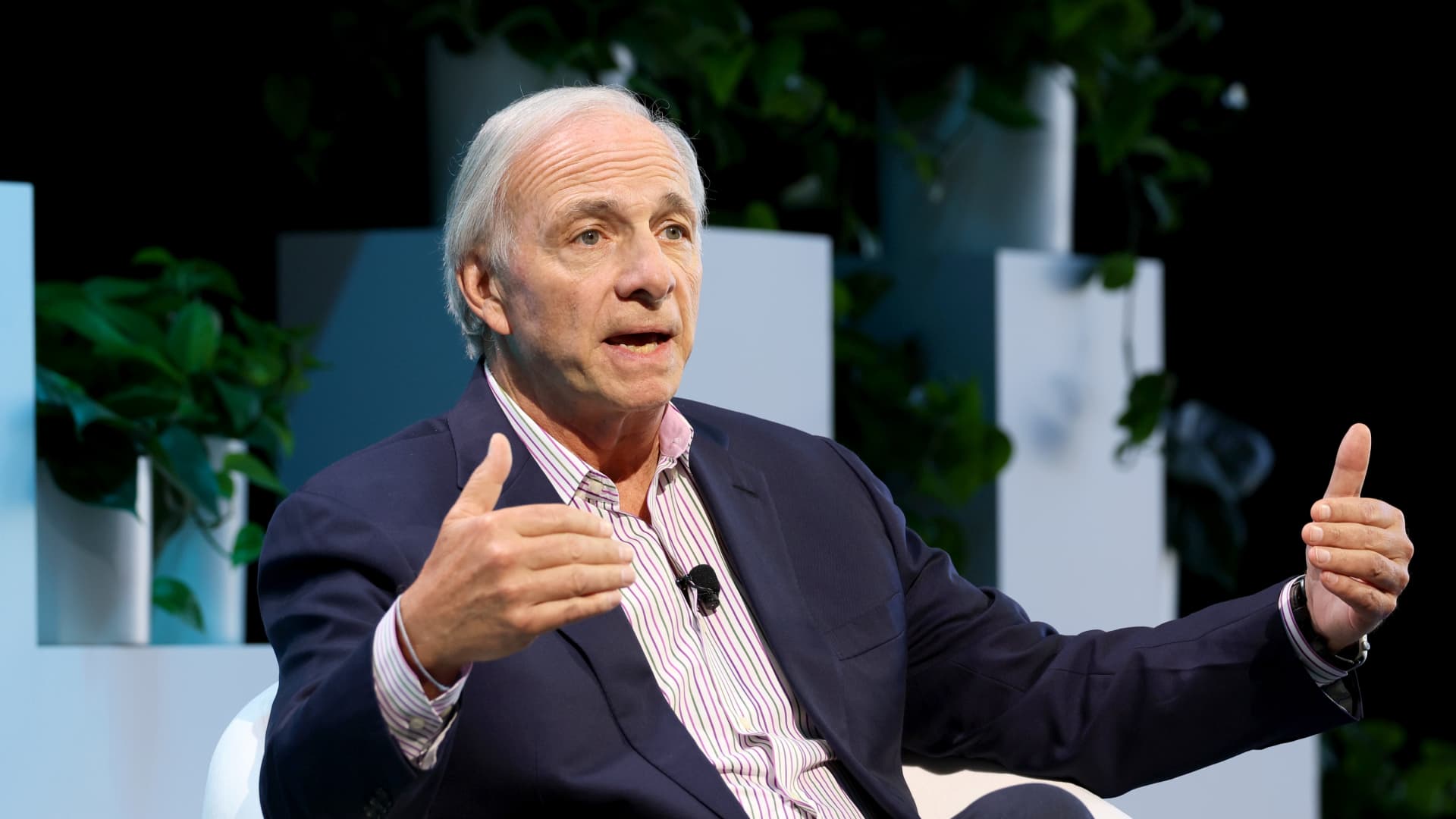
Ray Dalio warns that due to mounting global debt and US fiscal irresponsibility, gold and non-fiat currencies are becoming more attractive as stores of value, with potential risks to the US dollar's dominance, urging diversification of assets.
Economist Bernard Yaros warns that the insolvency of Social Security and Medicare trust funds by 2034 will force Congress to implement painful cuts, primarily to non-discretionary programs, as the bond market's reactions could accelerate reforms. Despite political reluctance, historical precedence suggests fiscal responsibility will eventually prevail, with bond vigilantes potentially playing a key role in prompting necessary policy changes.
Russia is nearing a recession due to a combination of poor harvests, declining energy revenues, and increasing fiscal pressures, with economic growth expected to slow sharply and potential for a technical recession in the coming quarters.
In recent months, President Trump’s erratic trade policies and fiscal decisions have plunged the US economy into chaos, risking recession, financial instability, and a potential sovereign debt crisis, while causing global economic uncertainty and market volatility.
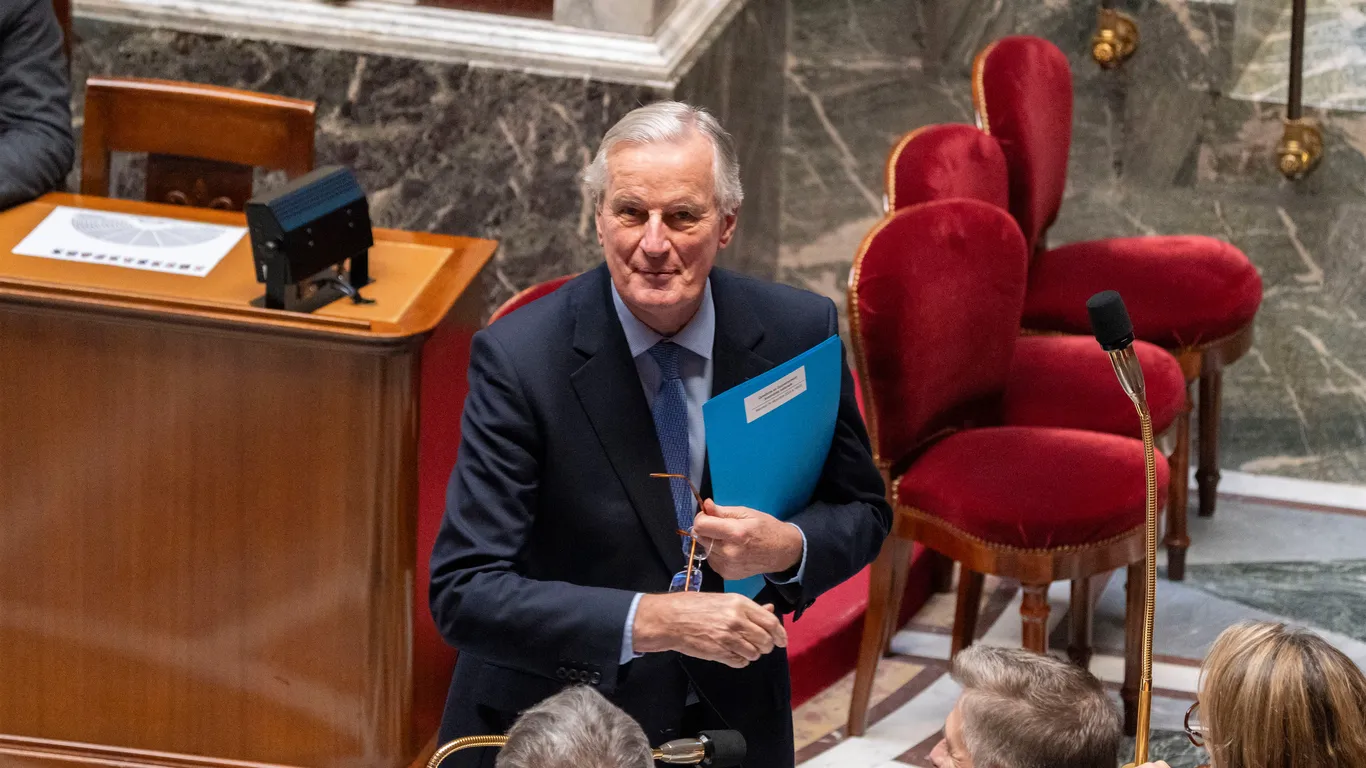
The French government has collapsed after a no-confidence vote ousted Prime Minister Michel Barnier and his cabinet, plunging the country into severe political and fiscal turmoil. This marks the first time in 60 years that France, Europe's second-largest economy, is without a functioning government. The crisis stems from efforts to reduce the national deficit, which led to unpopular fiscal measures and a fractured parliament. President Emmanuel Macron must now appoint a new prime minister to stabilize the situation and restart the budget process.
The head of the Congressional Budget Office warns that the unprecedented levels of US government borrowing could trigger a damaging market reaction, with federal debt projected to surpass World War II levels by 2029. Both Democrats and Republicans are blamed for fiscal profligacy, and economists are concerned about the potential impact of renewing the 2017 tax cut program. While Congress needs to act quickly to address the federal debt pile, cooperation from a divided Congress may be challenging, and a fiscal crisis could come as early as next year if there is no course correction.
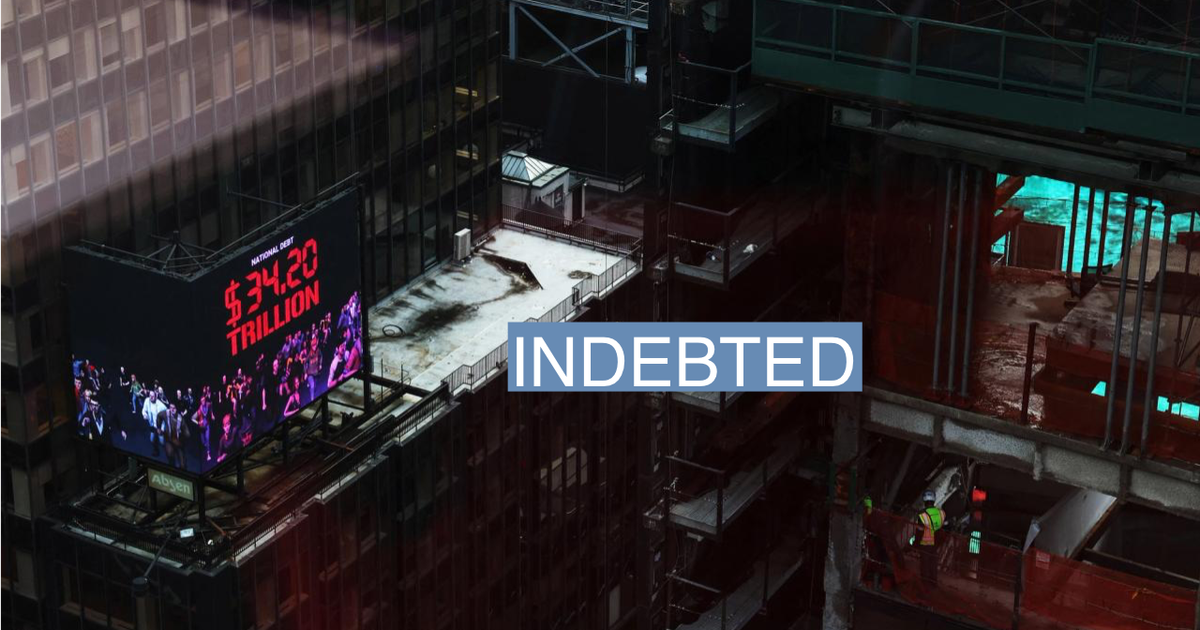
A report warns that the US national debt could reach $141 trillion by 2054, representing 166% of GDP, and leading to severe economic consequences including a financial crisis, higher interest payments, and risks to fiscal and economic outlook. Experts are divided on the urgency of the issue, with some calling for immediate action to prevent irreversible damage, while others believe that fiscal stimulus and productivity-enhancing measures could mitigate the impact of the growing debt.
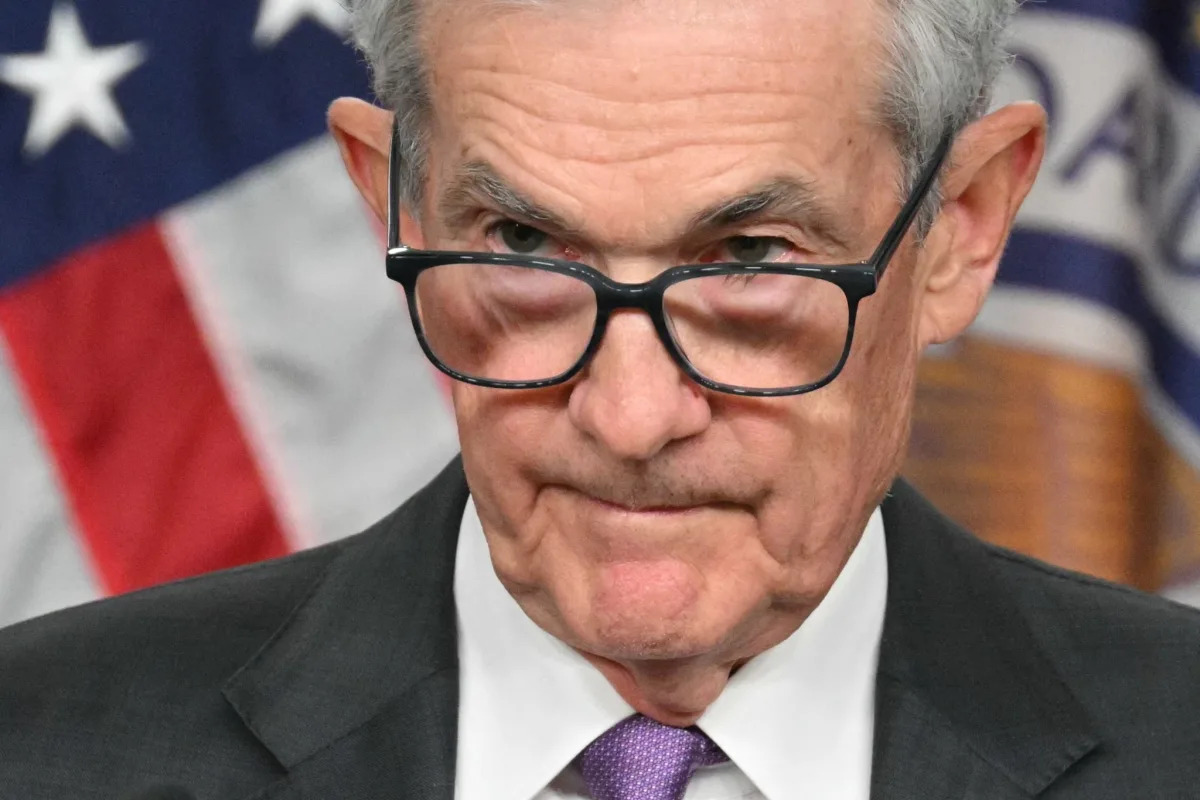
A report from the Congressional Budget Office warns that the US national debt is projected to reach $141.1 trillion by 2054, representing 166% of GDP and posing significant risks to the fiscal and economic outlook. Experts, including Fed chairman Jerome Powell and CEOs from major financial institutions, are sounding the alarm on the pace of debt accumulation, predicting a future financial crisis and 10 years of economic stagnation if the issue is not addressed. While some economists believe a fiscal crisis is inevitable, others argue that public debt can be justified if invested in productivity-enhancing measures. Regardless, the consensus is that the public needs to be involved in the conversation, as the consequences of unchecked national debt will have lasting and severe effects on the economy and society.
Germany is facing a fiscal crisis as its constitutional court rules that the government's plan to fund green projects through emergency borrowing violates the country's balanced-budget amendment. The coalition government is struggling to find alternative methods of funding green priorities, leading to a political crisis. Meanwhile, in the US, the Biden administration's push for widespread adoption of electric vehicles (EVs) is criticized as an expensive fantasy. Research shows that EVs have benefited from hidden subsidies, with costs ultimately borne by gasoline vehicle owners, taxpayers, and utility ratepayers. The adoption of EVs would require significant and expensive grid upgrades, and their impact on global emissions and climate change would be negligible. Additionally, the emissions associated with EV battery production and the sourcing of materials are largely unreported. Both Germany and the US face challenges in their green energy policies, with Germany grappling with fiscal constraints and the US lacking spending constraints altogether.
The US government has added over $524.7 billion to its debt in just three weeks, bringing the total debt to $33.5133 trillion. Senator Cynthia Lummis warns that the country's spending craze could lead to a debt death spiral that will burden future generations. Billionaire Ray Dalio also predicts a fiscal crisis in the US, emphasizing the importance of monitoring the supply-demand issue. The federal government currently pays $909.5 billion in interest on its outstanding public debt per quarter.
The recent surge in global bond yields, particularly in the US, has raised concerns among investors that the era of low interest rates may be coming to an end. Factors such as expectations of future Fed policy changes and the term premium have driven up yields. The increase in the term premium can be attributed to a combination of supply and demand dynamics, as well as fundamental factors such as a wobbly global economy and America's fiscal deficit. The rise in US bond yields has also spilled over to other regions, including Europe and Japan, where it threatens to bring about a fiscal crisis in Italy and poses challenges for the Bank of Japan in maintaining its negative interest rate policy.
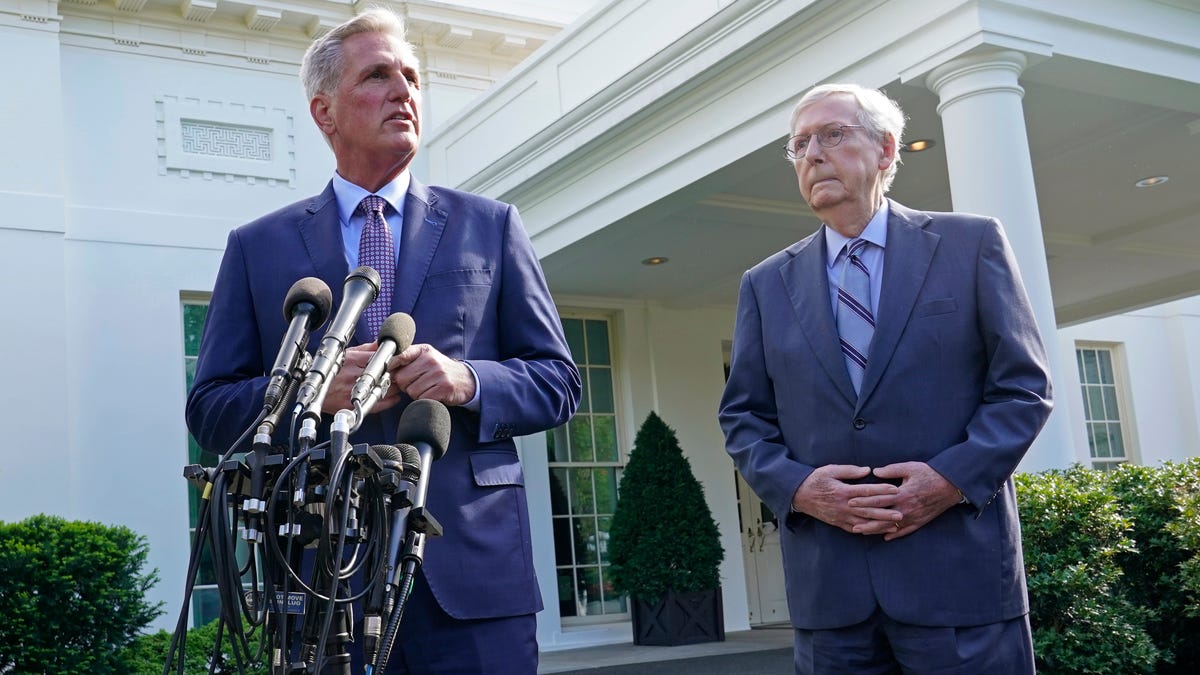
Speaker Kevin McCarthy is facing a tough challenge in crafting a spending plan that satisfies conservative House Republicans and avoids a government shutdown. McCarthy is struggling to unite the GOP caucus and secure approval from the Democratic-controlled Senate and President Joe Biden. Some GOP hardliners have even voted against their own party's Defense bill. If McCarthy fails, there are talks of a side deal between moderate Republicans and House Democrats. Meanwhile, Senate Republican Leader Mitch McConnell warns that shutdowns are politically damaging for the GOP. McCarthy's options are running out, and he may need to reach out to Democrats or consider a continuing resolution to buy more time.
Richard Ravitch, a civic-minded developer and public citizen who helped rescue New York City from bankruptcy and its decaying subways from fiscal collapse, died at the age of 89. He left an outsize mark on government at every level as one of the backstage wise men recruited to stave off the financial collapse of New York’s Urban Development Corporation in 1975 and, a few months later, of New York City’s own overdrawn municipal accounts. He was also instrumental in rejuvenating the city’s mass transit system in the 1980s as the chairman of the Metropolitan Transportation Authority.