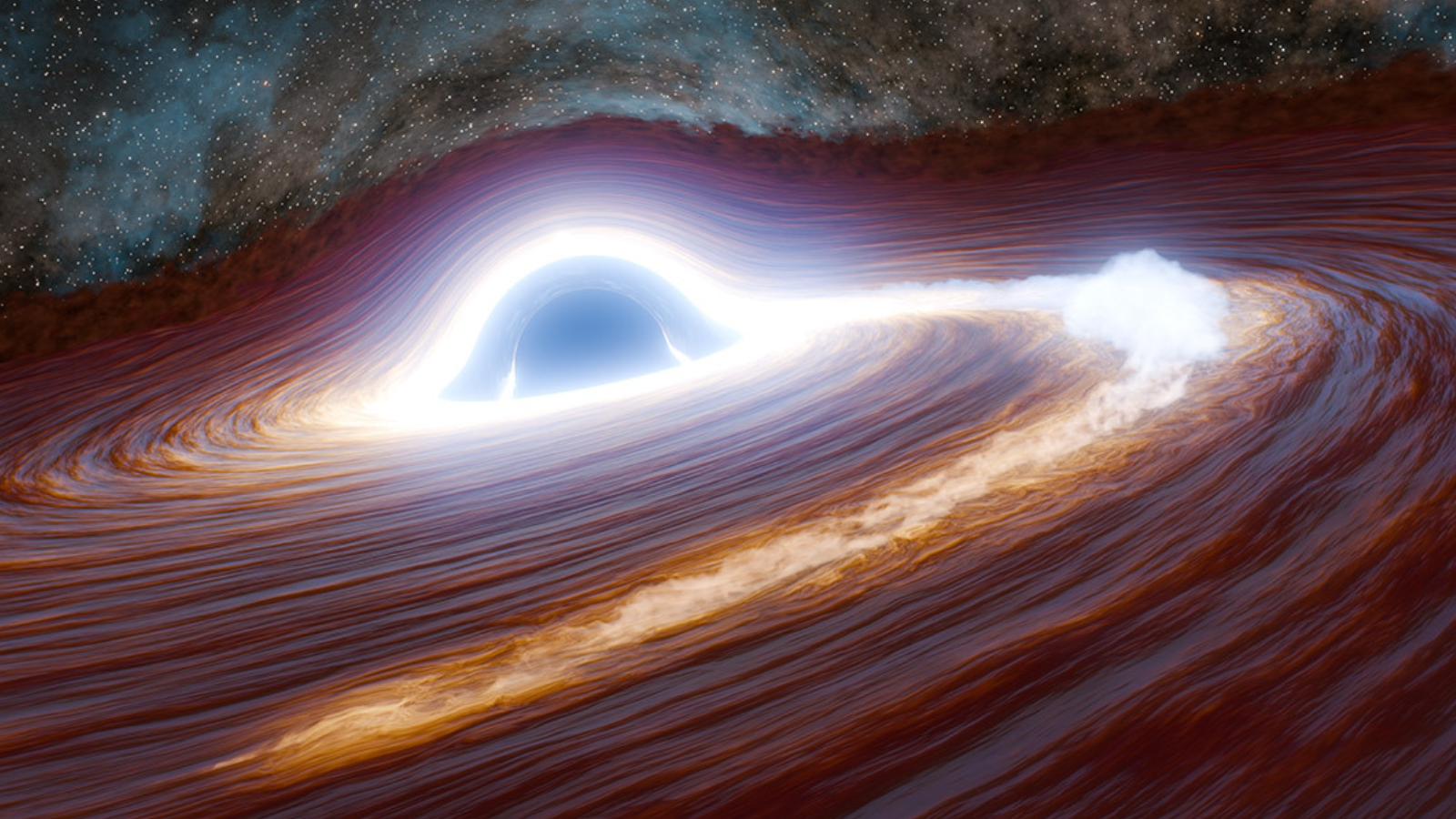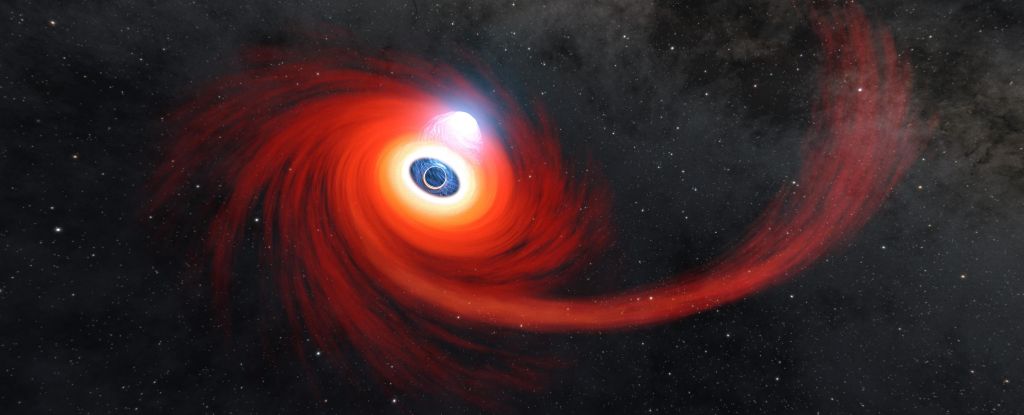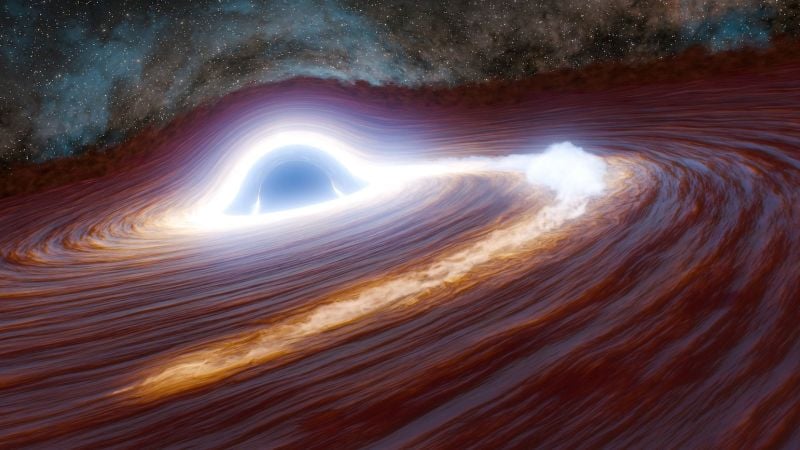
Astronomers observed the largest and most distant flare from a supermassive black hole, originating 10 billion light-years away, shining with the brightness of 10 trillion suns, likely caused by a star being torn apart in a tidal disruption event, providing new insights into black hole and galaxy dynamics.
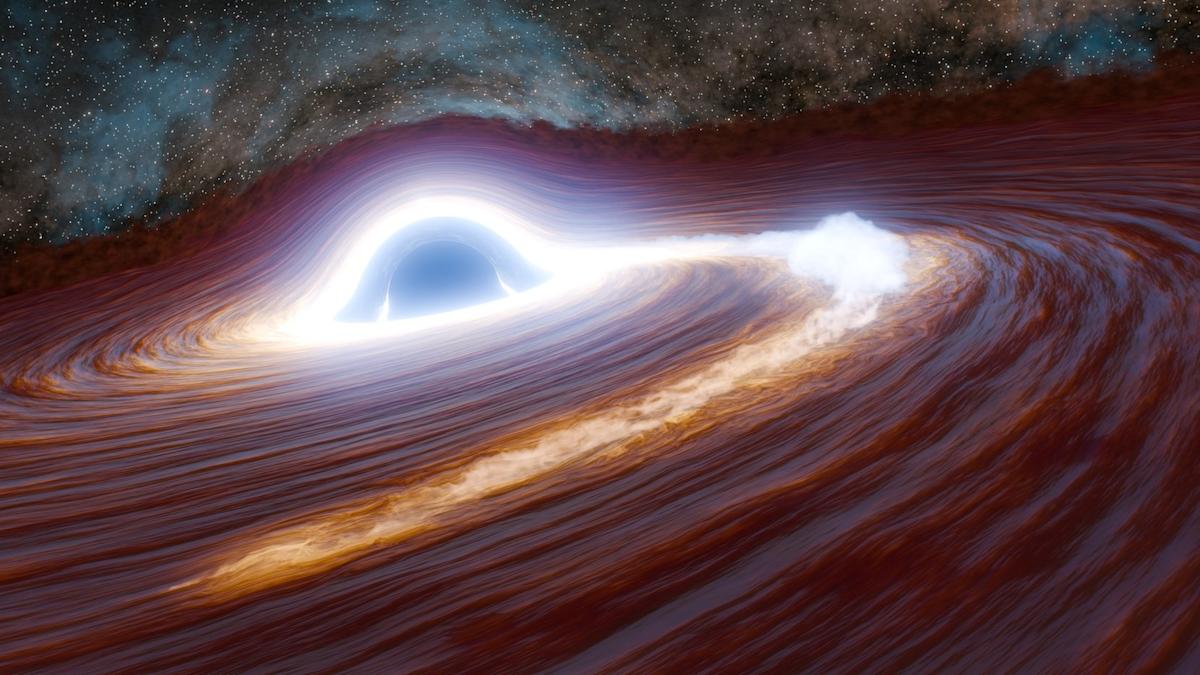
Scientists observed the largest and most distant black hole flare to date, occurring in a galaxy 10 billion light years away, where a black hole about 500 million times the mass of the sun consumed a star 30 times the sun's mass, resulting in a flare shining with the light of 10 trillion suns.
Scientists observed the largest and most distant black hole flare ever, originating from a supermassive black hole in a galaxy 10 billion light-years away, caused by a massive star being torn apart in a tidal disruption event, emitting energy equivalent to 10 trillion suns.
First Light Fusion has developed a new inertial fusion technology called FLARE that achieves high energy gain, potentially paving the way for commercially viable, clean, and sustainable energy, although further research is needed to confirm its unlimited potential.
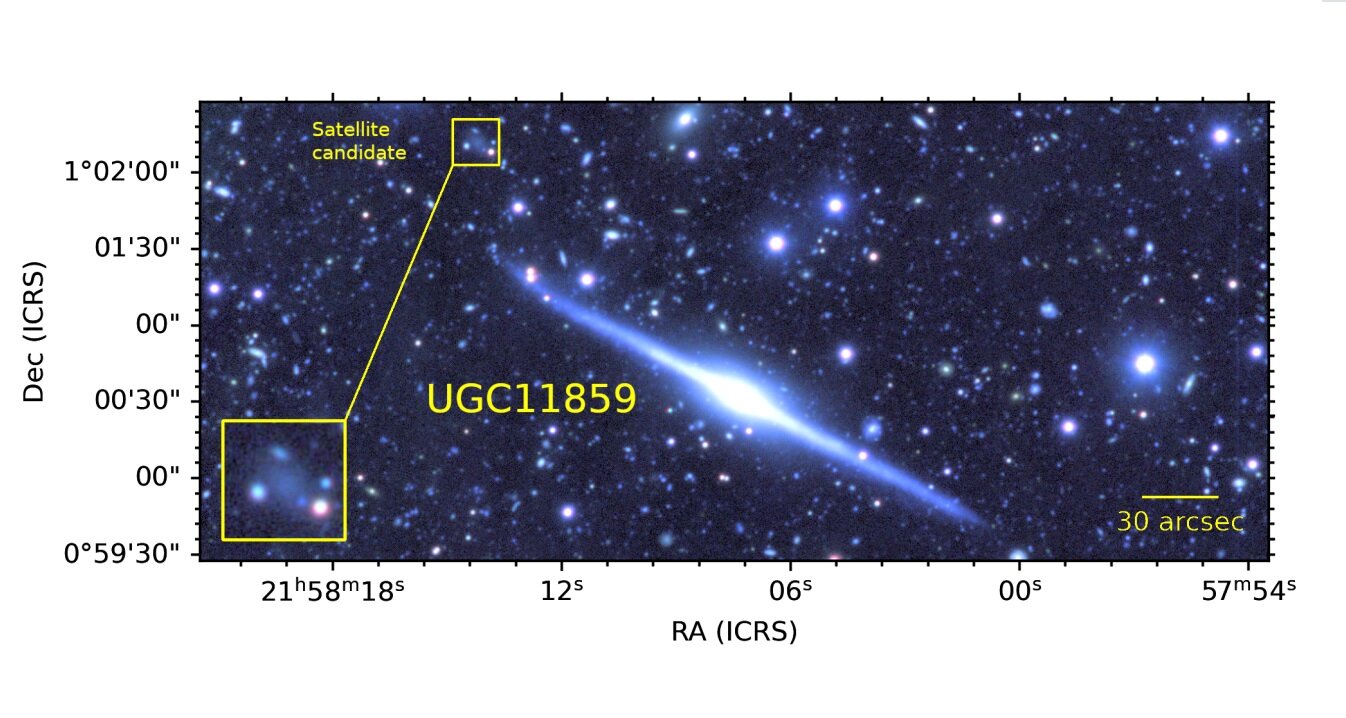
Astronomers have used the Gran Telescopio Canarias (GTC) to observe the ultra-thin galaxy UGC 11859 and have discovered a significant gravitational distortion in its disk, including the presence of a warp and a flare. The observations also suggest the existence of a small satellite galaxy near UGC 11859. These findings provide valuable insights into the structure and properties of this isolated galaxy.
Astronomers have observed a supermassive black hole, named J221951, suddenly flare to life in a distant galaxy. This event, occurring 10 billion years ago, is one of the most dramatic instances of a black hole feeding on vast amounts of material. The flare's brightness suggests that the black hole transitioned from a quiescent state to an active galactic nucleus or experienced a tidal disruption event. Further observations will help determine the cause of this sudden feeding activity.