Tag

Bone Loss

All articles tagged with #bone loss

health1 year ago

Widely Used Thyroid Drug May Accelerate Bone Loss in Older Adults

A study presented at the Radiological Society of North America suggests that levothyroxine, a common thyroid medication, may lead to reduced bone mass and density in older adults with normal thyroid levels. Conducted by Johns Hopkins University researchers, the study involved 81 participants over 65 and found bone loss over a 6-year period. This raises concerns about the potential overprescription of levothyroxine and its side effects, including increased osteoporosis risk, in older adults.

health1 year ago

Thyroid Medication Linked to Potential Bone Weakening

New research indicates that levothyroxine, a common thyroid medication prescribed to older adults, may be linked to increased bone loss. The study, involving 445 participants with normal thyroid levels, found that those taking levothyroxine experienced greater bone mass and density loss. Researchers suggest that even when following current guidelines, the medication could pose risks, urging patients to regularly consult with their doctors and assess the necessity of their treatment. These findings were presented at the Radiological Society of America meeting.

health1 year ago

"Promising Experimental Drug Offers Relief for Menopause Symptoms"

Researchers at the University of Central Florida have developed an experimental drug, P7C3, which shows promise in reducing bone loss and weight gain in postmenopausal women. The drug, also being studied for Alzheimer's and Parkinson's, works by inhibiting bone-absorbing cells and increasing beneficial gut bacteria. While more research is needed, early results are promising, and the drug may offer hope for women dealing with menopause-related health challenges. However, some experts caution that existing treatments, such as estrogen replacement, should not be overlooked.

health1 year ago

"FDA Approves Vibration Belt to Combat Bone Loss in Post-Menopausal Women"

The FDA has approved a vibration belt called Osteoboost to help post-menopausal women with low bone density. The device, which sends low-frequency vibrations to the lumbar spine and hips, aims to stimulate bone growth and preserve bone mineral density. Research has shown promising results in reducing bone loss, especially in women between 50 and 60 years old. While the device offers a medication-free and at-home solution, its effectiveness in reducing fracture risk and comparison to standard medication therapies still needs further study.

science-and-technology2 years ago

"Promising drug shows potential in preventing bone loss during space missions, according to study on mice"

A drug called BP-NELL-PEG has shown promise in preventing bone loss in mice during lengthy space missions. Microgravity in space causes astronauts to lose up to 1.5% of their bone mass per month, and exercise alone may not fully prevent bone loss. In a study on the International Space Station, mice treated with BP-NELL-PEG showed increased bone density, while untreated mice experienced significant bone loss. The drug, a modified version of the protein NELL-1, boosts bone tissue formation and inhibits bone breakdown. The researchers hope that BP-NELL-PEG could be used by humans in space and on Earth to combat bone loss and musculoskeletal deterioration.

science-and-technology2 years ago

Promising Drug Shows Potential in Preventing Bone Loss in Space

A new drug compound called BP-NELL-PEG has been found to prevent bone loss in mice during space travel, according to a study led by researchers from the University of California, Los Angeles (UCLA). The compound, which combines a bisphosphonate with a substance called NELL-1, was tested on mice aboard the International Space Station (ISS) and resulted in a significant increase in bone formation without any observable side effects. The findings hold promise for future space exploration missions involving extended stays in microgravity and could potentially be used to treat extreme osteoporosis and other bone-related conditions on Earth.

science-and-technology2 years ago

"Promising Experimental Drug Shows Potential in Countering Space-induced Bone Loss"

Scientists have developed an experimental treatment that promotes bone growth in mice living aboard the International Space Station (ISS) for at least nine weeks, potentially mitigating the bone loss experienced by astronauts in space. The treatment combines a molecule called NELL-1 with bisphosphonate, a drug used to prevent bone loss. The researchers are excited about the implications of their findings for future space exploration and potential medical applications on Earth. Further research is needed to validate the treatment's long-term safety and effectiveness.

health2 years ago

The Link Between COVID-19, Inflammation, and Bone Health

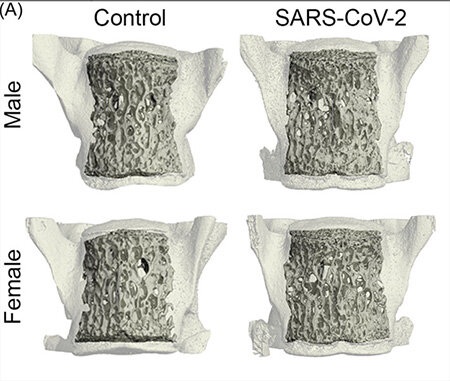
A study conducted by UC Davis Health found that COVID-19 can lead to acute bone loss in mice, suggesting that people with COVID-19 may experience long-term orthopedic issues such as decreased bone mass, increased fracture risk, and other musculoskeletal complications. The study revealed that SARS-CoV-2 infection caused significant changes in bone structure, including thinner growth plates and an increased number of osteoclast bone cells. Fragility fractures, resulting from minor trauma, may be an underreported long-haul symptom of COVID-19. The study highlights the potential long-term consequences of COVID-19 on bone health and emphasizes the need for further research in this area.

science-and-astronomy2 years ago

"China's Zebrafish Journey to Tiangong: A Space Station Experiment"

China plans to send zebrafish to its Tiangong space station as part of research into the interaction between fish and microorganisms in a closed ecosystem, as well as studying bone loss in astronauts. This is not the first time fish have been sent to space, as NASA's Aquatic Habitat and Soviet Union's Salyut 5 space station have previously conducted similar experiments.

science-and-technology2 years ago

"China's Zebrafish Journey to Tiangong: A Space Station Experiment"

China plans to send zebrafish to its Tiangong space station as part of research on the interaction between fish and microorganisms in a closed ecosystem, as well as studying bone loss in astronauts. The experiment, which follows previous fish experiments in space, aims to gain insights into the effects of microgravity on marine life. Further details about the timeline and equipment were not disclosed.

science-and-technology2 years ago

Updates on Rodent Research in Space Station.

The Rodent Research 5 mission, a collaboration between NASA and SpaceX, aims to study bone loss under microgravity conditions and determine if a novel treatment can reduce or prevent bone loss that would normally happen in a microgravity environment. The study found that changes to the microbiome of humans and rodents during space flight may influence bone remodeling, and the data create new avenues for exploration. Results from this experiment can help provide insight into diseases, disorders, and injuries associated with bone loss in spaceflight environments as well as on Earth, and can improve the current standard of care for osteoporosis disease and the prevention of osteoporotic fractures.

health2 years ago

The Science Behind Age-Related Shrinking.

As people age, they tend to shrink due to a combination of factors including muscle weakness, bone loss, and disc degeneration. Losing less than an inch in height is normal, but any more than that may be indicative of underlying issues such as osteoporosis. A bone density test can alert individuals of any problems that could exacerbate shrinkage. Maintaining a healthy lifestyle with regular exercise can help slow down any shrinkage.

health2 years ago

Oral Health Linked to Mental Health: Study

A study presented at the AADOCR/CADR Annual Meeting & Exhibition reveals a link between oral health problems and a range of mental health and addiction disorders. The study found that patients with adverse mental health conditions are more likely to have higher levels of oral disease. Symptoms of internalizing problems are a plausible risk factor of future adverse oral health, independent of externalizing and substance use problems. The study suggests that these results may inform both medical and dental communities in diagnosing and providing treatment to individuals suffering from mental illness.