Tag

Blazar

All articles tagged with #blazar

Scientists Discover 'Eye of Sauron' in Space Emitting Ghost Particles
science6 months ago

Scientists Discover 'Eye of Sauron' in Space Emitting Ghost Particles

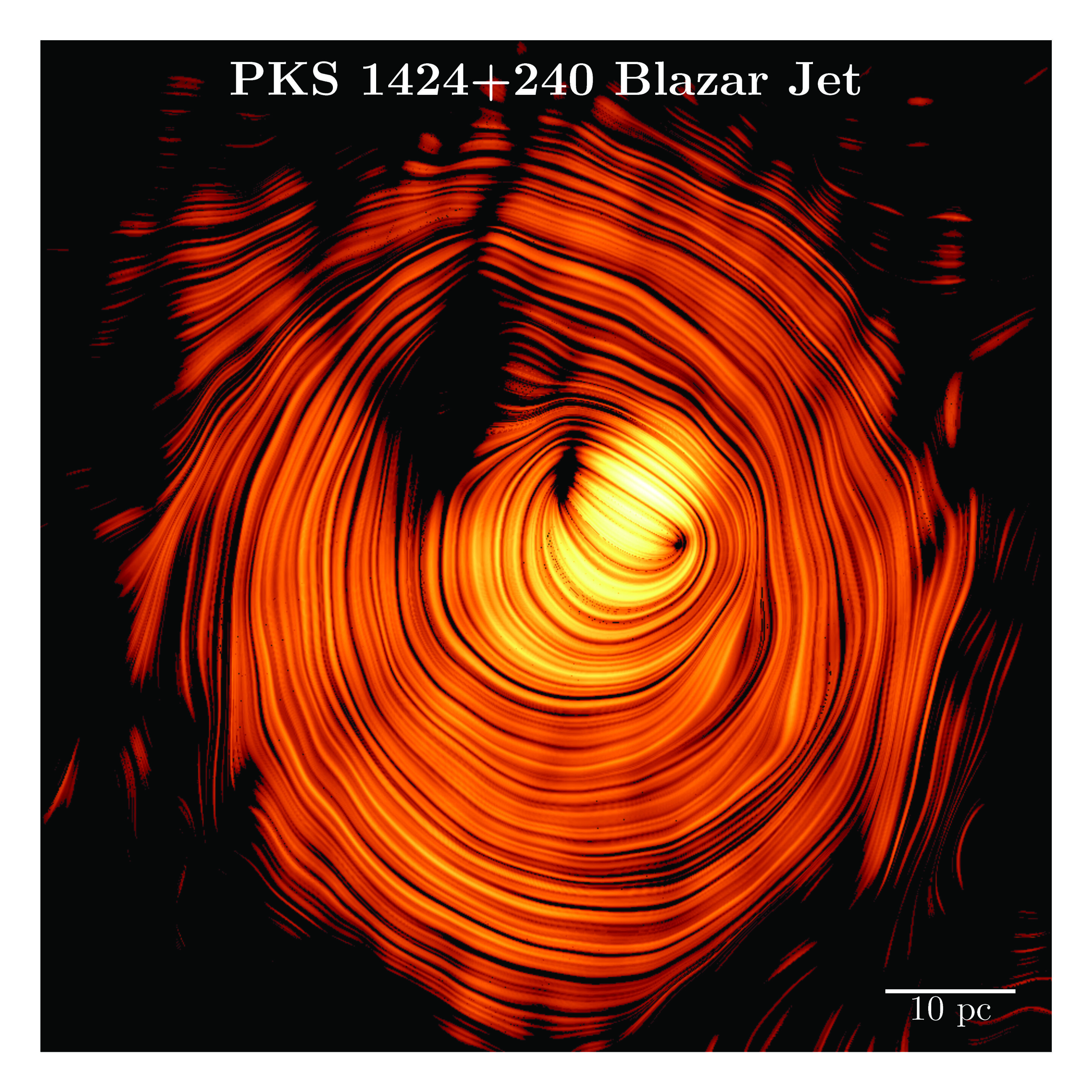
Astronomers have observed a bright galactic nucleus called PKS 1424+240, dubbed the 'Eye of Sauron,' a blazar with jets pointed directly at Earth, causing an optical illusion that makes the jets appear slower and brighter. Located 7.4 billion light-years away, it emits gamma rays and neutrinos, providing insights into supermassive black holes and cosmic jet behavior.

Astronomers Discover 'Eye of Sauron' Blazar Emitting Ghost Particles
science6 months ago

Astronomers Discover 'Eye of Sauron' Blazar Emitting Ghost Particles

Astronomers have captured a detailed image of a blazar called PKS 1424+240, resembling the 'Eye of Sauron,' revealing a toroidal magnetic field and high-energy jets pointing toward Earth. This object is a powerful source of gamma rays and neutrinos, providing insights into how supermassive black holes accelerate particles and produce ghost particles that pass through everything, including our bodies.

"Unleashing the Power: Supermassive Black Hole's 570-Light-Year Plasma Jet"
astronomy2 years ago

"Unleashing the Power: Supermassive Black Hole's 570-Light-Year Plasma Jet"

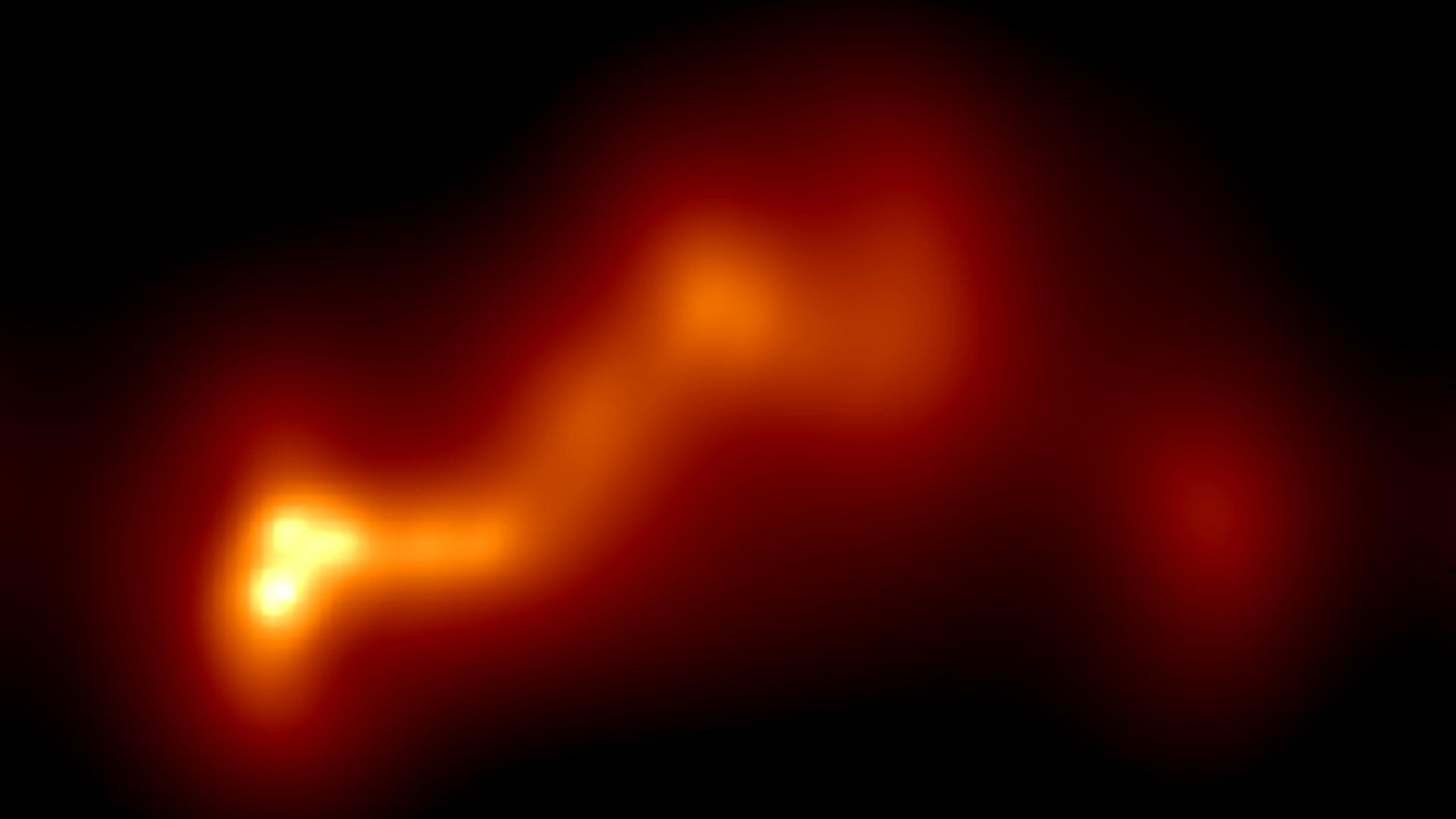
Astronomers have used a network of radio telescopes, including the RadioAstron space telescope, to observe a distant supermassive black hole releasing a twisted jet of plasma at near-light speed. The observations reveal unprecedented details of the black hole and plasma jet, showing that the jet is composed of twisted filaments stretching nearly 570 light-years. The twists and turns in the jet suggest the presence of a helical magnetic field that guides the plasma. These findings challenge prior theories and provide insights into the intricate processes near the black hole.

Cosmic Spider: Black Hole Spins Plasma Ropes
science-and-astronomy2 years ago

Cosmic Spider: Black Hole Spins Plasma Ropes

Astronomers have observed a distant supermassive black hole, located at the heart of a blazar named 3C 279, spinning a jet of plasma into a twisted rope and ejecting it at near-light speed. This observation, made using a network of radio telescopes including the RadioAstron space telescope, provides the most detailed look yet at the internal structure of an astrophysical jet emerging from a supermassive black hole. The findings challenge current theories on the creation and evolution of these jets, suggesting the need for revised models and a deeper understanding of the role of magnetic fields in their formation.

"Earth in the Path of a Supermassive Black Hole's High-Energy Jet"
science-and-astronomy2 years ago

"Earth in the Path of a Supermassive Black Hole's High-Energy Jet"

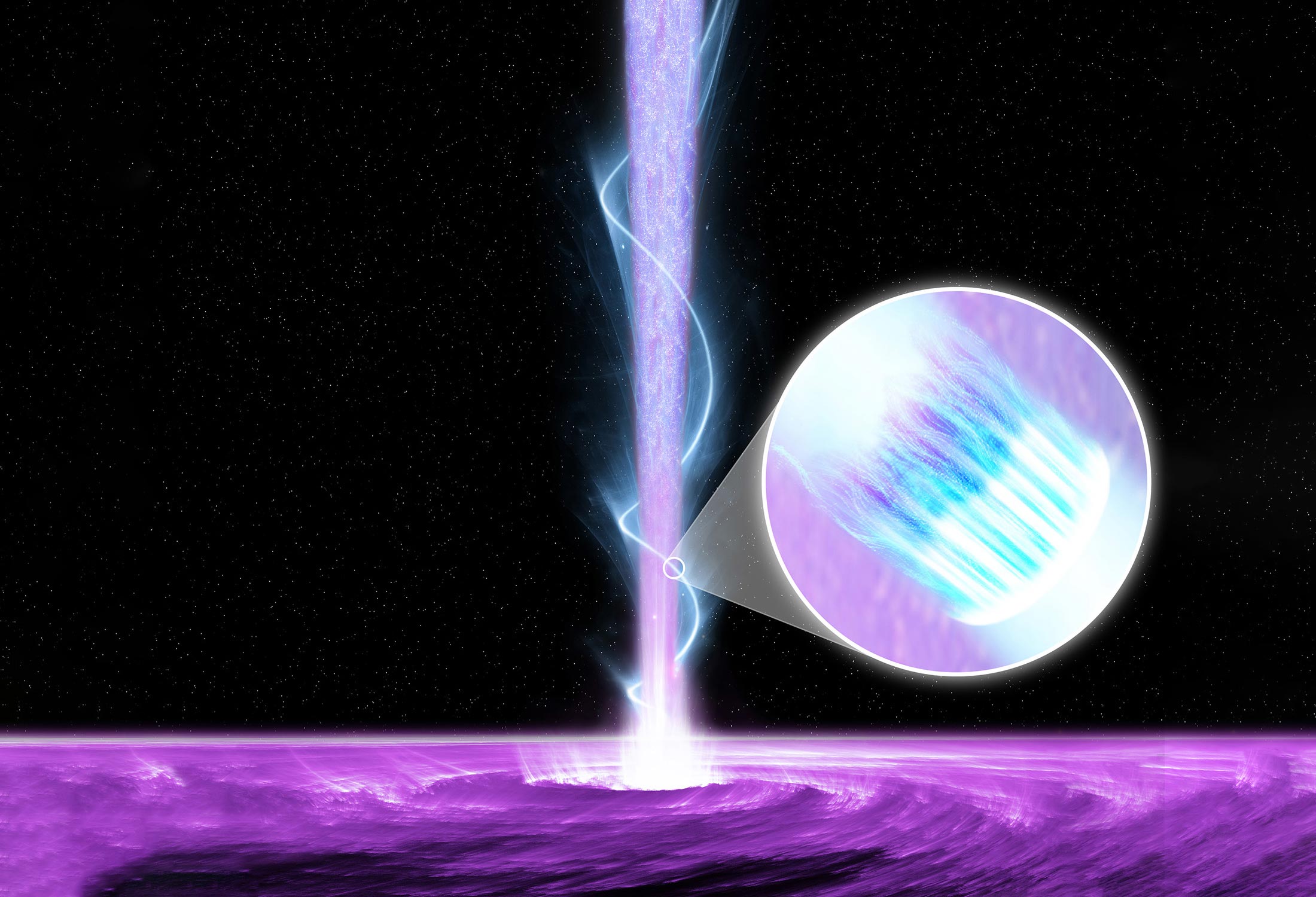
NASA's Imaging X-ray Polarimetry Explorer (IXPE) mission has observed a supermassive black hole, known as Markarian 421, pointing its highly energetic jet directly towards Earth. The jet, created by the black hole's accretion disk, emits bright electromagnetic radiation and is accompanied by a helical magnetic field. The polarization of the jet was found to rotate nearly 180 degrees in just two days, providing new insights into the physics of blazar jets. The discovery could help scientists better understand the mechanisms behind these extreme cosmic phenomena.

"NASA's IXPE Mission Unveils Astonishing Mega Jet Emanating from Black Hole"
astronomy2 years ago

"NASA's IXPE Mission Unveils Astonishing Mega Jet Emanating from Black Hole"

NASA's Imaging X-ray Polarimetry Explorer (IXPE) has made surprising discoveries about the blazar Markarian 421, located 400 million light-years away. IXPE's unique X-ray polarimetry measurements have revealed evidence of a helical structure in the magnetic field where particles are accelerated. The polarization angle of the X-ray emissions from Markarian 421 was found to rotate, indicating the presence of a shockwave propagating along the spiraling magnetic fields inside the blazar's jet. These findings provide valuable insights into the dynamics and emissions of blazar jets and highlight the importance of X-ray polarimetry in studying these cosmic phenomena.

Radio Galaxy Transforms into Blazar, Astronomers Discover
astronomy2 years ago

Radio Galaxy Transforms into Blazar, Astronomers Discover

Astronomers have observed a rare case of a galaxy shapeshifting, as a giant radio galaxy named PBC J2333.9-2343 has now been classified as a blazar. The galaxy's core has switched back on, and is now aiming its jet directly towards us. The blazar PBC J2333.9-2343 could give us a deeper understanding of how galaxies can transform, even on human timescales. The research team conducted an extremely thorough investigation, collecting observations in radio, infrared, optical, ultraviolet, X-ray, and gamma-ray wavelengths.

Black hole jet aims at Earth from newly-discovered ultramassive galaxy.
astronomy2 years ago

Black hole jet aims at Earth from newly-discovered ultramassive galaxy.

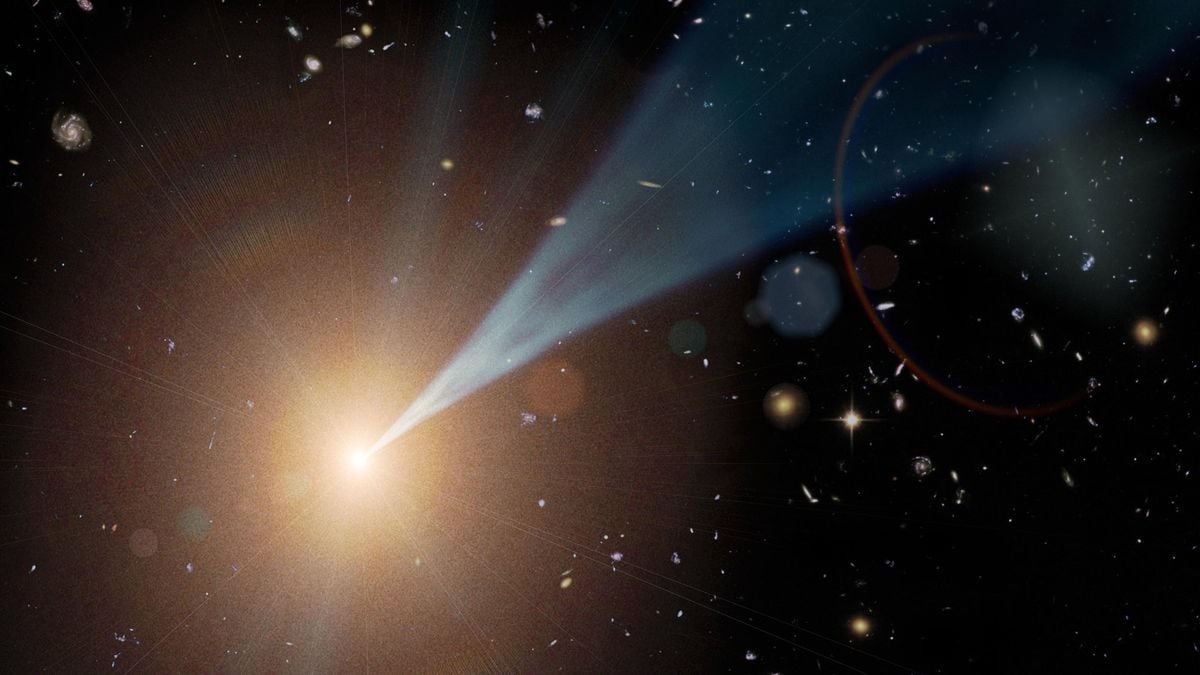
Astronomers have discovered that a jet from a galaxy with a black hole at its center has changed direction and is now pointing directly towards Earth. The galaxy, PBC J2333.9-2343, has been reclassified as a giant radio galaxy with a blazar in its core. Blazars are galaxies powered by black holes that shoot jets of high-energy particles towards Earth. The direction change appears to have taken place in the same nuclear outburst originating from the blazar's active galactic nucleus. The cause of the shift in the direction of jets is still unknown.

Black hole's jet shifts towards Earth in unprecedented cosmic event.
science-and-astronomy2 years ago

Black hole's jet shifts towards Earth in unprecedented cosmic event.

Astronomers have observed a jet streaming from the core of a distant galaxy that has changed directions, marking the first time they have observed a galaxy in the former group transform into a blazar. The galaxy, named PBC J2333.9-2343, is located about 656 million light-years away from Earth and is classified as a radio galaxy. The jet's orientation has changed by 90 degrees, now facing Earth, and astronomers suspect that the galaxy is X-shaped. The research is described in a paper published in the Monthly Notices of the Royal Astronomical Society.

science2 years ago

Supermassive black hole discovered facing Earth, emitting powerful radiation.

Scientists have discovered a colossal black hole, PBC J2333.9-2343, nearly 657 million light-years away from Earth, which is pointed directly at Earth. The black hole is about 40 times larger than the Milky Way galaxy and is classified as a giant radio galaxy. The researchers located a blazar, one of the most powerful phenomena in the universe, in the center of the galaxy, emitting light directly at Earth. The unique properties of the galaxy also revealed its old age.