Tag

Orbital Period

All articles tagged with #orbital period

astronomy1 year ago

"J0526+5934: The Smallest Star in a Ghostly Binary System"

Astronomers have discovered the smallest star ever, part of a binary system called TMTS J0526, with a radius just seven times that of Earth and about one-third the mass of the Sun. It orbits its companion, a white dwarf, with the shortest known period for binary stars at just 20.5 minutes. The observations suggest that the white dwarf is deforming the subdwarf star with every orbit, and this finding could provide insights into the evolution of such extreme stars.

astronomy2 years ago

Age of Stars Determines Frequency of Hot Jupiters

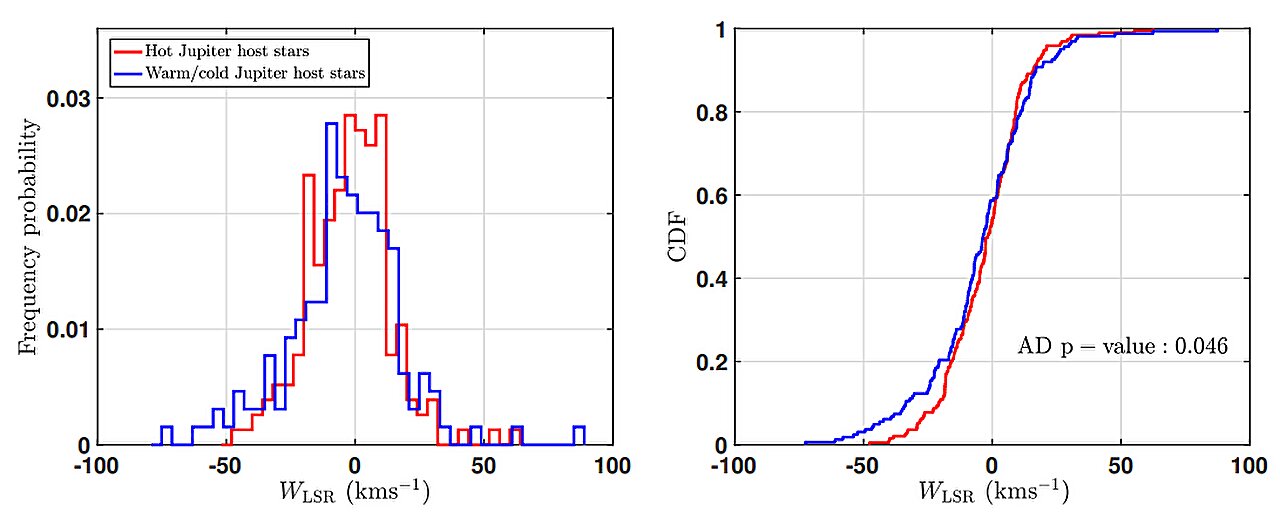
A study published in Proceedings of the National Academy of Sciences has found a correlation between the age of star systems and the frequency of hot Jupiters, large exoplanets that orbit close to their stars. The research team analyzed data for 383 Jupiter-sized exoplanets and found that hot Jupiters were more likely to be found around younger stars, with the frequency decreasing as star systems aged. The study also revealed that the frequency of hot Jupiters was related to the amount of metal in the host star, providing insights into the discrepancies between different exoplanet surveys.

astronomy2 years ago

"Scientists Confirm Existence of Missing Link in Spider Pulsars Theory"

Astronomers using the Five-hundred-meter Spherical radio Telescope (FAST) have discovered a binary pulsar system, known as PSR J1953+1844 or M71E, with an orbital period of only 53 minutes. This finding fills a gap in our understanding of the evolutionary stages of spider pulsar systems, confirming the theory of their evolution from redback to black widow states. The discovery was made possible by the unprecedented sensitivity of FAST, the world's largest and most sensitive radio telescope.

science-and-technology2 years ago

Calculating Venusian Day: Arecibo Data Reveals Surprising Findings

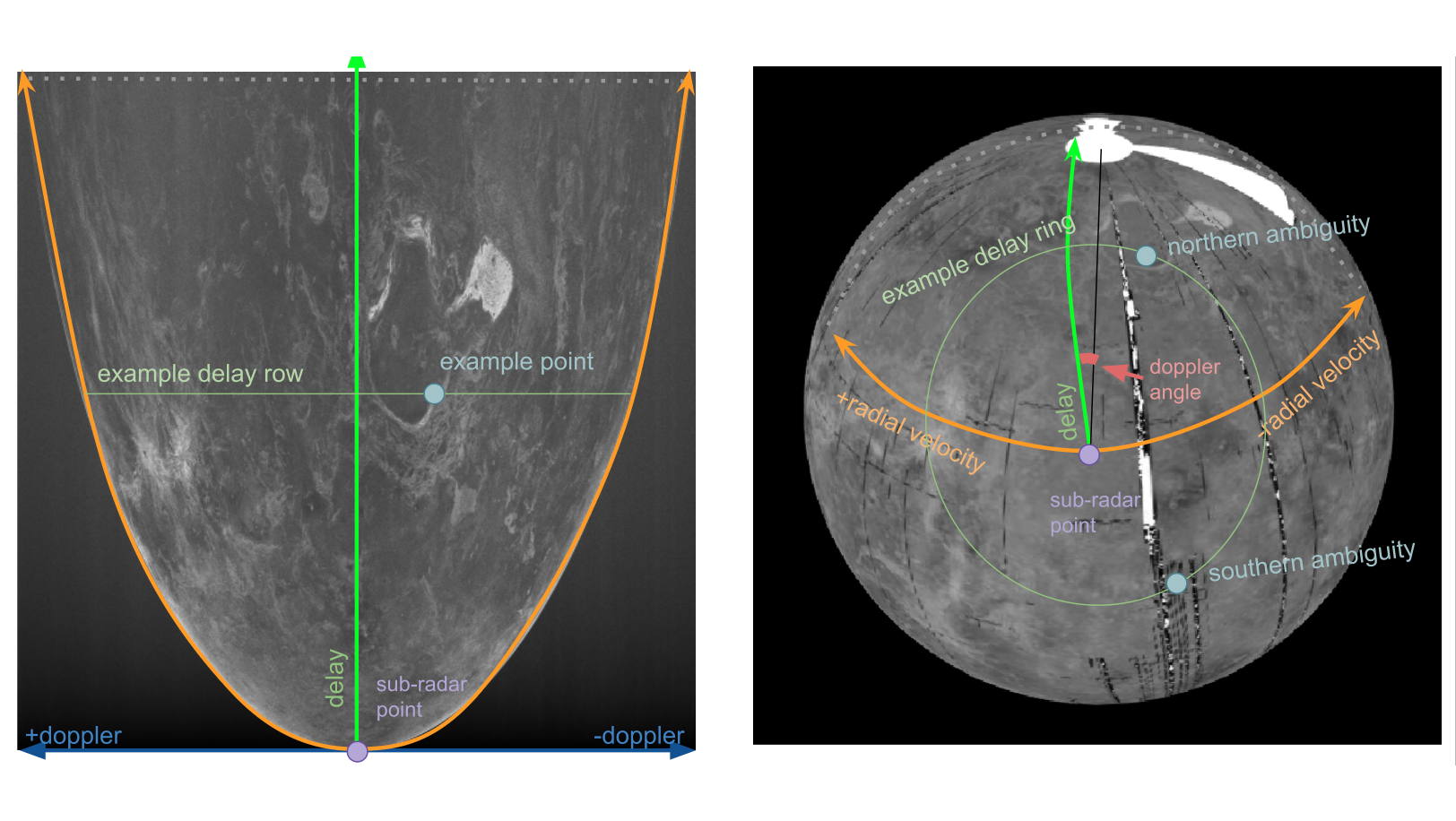
Nathaniel Fairfield, also known as thandal, used publicly available uncalibrated delay-doppler images of Venus collected by the Arecibo Observatory to estimate the planet's rotation and axis tilt. By aligning and calibrating the raw data, Fairfield found that Venus's revolution appears to be slightly speeding up and his estimates of the orbital axis were within 0.01 degrees of the International Astronomical Union's values. The complex signal processing involved mapping the data onto the Venus geoid and using surface features to estimate rotational speed and tilt. This research is important for better planning future missions.

astronomy2 years ago

Green Bank Telescope discovers binary pulsar with 53-minute orbit

Radio observations of the binary millisecond pulsar PSR J1953+1844 (M71E) show it to have an orbital period of 53.3 minutes and a companion with a mass of ~0.07 M⊙. It is a faint X-ray source and located 2.5 arcminutes from the center of the globular cluster M71. This discovery suggests the existence of a population of millisecond pulsars with moderate mass companions and very short orbital periods.