Tag

Apollo Missions

All articles tagged with #apollo missions

science-and-technology1 year ago

"SpaceX Dragon Capsule Now on Display in Chicago"

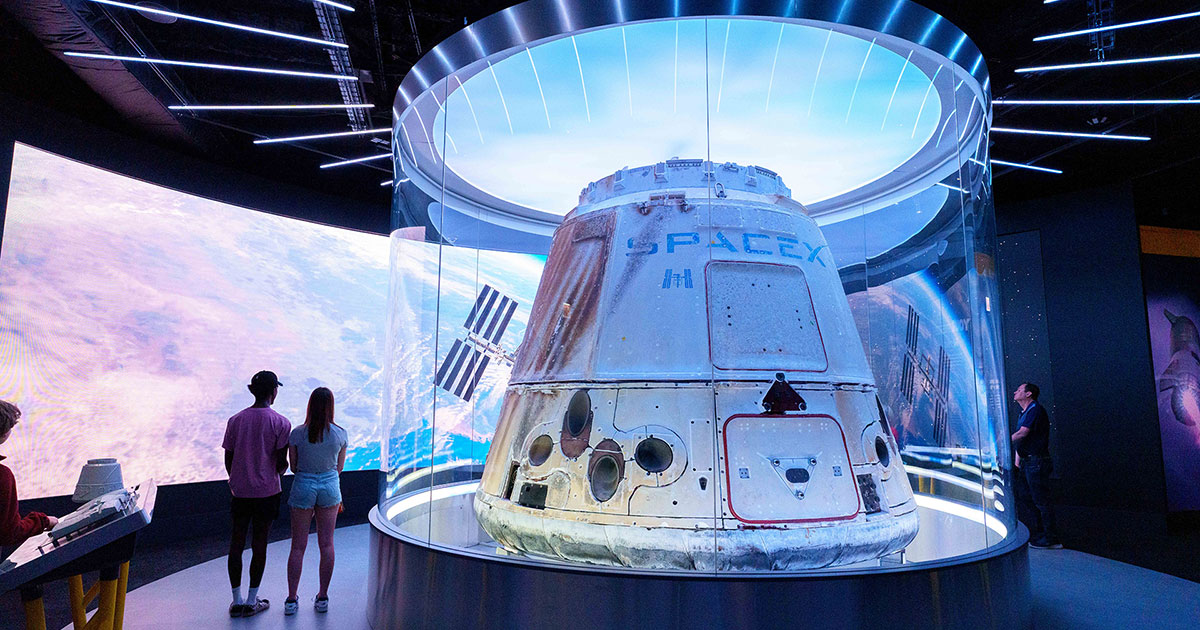
The Griffin Museum of Science and Industry in Chicago has unveiled a renovated gallery featuring a twice-flown SpaceX Dragon capsule alongside historic Mercury and Apollo spacecraft. The $125 million renovation, funded by Kenneth C. Griffin, includes immersive displays and new artifacts, highlighting space exploration from the past 20 to 30 years.

science1 year ago

"Unearthed Apollo Data Uncovers Hidden Moonquake Record"

A reanalysis of data from NASA's Apollo missions has revealed over 22,000 previously unknown moonquakes, nearly tripling the total number of known seismic events on the moon. These moonquakes, caused by gradual temperature changes and meteorite impacts, suggest that the moon may be more seismically and tectonically active than previously thought. The findings, presented at the Lunar and Planetary Science Conference, are in review by the Journal of Geophysical Research. Future moon missions are expected to provide more insight into moonquakes, with hopes that new data will confirm the discoveries made in this study.

obituary1 year ago

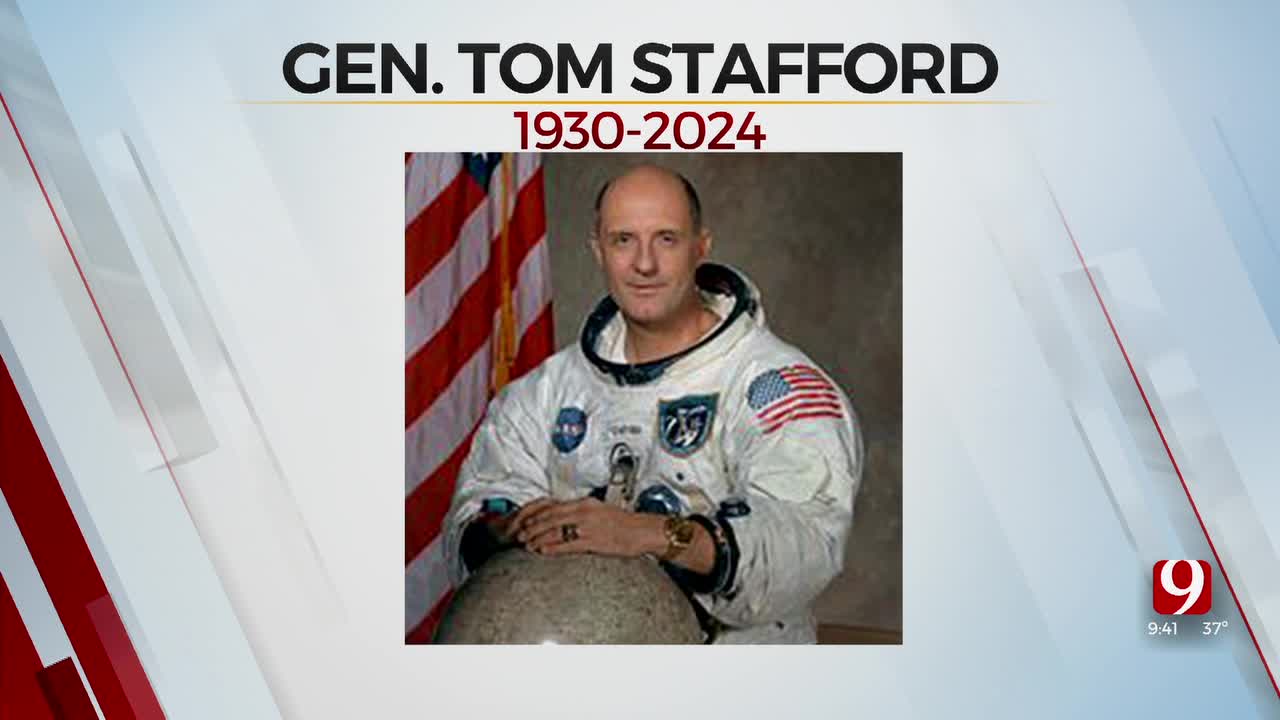
"Remembering General Thomas Stafford: A Legacy of Leadership and Service"

Oklahoma-born NASA astronaut General Thomas Stafford, known for his significant contributions to the Gemini and Apollo missions, passed away at the age of 93. Stafford, a decorated pilot and commander, played a pivotal role in space rendezvous and the Apollo X mission. His legacy includes setting a record for the highest reentry speed of any manned spacecraft and fostering US-Russian cooperation in space exploration. Stafford is survived by his wife, two sons, two daughters, and numerous grandchildren, with a funeral service to be held in his hometown of Weatherford.

obituary1 year ago

"Legendary Astronaut General Thomas Stafford Passes Away at 93"

General Thomas Stafford, an Oklahoma-born NASA astronaut, passed away at the age of 93. Stafford, a distinguished pilot and commander, played a significant role in the Gemini and Apollo missions, including the 1969 Apollo X mission, which was the first time humans went to the moon. He also contributed to improving space rendezvous practices and met Soviet cosmonauts during the Soyuz Test Project mission, marking a change in space exploration. Stafford is survived by his wife, two sons, two daughters, and many grandchildren, and a funeral service will be held in his hometown of Weatherford.

science2 years ago

"Scientists Declare the Moon's Arrival in a New Epoch"

Scientists suggest that the moon has entered a new geological epoch called the "Lunar Anthropocene," marking the impact of human exploration and activities on the lunar surface since the 1959 landing of the Soviet spacecraft Luna 2. With over a hundred spacecraft crashes and soft landings, as well as human artifacts left behind, the moon's environment has been significantly altered. As new space missions target the moon, concerns about preserving the lunar environment and historical artifacts arise, while the concept of a Lunar Anthropocene aims to raise awareness of humanity's impact on the moon's surface.

space-exploration2 years ago

Moon's Icy Secrets Unleash Lunar Water Harvesting Frenzy

NASA scientists have discovered evidence of hydrogen molecules within moon rocks, indicating the presence of lunar water. This discovery opens up the possibility of harvesting water on the moon for use as rocket propellant and life support, potentially turning the moon into a gas station for deep-space travel. The existence of lunar water could significantly reduce the cost and supply constraints of manned missions to the moon and even pave the way for future missions to Mars. This discovery is a significant step in deep-space travel and suggests the presence of a vast network of ice beneath the moon's surface.

space-science2 years ago

New Lunar Crystals Confirm Moon's Age: 40 Million Years Older Than Believed

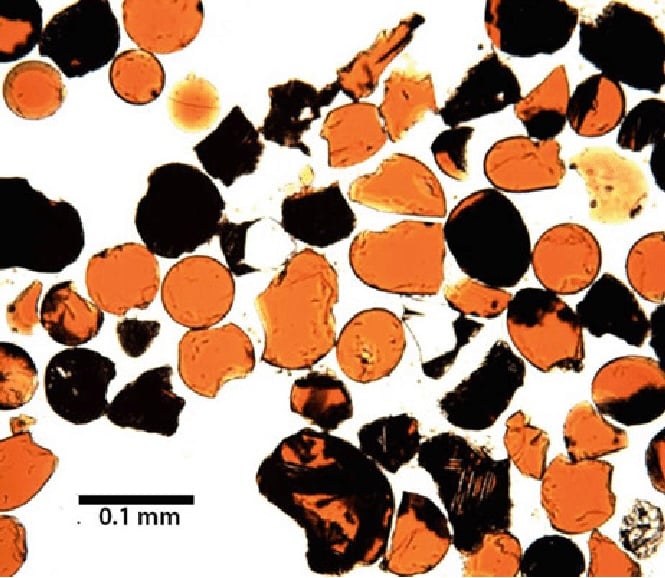
Analysis of zircon nanocrystals collected during the Apollo 17 mission suggests that the Moon is approximately 40 million years older than previously estimated, with an age of 4.46 billion years. These crystals serve as an anchor for the lunar chronology and were formed after the Moon's molten surface cooled. By using atom probe tomography and radiometric dating, scientists were able to measure the composition and age of the crystals, providing insights into the Moon's formation.

science2 years ago

New Study Suggests Moon is 40 Million Years Older Than Previously Believed

A new study using lunar crystals brought back by Apollo astronauts in 1972 suggests that the moon is 40 million years older than previously thought, pushing its age to at least 4.46 billion years. The study used an analytical method called atom probe tomography to determine the age of the oldest known lunar crystal. The findings provide valuable insights into the moon's formation and its role in stabilizing Earth's rotational axis and tides.

science-and-technology2 years ago

"NASA's 65-Year Legacy: Reflections from an Astrophysicist"

As NASA celebrates its 65th anniversary, an astrophysicist reflects on the agency's legacy and its profound impact on his life and career. From John Glenn's first flight into orbit to the Hubble telescope, NASA's missions have inspired generations of scientists. The article highlights key moments, such as the Mercury program proving NASA's ability to put a manned spacecraft in orbit, the Gemini missions demonstrating rendezvous maneuvers, and the Apollo missions leading to the historic Moon landing. NASA's advancements in space exploration and technology have revolutionized our understanding of the solar system and the cosmos. Looking ahead, private enterprise may play a larger role, but NASA's leadership in spaceflight and scientific research is expected to continue.

space2 years ago

"Unveiling the Future: A Glimpse of the Next Moon Footprints"

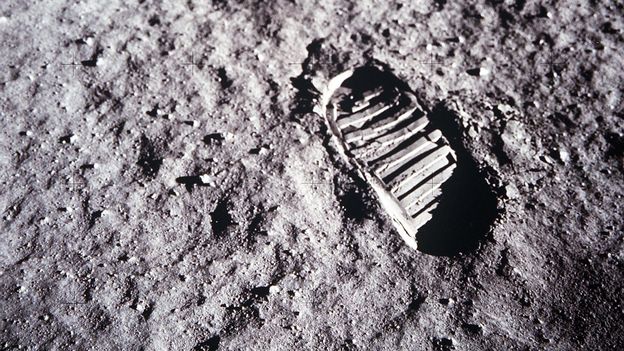
As NASA prepares for the Artemis missions to send astronauts back to the Moon, the design of the lunar boots is a crucial consideration. The new boots will need to protect astronauts from extreme temperatures and difficult terrain, while also leaving iconic and recognizable footprints on the lunar surface. Engineers are incorporating innovative materials and technologies into the boots to ensure they provide adequate grip, durability, and insulation. The boots will also need to accommodate a wider range of body sizes, as the Artemis missions will include the first woman to set foot on the Moon. The exact design of the boots has not been revealed yet, but they are expected to be more comfortable and mobile than the ones used during the Apollo missions.