Tag

Administrative State

All articles tagged with #administrative state

"Supreme Court Examines Trump-Era Bump Stock Ban"
politics2 years ago

"Supreme Court Examines Trump-Era Bump Stock Ban"

The Supreme Court is set to hear arguments regarding the Trump administration's ban on bump stocks, a device that increases a semiautomatic weapon's rate of fire. The case, which does not revolve around the Second Amendment, is part of a broader effort to limit the authority of administrative agencies, specifically the Bureau of Alcohol, Tobacco, Firearms and Explosives. The ban has sparked controversy among gun store owners and advocates, with Michael Cargill, a gun rights defender, challenging the ban and arguing against what he sees as an overreach of administrative power.
"Supreme Court's Potential Impact on Regulatory Cases"
jurisprudence2 years ago

"Supreme Court's Potential Impact on Regulatory Cases"

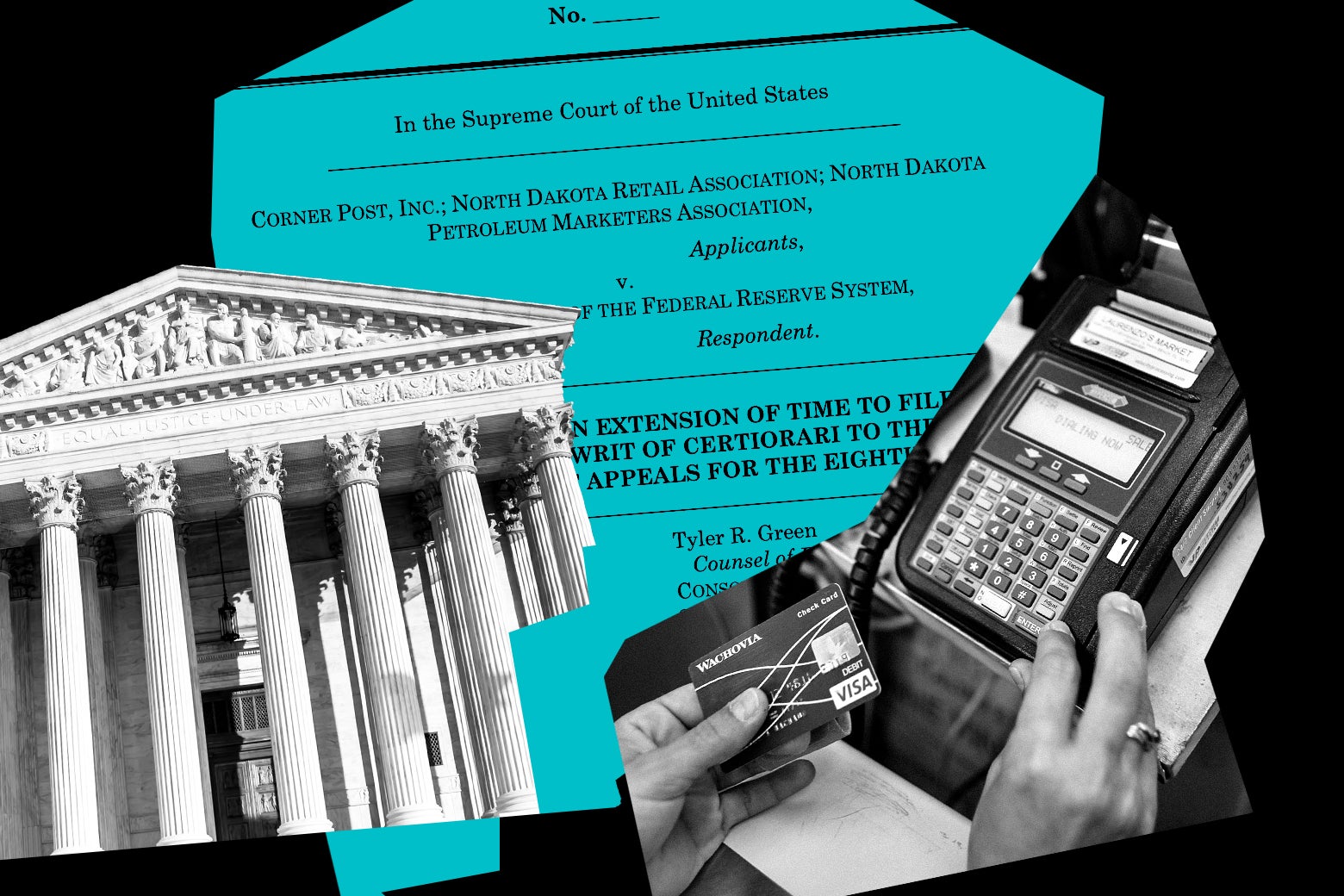
The Supreme Court case Corner Post v. Board of Governors could have far-reaching implications for the administrative state and regulatory past and future. The case involves a technical debate over the statute of limitations for challenging regulations, with potential to open the door for nonstop litigation against old rules. If successful, it could empower industry to challenge old regulations and significantly restrict agencies' ability to make and enforce rules, ultimately impacting millions of Americans and posing a threat to constitutional democracy.

"The Battle for Democracy: The Supreme Court's Role in Curbing Bureaucratic Power"
politics2 years ago

"The Battle for Democracy: The Supreme Court's Role in Curbing Bureaucratic Power"

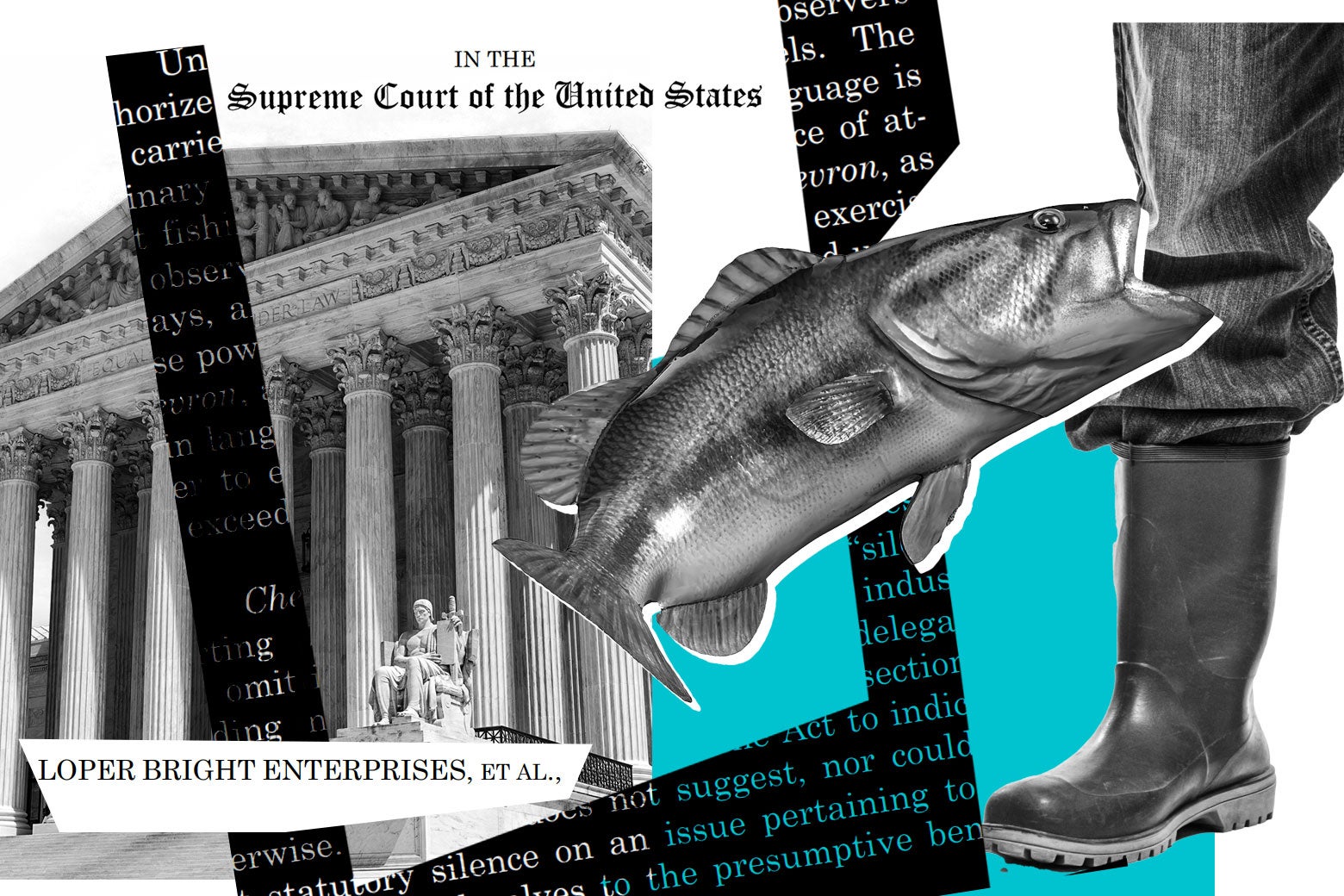
The case of Loper Bright Enterprises v. Raimondo, brought by New England fishermen against Commerce Secretary Gina Raimondo, may weaken Chevron deference, which has empowered the administrative state. The debate centers on who should have the power to decide laws - unelected judges or bureaucrats. The author argues that unelected bureaucrats should not have the authority to create laws, and that Chevron deference incentivizes vague laws and presidential abuse of power, posing a real threat to democracy.

"Supreme Court's Phony Case: Uncovered"
jurisprudence2 years ago

"Supreme Court's Phony Case: Uncovered"

The Supreme Court heard oral arguments in cases aiming to undermine federal agencies' power by overturning Chevron deference, which requires courts to defer to an agency's reasonable interpretation of an ambiguous law. The cases involve a defunct program, but conservative legal activists seized on them to challenge Chevron deference. The Court's focus on this issue, rather than the original statutory interpretation question, has raised concerns about the justices' agenda and the potential impact on federal agency authority.

"Supreme Court's Impact on Government Power and Agency Rules"
politics2 years ago

"Supreme Court's Impact on Government Power and Agency Rules"

The U.S. Supreme Court, with a 6-3 conservative majority, is considering three cases that will impact the "war on the administrative state," a conservative push to weaken federal agencies' regulatory power. The cases involve challenges to the Chevron deference doctrine, the funding structure of the Consumer Financial Protection Bureau, and the legality of in-house tribunals at the Securities and Exchange Commission. The court's rulings could have far-reaching consequences for federal agency authority and the ability to regulate various industries.

"Supreme Court's Landmark Challenge: Reeling in Government Power"
law-and-politics2 years ago

"Supreme Court's Landmark Challenge: Reeling in Government Power"

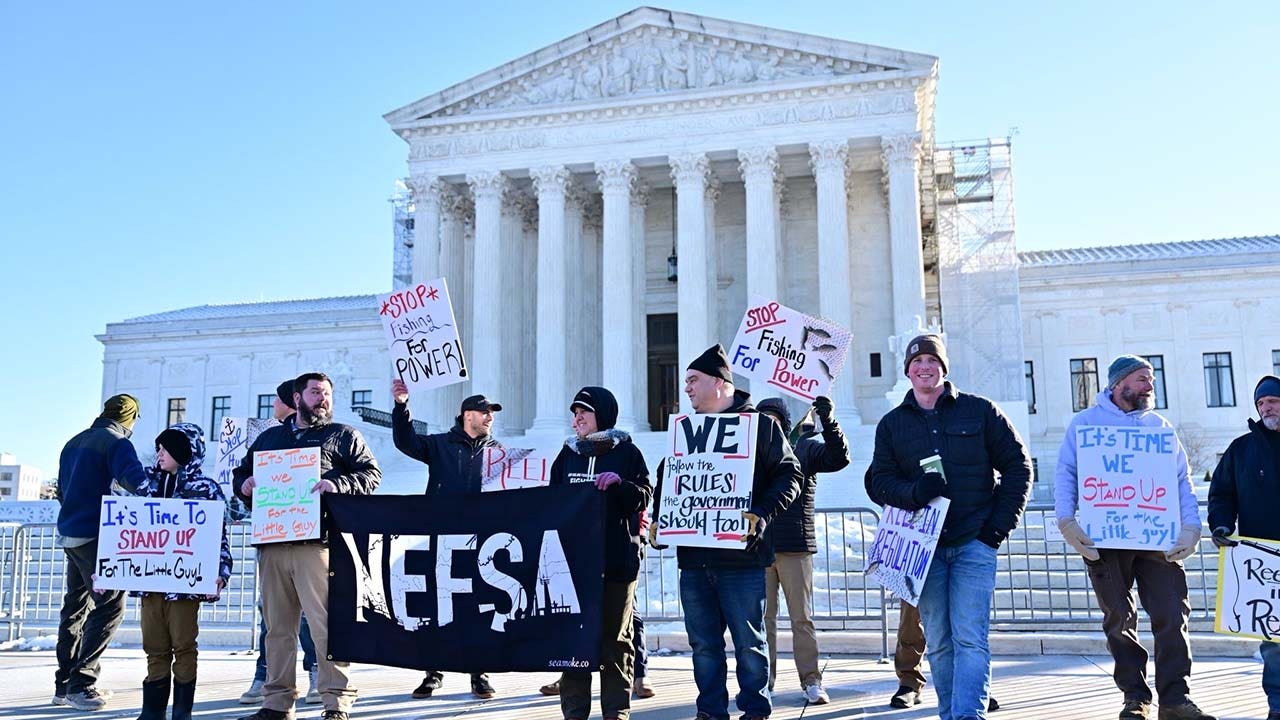
The Supreme Court's conservative majority appears inclined to challenge the Chevron doctrine, a legal theory giving deference to federal agency regulations, in response to lawsuits from East Coast fishermen contesting a National Oceanic and Atmospheric Administration (NOAA) rule. Justices expressed concerns about the doctrine's impact on various groups and its potential for instability, while the government argued that overturning Chevron would disrupt the legal framework. The fishermen argue that the mandated cost of at-sea monitors significantly impacts their businesses, and a ruling is expected by late June.

"Supreme Court's Potential Blow to Federal Agency Powers"
politicslaw2 years ago

"Supreme Court's Potential Blow to Federal Agency Powers"

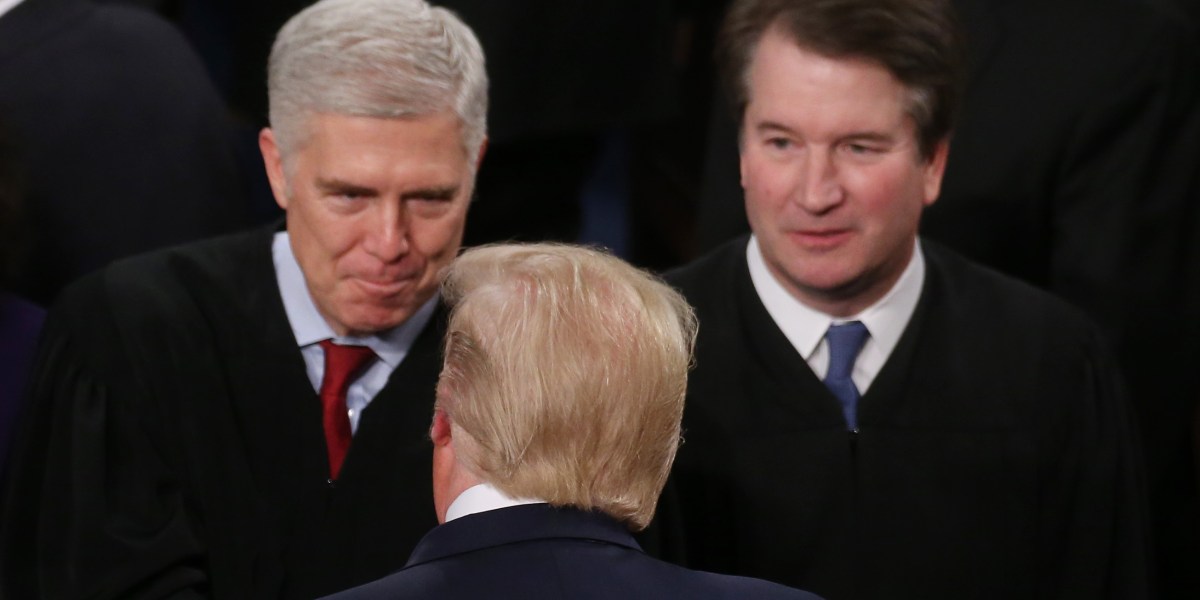
Two of Trump's Supreme Court appointees, Justices Neil Gorsuch and Brett Kavanaugh, are leading the charge to eliminate the Chevron doctrine, a 40-year-old legal principle that empowers federal agencies to interpret laws when they are unclear. The conservative majority on the Supreme Court appears set to overturn this precedent, potentially impacting regulations on public health, workplace safety, and consumer protections. The outcome of the case, which is expected by early summer, could significantly limit the power of federal agencies and lead to a flood of litigation challenging longstanding regulations.

"Supreme Court's Potential Impact on Federal Agency Powers and the Administrative State"
politics2 years ago

"Supreme Court's Potential Impact on Federal Agency Powers and the Administrative State"

The Supreme Court is considering a case that could potentially weaken federal agencies' power to regulate businesses by overturning the Chevron v. Natural Resources Defense Council precedent, which currently allows judges to defer to agencies' interpretations of ambiguous laws. If overturned, this could make it easier to challenge regulations across various issues, but the extent of the ruling's impact remains uncertain until the court issues its decision, expected by the end of its term in June.

"Supreme Court's Potential Impact on Federal Administrative Power"
politics2 years ago

"Supreme Court's Potential Impact on Federal Administrative Power"

The Supreme Court is set to hear a case involving a fishing regulation that could have far-reaching implications for the power of executive agencies. The case, backed by a conservative group, aims to overturn the seminal 1984 Chevron v. Natural Resources Defense Council decision, which has been a cornerstone of American law. The outcome could potentially limit the authority of government agencies and has sparked broader debates about the role of regulation and the separation of powers.

Supreme Court Contemplates Limiting SEC's Power in Landmark Case
law-and-politics2 years ago

Supreme Court Contemplates Limiting SEC's Power in Landmark Case

The Supreme Court's conservative majority expressed skepticism about the Securities and Exchange Commission's (SEC) use of in-house legal proceedings to discipline those accused of fraud, with concerns raised about the violation of the Seventh Amendment right to a jury trial and the encroachment on executive branch prerogatives. The arguments highlighted the ongoing tension between conservatives, who believe the power of federal agencies has curtailed individual rights, and liberals, who argue that Congress should be trusted to delegate authority to address complex problems. The court also grappled with a 1977 precedent that affirmed the powers of administrative hearings, with Justice Elena Kagan asserting that Congress should decide how to solve problems and whether administrative agencies are appropriate. The case could have implications for administrative law judges across the federal government.

Supreme Court's Potential Impact on SEC and Financial Fraud Watchdog Powers
law-and-politics2 years ago

Supreme Court's Potential Impact on SEC and Financial Fraud Watchdog Powers

The conservative justices of the U.S. Supreme Court expressed skepticism towards the Securities and Exchange Commission's (SEC) in-house enforcement proceedings, which aim to maintain the integrity of securities markets. The case brought by George Jarkesy challenges the SEC's actions, arguing that he should have had a trial in federal court with a jury. The justices focused on the contention that the SEC's fact-finding process violated Jarkesy's Seventh Amendment right to a jury trial. The case is part of a broader effort to dismantle what some conservatives call "the administrative state."

Supreme Court's Potential Rulings on Financial Fraud and SEC's Authority
law-and-politics2 years ago

Supreme Court's Potential Rulings on Financial Fraud and SEC's Authority

The Supreme Court justices expressed concerns about the Securities and Exchange Commission's (SEC) enforcement actions for securities fraud, suggesting that the court may limit the agency's power. Conservative justices questioned the SEC's use of in-house administrative law judges, arguing that it violates an individual's right to a trial by jury. If the court rules against the SEC, it could impact other agencies that use similar proceedings. The case arose after the SEC brought an enforcement action for securities fraud, and the defendant challenged the proceedings, arguing they violated the Constitution. The 5th US Circuit Court of Appeals ruled in favor of the defendant, finding that certain SEC proceedings deprived individuals of their Seventh Amendment right to a civil jury. The Supreme Court seemed focused on this aspect of the case during arguments.

Supreme Court's Potential Blow to SEC's Power and Trump's Administrative State Agenda
law-and-politics2 years ago

Supreme Court's Potential Blow to SEC's Power and Trump's Administrative State Agenda

The Supreme Court is signaling support for a hedge fund manager, George Jarkesy, who claims that the Securities and Exchange Commission (SEC) violated his constitutional rights by using in-house judges instead of a jury to decide if he broke the law. This case has broader implications for the government's ability to enforce regulations and weaken the "administrative state." The conservative justices expressed skepticism towards the Biden administration's argument that securities fraud enforcement falls under the executive branch's enforcement role. The liberal justices were more sympathetic to the government's position. The decision, along with other cases before the court, is expected to be decided in the middle of next year's presidential election.

Vivek Ramaswamy Seeks Supreme Court Support to Slash 1 Million Government Jobs
politics2 years ago

Vivek Ramaswamy Seeks Supreme Court Support to Slash 1 Million Government Jobs

Vivek Ramaswamy, a businessman-turned-candidate, plans to trigger mass layoffs at federal agencies in an effort to undermine the administrative state and reduce the power of career civil servants. He believes that the Supreme Court will support his approach, which involves using "reduction in force" regulations to trim the number of government workers. Ramaswamy aims to shut down several federal agencies and make significant changes through executive action, without congressional approval. He predicts legal challenges centered on civil service protections but argues that these protections do not apply to mass layoffs. Ramaswamy's proposals have drawn criticism from some Republicans, while others see his ideas as a way to reshape the future of the Republican Party.

politics2 years ago

The Impending Financial Disaster: Understanding the Debt Limit Showdown.

The U.S. may default on its debt in June if Congress fails to pass an increase in the debt limit, which is a possibility due to the Republican Party's desire to destroy the "administrative state" and return to pre-New Deal politics. This would mean a return to vicious predatory capitalism and severe hobbling of democracy. Some Republicans believe that a U.S. default is necessary to avoid a totalitarian future, and any suffering by regular people would likely redound to their political benefit. The Biden administration apparently has no credible plan to ward off this catastrophe.