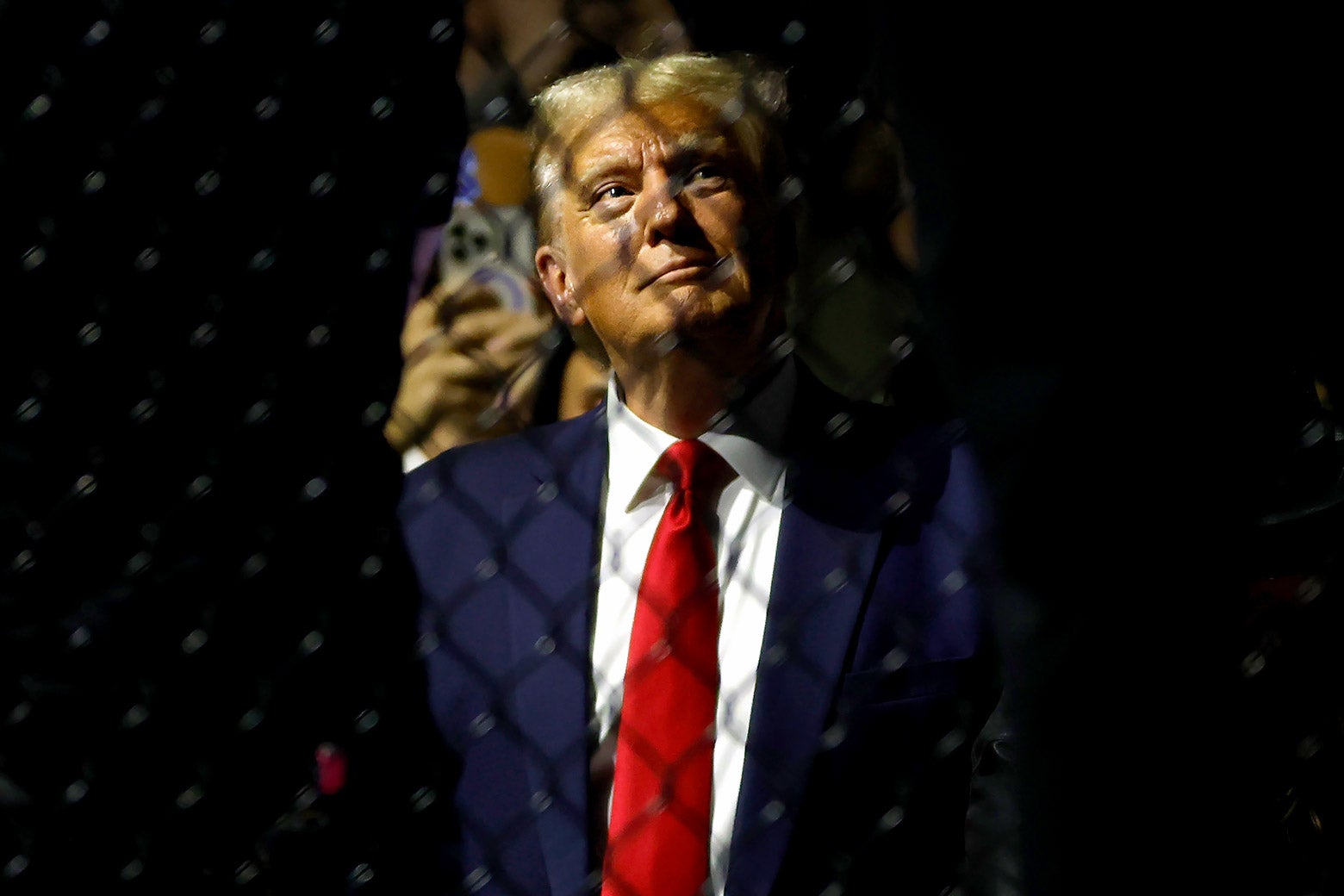
President Donald Trump criticized the conservative legal movement and Leonard Leo for a federal court ruling that blocked most of his tariffs, highlighting a growing rift with a key political community.
President Trump publicly distanced himself from the Federalist Society, a key conservative legal organization that helped shape his judicial appointments, criticizing its advice and leadership. This split could weaken the Society's influence on the judiciary and alter the ideological composition of future federal judges, potentially impacting conservative legal policies and Trump's second-term judicial strategy.
The Supreme Court is considering a case that could potentially weaken federal agencies' power to regulate businesses by overturning the Chevron v. Natural Resources Defense Council precedent, which currently allows judges to defer to agencies' interpretations of ambiguous laws. If overturned, this could make it easier to challenge regulations across various issues, but the extent of the ruling's impact remains uncertain until the court issues its decision, expected by the end of its term in June.
The Supreme Court is set to hear a case involving a fishing regulation that could have far-reaching implications for the power of executive agencies. The case, backed by a conservative group, aims to overturn the seminal 1984 Chevron v. Natural Resources Defense Council decision, which has been a cornerstone of American law. The outcome could potentially limit the authority of government agencies and has sparked broader debates about the role of regulation and the separation of powers.
Amicus briefs filed by conservative legal activists, including Princeton Professor Robert P. George and Leonard Leo, have influenced Supreme Court rulings by promoting historical falsehoods. These briefs have been used to support conservative arguments in cases involving abortion, affirmative action, LGBTQ+ rights, and more. Leo and his network of nonprofit groups have connections to a majority of amicus briefs filed on behalf of conservative parties in high-profile rulings. Major historical organizations have criticized the use of these briefs, stating that they perpetuate flawed interpretations of history. The influence of amicus briefs in shaping court opinions has raised concerns about the lack of vetting and disclosure processes for these filings.
If Donald Trump is elected president in 2024, he plans to remake the judiciary, civil service, Justice Department, and policing and immigration law, while also doing away with legal checks on executive power. However, one of the most alarming aspects of his campaign is his belief that the Federalist Society, led by Leonard Leo, is not conservative enough. Trump's rejection of the Federalist Society's more moderate approach has led him to seek out fringe and radical advisors who are willing to push the boundaries of the law. This shift highlights the tension within the conservative legal movement and the battle over the legitimacy of legal institutions.
Lawyers George Conway, J. Michael Luttig, and Barbara Comstock argue that American democracy, the Constitution, and the rule of law are increasingly in peril, especially if Donald Trump is reelected. They express concern over Trump's plans to appoint partisan loyalists, sidestep existing laws, and undermine long-established legal norms. They criticize the conservative legal movement, particularly the Federalist Society, for failing to speak out against Trump's constitutional excesses. In response, they have formed the Society for the Rule of Law Institute, aiming to rebuild a conservative legal movement that supports and defends American democracy, the Constitution, and the rule of law. They emphasize the need for pro-democracy lawyers to unite and counter the spread of falsehoods and authoritarian legal theories.
The Supreme Court has ruled that companies are guilty of discrimination unless they accommodate employees from any policies that burden their religious practices, making it more difficult for companies to defend themselves by showing an "undue hardship." This decision is likely to lead to a wave of litigation, with employees suing their employers to block corporate policies they disagree with. The court's decision is part of a broader strategy within a conservative legal movement that has soured on corporate America and seeks to prioritize the rights of religious conservatives over others.
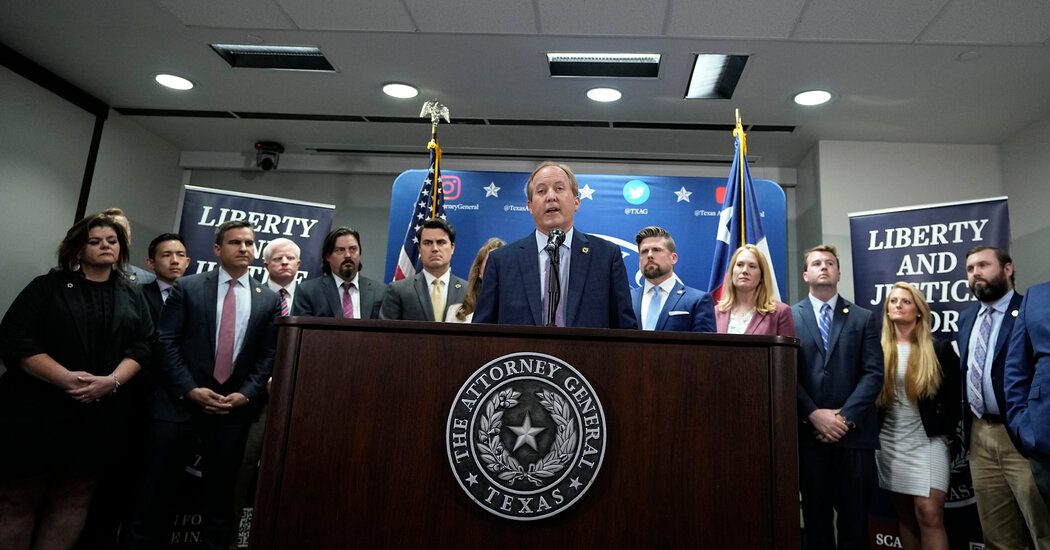
Despite facing impeachment and multiple legal challenges, Texas Attorney General Ken Paxton has managed to survive due to his position as a leading figure in the conservative legal movement. Paxton's challenges to the Obama and Biden administrations and his willingness to contest the results of the 2020 election have garnered him the loyalty of Republican primary voters and the endorsement of former President Donald J. Trump. Facing opposition from some of his own Republican colleagues, Paxton is counting on political support that he's amassed as a Republican legal firebrand.