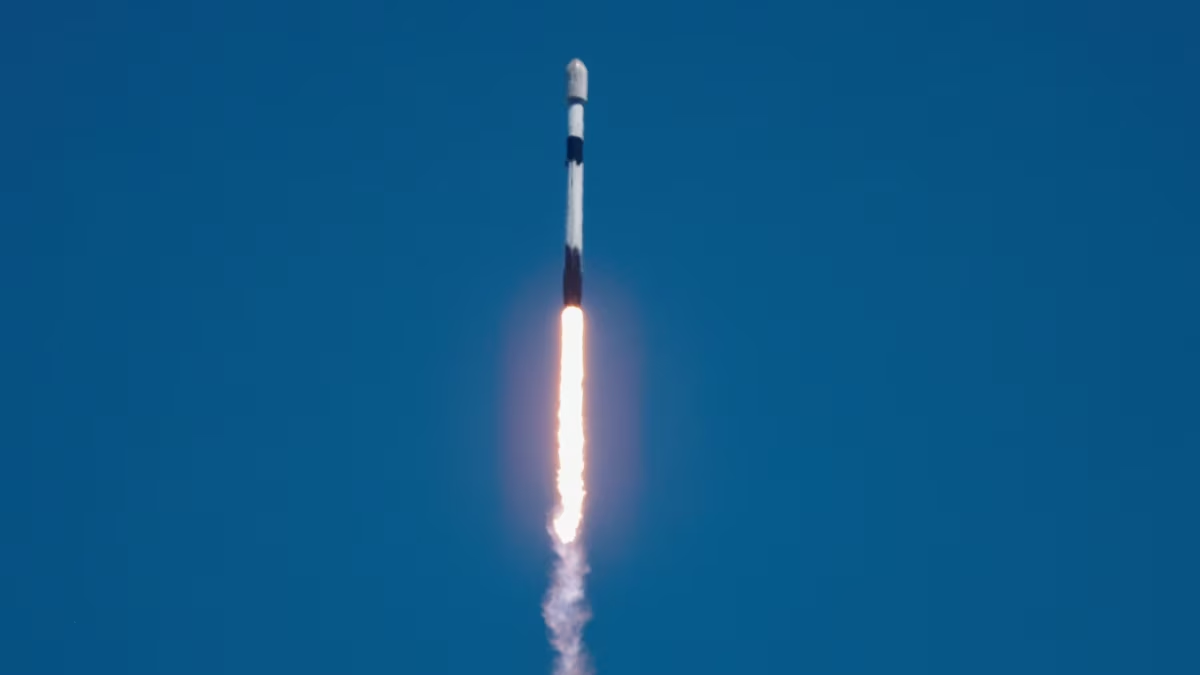
The European Space Agency (ESA) is in discussions with SpaceX to join the Zero Debris Charter, an international agreement aimed at reducing space junk by 2030. SpaceX's satellites make up a significant portion of the current low-Earth orbit population, and their involvement could bolster efforts to mitigate space debris. The charter, which has over 100 signatories, seeks to prevent the creation of new orbital debris, a growing concern as more organizations launch large satellite constellations.
The European Space Agency (ESA) has introduced its "Zero Debris approach" to significantly reduce space debris in Earth and Lunar orbits by 2030. To promote global action, ESA has facilitated the Zero Debris Charter, a global initiative for all space entities to sign and follow towards achieving a zero debris future. The charter has been finalized and more than 40 organizations have actively engaged in its development. The goal is to bring together space actors worldwide to create no more debris by 2030 and ensure the long-term sustainability of space activities. Interested entities can register their intent to sign the charter, with signing ceremonies planned for the first half of 2024.
The European Space Agency (ESA) and three European satellite manufacturers, Airbus Defence and Space, OHB and Thales Alenia Space, have announced plans to develop a "Zero Debris Charter" to prevent the creation of new debris, particularly in low Earth orbit. The charter will include "ambitious and meaningful targets to be achieved by 2030" and will be nonbinding, but advocates hope it could be incorporated into future regulations. The goal is that, by 2030, those who agree to abide by the charter will deorbit their satellites at the end of their lives or contract with companies that provide active debris removal services to deorbit them.