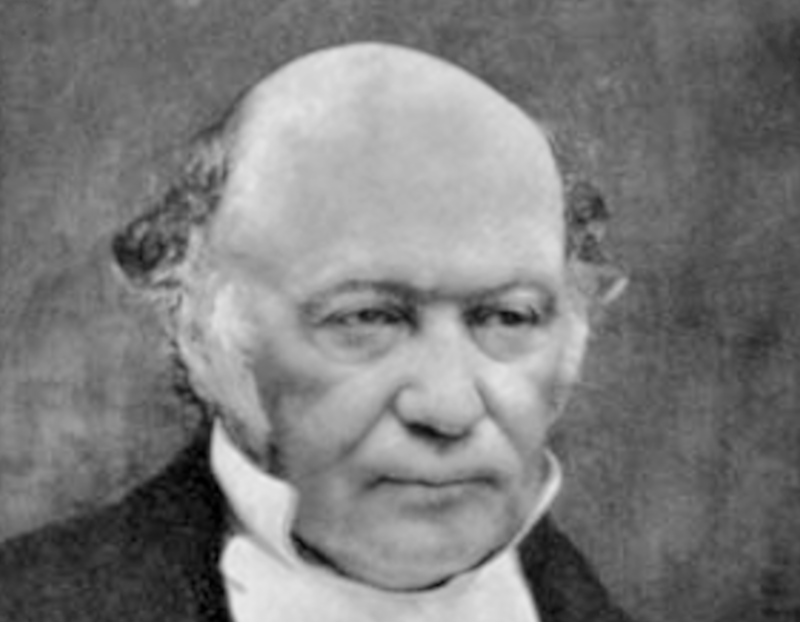
The article explores the early ideas and contributions of William Rowan Hamilton related to wave and particle theories, which foreshadowed the development of quantum mechanics, highlighting his analogies and influence on later scientists like de Broglie and Schrödinger.
William Rowan Hamilton's development of mechanics using light-ray analogies in the 1820s laid the groundwork for quantum mechanics a century later, with his ideas influencing the wave-particle duality and the formulation of Schrödinger's wave equation, which is central to modern quantum physics and technology.
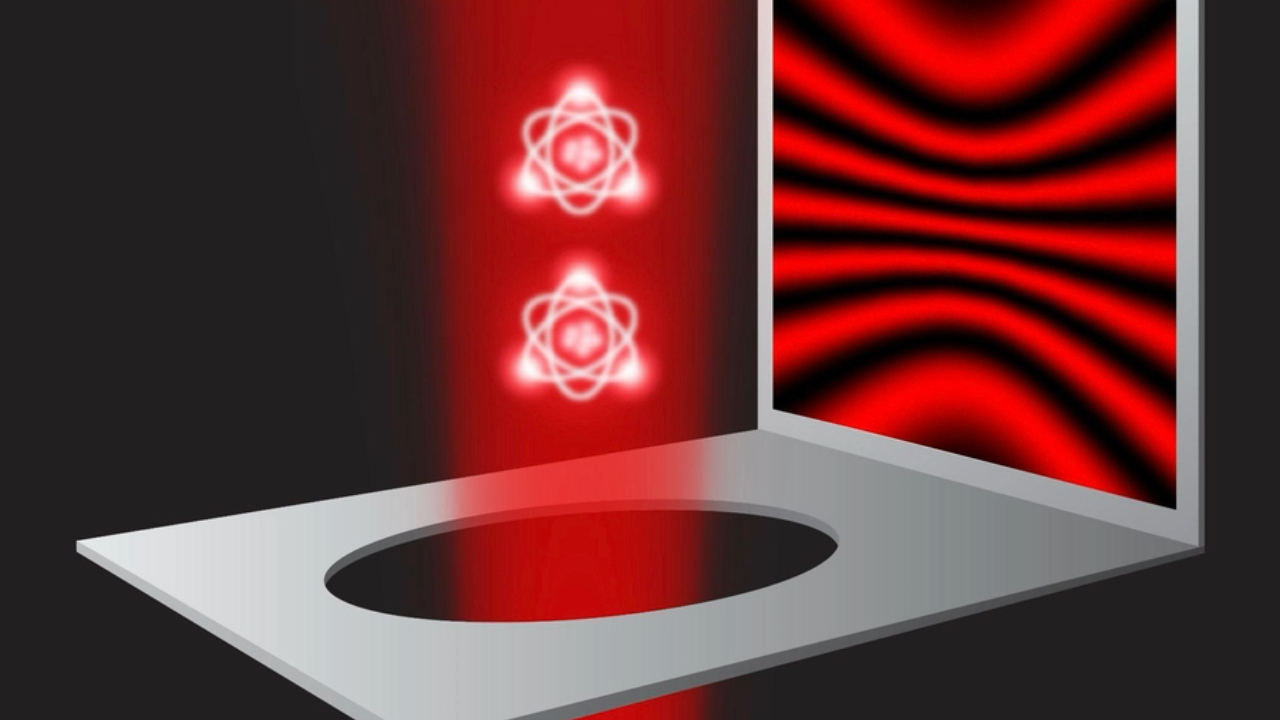
MIT physicists have recreated the iconic double-slit experiment using individual atoms as slits and single photons, confirming that even minimal interaction destroys the wave interference pattern, thus reinforcing that light cannot exhibit both particle and wave nature simultaneously, and settling a nearly century-old debate between Einstein and Bohr.
MIT researchers performed a simplified atomic-scale double-slit experiment confirming that light cannot be observed as both a wave and a particle simultaneously, supporting Bohr's complementarity principle and challenging Einstein's earlier objections to quantum uncertainty.
MIT researchers performed an idealized double-slit experiment using single ultracold atoms, providing further evidence that Einstein's idea of detecting a photon's path without destroying interference is incorrect, supporting quantum mechanics predictions.
Scientists conducted an advanced double slit experiment at the atomic level, confirming quantum mechanics' prediction that observation collapses wave-like behavior of photons into particles, thereby disproving Einstein's hypothesis that atomic disturbances could reveal wave behavior without collapsing the wave function.
MIT researchers recreated a modern, highly precise version of the double-slit experiment using ultracold atoms, confirming that wave-particle duality depends on quantum uncertainty and refuting Einstein's idea that both a photon's path and interference pattern can be measured simultaneously, thus advancing our understanding of quantum mechanics.
Physicists at Stevens Institute of Technology have developed a precise formula that fully quantifies the wave-like and particle-like behaviors of quantum objects, advancing understanding of wave-particle duality and enabling new applications in quantum imaging and computing.
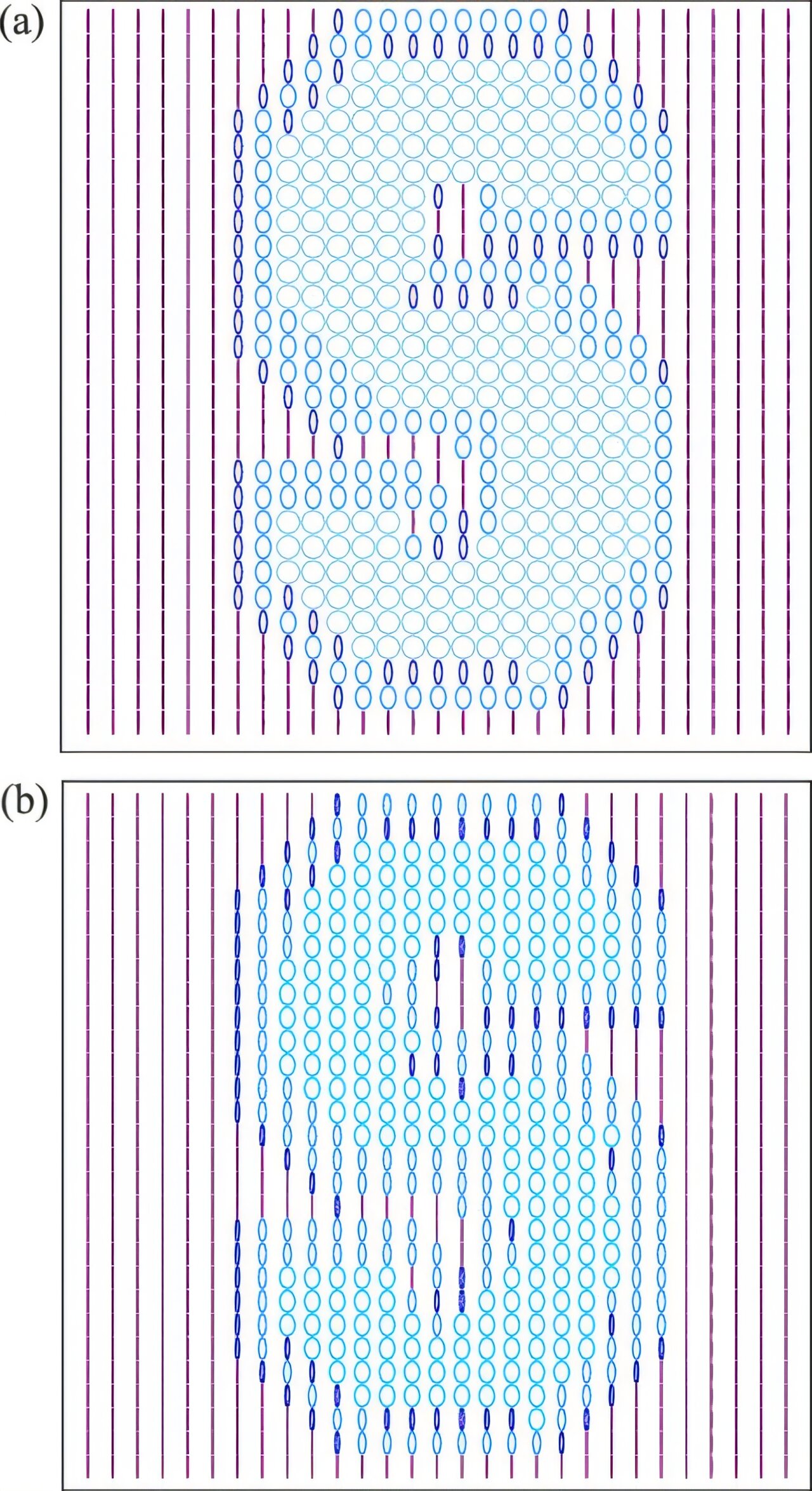
Researchers at Stevens Institute of Technology have developed a new formula that precisely quantifies the wave-ness and particle-ness of quantum objects, revealing their dual nature and enabling advanced applications in quantum imaging and computing. The formula incorporates coherence as a key variable, allowing for exact measurements and a better understanding of quantum behavior, with potential implications for quantum information technology.
The nature of light as both a particle and a wave has puzzled scientists for centuries, with key experiments by Thomas Young and Albert Einstein providing evidence for its dual nature. Young's double-slit experiment demonstrated light's wave properties, while Einstein's explanation of the photoelectric effect revealed its particle characteristics. This wave-particle duality is fundamental to quantum mechanics and essential for the stability of atoms and the existence of life.
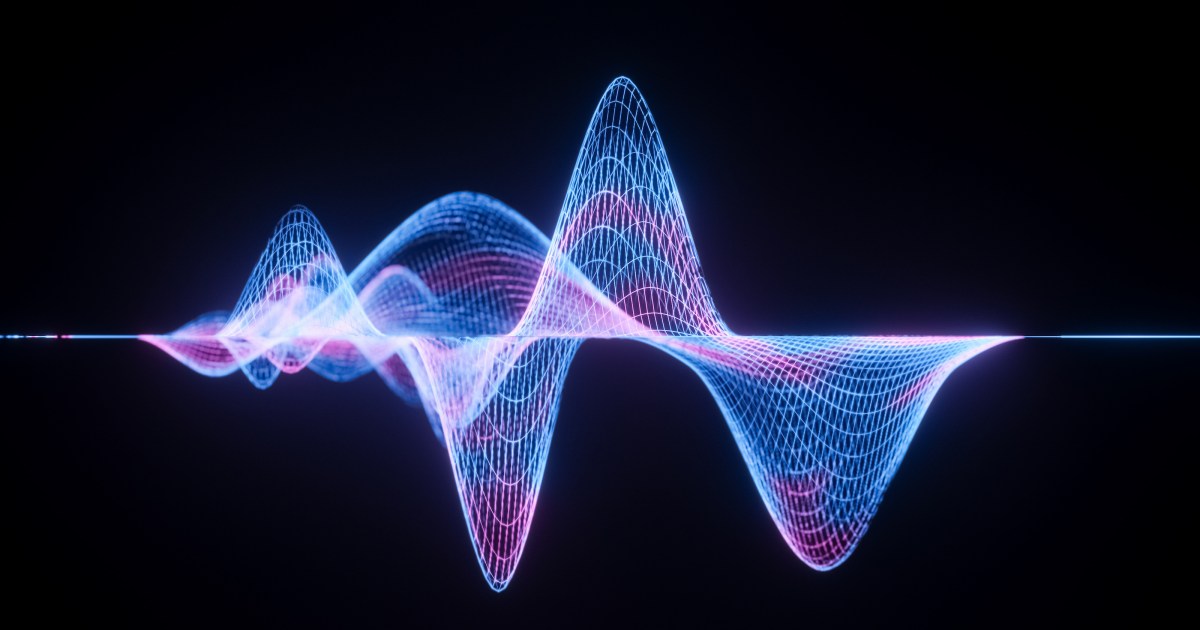
The concept of wave-particle duality, which describes the behavior of quanta such as light and electrons, has its origins in the 17th century with Christiaan Huygens and Isaac Newton. The idea that light is a wave was initially proposed by Huygens, while Newton described light as a series of rays or corpuscles. Thomas Young's double slit experiment in the early 19th century provided evidence for the wave nature of light, and subsequent experiments by Augustin-Jean Fresnel and François Arago further supported the wave theory. Maxwell's equations in the 19th century revealed light as an electromagnetic wave, and Einstein's work on the photoelectric effect demonstrated that light's energy is quantized into individual packets known as photons. Modern experiments continue to confirm the wave-particle duality of quanta, showing that they behave as waves when unobserved and as particles when measured or compelled to interact with other quanta.
Researchers at the City University of New York have achieved a breakthrough in creating light-based time reflections using a metamaterial with adjustable optical properties. By dynamically adding or removing material along a waveguide, they were able to alter the waveguide's effective properties and manipulate light's temporal components. This breakthrough has revealed counterintuitive effects, such as the beginning of the original signal appearing at the end of the reflected signal and changes in light's frequencies. The researchers also observed that colliding beams of light can behave like colliding billiard balls when a time reflection occurs. These findings hold promise for advancements in signal processing, communications, and energy conversion applications.
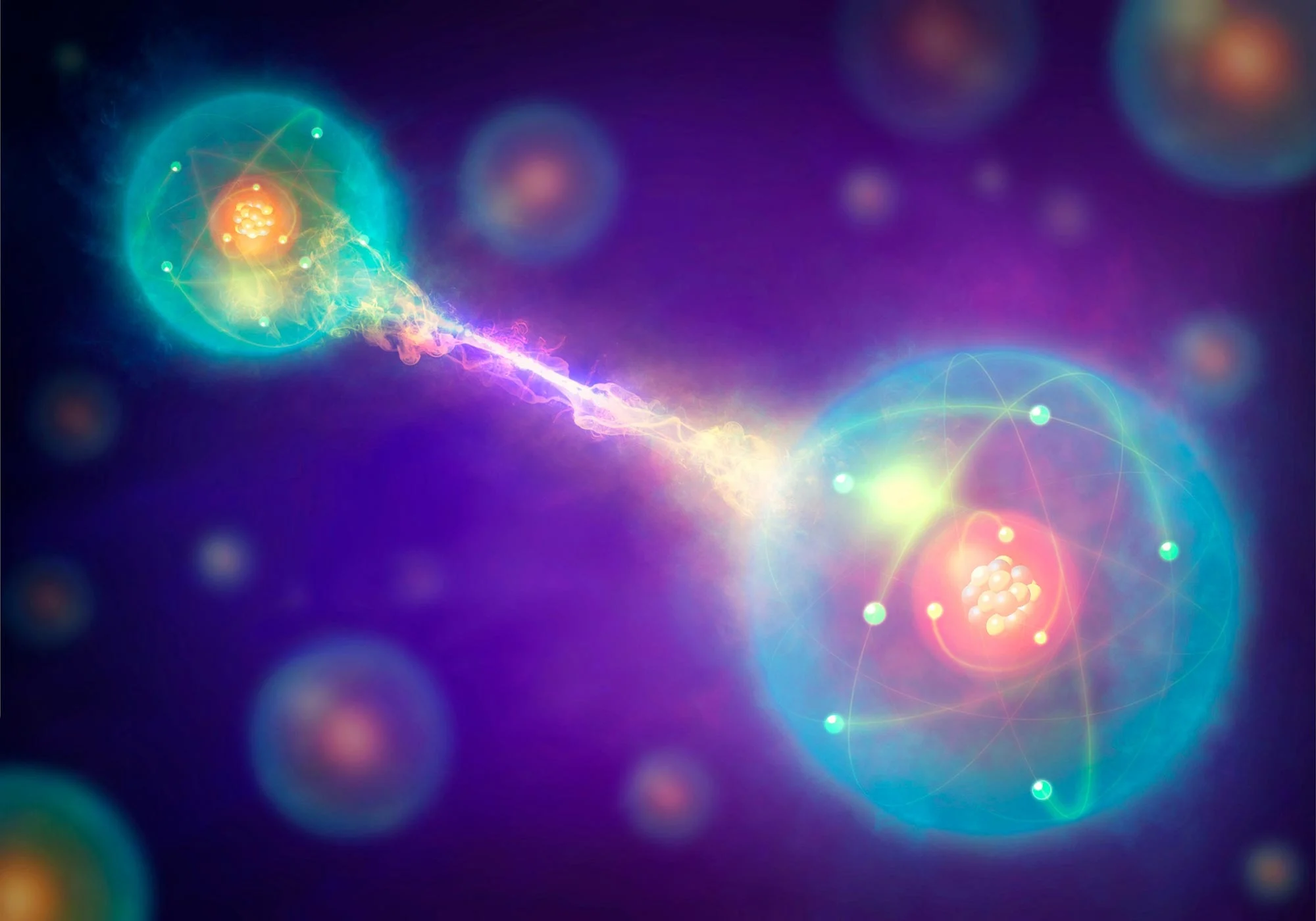
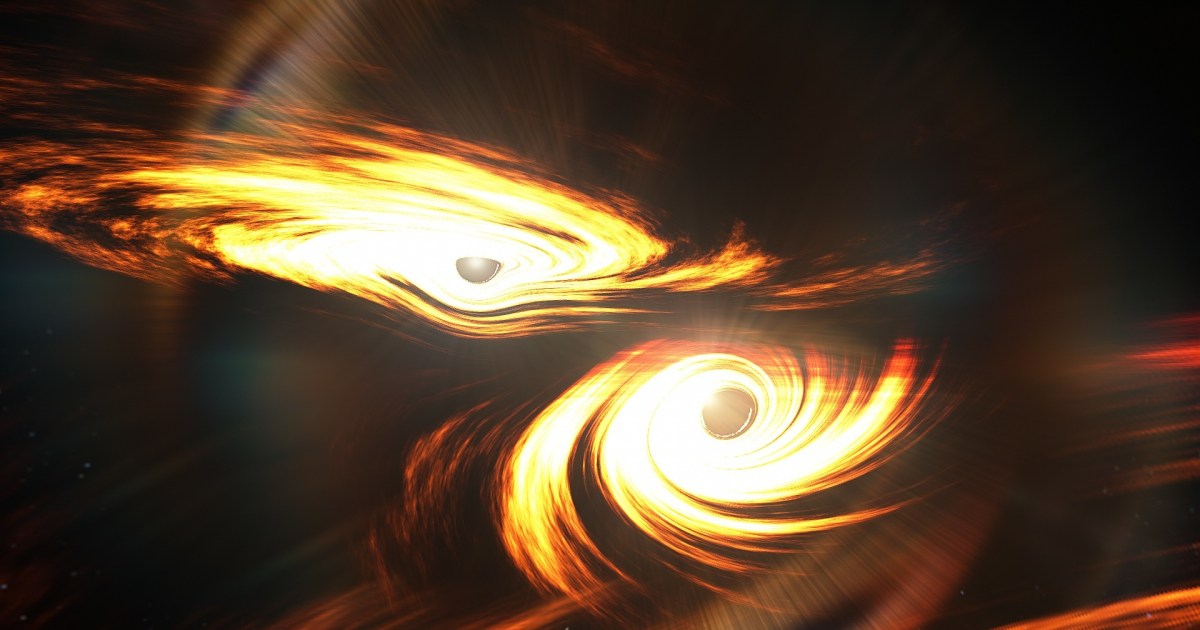
Gravitational waves, which have been observed and confirmed by experiments like LIGO, are believed to exhibit wave-like behavior. However, in order to fully understand their nature, scientists need to determine if they also exhibit particle-like behavior, known as wave-particle duality. While gravitational waves are expected to be composed of gravitons, the hypothetical particles that mediate the force of gravity, detecting the particle aspect of gravitational waves remains a challenge. Current gravitational wave detectors do not have the necessary sensitivity to probe the quantum effects that may arise during black hole mergers. Theorists are working on calculating these effects, while experimentalists are designing tests to explore the quantum nature of gravitational waves.
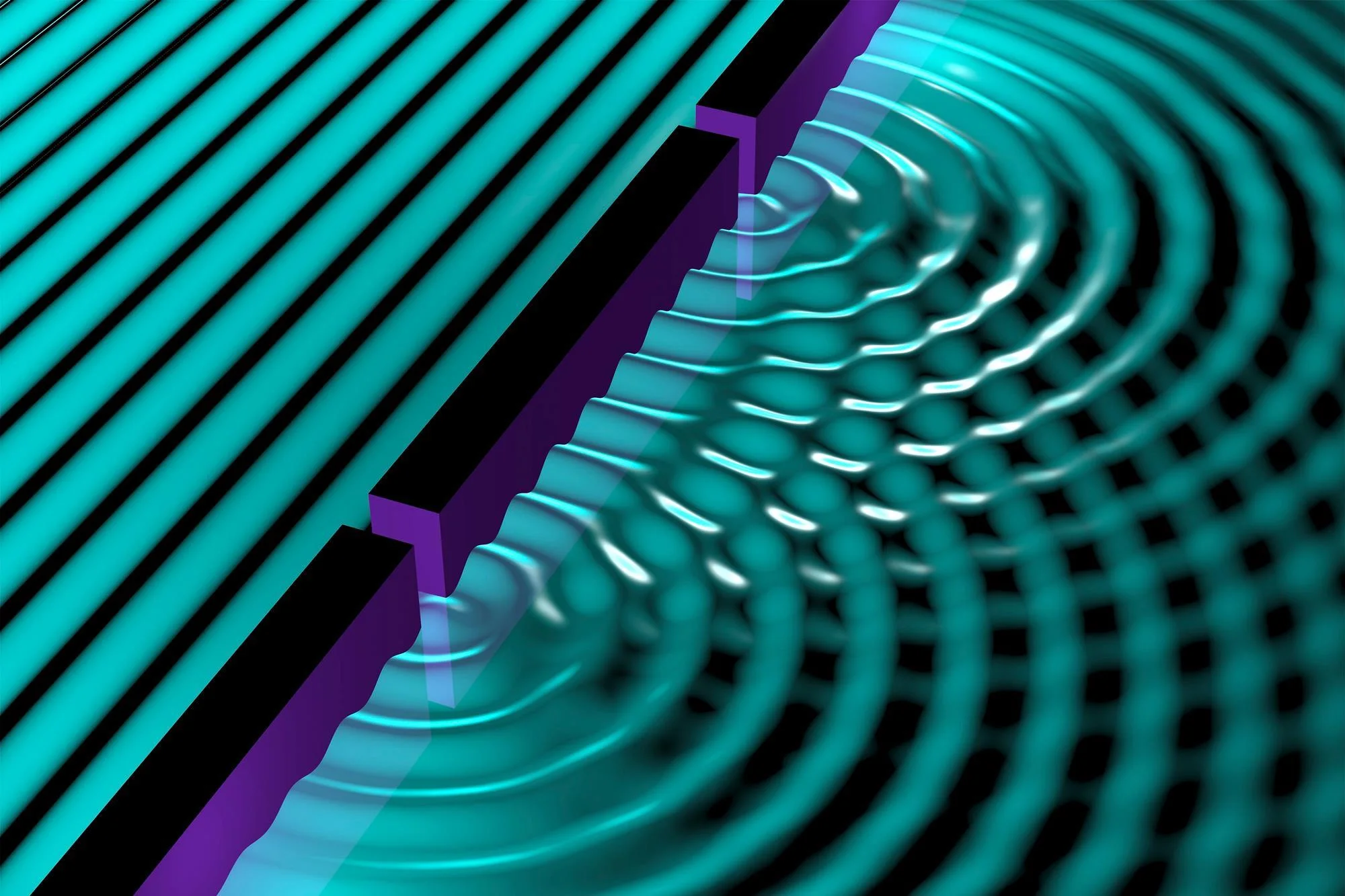
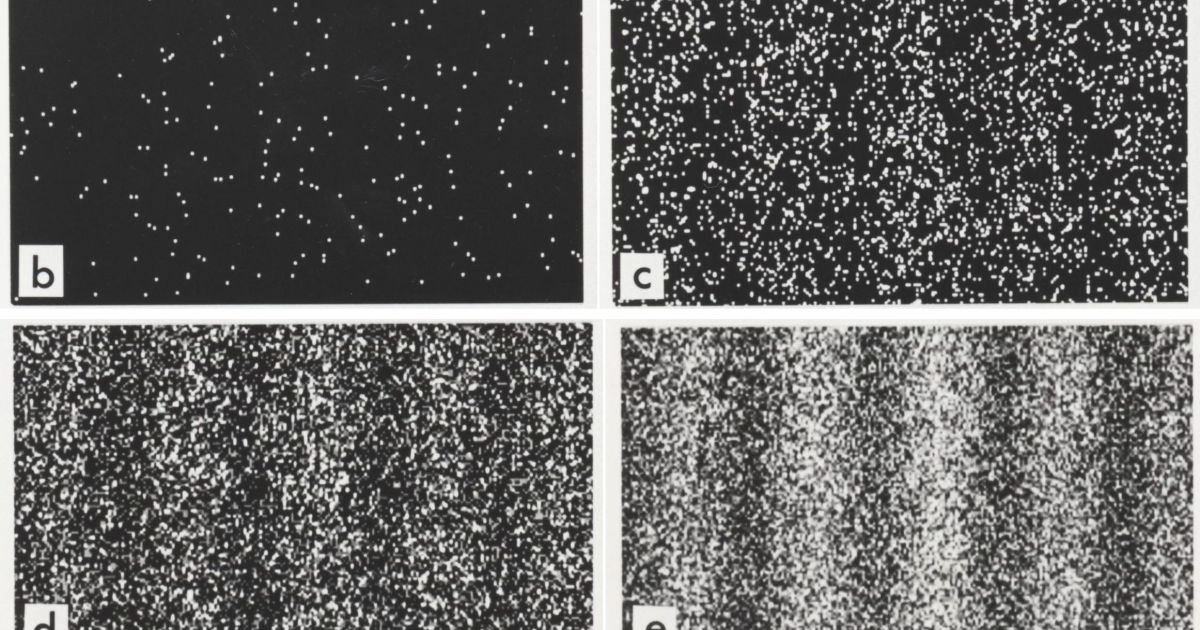
The double-slit experiment, which investigates whether light behaves as a wave or a particle, reveals that the behavior of individual quanta depends on how they are observed. If you measure which slit a quantum passes through, it behaves as a classical particle, but if you don’t measure, it behaves as a wave, acting like it passed through both slits simultaneously and producing an interference pattern. The experiment also shows that the observer plays a fundamental role in determining what is real, but the interpretation of quantum physics is subjective and cannot conclude whether nature is deterministic or not.
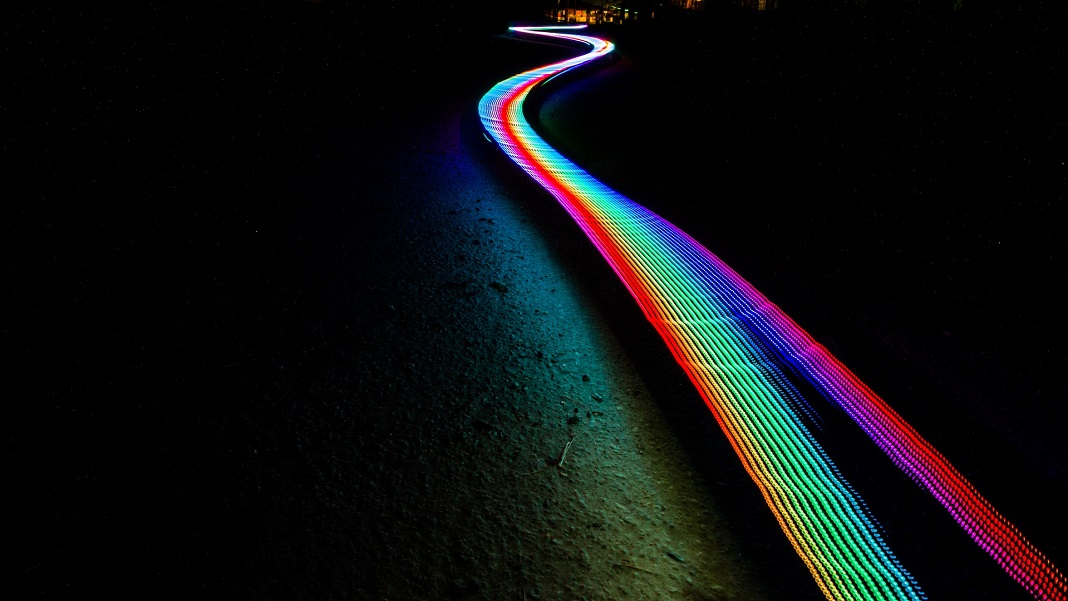
Physicists at Imperial College London have recreated the famous double-slit experiment using time instead of space. They fired light through a material that changes its properties in femtoseconds, only allowing light to pass through at specific times in quick succession. The interference patterns showed up as changes in the frequency or color of the beams of light, demonstrating wave-particle duality. The experiment has helped in understanding materials that can minutely control the behavior of light in space and time, with potential applications in signal processing and light-powered computers.