McDonald's is subsidizing part of the cost of its $5 value meals to attract lower-income customers amid a decline in their traffic, acting as a short-term strategy to navigate economic stress and maintain sales, while also gaining market share from higher-cost competitors.
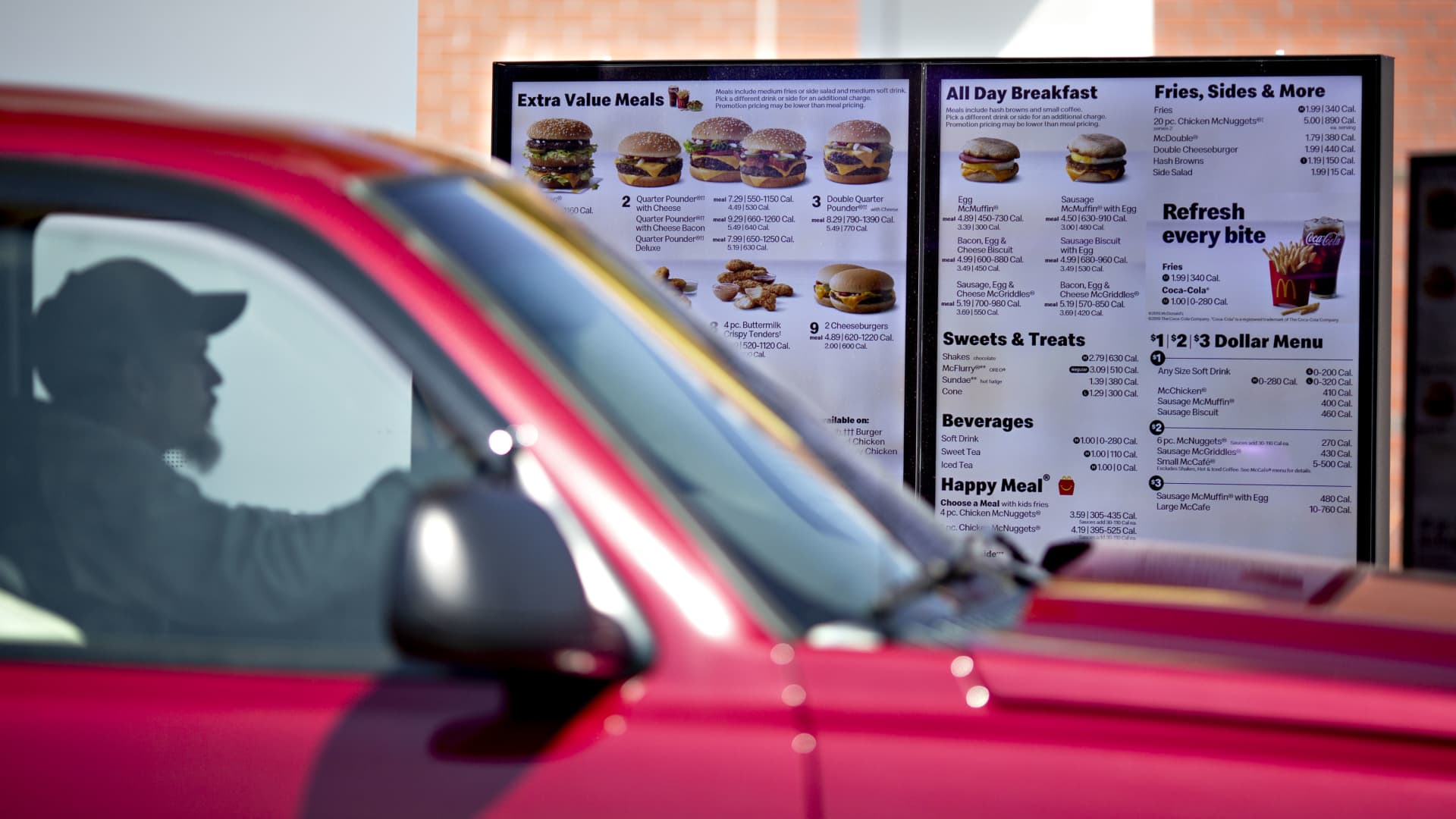
McDonald's is reintroducing Extra Value Meals nationwide starting September 8 to offer customers more affordable combo options, responding to previous concerns about high prices and aiming to improve perceived value and customer retention.
McDonald's CEO Chris Kempczinski highlights a divide in customer behavior due to economic pressures, with lower- and middle-income consumers skipping meals or eating at home. Rising food prices and inflation are impacting restaurant traffic, prompting McDonald's to introduce new value meals to retain budget-conscious customers amid broader economic challenges.
McDonald's CEO Chris Kempczinski highlights the impact of a 'two-tier economy' on consumer behavior, with higher-income customers spending freely and lower-income consumers cutting back, prompting the company to reduce prices on value meals and consider supporting a higher minimum wage. The broader economic context shows a split in consumer spending patterns, with McDonald's adapting its strategy to maintain affordability while engaging in discussions about wage policies amid legislative efforts to raise the federal minimum wage.
McDonald's CEO warns of a growing economic divide, with lower-income consumers spending less and feeling increased financial pressure, prompting the company to expand its value menu as broader economic indicators show a bifurcating consumer landscape where the wealthy continue to spend freely while others struggle.
McDonald's is reducing prices on some combo meals to attract customers and counteract declining visits due to high costs, potentially sparking a broader fast food price war as rivals may follow suit amid industry-wide traffic drops and rising operational costs.
McDonald's has introduced new value meals starting June 25, offering a McChicken or McDouble sandwich, small fries, 4-piece Chicken McNuggets, and a small soft drink for $5 or $6. Additionally, the "Free Fries Fridays" promotion offers free medium fries with any $1 purchase through 2024, and Southern California locations have $1.49 soft drinks and frozen beverages until Sept. 2. Other fast-food chains like Taco Bell and Wendy's are also offering value meals to attract customers amid high dining-out costs.
Fast-food chains like McDonald's, Wendy's, and Burger King are temporarily reintroducing value meals to attract inflation-weary customers, despite the financial strain on franchisees. These value meals are often break-even propositions, relying on customers to purchase additional items to maintain profitability. Franchisees are feeling the pinch from rising costs, including higher wages and ingredient prices, but see value meals as a strategy to increase market share and customer traffic amidst economic pressures.
Burger King is launching a $5 meal deal to attract cost-conscious consumers amid inflation, joining other fast food chains like McDonald's and Wendy's in offering value-oriented options to boost foot traffic and profits.
McDonald's reported better-than-expected sales in the third quarter, with global same-store sales rising 8.8%. However, the company saw a drop in visits from customers with lower incomes due to price increases. To counter this, McDonald's plans to focus on value meals and promotions, such as "Free Fries Friday" in the US and discounts in Europe and China. The company's CEO emphasized that customer perceptions of value go beyond price, highlighting newer stores and faster service times. Despite revenue rising 14% to $6.69 billion, McDonald's criticized a new rule that may classify it as a "joint employer" of workers at franchised restaurants, potentially making it easier for workers to unionize.