Oil prices are expected to fall below $50 in 2026 due to increased global supplies and demand concerns, leading to sector consolidation and a shift towards gas-fueled growth drivers by oil companies.
Oil prices remain stable within a tight range as increased output offsets supply disruptions caused by Russia-Ukraine airstrikes, with market concerns about Russian exports and global demand influenced by geopolitical tensions, US tariffs, and economic data from Asia. The upcoming OPEC+ meeting and US economic indicators are key factors to watch.
Despite the conflict between Israel and Iran, oil prices have remained relatively stable or even decreased due to factors like Iran not targeting oil supplies, market skepticism of threats, seasonal demand changes, oversupply of oil, and the US's status as the world's largest oil producer, which collectively prevent an oil crisis.
US oil production is expected to decline in 2024 for the first time since the pandemic, dropping from a record 13.5 million barrels per day due to lower oil prices, reduced drilling activity, and global market pressures, challenging the previous 'energy dominance' agenda.
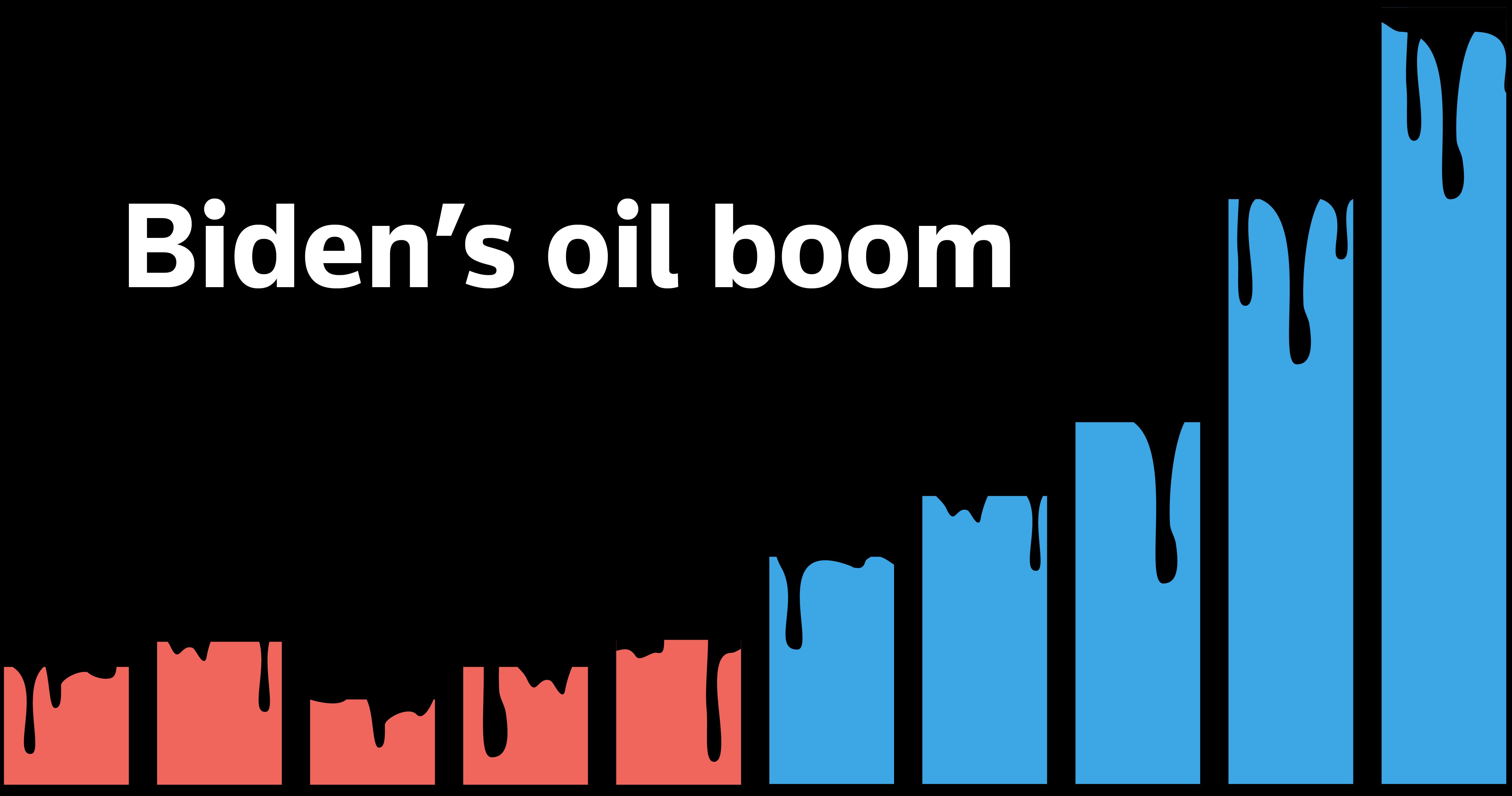
Despite President Biden's push for a carbon-free future, the US oil and gas industry has thrived under his administration, with record production, booming exports, rapid job growth, and soaring profits for major companies. This success has been driven by factors such as high global oil and gas prices due to Russia's invasion of Ukraine and the post-COVID economic recovery. While Biden's supporters focus on his green economy initiatives, critics tie rising gas prices to his policies. The long-term impact of Biden's actions, such as canceling the Keystone XL Pipeline and promoting electric vehicles, remains to be seen, but for now, the fossil fuel industry has outpaced renewable energy in job growth and profitability.
Despite President Biden's efforts to transition towards greener alternatives, the US has reached an all-time high in crude oil production, outstripping other major oil-producing countries. This increase has helped keep gas prices low and meet global demand, but it poses a challenge for Biden's climate politics. While he has implemented measures to drive clean energy investment and reduce emissions, Republicans criticize his energy policies, and he faces the task of balancing his climate accomplishments with the oil boom in his reelection campaign.
The US has maintained its position as the world's largest oil producer for six consecutive years, with its 2023 production reaching a record high unlikely to be surpassed by any global competitor in the near future, according to the Energy Information Administration. Despite a slowdown in growth, technological advancements have made US production more efficient, leading to a remarkable turnaround from a 62-year low in 2008. However, the future of US production remains uncertain due to factors such as private operations, merger activity, and changing financial priorities of public companies.
US oil production has surged to record highs, with industry participants now making profits, despite previous concerns about profitability. Bloomberg Opinion columnist Javier Blas discusses the state of US supply, its impact on OPEC, rising tension in the Red Sea, and the rise of electronic electricity trading in the European market.
The U.S. Energy Information Administration predicts that U.S. crude oil production will reach record levels of 13.2M bbl/day in 2024 and 13.4M bbl/day in 2025, attributing the growth to increased well efficiency. However, the rate of growth is expected to slow due to lower drilling activity. The EIA also forecasts significant growth in solar power as a source of U.S. electricity generation. Additionally, it anticipates a drop in OPEC+ production and an increase in global petroleum inventories by mid-2025, despite efforts to restrict production and prevent price declines.
The U.S. is challenging Saudi Arabia and OPEC+ for market share as its record-high oil production and growing exports make it difficult for the group to support oil prices through production cuts. Saudi Arabia's crude exports have declined while U.S. exports have risen, narrowing the gap between the two. Rising tensions in the Middle East have contributed to disruptions in oil shipments, potentially driving buyers to procure cheaper U.S. oil. OPEC+ faces challenges in maintaining market share, with concerns of modest oversupply if members do not comply with voluntary production cuts.
Saudi Aramco announced a cut in crude prices to all regions, including Asia, amid weaker global oil prices and increased production by non-OPEC countries. The move comes after a summer rally and a fourth-quarter decline in crude prices. Oil prices bounced last week due to attacks on shipping in the Red Sea, stoking fears of a broader conflict. U.S. oil production has reached record levels, easing concerns about tight supplies and potentially leading to record-breaking U.S. crude exports.
Analysts predict that oil prices are unlikely to reach $100 a barrel in 2024 due to surging non-OPEC+ oil production and significant storage space held by the OPEC+ group. The OPEC+ alliance is facing record-breaking US oil production and rising supply from other non-OPEC+ producers, which puts downward pressure on prices. While OPEC+ is trying to keep a floor under oil prices, it may struggle to prop up prices if it fails to extend production cuts beyond March 2024. The United States is now the global swing producer, accounting for two-thirds of non-OPEC+ production growth. OPEC+ may need to continue tight supply management to prevent a collapse in oil prices in the coming years.
The International Energy Agency (IEA) reported that OPEC's market share of the oil market has dropped to its lowest level since 2016, standing at 51%. This decline is attributed to record-breaking oil production from the United States, Brazil, and Guyana. The IEA also noted a sharp slowdown in global oil demand amid economic turmoil. OPEC+ members have responded by announcing extensive production cuts to prevent an inventory build-up, while the US is expected to increase its oil supply by 1.4 million barrels per day. The IEA predicts a slowdown in crude demand and lowered its forecast for global oil demand growth in 2023.
US oil production is projected to continue booming in 2024, potentially reaching a record high of 13.3 million barrels per day. This surge in supply could put pressure on Saudi Arabia to regain control over crude prices. Exxon Mobil and Chevron are increasing their capital expenditure budgets for 2024, investing more in the Permian Basin, the center of the shale boom. While some experts warn that Saudi Arabia may flood the market with supply to depress prices, others believe OPEC is more concerned about inadequate investment in supply rather than the growth of US shale oil.