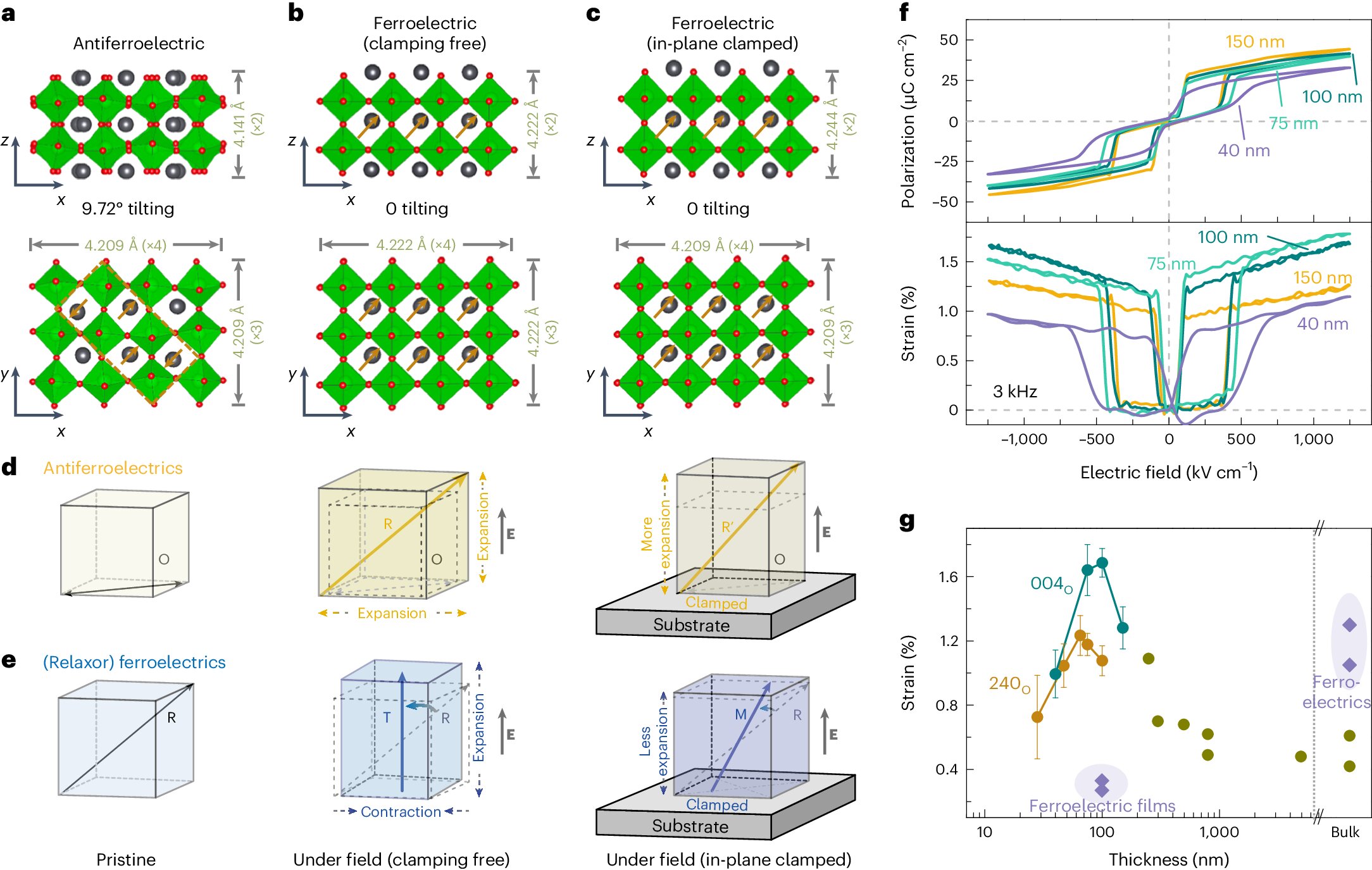
Researchers from Rice University and UC Berkeley have discovered that antiferroelectric materials, specifically lead zirconate (PbZrO3), can outperform conventional piezoelectric materials in miniaturized electromechanical systems. These materials exhibit up to five times greater electromechanical response even in extremely thin films, overcoming performance limitations due to clamping. This breakthrough could lead to the development of more efficient and powerful microelectromechanical and nanoelectromechanical systems.
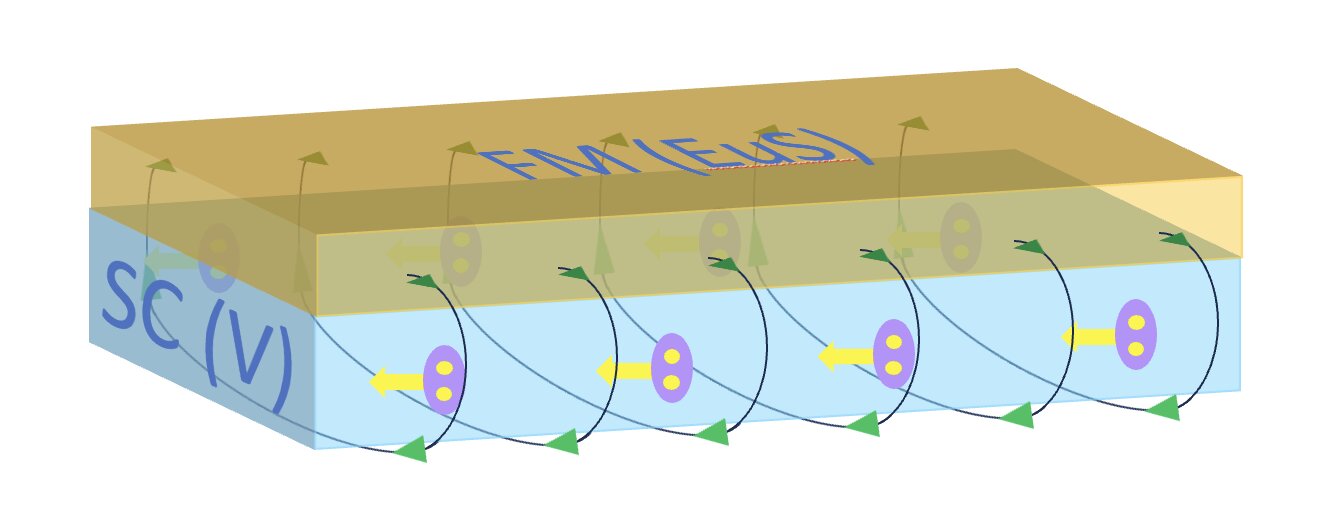
Researchers at MIT and IBM Research Europe have observed the superconducting diode effect in thin films of superconductor materials. This effect allows for the flow of electrical current in one direction with zero resistance, while exhibiting resistance in the opposite direction. The team discovered the effect while studying Majorana bound states and found that it was present even without the application of spin-orbit and exchange fields. The findings could lead to the development of more efficient electronic components such as diodes.
Researchers have discovered that the resistivity of optimally superconducting (Nd,Sr)NiO2, an infinite-layer nickelate, exhibits a linear-in-temperature behavior, similar to high-temperature cuprate superconductors. This finding suggests a common underlying mechanism for superconductivity in both material classes. The study provides insights into the electronic properties of nickelates and their potential for high-temperature superconductivity.
Researchers have observed quantum metric-induced nonlinear transport in thin films of a topological antiferromagnet, MnBi2Te4. This includes nonlinear anomalous Hall effect (AHE) and diode-like nonreciprocal longitudinal response. The transverse and longitudinal conductivities reverse signs when reversing the antiferromagnetic order, diminish above the Néel temperature, and are insensitive to disorder scattering, confirming their origin in the band structure topology. The findings provide a pathway to probe the quantum metric through nonlinear transport and design magnetic nonlinear devices.
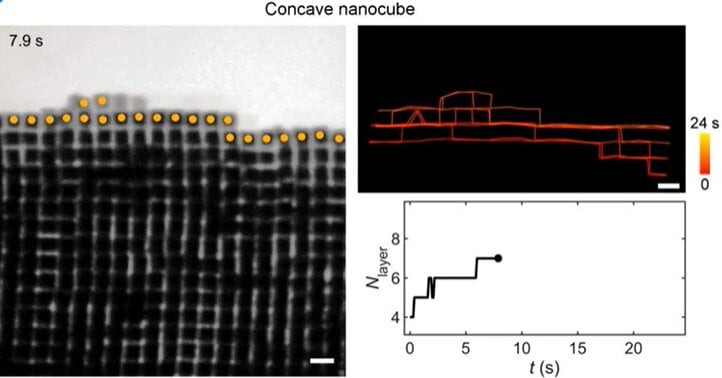
Researchers have used liquid-phase transmission electron microscopy to watch nanoparticles self-assemble into solid materials for the first time. The study provides unprecedented insights into the self-assembly process and could be used to design new materials, including thin films for electronic applications. The researchers used differently shaped nanoparticles to explore how shape affects behavior and found that particles collided into each other, sticking together to form layers, before forming a horizontal layer and then stacking vertically to form a crystalline structure.
Researchers from Northwestern University and the University of Illinois have observed nanoparticles self-assembling into solid materials for the first time, offering valuable insights for the design of new materials, such as thin films for electronics. The study used a newly optimized form of liquid-phase transmission electron microscopy (TEM) to gain unprecedented insights into the self-assembly process. The researchers say this information will help engineers design new materials, specifically thin-film materials, which are often used to build flexible electronics, light-emitting diodes, transistors, and solar cells.
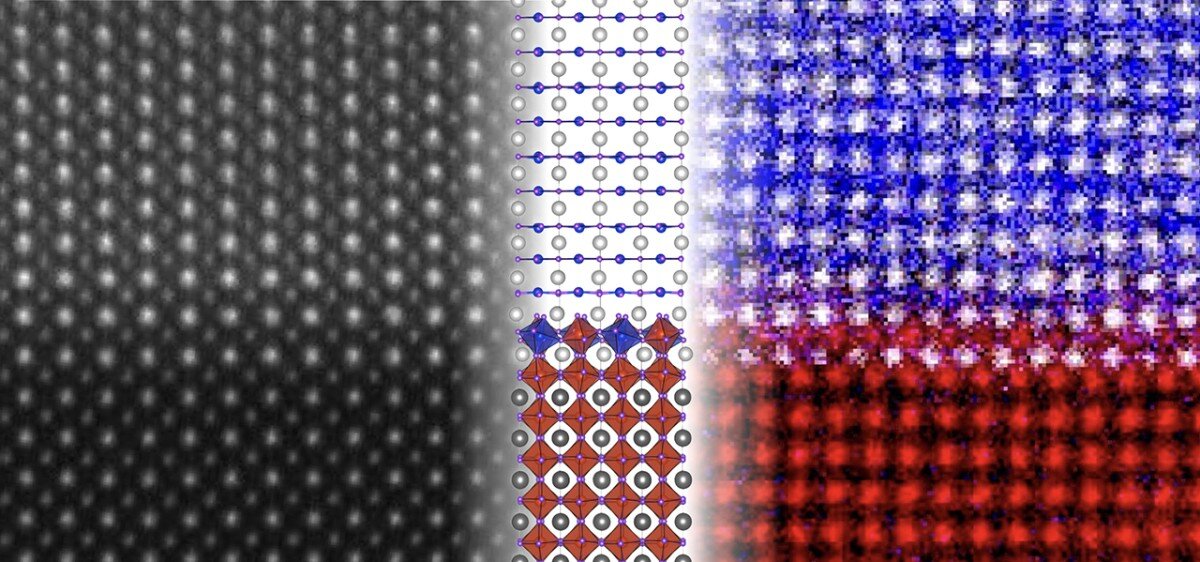
Researchers at Cornell have used advanced electron microscopy techniques to uncover an unexpected atomic structure within a newly discovered class of nickel-based superconductors, providing a blueprint for how more functional versions might be engineered in the future. The study shows that superconductivity may not be reliant on the thin-film geometry, meaning that creation of superconducting bulk crystals theoretically should be possible. The discovery is encouraging for the field because it shows that superconductivity is occurring in the nickelate film itself, not at the atomic interface where the film and substrate meet.