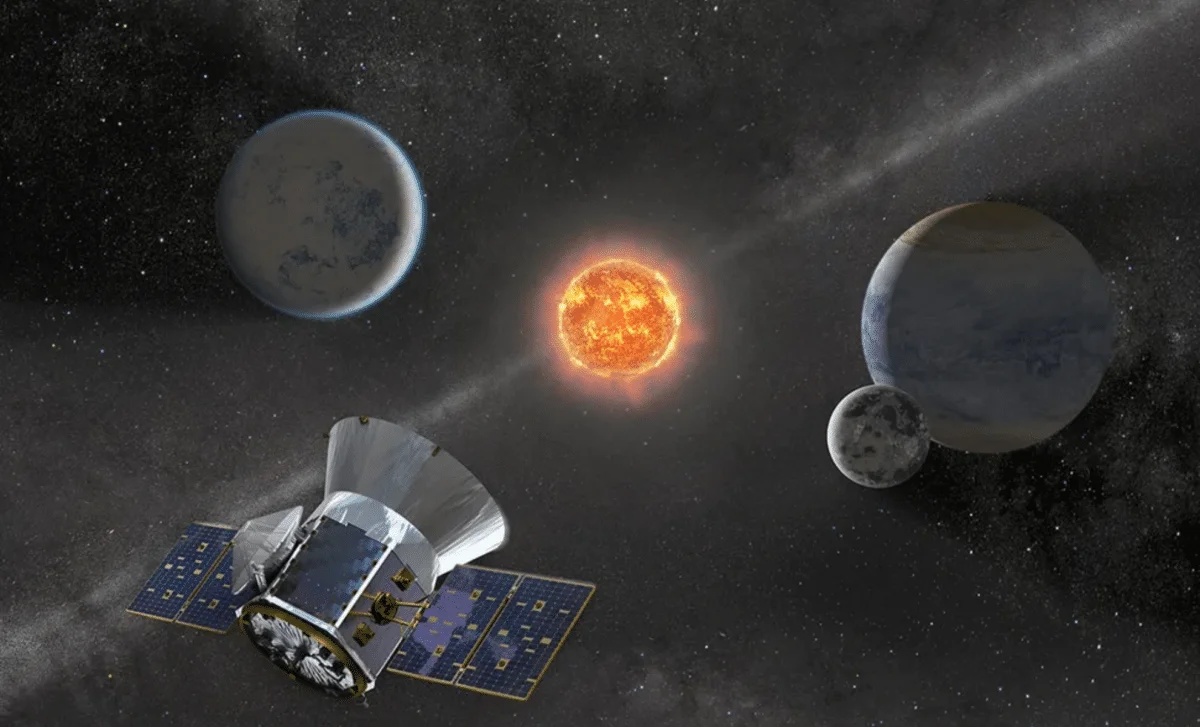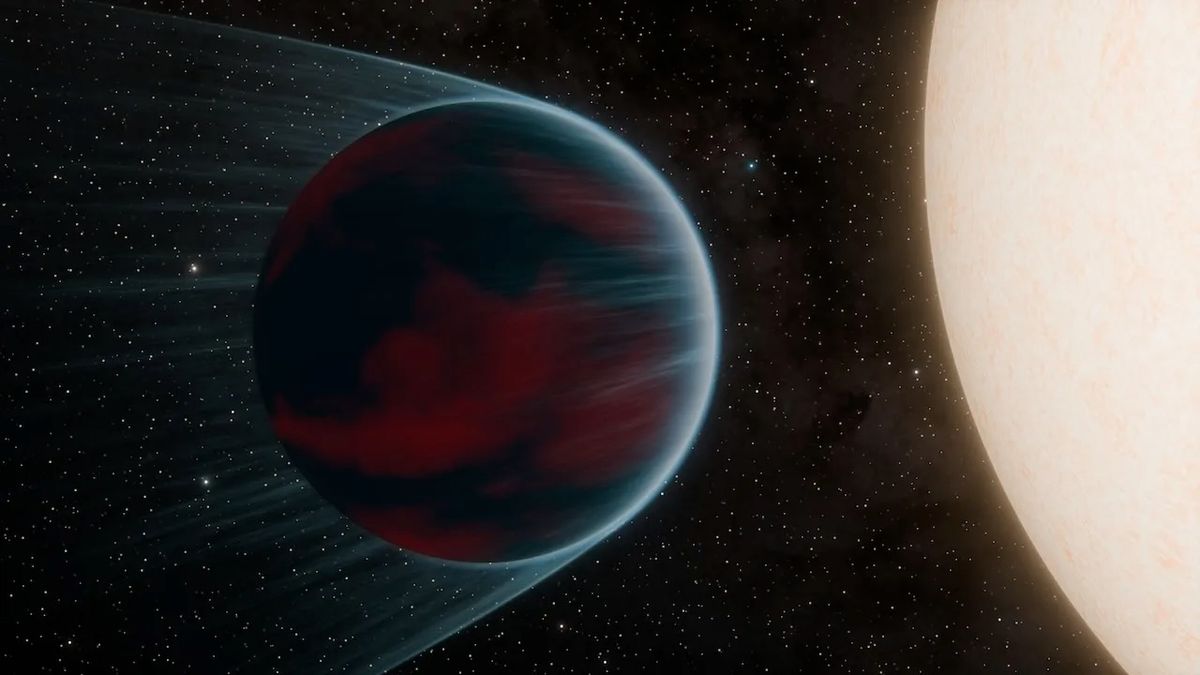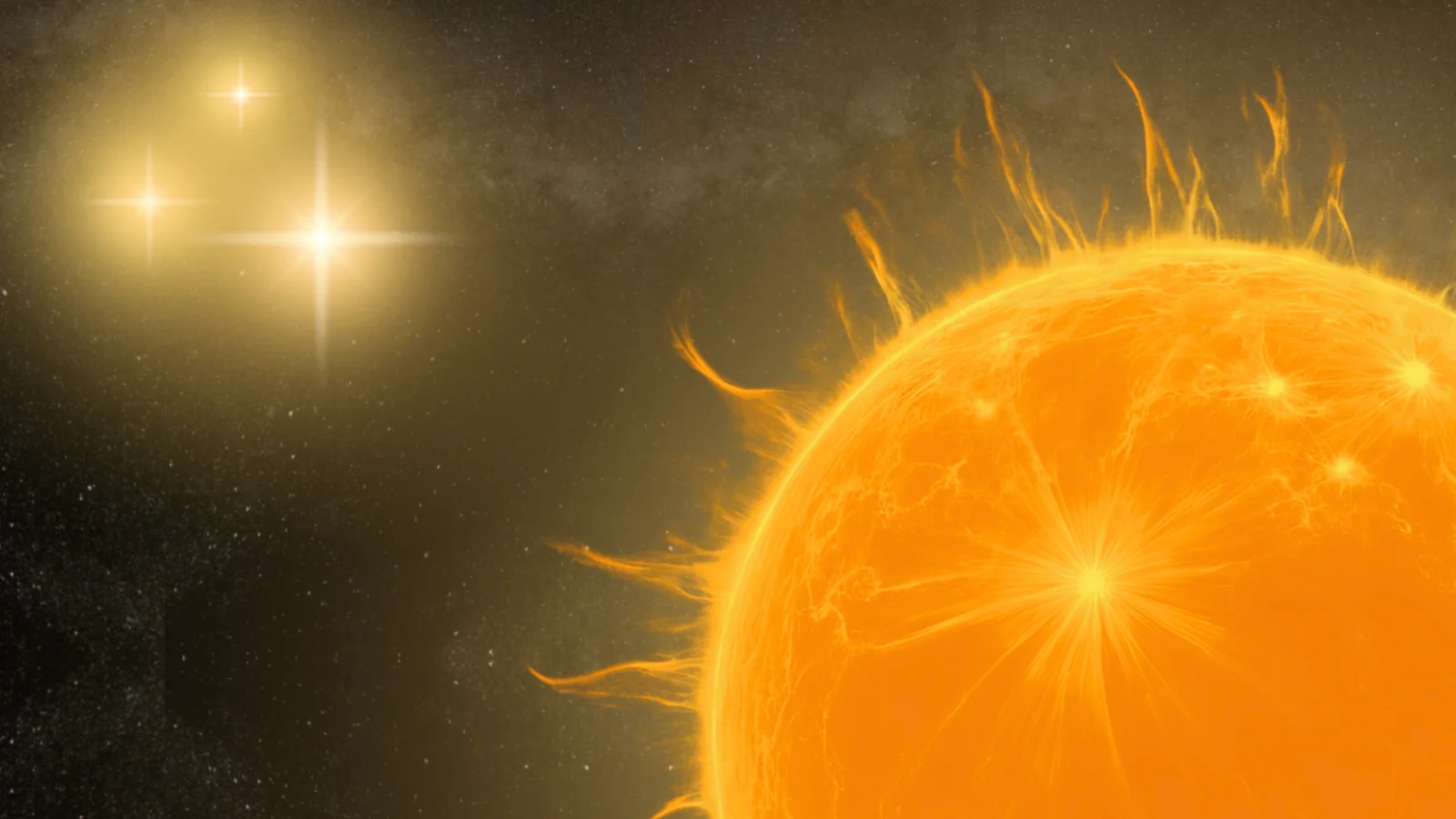
Scientists using TESS data have observed that planets are becoming rarer around aging stars, likely due to the stars' expansion and tidal forces that cause planets to decay or be engulfed, providing insights into the future fate of our solar system.
Scientists using NASA's TESS have discovered three Earth-sized exoplanets orbiting twin stars in a unique and compact binary system, challenging previous ideas about planet formation in such environments and opening new avenues for studying planetary stability and diversity.
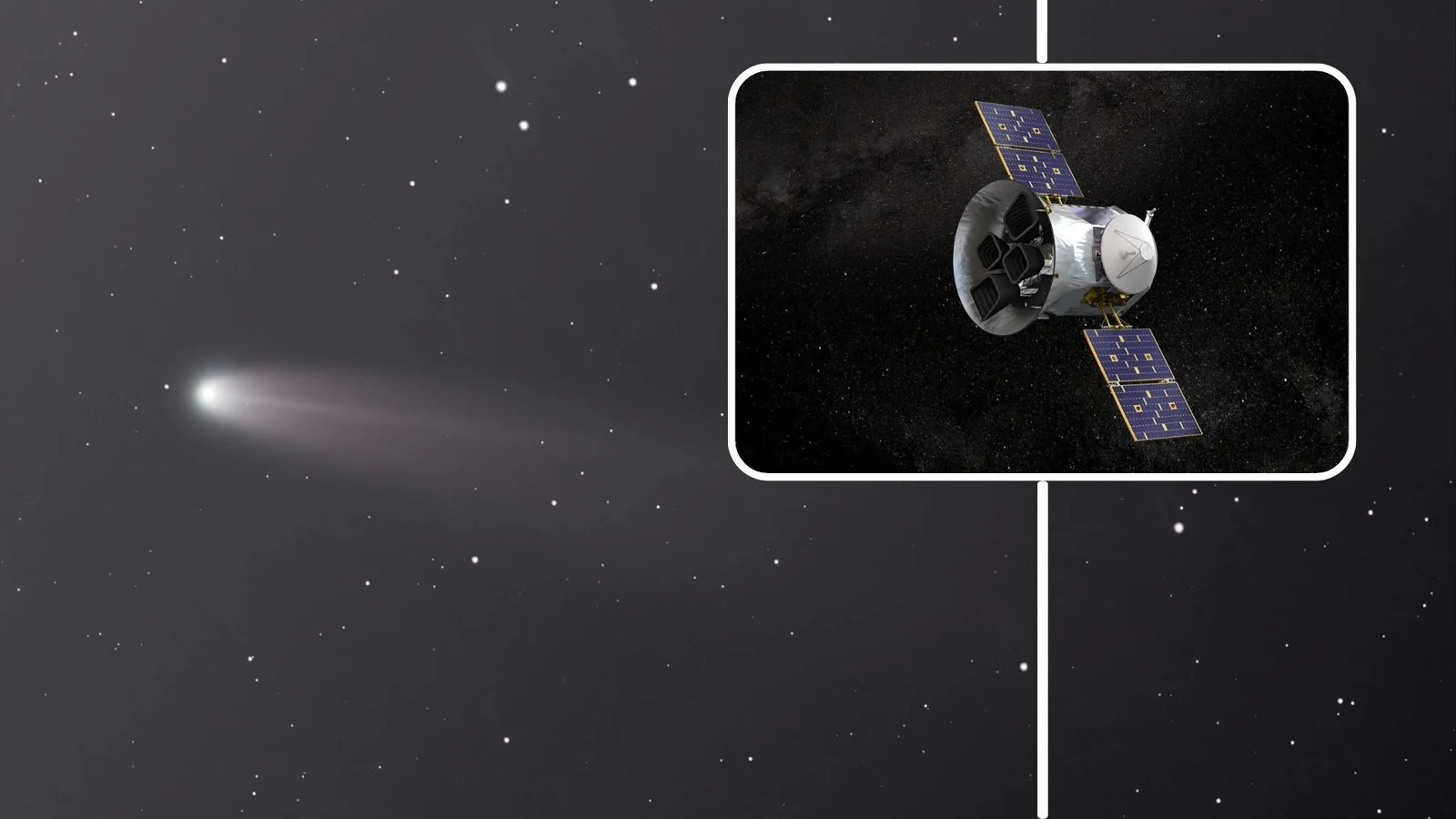
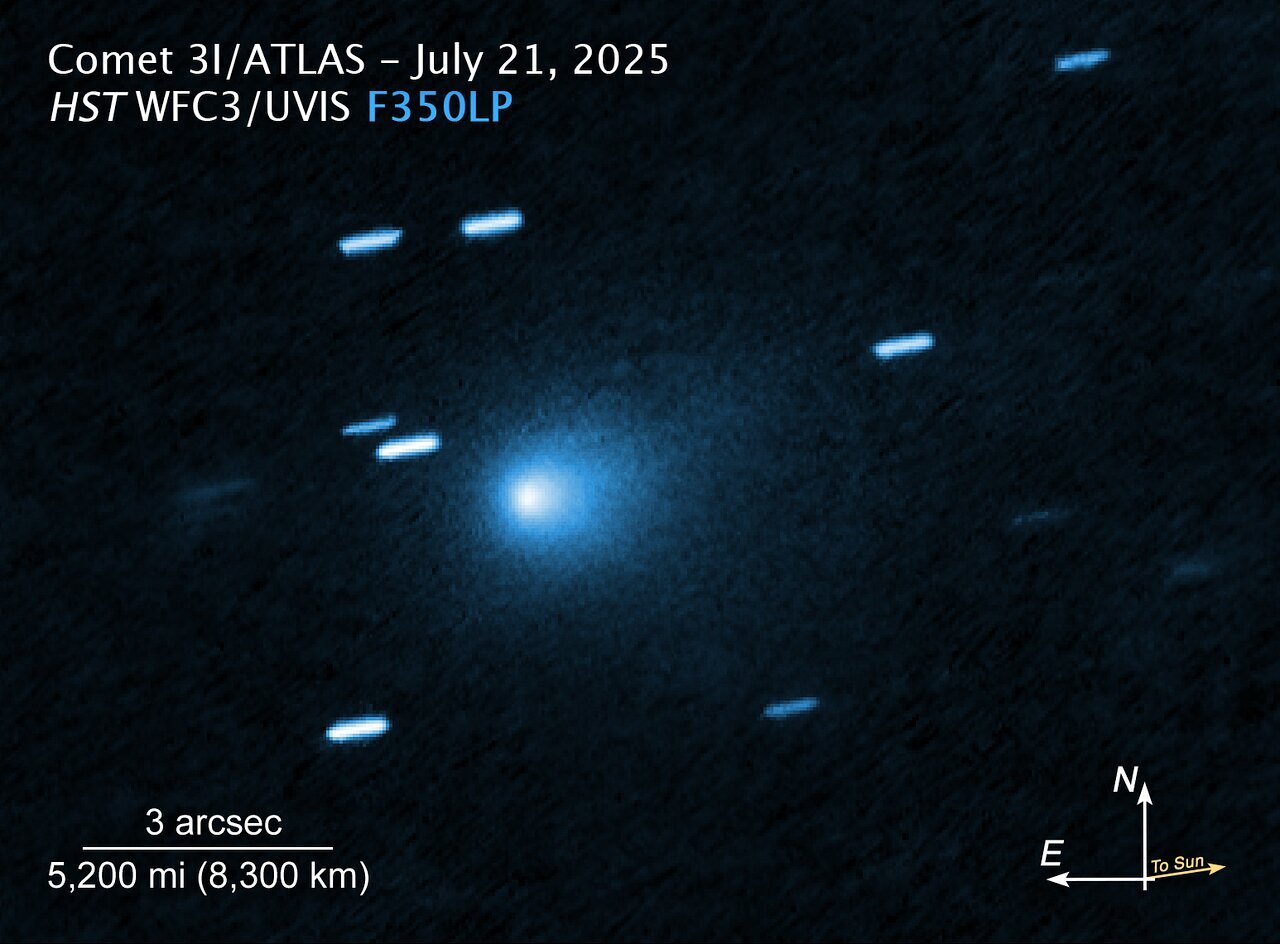
New images of interstellar comet 3I/ATLAS, captured by the Hubble Space Telescope and analyzed through NASA's TESS data, reveal that it was active farther from the sun than expected and may release different molecules, providing insights into the composition of other solar systems and their differences from our own.
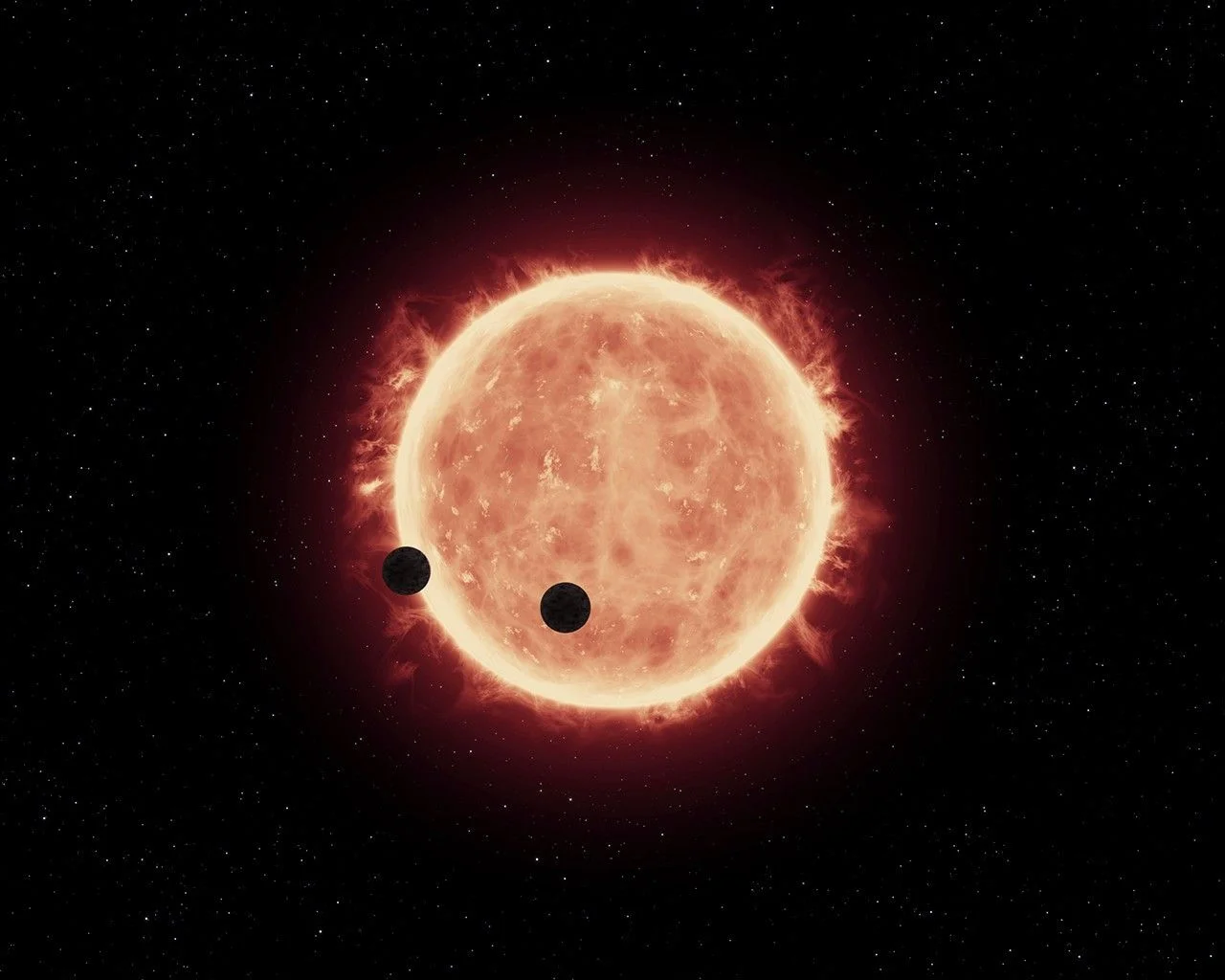
NASA's TESS has discovered two Earth-sized rocky exoplanets orbiting the nearby K-type star TOI-2322, with one orbiting every 11.3 days and the other every 20.2 days, both exhibiting properties similar to Earth and providing valuable insights into planetary structures and star-planet interactions.
Astronomers using TESS have discovered a new Earth-sized exoplanet, TOI-2431 b, orbiting a nearby star every 5.4 hours, making it one of the shortest period exoplanets known. The planet is likely molten due to its proximity to its star and is a promising target for further study with the James Webb Space Telescope.
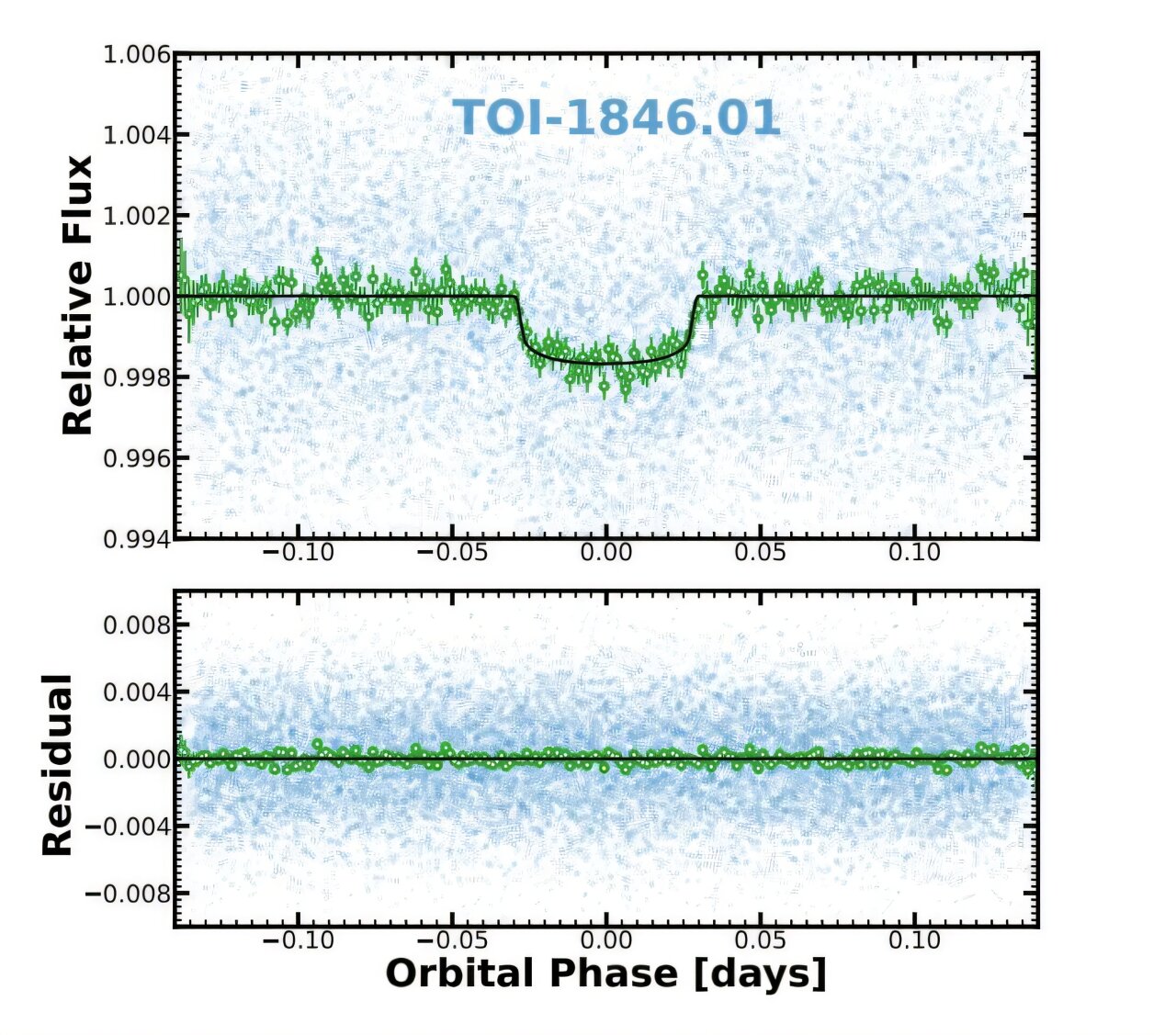
Astronomers using NASA's TESS have discovered a super-Earth exoplanet, TOI-1846 b, orbiting a nearby M dwarf star about 154 light years away. The planet is roughly twice Earth's size, four times its mass, and likely water-rich, orbiting its star every 3.93 days. The discovery adds to TESS's catalog of over 7,600 candidate exoplanets and highlights the potential for further studies to determine its composition.
NASA's TESS spacecraft, with the help of citizen scientists, discovered a rare, cool, and massive exoplanet called TOI-4465 b, located 400 light-years away. This gas giant, six times the mass of Jupiter, orbits its star at a relatively distant and elliptical orbit, making it an intriguing target for future study, especially with the James Webb Space Telescope. The discovery highlights the importance of global collaboration and citizen science in advancing astronomical research.
NASA's citizen science project, Eclipsing Binary Patrol, has identified over 10,000 eclipsing binary star systems using data from the TESS satellite, including nearly 8,000 new discoveries, which will aid in studying star physics and exoplanet search efforts.
Astronomers using NASA's TESS have discovered a new exoplanet, TOI-4994 b, which is a warm Saturn-sized planet orbiting a G-type star 1,079 light years away. This exoplanet, slightly smaller than Saturn, has a 21.5-day orbit and an equilibrium temperature of 717.6 K. The discovery adds to the relatively small number of known warm Saturns, with less than 20 identified so far. Further observations are needed to explore its history and potential planet-planet interactions.
A new exoplanet, TOI-3261 b, has been discovered, marking it as only the fourth 'hot Neptune' ever found. Detected by NASA's TESS and confirmed with ground-based telescopes, this planet orbits its star in just 21 hours. Hot Neptunes are rare due to their proximity to stars, which often strips away their atmospheres. TOI-3261 b's density suggests atmospheric loss, and its formation remains a mystery. Future studies, including those with the James Webb Space Telescope, aim to uncover more about these elusive planets.
Astronomers have discovered one of the youngest planets ever detected, named IRAS 04125+2902 b, orbiting a 3 million-year-old star in the Taurus Molecular Cloud. This 'baby' planet, about 10 times the width of Earth, was spotted due to its star system's warped debris disk, which exposed it to telescopes. The discovery, detailed in Nature, challenges current planetary formation theories and provides insights into early planetary development. The planet's misaligned disk remains a mystery, potentially caused by material from its star-forming region.
Astronomers have discovered a fast-forming exoplanet, estimated to be 10 to 20 times the mass of Earth, that formed in just three million years, challenging current understanding of planetary formation speeds. The planet, located 520 light-years away in the Milky Way, orbits a young star every 8.8 days and was detected using NASA's TESS telescope. This discovery raises questions about how quickly planets can form and the processes involved, as it was previously thought that such young transiting planets couldn't be observed due to obstructive protoplanetary disks.
Astronomers have discovered the youngest exoplanet ever observed, named TIDYE-1b, which is a gas giant orbiting a protostar in the Taurus molecular cloud, about 520 light-years from Earth. This exoplanet, only up to 3 million years old, challenges current understanding of planetary formation due to its misaligned protoplanetary disk and distant companion star. The discovery, made using NASA's TESS, provides insights into the early stages of planetary development.
Astronomers have discovered a rare 'hot Neptune' exoplanet, TOI-3261 b, using NASA's TESS and ground-based telescopes. This planet, which orbits its star in just 21 hours, is only the fourth of its kind found in the 'hot Neptune desert,' a region with few such planets due to their difficulty in retaining atmospheres close to stars. The discovery offers insights into planetary formation and evolution, suggesting TOI-3261 b may have started as a larger gas giant before losing mass through photoevaporation and tidal stripping. Further atmospheric analysis, potentially with the James Webb Space Telescope, could reveal more about its composition and history.
NASA's TESS telescope has discovered a rare 'hot Neptune' exoplanet, TOI-3261 b, which orbits its star in just 21 hours. This planet, located in the 'hot Neptune desert,' offers a unique opportunity to study planet formation and atmospheric loss due to its proximity to its star. The planet's dense atmosphere suggests it has lost lighter gases over time, likely through photoevaporation and tidal stripping. Future observations, possibly with the James Webb Space Telescope, could provide further insights into its atmospheric composition and the formation of similar exoplanets.