Tag

Rocky Planets

All articles tagged with #rocky planets

science1 year ago

Small Planets with Large Moons May Be Key to Finding Life

New simulations suggest that smaller rocky planets are more likely to host large moons due to less energetic collisions that produce silicate-rich disks, which are more conducive to moon formation. This contrasts with larger planets, where more energetic impacts create vapor-rich disks that hinder moon formation. The findings imply that exomoons are more likely to be found around planets less than 1.6 times the size of Earth.

science-and-exploration2 years ago

"Extreme Environments Can Foster Formation of Rocky Planets, Webb Study Finds"

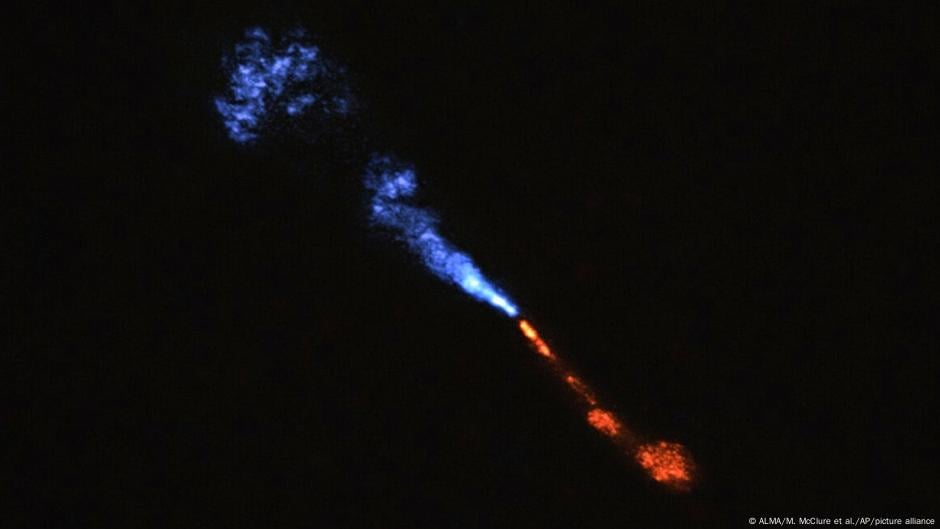
The NASA/ESA/CSA James Webb Space Telescope has provided the first observation of water and other molecules in the inner regions of a disc in an extreme environment, suggesting that rocky planets can form in a broader range of environments than previously believed. The telescope's eXtreme UV Environments (XUE) program focuses on characterizing planet-forming discs in regions where massive stars are formed, and the first results show that the conditions for rocky planet formation in these regions are similar to those found in nearby star-forming regions. This discovery has important implications for understanding the diversity of exoplanet populations.

space2 years ago

"Scientists Reveal Astonishing Secrets of Fiery Lava Worlds"

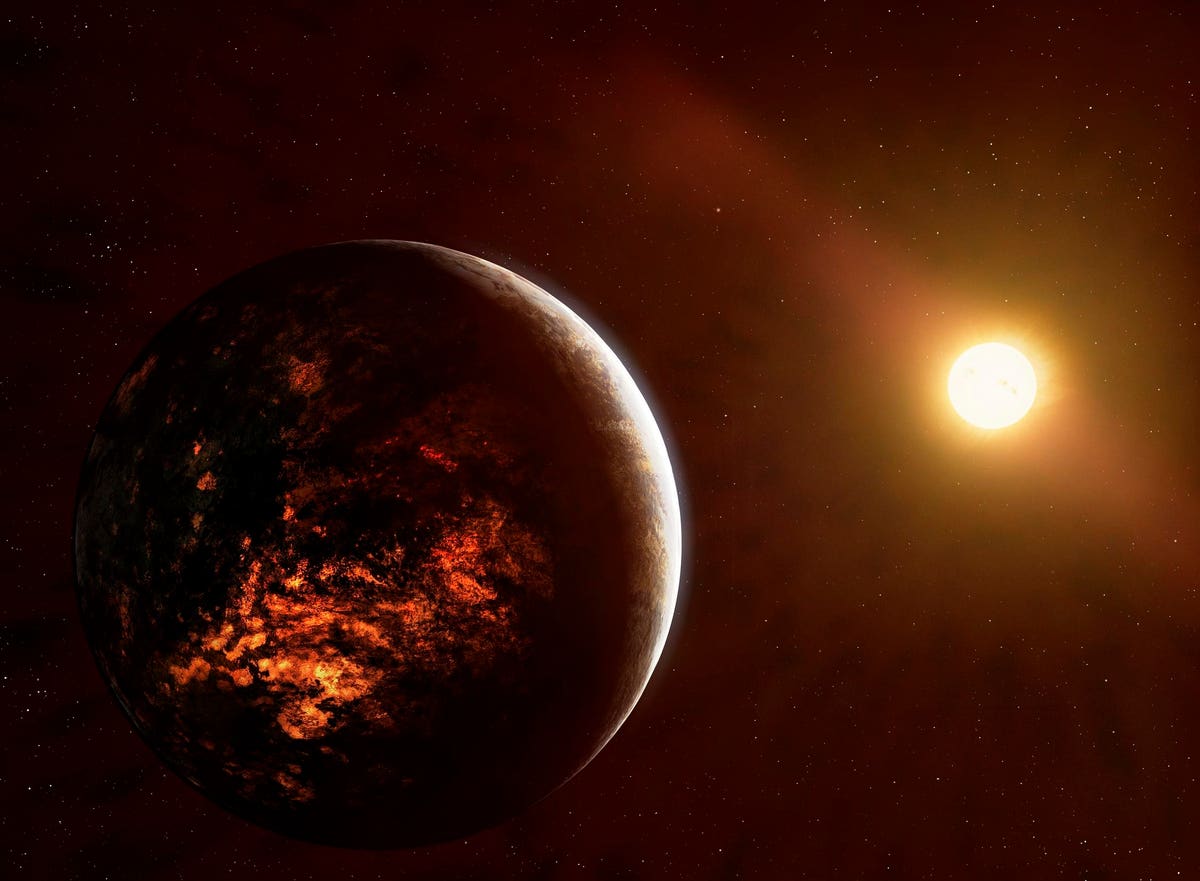
A new study published in The Astrophysical Journal explores the strange and fascinating world of lava planets, which make up almost half of all rocky exoplanets discovered so far. These large lava worlds, unlike anything in our solar system, have seas of liquid magma on their surfaces due to their close proximity to their stars. Although inhospitable to life, these "super-Earths" can provide insights into the early evolution of terrestrial planets. The study reveals three probable types of lava worlds and raises exciting new questions about these unique planets.

astronomy2 years ago

JWST Reveals Surprising Discoveries About Nearby Exoplanets.

The James Webb Space Telescope has failed to detect any trace of a thick carbon dioxide atmosphere on TRAPPIST-1 c, the second planet in the TRAPPIST-1 system. The planet is theorized to be a Venus-like world, but JWST's measurement of 15-micron mid-infrared light emitted by TRAPPIST-1 c suggests that the planet has either a bare rocky surface or a very thin carbon dioxide atmosphere. The absence of a thick, CO2-rich atmosphere on TRAPPIST-1 c suggests a relatively volatile-poor formation history. Researchers will conduct a follow-up investigation to observe the full orbits of TRAPPIST-1 b and TRAPPIST-1 c later this year.

astronomy2 years ago

The Fate of Rocky Planets Near Stars Unveiled by Astronomers.

Astronomers have found a way to use the anomalies in the Kepler data, which appear to be rings of dust surrounding stars where planets should be, to understand some of the most mysterious and hard to detect planets in the universe. These anomalies are rocky planets in the process of being obliterated. The team of researchers released a paper detailing simulations of how this process could unfold. Additionally, the astronomers found that these debris trails can give us very important clues as to rocky planetary formation.

astronomy2 years ago

The Fate of Rocky Planets Near Stars Unveiled by Astronomers.

Astronomers have found a way to use the rings of dust surrounding stars where planets should be to understand some of the most mysterious and hard to detect planets in the universe. These rings of dust are actually rocky planets in the process of being obliterated due to their proximity to their parent star. The team of researchers released a paper detailing simulations of how this process could unfold and found that these small worlds are caught between two extremes. Additionally, the debris trails can give us important clues as to rocky planetary formation. Follow-up observations with the James Webb Space telescope are advocated to study these systems in detail to understand what these rocky planets were made of.