CNBC's Andrew Ross Sorkin warns that the current stock market, driven by AI and speculative bubbles, shows parallels to the 1929 crash, raising concerns about an impending financial meltdown due to overvaluation, deregulation, and risky private investments.
Japan's economy, after decades of stagnation, is showing signs of recovery with wage increases, stock market growth, and a shift in executive culture. China, facing a similar property-market collapse, is closely watching Japan's revival for insights. However, the road to Japan's economic resurgence involved complex policy measures and global support that may be difficult for China to replicate. China's approach to its own economic challenges, including a focus on manufacturing and trade conflicts, differs significantly from Japan's, raising questions about its ability to navigate a similar recovery.
Fourteen S&P 500 stocks, including SolarEdge Technologies, Enphase Energy, and Moderna, have crashed 50% or more from their highest levels in 52 weeks, indicating that the market's troubles are largely masked by the indexes. The stock market is suffering as higher inflation eats into returns and interest rates attract investors seeking safer returns. Additionally, October is historically known for stock market crashes, and several leading stocks, such as Apple and Alphabet, are already in correction territory. Solar stocks, including SolarEdge and Enphase Energy, have been hit hard, despite expected growth in profits. Other S&P 500 stocks, such as Moderna, are also experiencing significant declines.
The author predicts a possible stock market crash based on the underperformance of the majority of stocks and the recent disturbing crash in Treasuries, which indicates a credit event. They believe that a short squeeze in Treasuries could occur, leading to a collapse in credit spreads and a subsequent stock market crash. The author warns that investors may have been tricked into a narrative around AI and a "bull market" and advises caution in the current market conditions.
London-based money managers Ruffer & Co. are holding nearly 60% of their flagship Total Return fund in cash and short-term bonds, along with 20% in longer-term inflation-linked bonds, gold, safe-haven Japanese yen, and put options on the market. With only 15% exposure to the stock market, the fund is preparing for an imminent stock-market crash. Ruffer's bearish stance reflects their belief that record monetary tightening and cracks in the US economy will lead to a major reckoning, where inflation, government debts, and higher bond yields wreak havoc on stock-market valuations. While the firm's bearish bets have resulted in underperformance this year, they maintain that the liquidation event has only been postponed, not canceled.
Financial expert Jon Wolfenbarger warns that despite the optimistic narrative of a soft-landing, the US stock market is headed for a crash with a further 48% downside. Wolfenbarger points to two key indicators: the Institute for Supply Management's Purchasing Managers' Index showing signs of slowing economic growth, and real gross domestic income (GDI) being negative year-over-year for three consecutive quarters. Additionally, high valuations, as measured by the Shiller cyclically adjusted price-to-earnings ratio and market cap-to-GDP, suggest stocks are in trouble. Wolfenbarger predicts the S&P 500 will fall to around 2,250, representing a 48% decline from current levels.
Societe Generale's Albert Edwards warns that a recession is still looming as bankruptcies among small firms increase due to rising interest rates. While large firms have been able to borrow money and benefit from higher rates, smaller companies are struggling to access funds and are facing financial trouble. The rise in bankruptcy filings and tightening lending standards for small businesses could have a significant impact on job growth and potentially tip the economy into a recession. This would also affect the earnings of larger companies, which drive the performance of the S&P 500. While some indicators show weakness ahead, such as contracting manufacturing activity and increasing late payments on loans, the overall state of the US economy is still uncertain.
Michael Burry, the investor famous for predicting the 2008 housing market collapse, has placed bearish bets of over $1.6 billion against the S&P 500 and Nasdaq 100, using more than 90% of his portfolio. Despite his previous wavering between bullish and bearish sentiments, Burry's fund, Scion Asset Management, has made significant bets on a market downturn. Burry's investment record has been strong, with traders following his disclosed investments over the past three years seeing annualized returns of 56%, compared to the S&P 500's 12% over the same period.
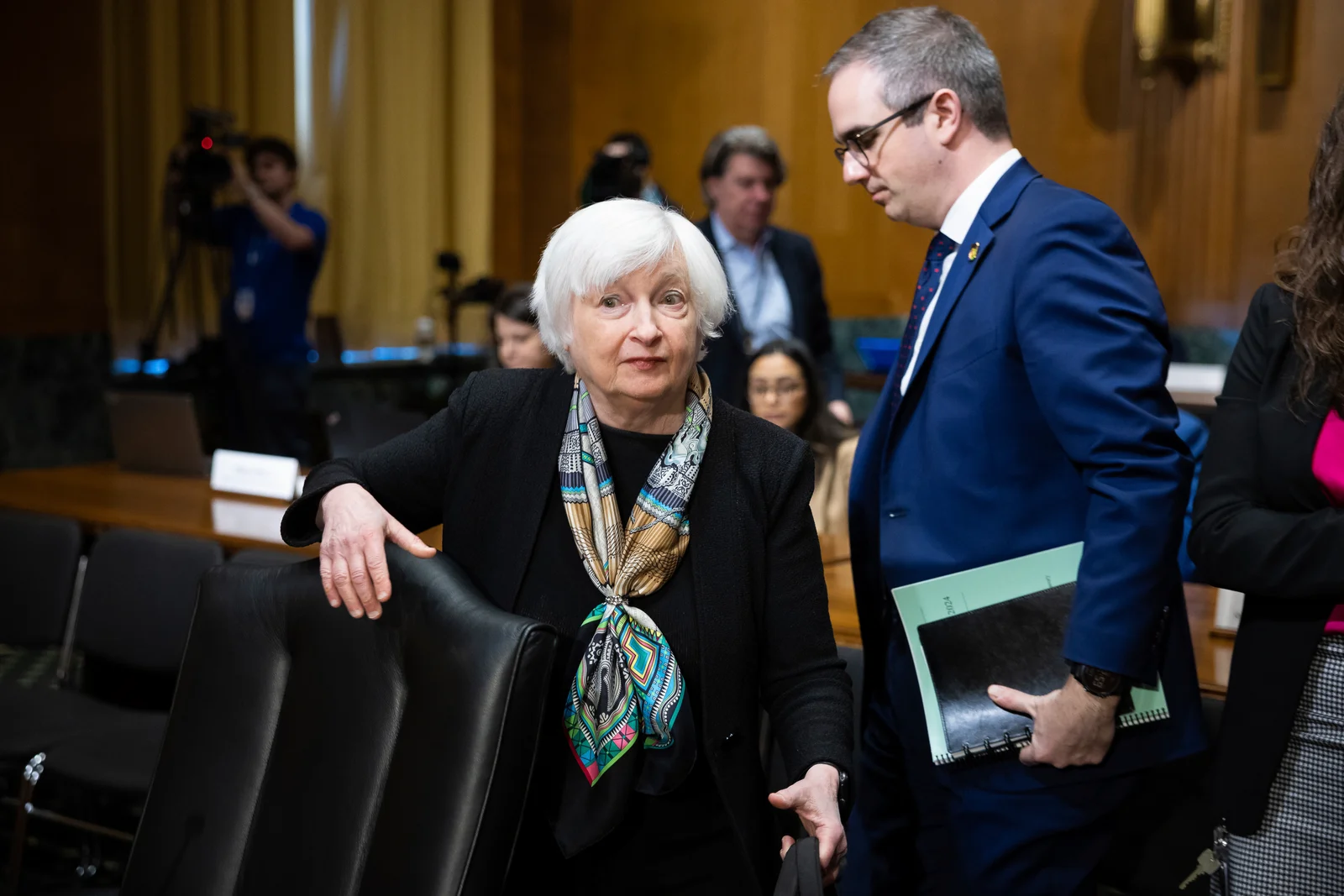
Treasury Secretary Janet Yellen warned of "widespread suffering" and a potential stock market crash if the US fails to raise the government's borrowing authority in the coming weeks. Yellen said millions of Americans who rely on payments from the federal government would likely go unpaid, ranging from 66 million Social Security beneficiaries to millions of veterans and military families. She warned that a situation where the US runs out of cash to pay its bills and defaults on its debt "would generate an economic and financial catastrophe."
Warren Buffett's Berkshire Hathaway dumped $13.3 billion in equities and increased exposure in cash and US Treasuries in Q1, indicating a possible collapse in risk-on asset prices. Buffett is preparing for a potential stock market crash, particularly as the US banking crisis unfolds. The increasing possibility of a global recession also risks putting downside pressure on Bitcoin, with its 100-week correlation with the Nasdaq reaching its highest level of about 0.42%. Bloomberg Intelligence analyst Mike McGlone expects that BTC price would likely be the leading indicator for a stock crash.
Charles Schwab Corp. is experiencing its worst month in over 35 years, with shares down 34% in March, wiping out $47 billion in market value. The brokerage giant is facing headwinds from its banking arm, which invested in long-dated bonds during a period of low interest rates and is now stuck with losses on those investments as the Federal Reserve has increased interest rates. Additionally, customers seeking better returns are moving their cash deposits into higher yielding assets like money-market funds, putting pressure on the company's profit outlook. Despite the drop, some analysts see this as a historic buying opportunity for the financials sector as a whole.