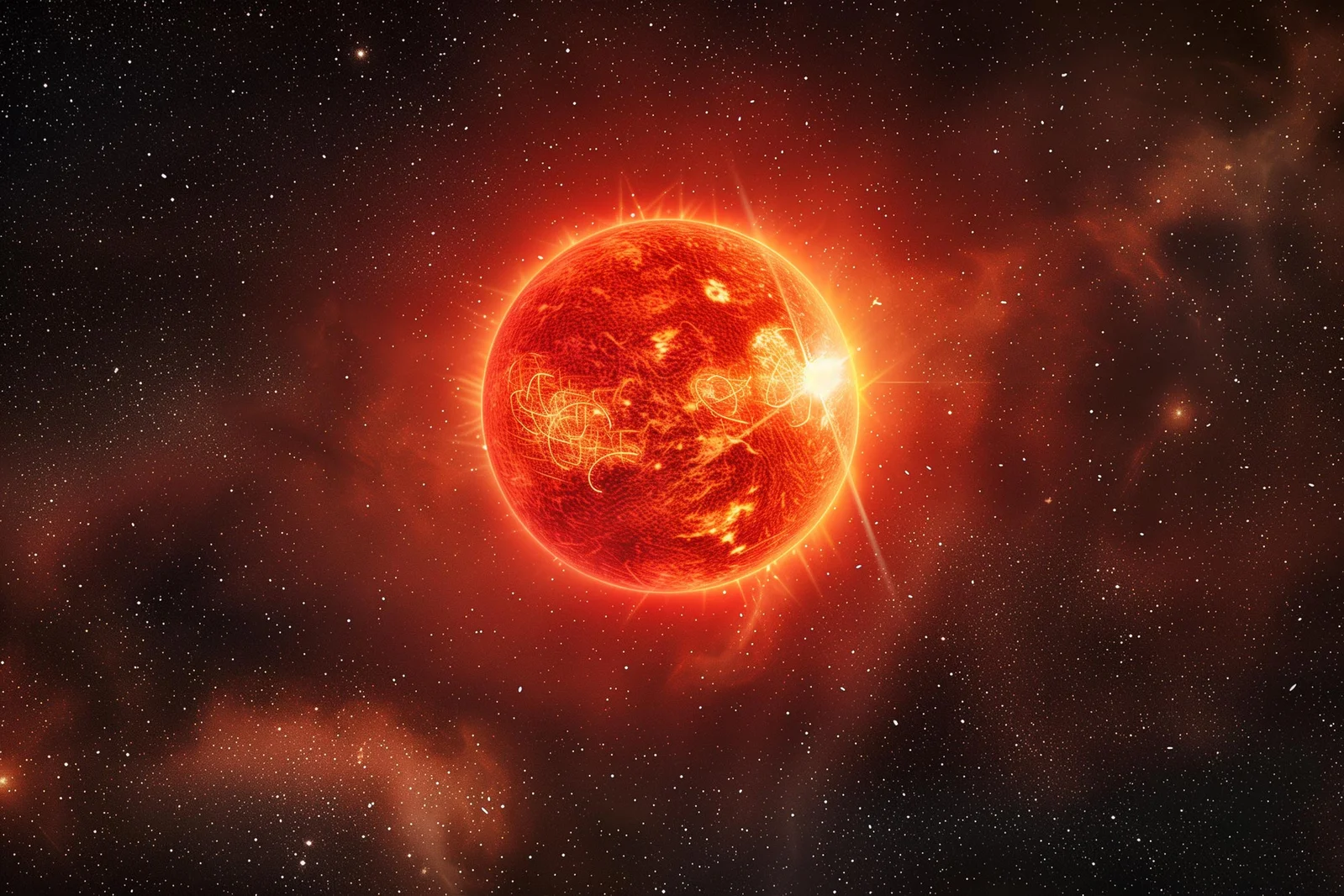
New observations of the red giant star R Doradus suggest that starlight alone cannot account for the powerful winds that distribute life's essential elements across the galaxy, challenging decades-old theories and indicating other processes like stellar pulsations or dust formation may be involved.
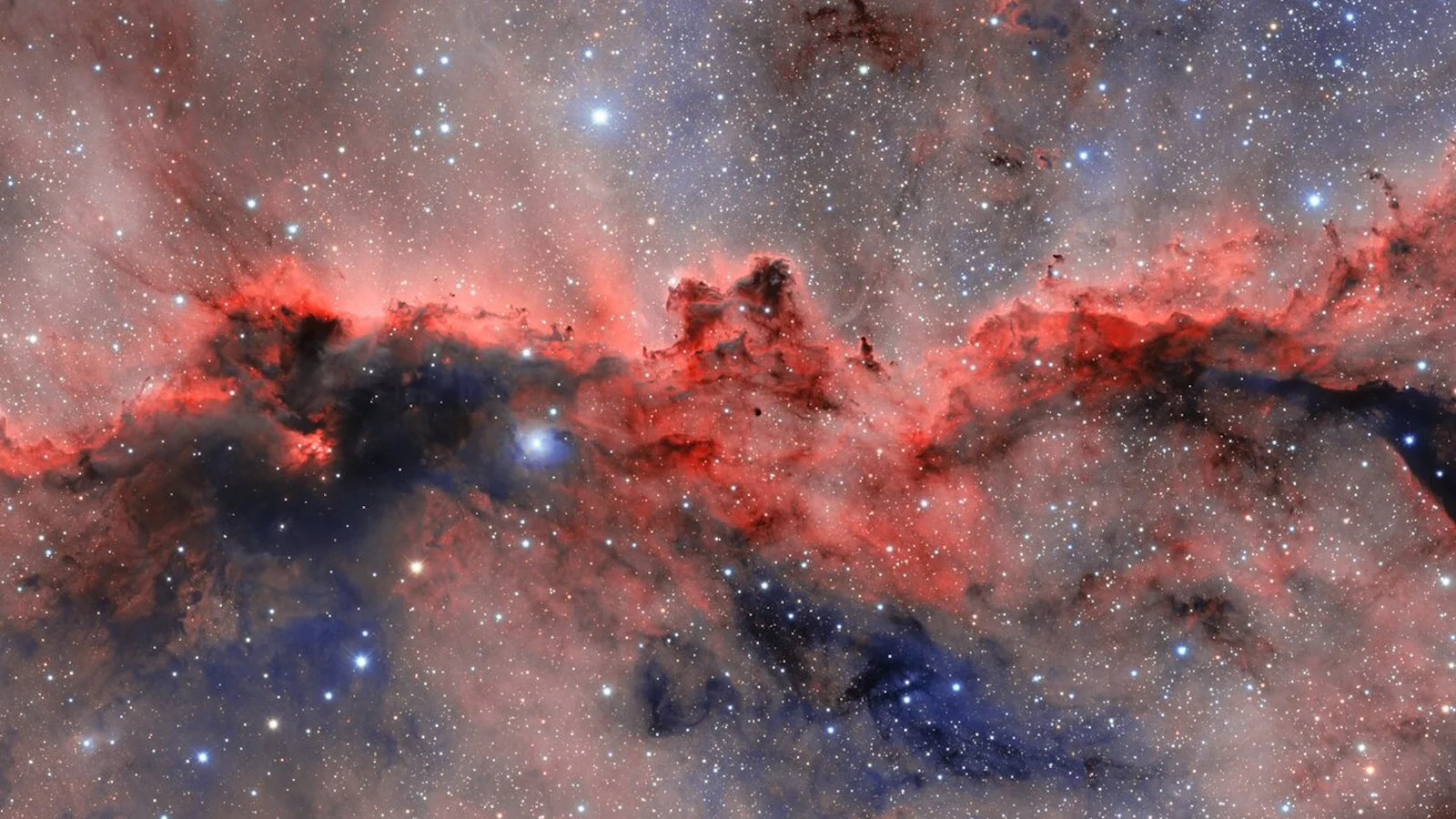
Astronomers have captured a stunning image of the nebula NGC 6188, also known as the Fighting Dragons of Ara, located 4,000 light-years away in the constellation Ara. The image depicts two dragon-like shapes formed by stellar winds from young stars, showcasing the dynamic interplay of radiation and cosmic dust in this emission nebula.
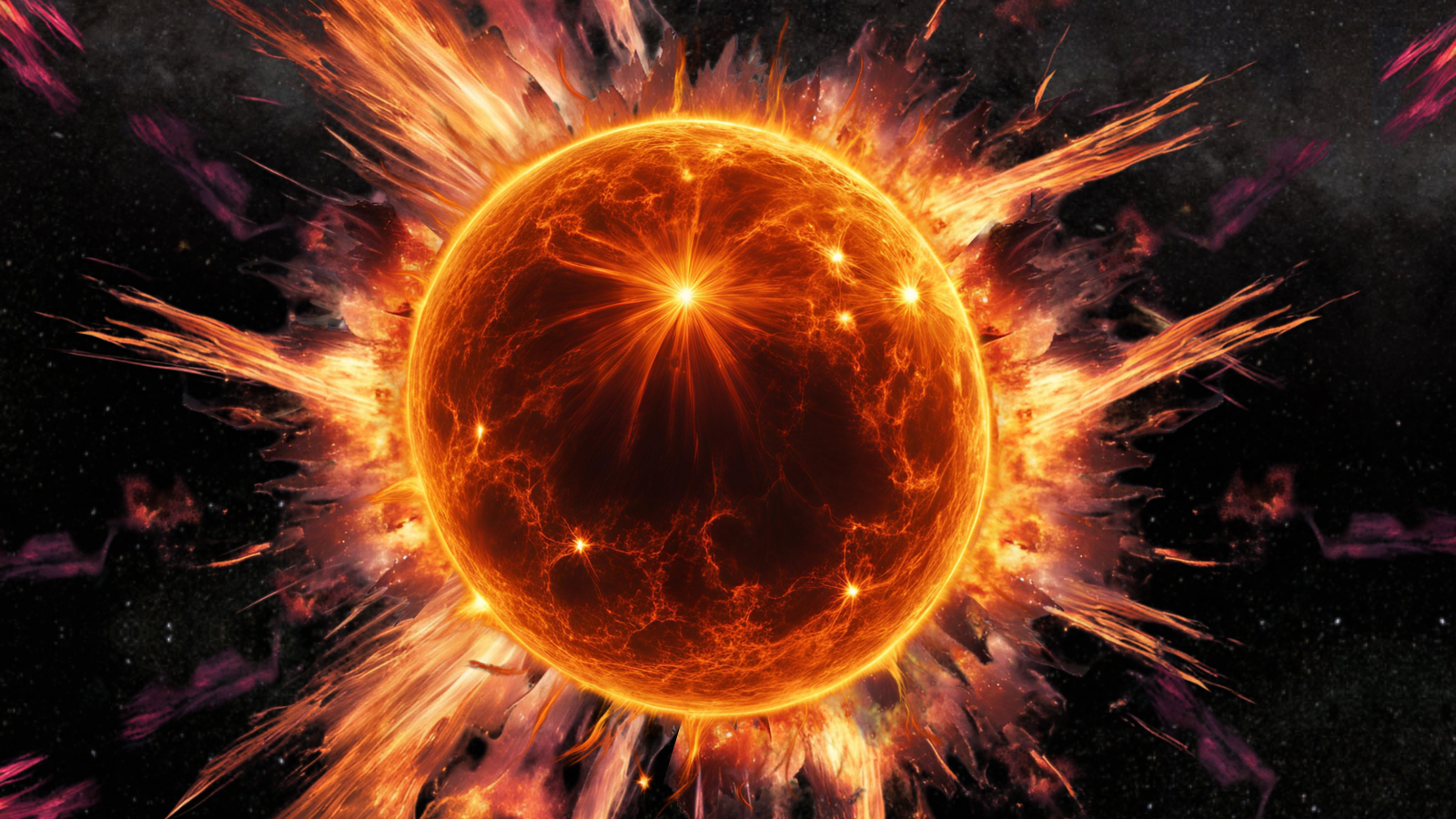
New research suggests that very massive stars eject much more matter through powerful stellar winds than previously thought, influencing their evolution and the formation of black holes, and challenging existing models of star and black hole development.
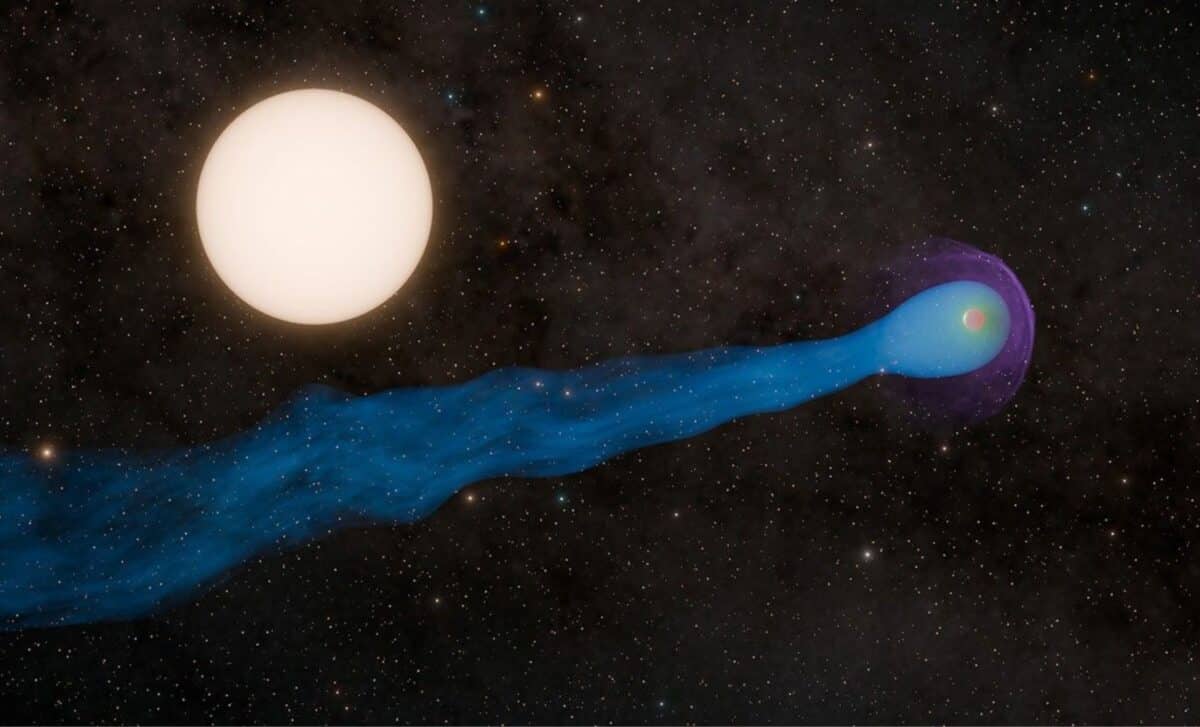
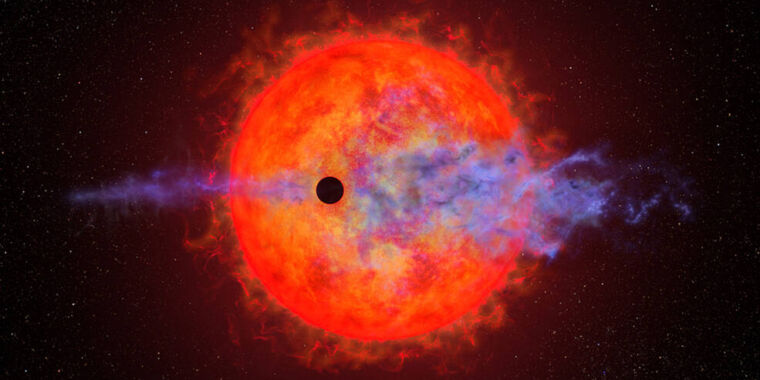
NASA astronomers have discovered that the exoplanet WASP-69 b, a gas giant located 163 light-years away, has a comet-like tail over 350,000 miles long, formed by escaping gases shaped by stellar winds from its host star. This phenomenon offers insights into the interactions between planets and their stars, highlighting the dynamic nature of planetary atmospheres under stellar influence. The study of such exoplanetary tails could enhance understanding of planetary habitability and atmospheric evolution.
Astronomers have detected stellar winds blowing from three main-sequence stars similar to the sun, finding that these winds shrink about 67 times as fast as the sun's. These powerful winds can trigger processes that evaporate the atmospheres of planets orbiting these stars, affecting their potential habitability. The observation of X-rays emitted by the stars' hot plasma bubbles has provided crucial insights into the rates at which these stars lose mass via their stellar winds, shedding light on planetary system evolution and the likelihood of habitable planets.
An international research team led by a University of Vienna scientist has directly detected stellar winds from three sun-like stars for the first time by recording the X-ray emission from their astrospheres, placing constraints on the mass loss rate of the stars via their stellar winds. The study, published in Nature Astronomy, observed the spectral fingerprints of oxygen ions with the XMM-Newton space telescope and estimated the mass loss rates of the stars to be much stronger than the solar wind, potentially due to stronger magnetic activity. This breakthrough paves the way for future direct detection and imaging of stellar winds, with implications for understanding stellar and planetary evolution.
Astrophysicists have discovered that the exoplanet WASP-69b, similar in size to Jupiter, is losing its gas atmosphere at a rapid rate due to its close proximity to its host star, resulting in the formation of a 350,000-mile-long tail shaped by stellar winds. This finding provides crucial insight into the role of stellar winds in shaping planetary evolution and offers a rare opportunity to study atmospheric mass loss in real time, according to researchers at UCLA.
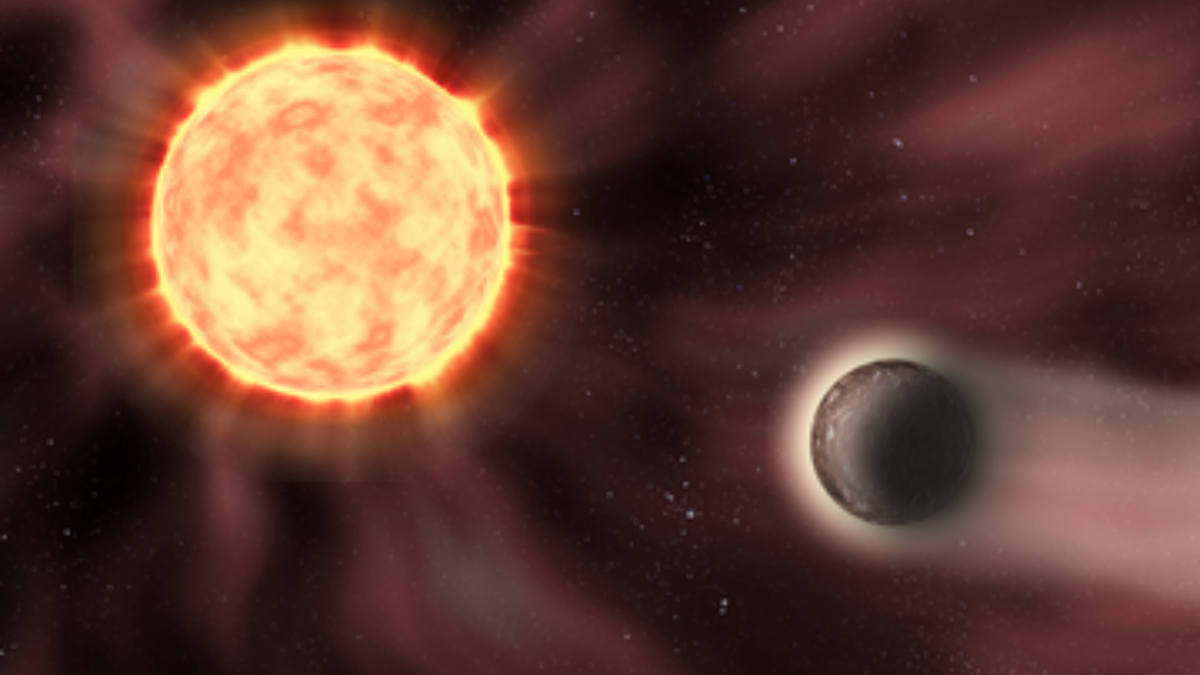
Stellar winds, consisting of charged particles ejected from cool stars with powerful magnetic fields, could strip entire atmospheres from orbiting planets, rendering them incapable of hosting life. These winds can reach speeds up to 5 million miles per hour, strong enough to blow away the atmosphere and destroy the conditions needed for life. Understanding the interaction between stellar winds and celestial bodies deepens our knowledge of space and aids in the search for habitable exoplanets.
Scientists have observed the exoplanet Au Mic b, which orbits a young and volatile red dwarf star, losing portions of its atmosphere in an unpredictable manner. The planet's close proximity to its star makes it vulnerable to plasma eruptions caused by magnetic reconnection. The Hubble Space Telescope observed hydrogen leaving the planet during two transits, but the loss of hydrogen was only apparent some of the time. Stellar winds and photoionization may be responsible for shaping the outflows in a way that makes them unobservable from Hubble's perspective. The behavior of planets like Au Mic b and the fate of their atmospheres remain largely unknown.
Scientists from the Leibniz Institute for Astrophysics Potsdam have conducted simulations showing that cool stars with powerful magnetic fields can generate stellar winds that are so strong they strip away the atmospheres of orbiting planets, rendering them inhospitable for life. These stellar winds can reach speeds up to five times greater than the solar wind produced by our sun, potentially causing significant damage to exoplanets in habitable zones. The research highlights the importance of understanding the impact of stellar winds on exoplanets and deepens our understanding of habitability in the Milky Way.
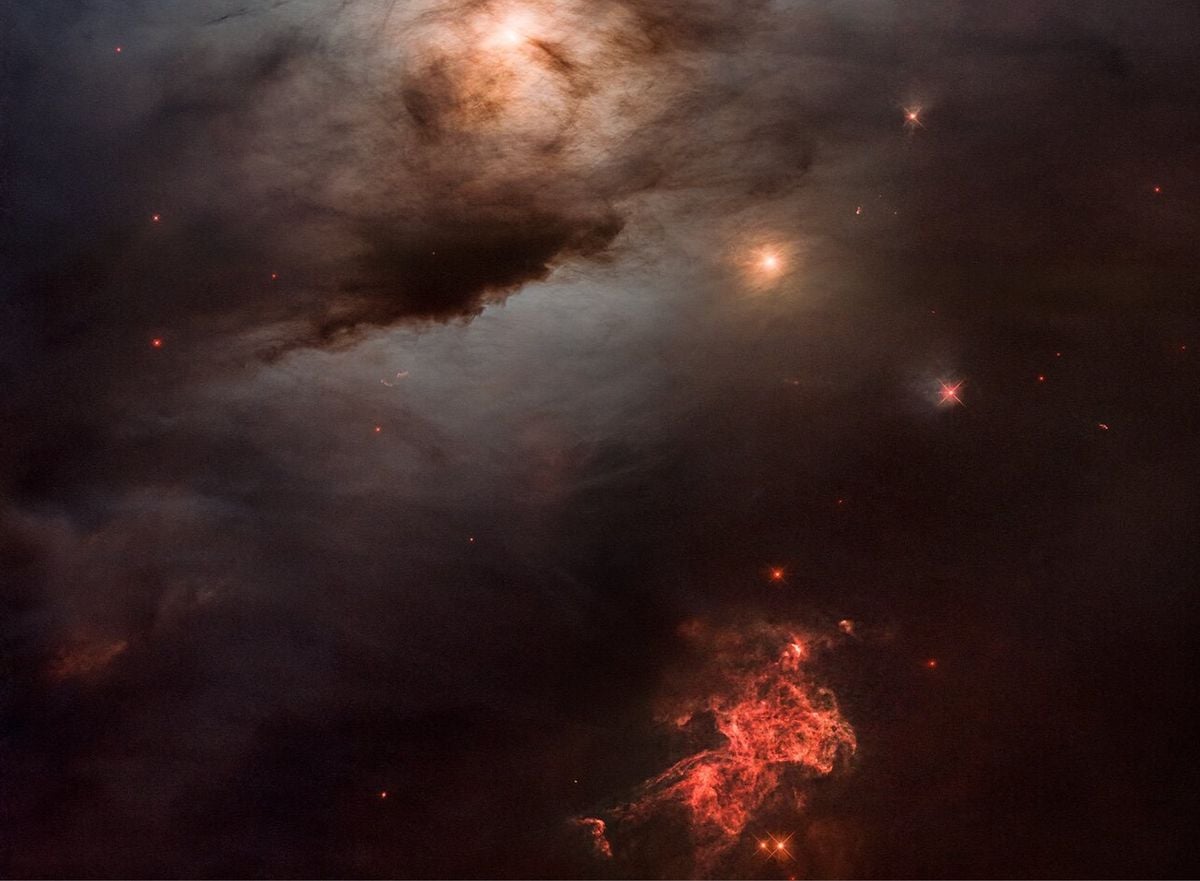
The Hubble Space Telescope celebrated its 33rd launch anniversary by capturing a stunning new photo of NGC 1333, a reflection nebula located 960 light-years away in the Perseus molecular cloud. The image showcases hundreds of newly forming stars embedded within the dark cloud, which is filled with obscuring dust. The photo also highlights the ferocious stellar winds sweeping through the nebula's clouds of dust, likely caused by the bright blue star at the top of the image, and a reddish glow representing hydrogen ionized by young stars.