Tag

Stellar Mass

All articles tagged with #stellar mass

astronomy1 year ago

"Discovery: Massive Black Hole Found Near Earth in Milky Way"

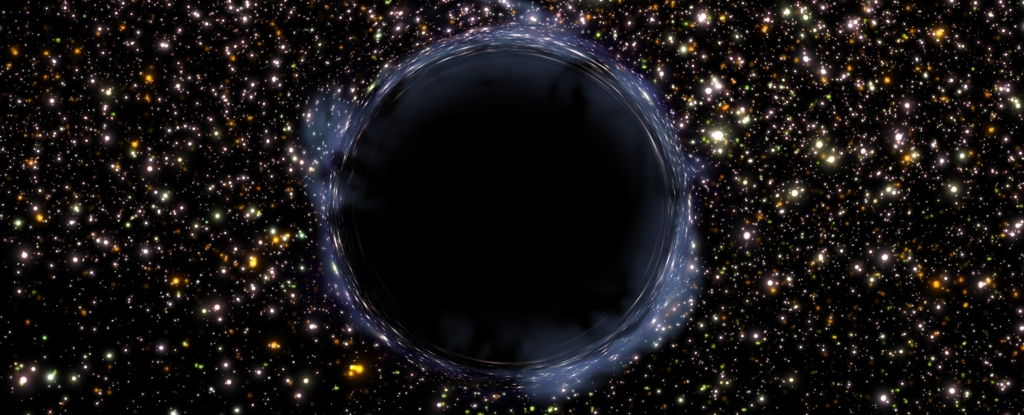
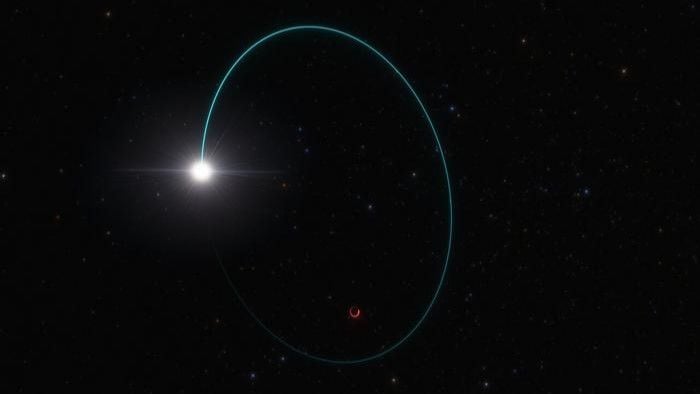
Astronomers have discovered the most massive stellar-mass black hole, named Gaia BH3, in the Milky Way, located roughly 2,000 light-years away in the constellation Aquila, making it the second-closest known black hole to Earth. This black hole is 33 times more massive than our sun and was found using the European Space Agency's Gaia spacecraft. The discovery provides insights into the formation and effects of black holes, and the star orbiting it is "metal poor," supporting a theory about the formation of small black holes.
astronomy2 years ago

"Unveiling the Enigmatic Shadows: Astronomers Uncover an Almost Dark Galaxy"

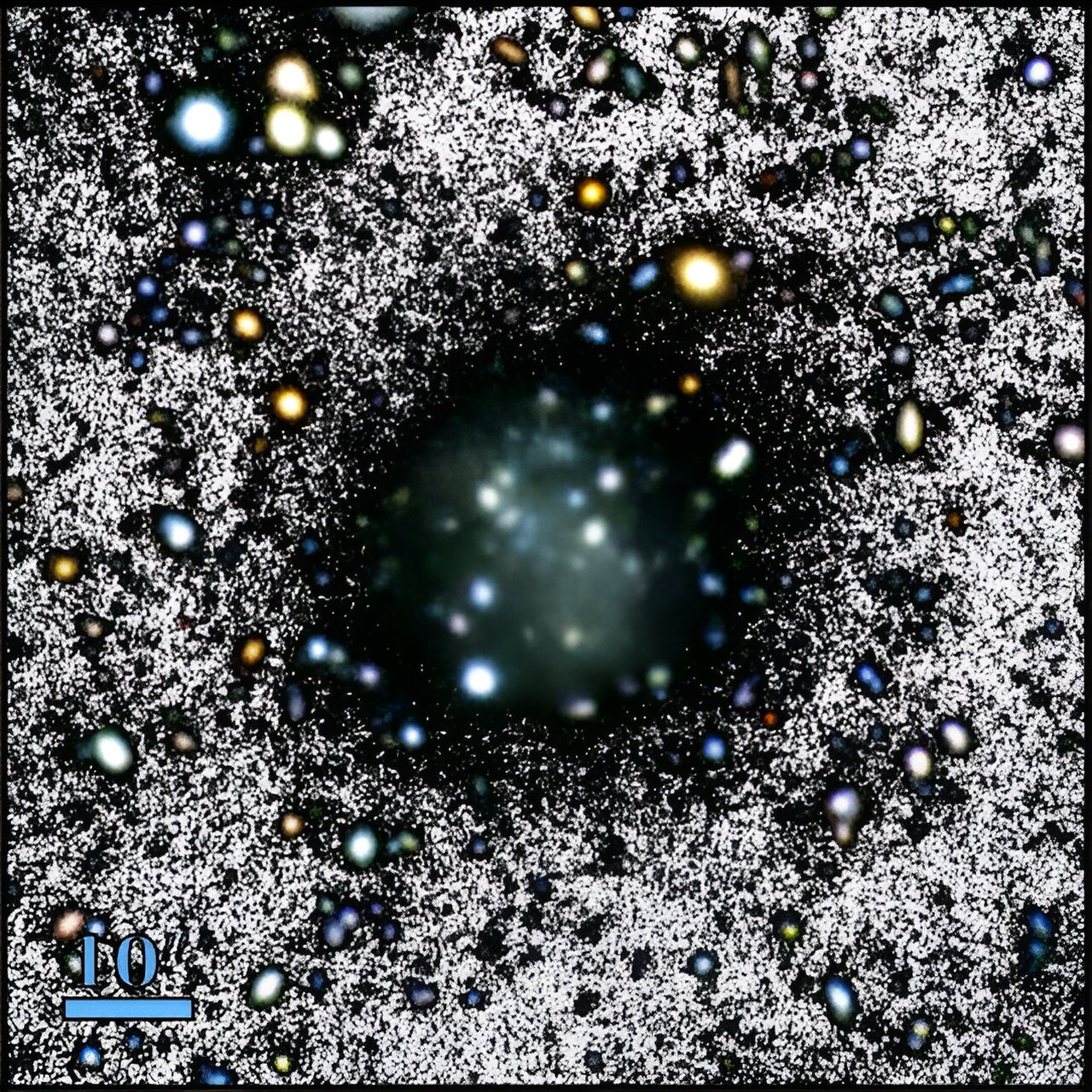
Astronomers have discovered a new almost dark galaxy called "Nube" through deep optical imagery from the IAC Stripe 82 Legacy Project. Nube has a very low surface brightness and is as massive as the Small Magellanic Cloud. It is located 350 million light years away and has a stellar mass of about 390 million solar masses. Nube is the most massive and extended galaxy of its kind detected so far, with extreme properties that raise questions about its origin and nature.

astronomy2 years ago

Unveiling the Hidden Stealth Black Holes in Our Cosmic Backyard

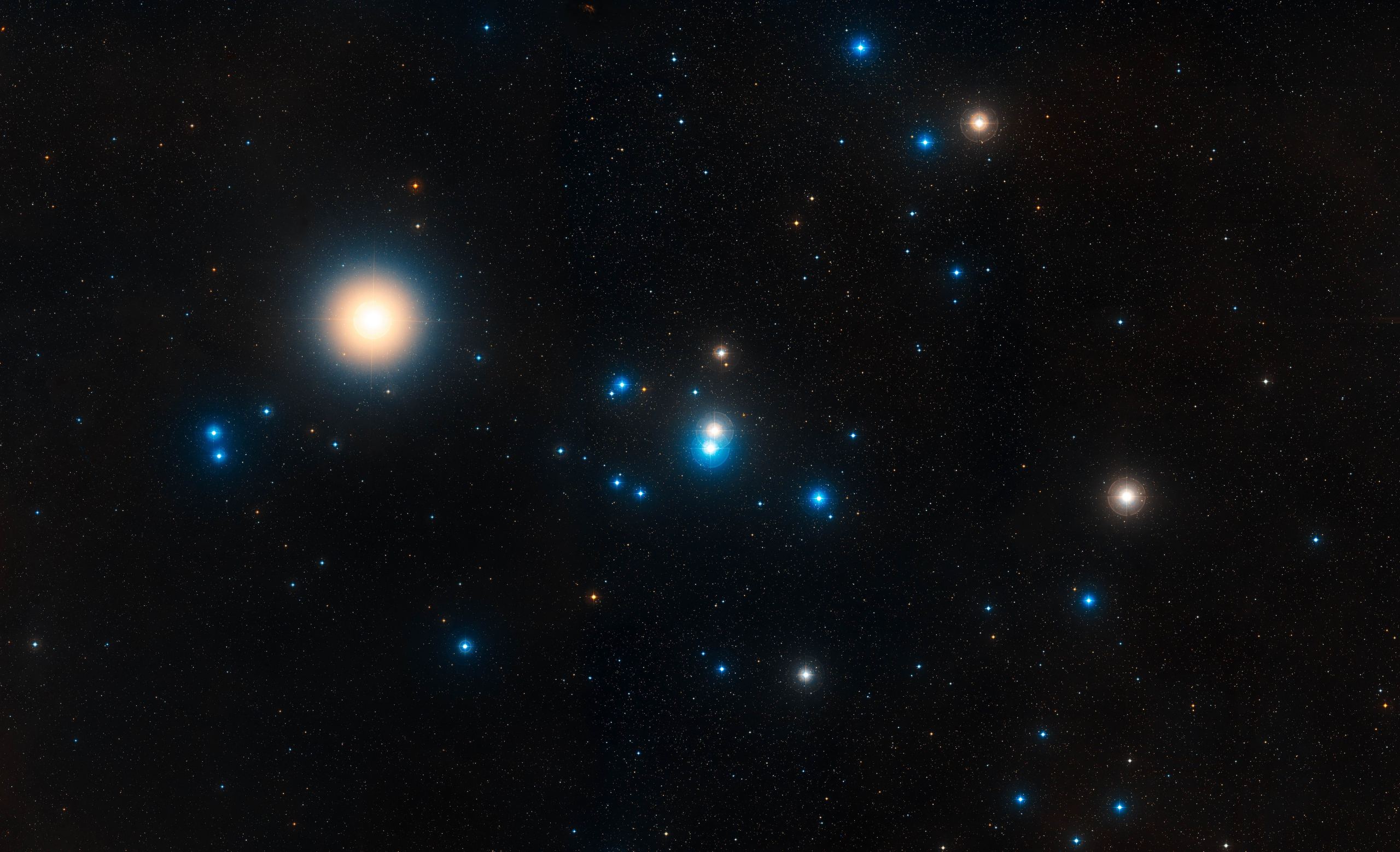
A recent study suggests that there may be two or three candidate black holes just 150 light-years away from Earth, much closer than previously thought. Researchers focused on the Hyades star cluster and found that the motion and evolution of stars in the cluster could be explained by the presence of stellar mass black holes. These black holes may have formed from the collision, merger, and collapse of stars in densely packed groups. Further observations and models are needed to confirm the existence of these black holes and explore the possibility of nearby wormholes.

astronomy2 years ago

Surprising Discovery: Black Holes Found Closer to Earth Than Expected

A new study suggests that there could be two or three stellar mass black holes hiding in the Hyades cluster, located 150 light-years away from Earth. By analyzing and modeling the cluster, astronomers found that their simulations matched the observed data when including these black holes. Although their precise locations are unknown, this discovery indicates that the Hyades cluster contains the closest candidate black holes to the Solar System, more than 10 times closer than the previous candidate. This finding helps us understand the distribution and impact of black holes in star clusters and contributes to our knowledge of gravitational wave sources.

astronomy2 years ago

Black Holes Lurking in Nearby Star Cluster Pose Closest Threat to Earth

The Hyades star cluster in the constellation Taurus, located 150 light-years away, may be hiding a stellar-mass black hole. Astronomers compared observations of the cluster with N-body simulations and found that the best model predicts the presence of 2 or 3 black holes. However, the results are not conclusive, and further observations are needed to confirm the existence of a black hole in the cluster.

astronomy2 years ago

"Groundbreaking Discovery: Astronomers Uncover Enormous Dormant Galaxy"

Astronomers have discovered a new massive and quiescent galaxy, COSMOS-1047519, at a high redshift of 4.53. This finding is significant as it adds to the limited number of spectroscopically confirmed high-redshift quiescent galaxies and provides insights into the early stages of the universe. The galaxy has a stellar mass of about 60 billion solar masses and a low star formation rate of only 10 solar masses per year. The observations suggest that COSMOS-1047519 experienced a starburst followed by rapid quenching, making it one of the youngest quiescent galaxies at a redshift higher than 3.0. The researchers propose that gas depletion due to starburst and/or AGN feedback triggered by galaxy-galaxy interactions or mergers may be responsible for quenching.

science2 years ago

"University of Michigan Scientists Uncover the Devastating Power of a Giant Black Hole"

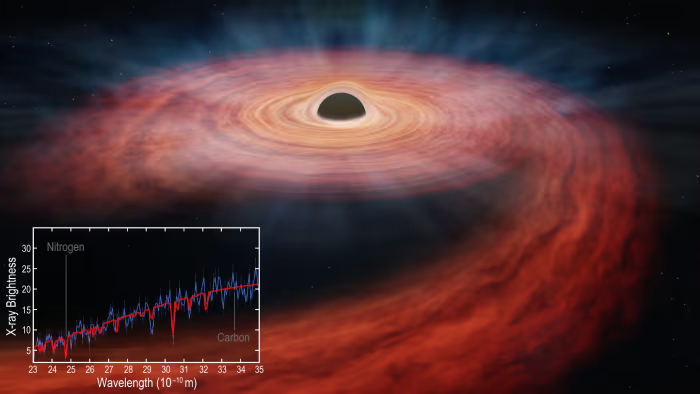
Scientists at the University of Michigan have studied a tidal disruption event caused by a giant black hole tearing apart a massive star. Using NASA's Chandra X-ray Observatory and ESA's XMM-Newton, the researchers analyzed the nitrogen and carbon near the black hole, which were believed to have been created inside the star before its destruction. The study provides insights into the composition and mass of the star, suggesting an unexpectedly high stellar mass for such an event. This research could help identify star clusters around supermassive black holes in distant galaxies.

astronomy2 years ago

Ancient and Dormant: A Giant Galaxy Discovered at Redshift 4.658.

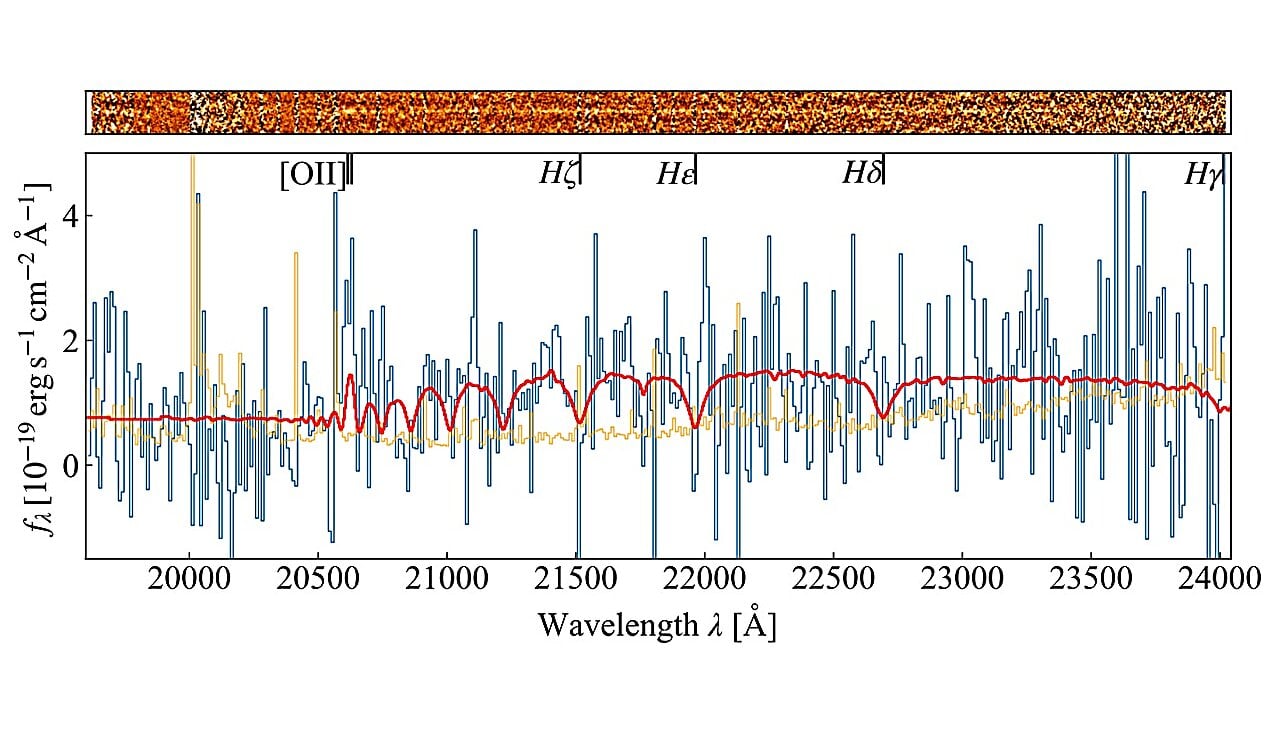
Astronomers have confirmed the existence of a massive quiescent galaxy, GS-9209, at redshift 4.658, just 1.25 billion years after the Big Bang, using the James Webb Space Telescope (JWST) NIRSpec. The galaxy has a stellar mass of M∗ = 3.8 ± 0.2 × 10¹⁰ M⊙, which formed over a ≃ 200 Myr period before quenching its star formation activity at z=6.5. This discovery sheds light on the rapid assembly of the earliest galaxies and the physics of galaxy formation.

astronomy2 years ago

Reevaluating the Size of Galaxies: New Discoveries Challenge Previous Assumptions.

The James Webb Space Telescope (JWST) has detected galaxies from the Cosmic Dawn period that are so massive they challenge our understanding of the Universe. The galaxies may be even more massive than previously thought, according to the latest results from the Cosmic Dawn Center. The team hypothesizes that what we’re seeing at work here is an effect that could mean these galaxies are even larger than they appear. The team found that if the galaxies were considered as an entity made up of multiple stellar groupings, the inferred stellar masses of these five galaxies would be up to ten times greater. The next step will be to look for signatures that correlate to the true mass of these galaxies that do not require high-resolution imaging.

astronomy2 years ago

James Webb Telescope Reveals Surprising Scale of Galaxies

Early results from the James Webb Space Telescope have revealed galaxies so early and massive that they challenge current cosmic models. A new study from the Cosmic Dawn Center suggests that the galaxies may be even more massive than previously thought due to an effect that has never before been studied at such early epochs. The study found that if a galaxy is regarded not as one big blob of stars, but as an entity built up of multiple clumps, the inferred stellar masses can be up to ten times larger. This highlights the importance of being able to resolve galaxies and accurately determine their properties.