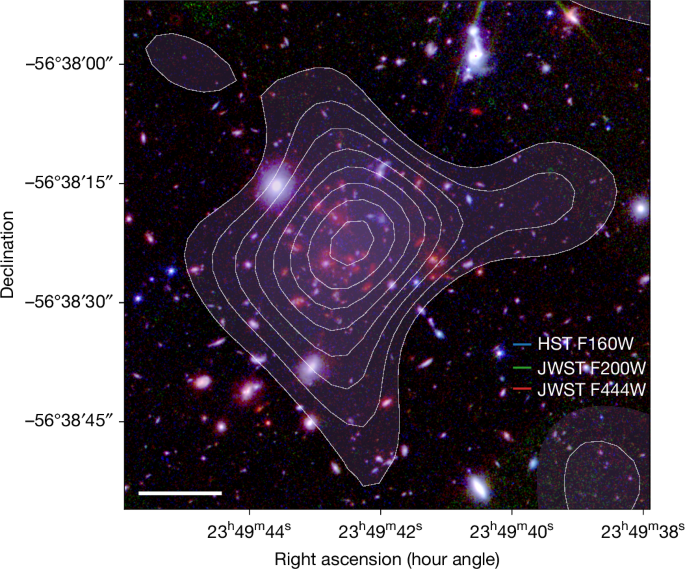
This study reports the detection of hot intracluster gas at redshift 4.3 using the Sunyaev–Zeldovich effect, providing insights into the formation and evolution of galaxy clusters in the early universe.
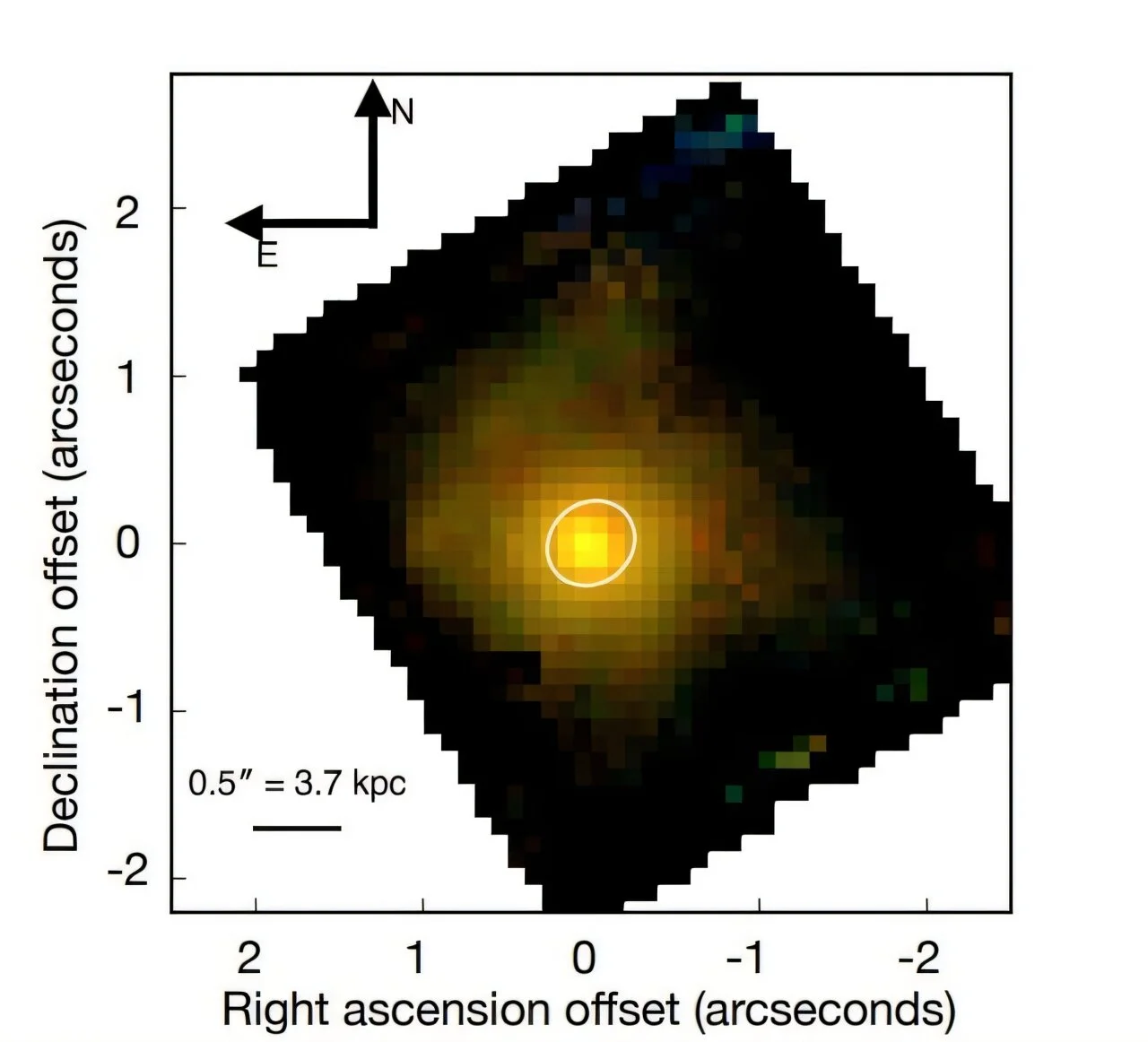
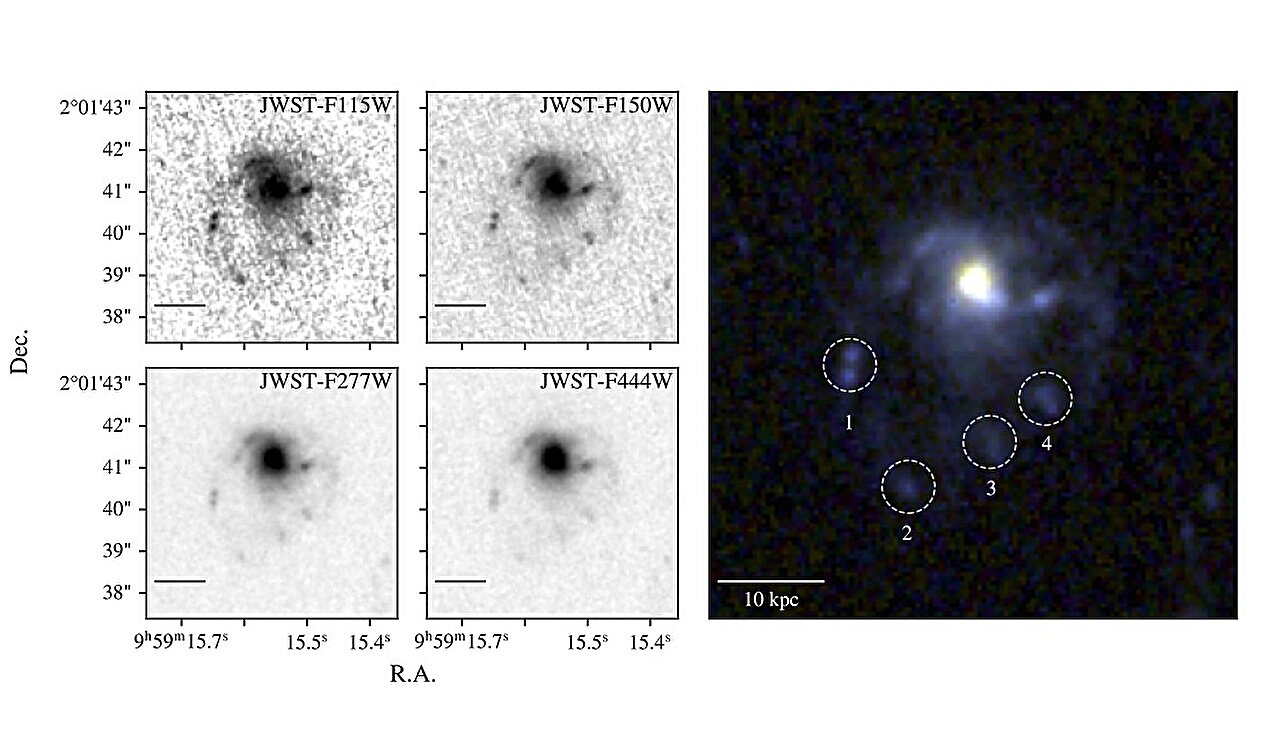
Using JWST, astronomers observed galaxy XMM-VID1-2075 at a high redshift of 3.45, finding it to be a massive, evolved, slow-rotating galaxy with properties suggesting it underwent merger activity, making it the highest redshift slow-rotator identified so far.
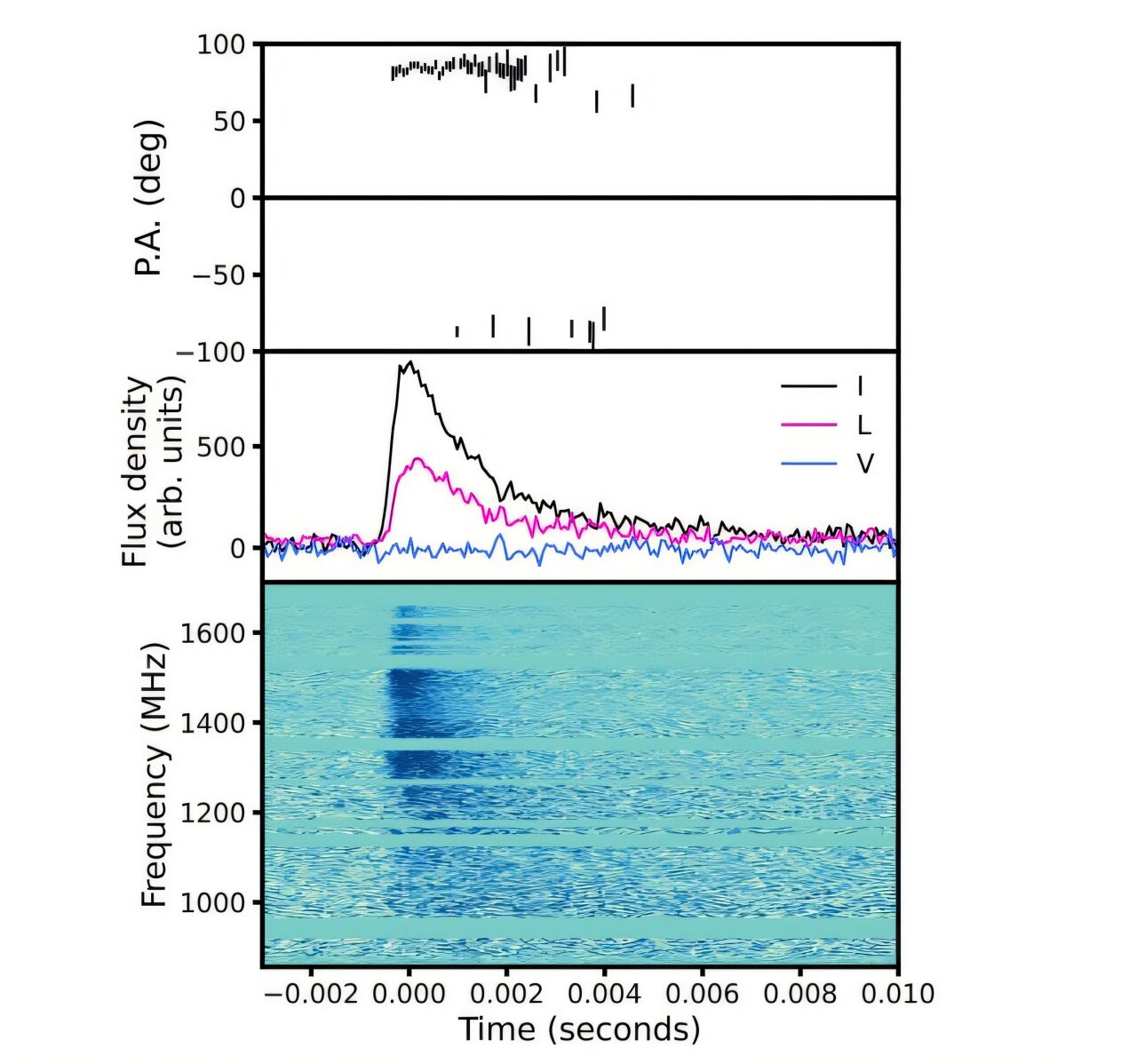
Astronomers using the MeerKAT telescope have discovered the most distant fast radio burst, FRB 20240304B, originating just 3 billion years after the Big Bang at a redshift of 2.148, providing new insights into the early universe and galaxy formation.
Astronomers using JWST have discovered a new galaxy, COSMOS2020-635829, exhibiting features of a jellyfish galaxy undergoing ram pressure stripping at a redshift of 1.156, providing insights into galaxy evolution and environmental quenching in the early universe.
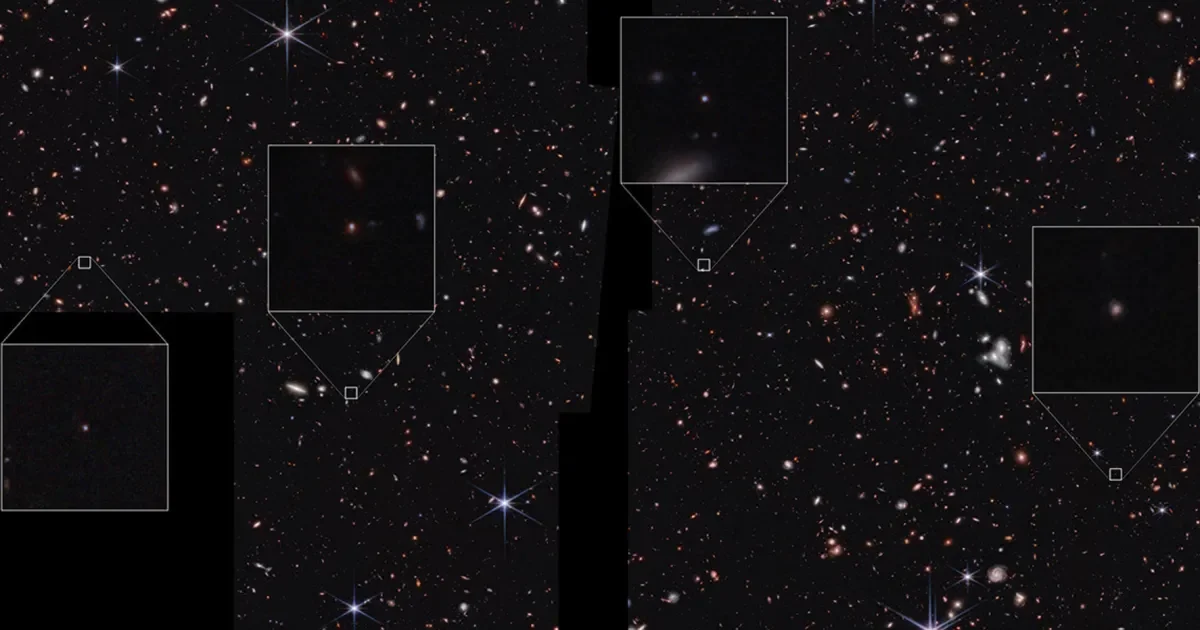
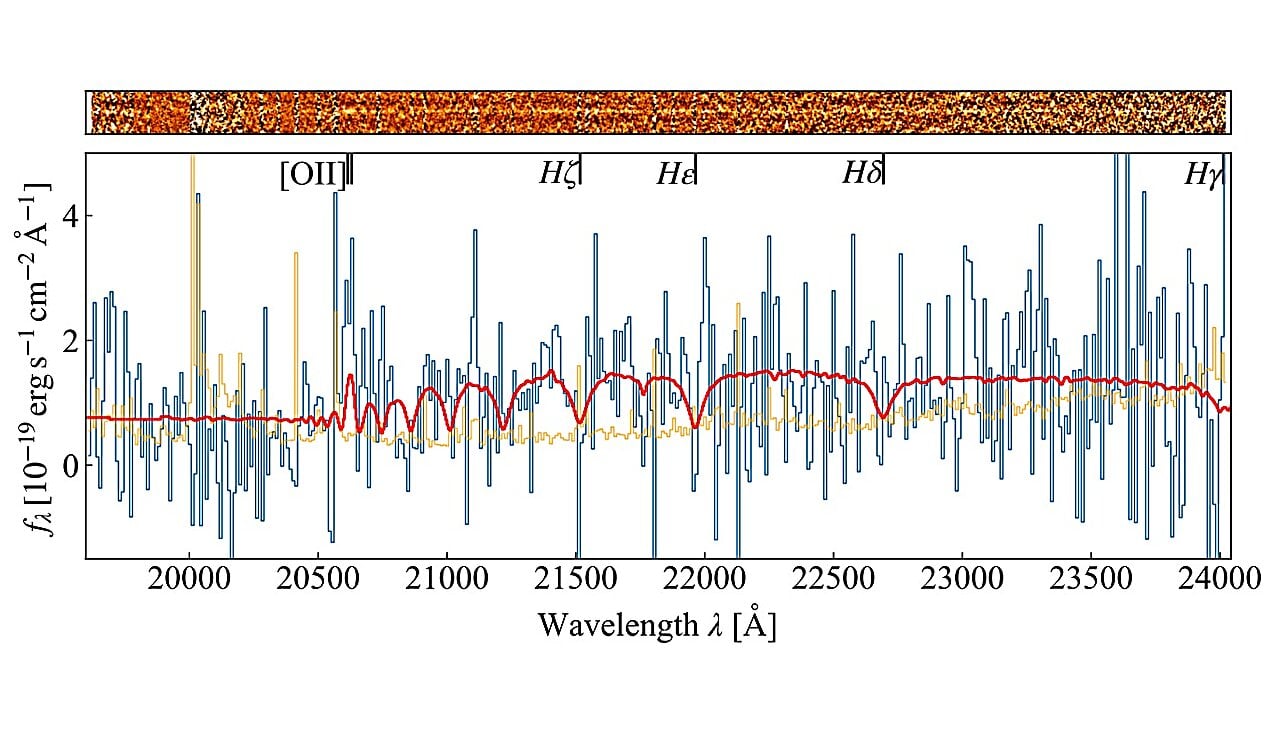
Astronomers have discovered a new massive and quiescent galaxy, COSMOS-1047519, at a high redshift of 4.53. This finding is significant as it adds to the limited number of spectroscopically confirmed high-redshift quiescent galaxies and provides insights into the early stages of the universe. The galaxy has a stellar mass of about 60 billion solar masses and a low star formation rate of only 10 solar masses per year. The observations suggest that COSMOS-1047519 experienced a starburst followed by rapid quenching, making it one of the youngest quiescent galaxies at a redshift higher than 3.0. The researchers propose that gas depletion due to starburst and/or AGN feedback triggered by galaxy-galaxy interactions or mergers may be responsible for quenching.
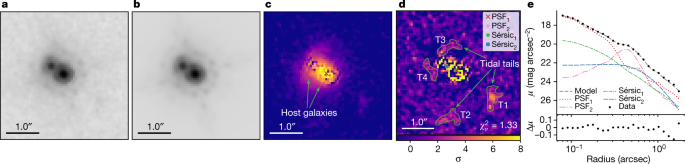
Astronomers have discovered a pair of quasars in a disk-disk galaxy merger at a redshift of 2.17, making it one of the closest quasar pairs ever found. The discovery was made using data from the Hubble Space Telescope, Chandra X-ray Observatory, and other telescopes. The quasar pair is believed to be a binary system, rather than a gravitational lens, and could provide insights into the co-evolution of supermassive black holes and their host galaxies.