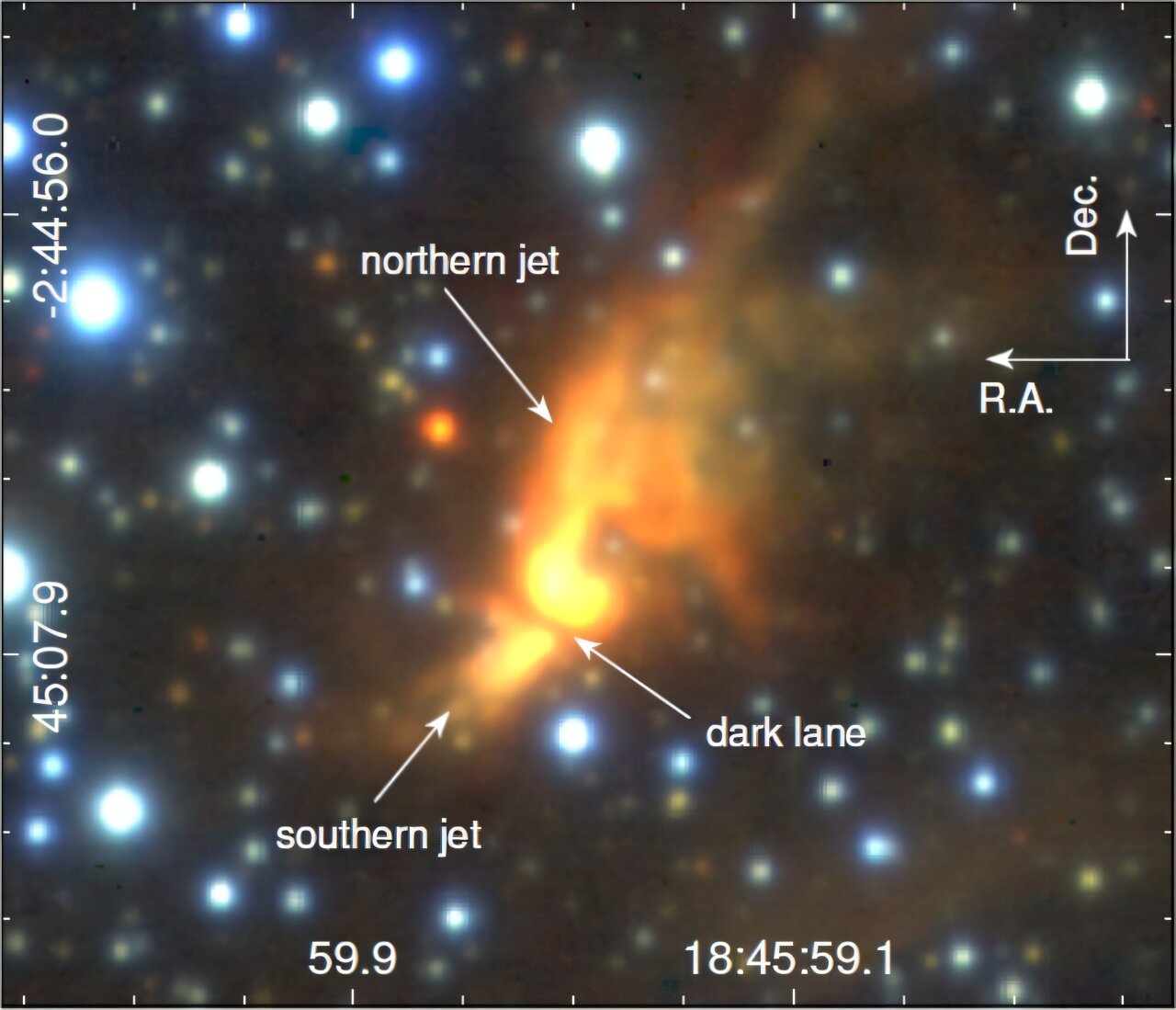
Astronomers using near-infrared and radio observations have studied the massive young stellar object YSO-G29, revealing evidence of a protostar within a dense molecular core, potential binary system characteristics, and molecular outflows, shedding light on its complex morphology and star formation processes.
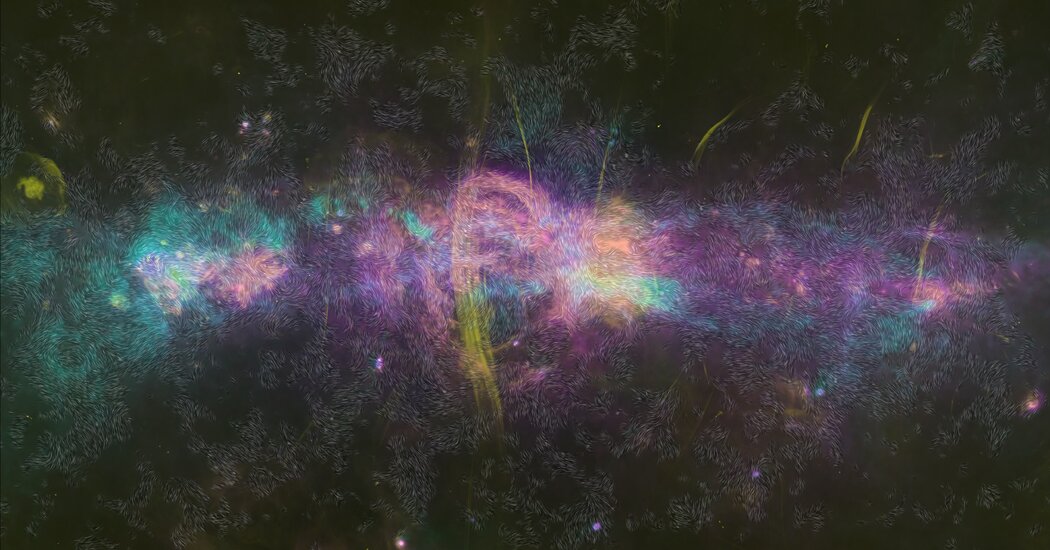
An international team of astronomers, as part of the FIREPLACE project, has produced a celestial image revealing previously unseen details of the central Milky Way, including magnetic field lines and jets of hot ionized gas. The image, created using infrared light polarization measurements aboard the Stratospheric Observatory for Infrared Astronomy, offers insights into the role of magnetic fields in the cycle of stellar birth and death, potentially guiding the development of new astronomical exploration and theories.
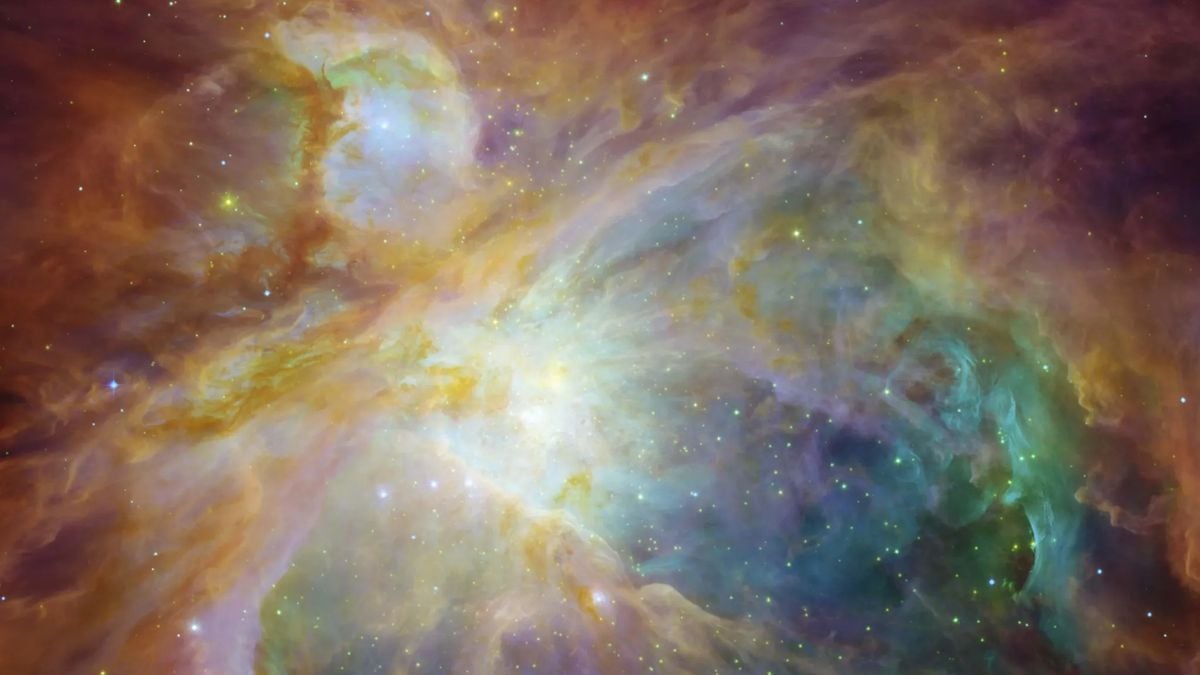
The James Webb Space Telescope has detected hundreds of mysterious free-floating planets in the Orion Nebula, including pairs of Jupiter-size worlds that orbit each other. A new study suggests that these "rogue" planets, particularly the Jupiter-mass binary objects (JuMBOs), may have formed through the cloud-collapse model rather than being pulled away from their parent planetary systems by passing stars. The research, which involved simulations of planetary systems and stellar flybys, provides insights into the formation of these enigmatic free-floating planets and could aid future observations by telescopes such as the Vera C. Rubin Observatory.
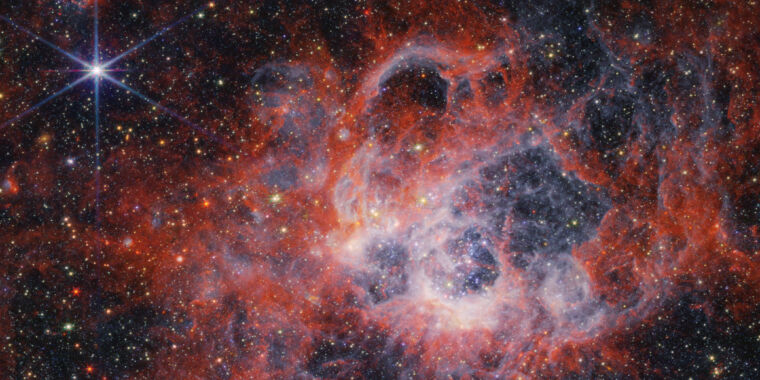
The James Webb Space Telescope has captured a stunning image of the nebula NGC 604 in the Triangulum Galaxy, revealing about 200 of the hottest and largest stars in their early stages of life, some of which are over 100 times more massive than the Sun. The nebula's vibrant colors are a result of stellar winds carving out cavities and ultraviolet radiation ionizing the surrounding gas, creating a ghostly glow of ionized hydrogen and bright orange streaks signifying the presence of carbon-based molecules. This region is unique for its density of large stars, making it a fascinating area for astronomers to study stellar formation.
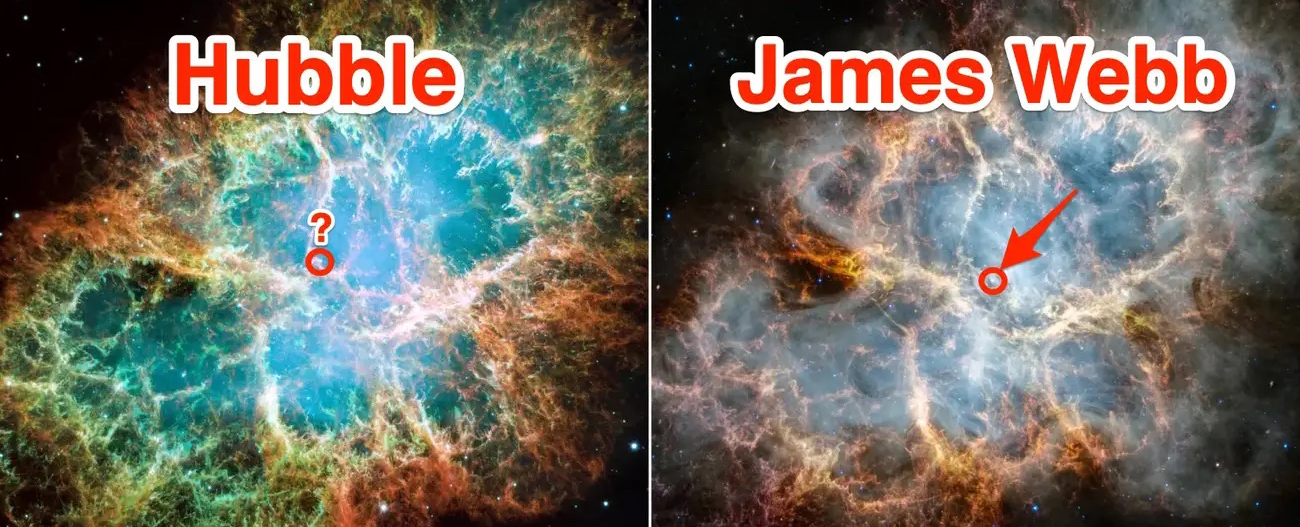
NASA's James Webb Space Telescope (JWST) has captured stunning new views of the Crab Nebula, revealing never-before-seen details. The image shows the Crab Pulsar at the center of the nebula, surrounded by hazy, ghost-like wisps of charged particles. JWST's infrared capabilities allowed it to capture features that the Hubble Space Telescope couldn't, such as the composition of the ejected material. This marks the first time in 20 years that Hubble will have a new image of the Crab Nebula for comparison.
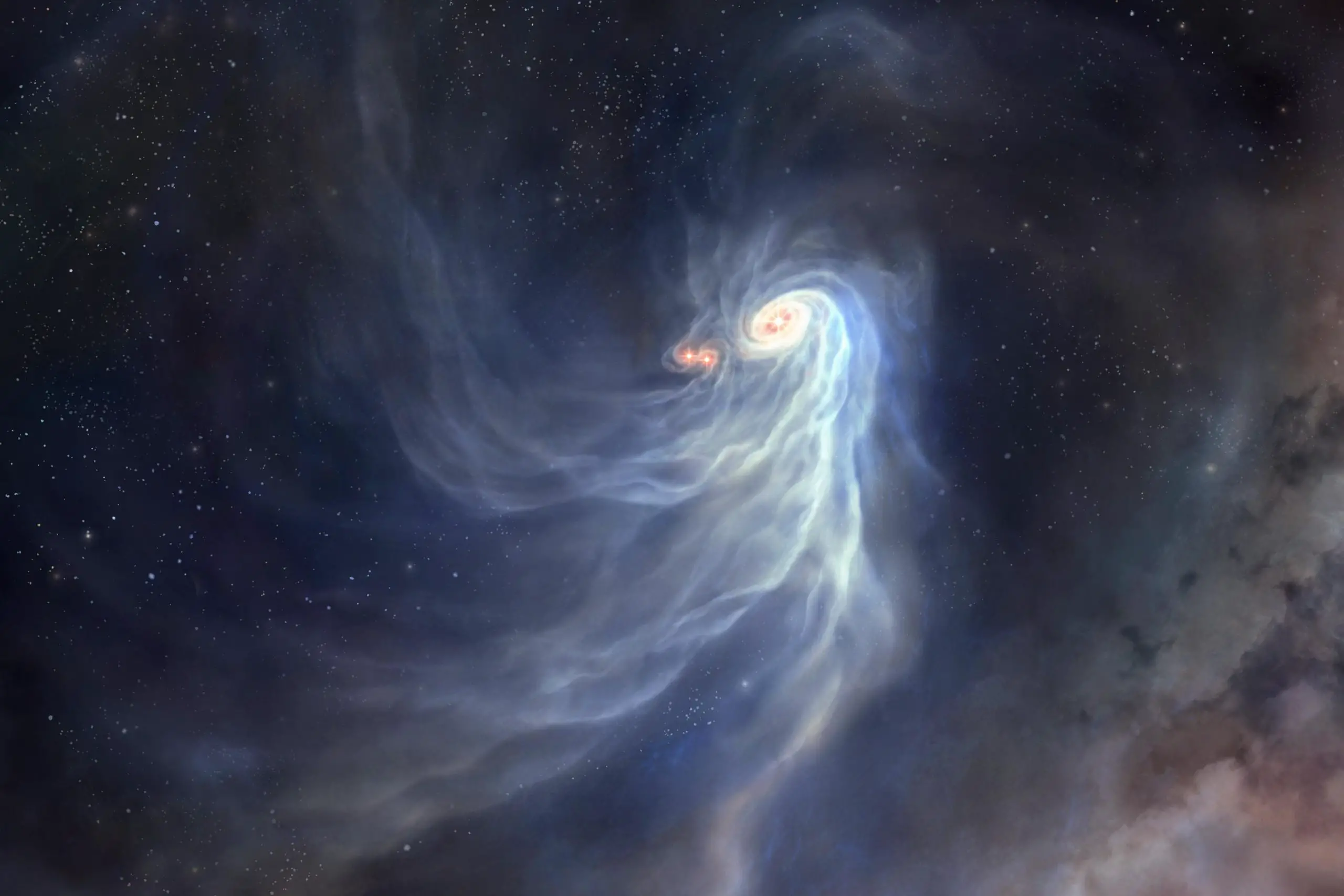
Astronomers have made a significant discovery in understanding the formation of stars and planets by observing three large spiral arms distributing materials to early-stage stars in a developing triple stellar system. The spiral arms act as "streamers," supplying gas to the young stars, which grow by absorbing it. This finding provides valuable insights into the origins of streamers and sheds light on the complexities of multiple stellar systems. The researchers used radio telescopes and computer simulations to support their observations and hope to determine if their findings are an anomaly or a common process in star formation.
Astronomers using the James Webb Space Telescope have discovered newborn galaxies that are still in the process of being formed, providing insights into the earliest stages of galaxy formation. These galaxies, located in the early universe, have significantly fewer heavy elements compared to their stellar masses and the amount of new stars they produce. The observations challenge the previously observed tight relation between the number of stars formed and the amount of heavy elements in galaxies. The findings align with theoretical predictions and suggest that these galaxies are in the process of being created, with fresh, unpolluted gas streaming into them faster than stars can enrich them with heavy elements. Further observations with the James Webb Space Telescope are expected to provide a clearer understanding of galaxy formation in the early universe.
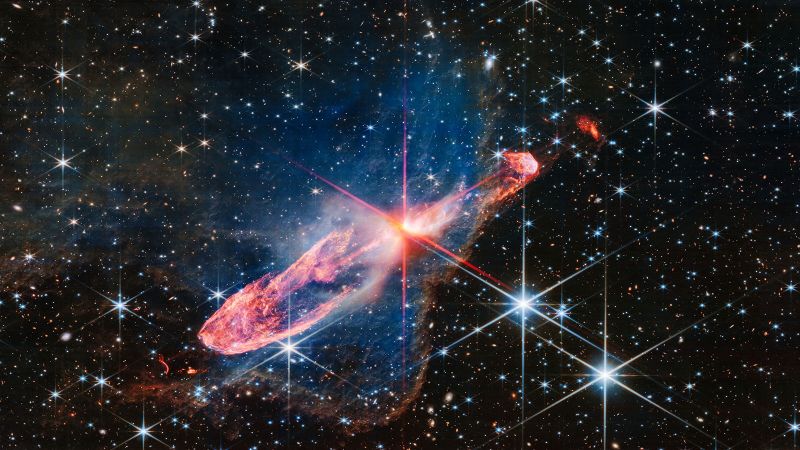
The James Webb Space Telescope has captured a detailed near-infrared image of the young stars Herbig-Haro 46/47, located 1,470 light-years away in the Vela constellation. The image reveals the stars within a gas and dust-filled nebula, showcasing their orange-white center and the material they have released into space over thousands of years. The image also highlights the wavy patterns and blue threads created by collisions between new and older ejected material. This observation provides valuable insights into the formation and evolution of stars.
The early Solar System may have been shielded from the destructive effects of a nearby supernova by the gas within the filament where it formed, according to a study by researchers at the National Astronomical Observatory of Japan. Isotopes found in ancient meteorites suggest the presence of short-lived radionuclides (SLRs) that could have been generated by a supernova. However, the high levels of SLRs detected in the meteorites indicate that the gas within the filament likely protected the Solar System from the full impact of the supernova. The study highlights the potential implications for our understanding of stellar system formation and evolution.