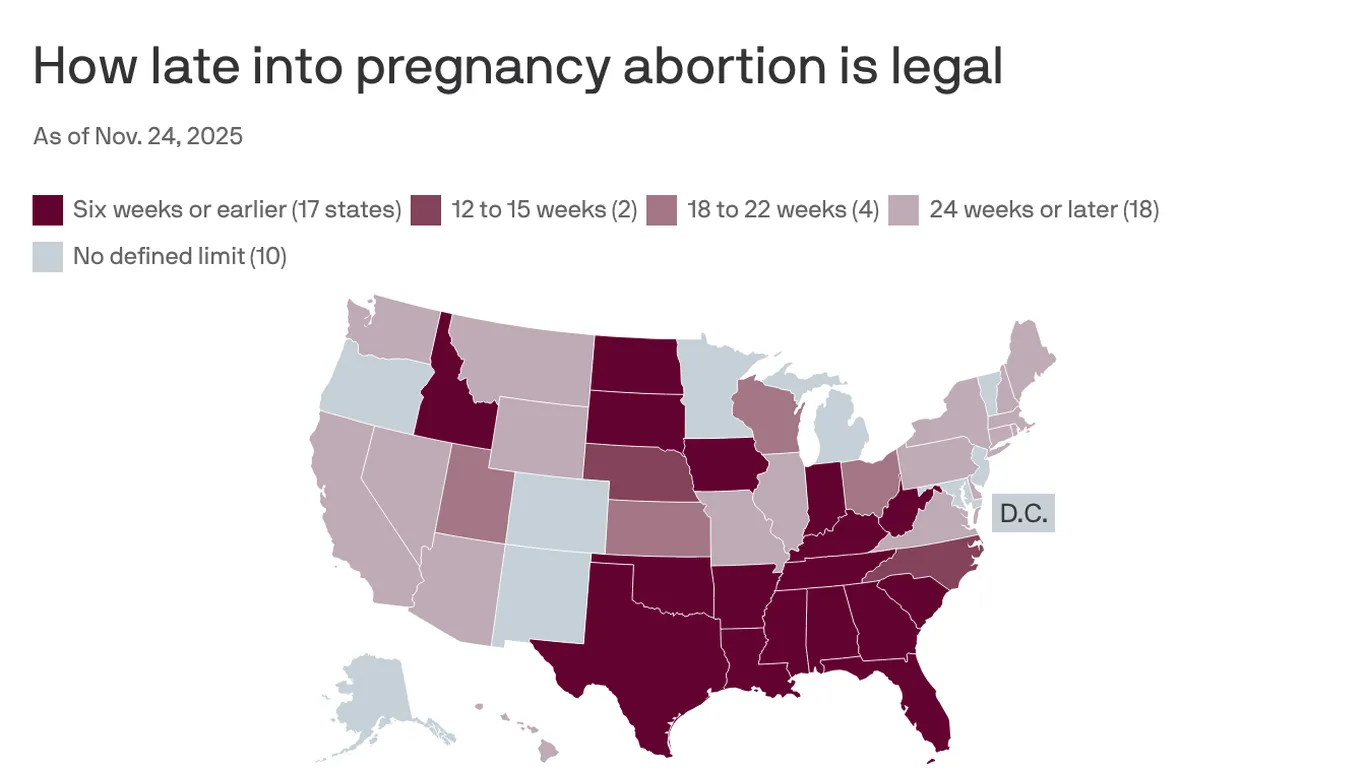
Several key states including Missouri, Nevada, Virginia, Idaho, Oregon, and Nebraska are poised to influence abortion access through upcoming ballot measures in 2026, with debates over constitutional protections, restrictions, and broader reproductive rights amid ongoing legal and political shifts post-Roe v. Wade overturn.
Following the 2024 election, states that voted on abortion rights have seen mixed results, with some expanding access and others facing ongoing legal battles and restrictions, highlighting the ongoing flux in U.S. reproductive law and the potential for further changes in upcoming elections.
Major food companies are lobbying against state regulations on ultraprocessed foods, claiming they will increase grocery prices, while supporting a federal standard to preempt state laws, amid ongoing debates over food safety, health concerns, and affordability.
President Trump's AI czar, David Sacks, has issued an executive order to block state AI regulations, causing controversy within the tech industry and Congress, as it undermines efforts for a unified federal AI policy and sparks political and legal conflicts.
New York Governor Kathy Hochul signed the RAISE Act into law, establishing comprehensive safety regulations for advanced AI models, including incident reporting, risk assessments, and penalties, positioning New York as a leader in AI regulation amid federal delays.
State efforts to regulate AI in housing to prevent discrimination and manipulation face potential disruption from President Trump's executive order, which aims to challenge and limit such state laws, creating legal uncertainty amid ongoing debates over AI's role in addressing housing affordability.
The Trump administration's CFPB is moving to override state laws that protect consumers from having medical debt reported on their credit reports, aiming to establish a uniform national standard under the Fair Credit Reporting Act, which could impact millions of Americans with medical debt.
States are increasingly enacting laws to regulate biometric data collection amid a lack of federal regulation, with some cases leading to large settlements with tech companies. However, enforcement is challenging, especially against overseas companies like PimEyes, which operate beyond U.S. jurisdiction. Public concern about privacy and facial recognition technology is growing, but federal legislation remains stalled due to industry lobbying.
State legislatures across the U.S. are proposing and enacting laws to restrict or regulate food dyes and additives, driven by consumer demand and political movements like MAHA, amid debates over scientific evidence and industry impacts, with some states banning certain dyes in schools and others requiring warning labels, while a national standard from the FDA is anticipated.
The failure of a proposed ban on state-level AI regulation in the US Senate has increased pressure for federal AI rules, as states continue to develop their own regulations amid public support for national standards; the debate highlights political divisions and the challenge of regulating AI at the federal level.
The Senate overwhelmingly rejected a proposed 10-year moratorium on state-level AI laws, allowing states to continue regulating AI, which is seen as a victory for consumer protection and safety efforts against unregulated AI development.
The Senate voted overwhelmingly to remove a provision from President Trump's tax bill that would have limited U.S. states from regulating artificial intelligence, a move opposed by major tech companies and advocates for AI safety, highlighting ongoing debates over AI regulation at the state and federal levels.
The US Senate overwhelmingly rejected a proposed 10-year ban on state regulation of AI, a move supported by major tech companies and advocates for innovation, while raising concerns about the potential for inconsistent regional rules and the need for federal oversight. The vote leaves room for state-level AI regulations to proceed, with some states already enacting or considering related laws.
A group of 17 Republican governors urged Senate leaders to remove a 10-year moratorium on enforcing state and local AI laws from a GOP bill, warning it could undo their efforts to protect citizens from AI harms. The provision faces bipartisan opposition and is expected to be stripped from the bill. Meanwhile, other legislative updates include Senate debates on immigration fees, tax provisions, and the progress of a major GOP bill, with President Trump softening his July 4 deadline for its passage.
The Supreme Court upheld a Tennessee ban on gender transition treatments for minors, leaving a patchwork of state laws across the U.S. that either restrict or protect access to puberty blockers and hormone therapies for transgender youth, potentially deepening the national divide on this issue.