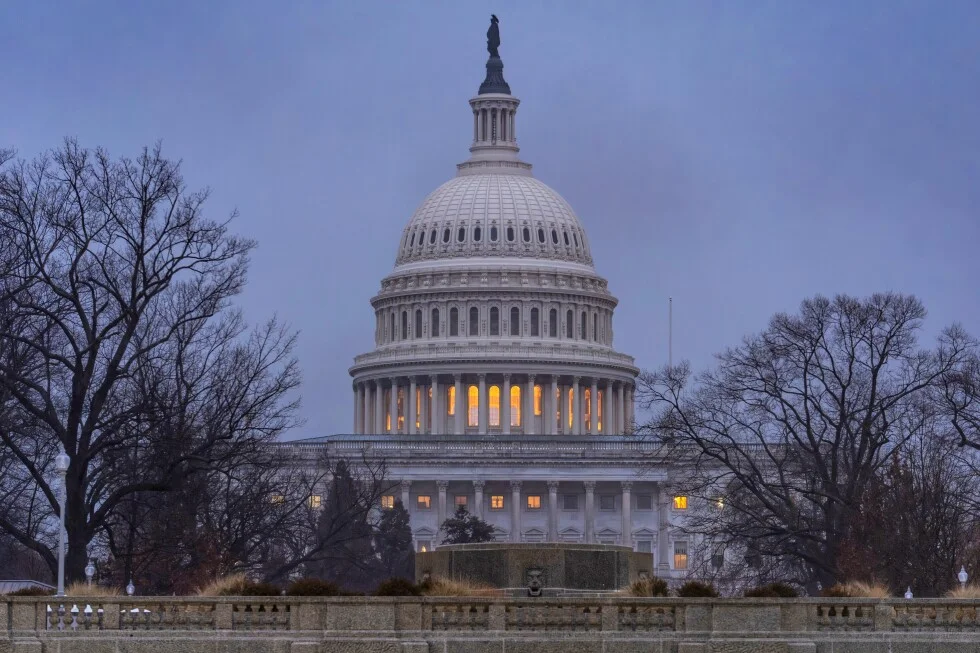
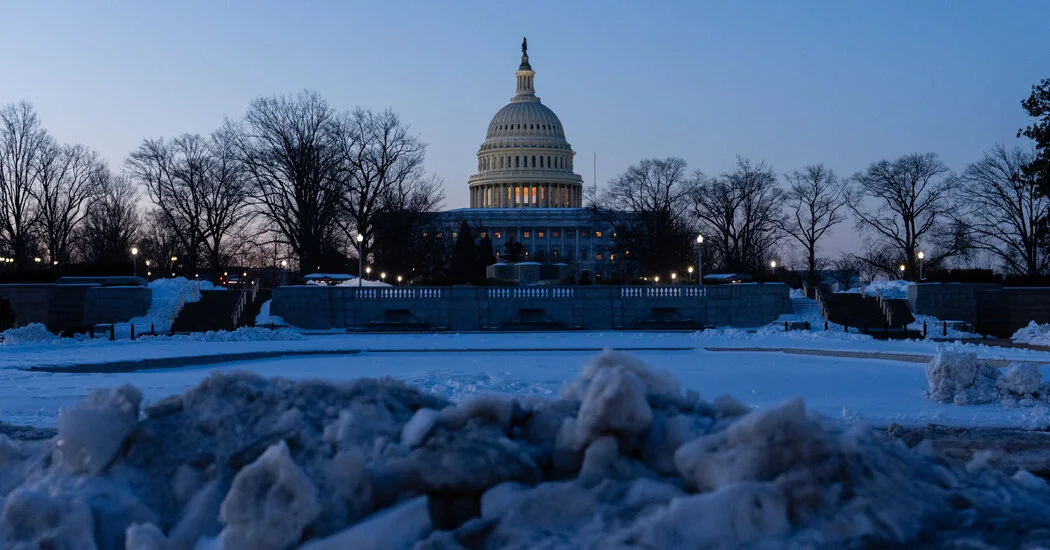
The Senate narrowly advanced a war powers resolution to limit President Trump's ability to engage U.S. forces in Venezuela without congressional approval, reflecting a rare bipartisan effort to reassert congressional authority over military actions, despite opposition from the White House and President Trump.
President Donald Trump has approved a sanctions bill aimed at economically crippling Russia for its invasion of Ukraine, with Senator Lindsey Graham confirming the president's support. The legislation, primarily authored by Graham and Senator Richard Blumenthal, targets countries purchasing Russian exports to cut off funding for Russia's military actions. A vote could occur as early as next week, amid ongoing efforts to negotiate a peace deal in Ukraine.
The US House of Representatives, with some Republican support, passed a bill to extend COVID-era healthcare subsidies for three years, but it faces significant opposition in the Senate, making its future uncertain ahead of the midterm elections.
The U.S. House approved a three-year extension of ACA health care tax credits with bipartisan support, aiming to serve as a foundation for a broader Senate compromise on health care reform, amid ongoing negotiations and disagreements over reforms and funding.
President Trump criticized five Republican senators for voting in favor of a war powers resolution that would limit his ability to conduct military actions against Venezuela, calling their votes 'stupidity' and questioning the constitutionality of the law.
The Senate is set to vote on a war powers measure regarding Trump's actions in Venezuela, which would require congressional approval for further military strikes. The vote tests Republican support for Trump's aggressive approach, amid mixed reactions from Democrats and some GOP members. Previous efforts to restrict Trump's military actions have largely failed, and the administration is preparing to brief lawmakers on its strategy.
Ben Nighthorse Campbell, the first Native American senator and a key figure in establishing the National Museum of the American Indian, has died at age 92.
In 2025, Congress, led by Republicans, made Trump's tax cuts permanent, increased military and immigration spending, repealed numerous regulations using the CRA, and weakened Senate minority power through rule changes, impacting economic and political dynamics in the US.
Donald Trump has suggested that Republicans should eliminate the filibuster in the Senate to facilitate passing legislation and prevent government shutdowns, especially ahead of the 2026 elections, arguing it would enable more effective governance and support his legislative priorities.
Senator Liz Brown was removed as chair of the Indiana Senate Judiciary Committee after her support for a redistricting plan that was rejected by the Senate, leading to a leadership reshuffle with Cyndi Carrasco replacing her. Brown expressed that the change reflects ongoing tensions from the redistricting debate, while the Senate leadership did not specify reasons for her removal.
Senator Cynthia Lummis, a key advocate for cryptocurrency legislation and leader of the Senate crypto subcommittee, announced her retirement at the end of her term in 2026, prompting concerns within the crypto industry about losing a fierce ally on Capitol Hill, especially as her seat in Wyoming is likely to be contested in a heavily Republican primary.
Senator Schumer plans to introduce a resolution to force the Trump administration to expedite the release of Epstein-related files, amid bipartisan frustration over the DOJ's slow disclosure of materials related to Jeffrey Epstein's case, despite a recent law requiring their public release within 30 days.
Senate Democratic leader Chuck Schumer plans to introduce a resolution to force the Justice Department to fully release Epstein files, criticizing the partial release as a violation of law and calling for legal or even impeachment actions to ensure transparency.
Colorado Senators Bennet and Hickenlooper placed a hold on a government funding package to oppose the Trump administration's decision to dismantle the National Center for Atmospheric Research in Boulder, citing concerns over retaliation and the impact on science and climate research.