Tag

Squid

All articles tagged with #squid

science1 year ago

"Rare 'Octopus Squid' with Giant Biolights Captured Attacking Camera"

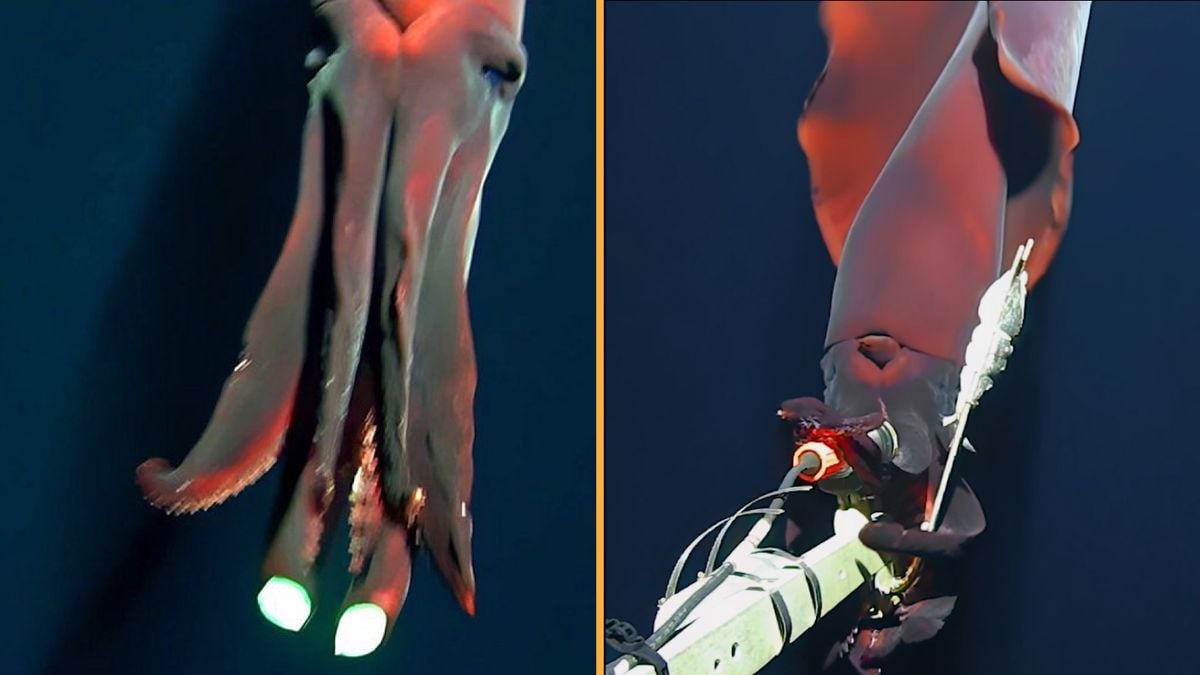
Researchers from the Minderoo Foundation and the University of Western Australia captured rare footage of a Dana octopus squid (Taningia danae) using its large photophores to attack an underwater camera at a depth of 3,281 feet in the Pacific Ocean. This species, known for its colossal size and bioluminescent organs, uses light to stun prey and possibly communicate. The encounter provides valuable insights into the behavior and habitat of this elusive deep-sea creature.

science-and-nature2 years ago

Rare Footage Reveals Elusive Squid Without Suckers in Galapagos

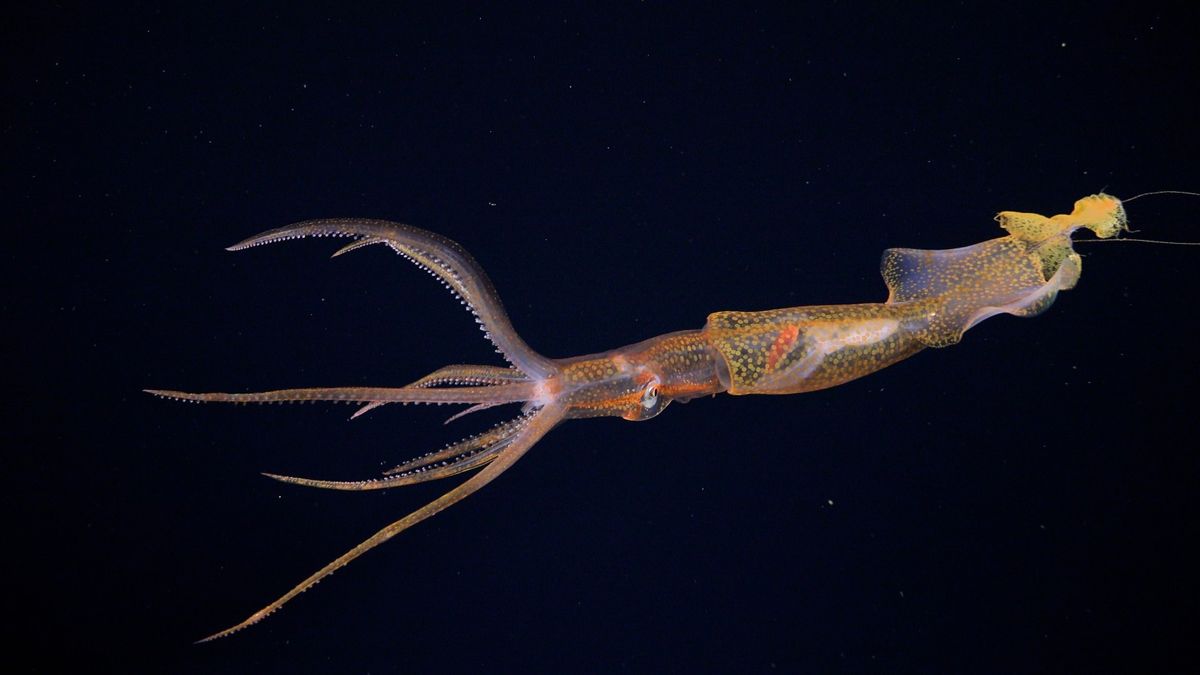
Researchers from the Schmidt Ocean Institute captured rare footage of the elusive squid species, Grimalditeuthis bonplandi, off the coast of the Galapagos Islands. This ghostly cephalopod, known for its weak, sucker-less tentacles, was filmed alive for only the second time ever. The squid, which can grow up to 10 inches in length, is a slow swimmer and inhabits depths of 660 to 5,000 feet. Its feeding tentacles lack suckers and it is believed to use graceful movements to lure small shrimp and crustaceans. Limited video observations and infrequent encounters make it difficult to fully understand the behavior and feeding habits of this mysterious creature.

science-and-technology2 years ago

"Scientists Develop Transparent Squid with Exposed Brain"

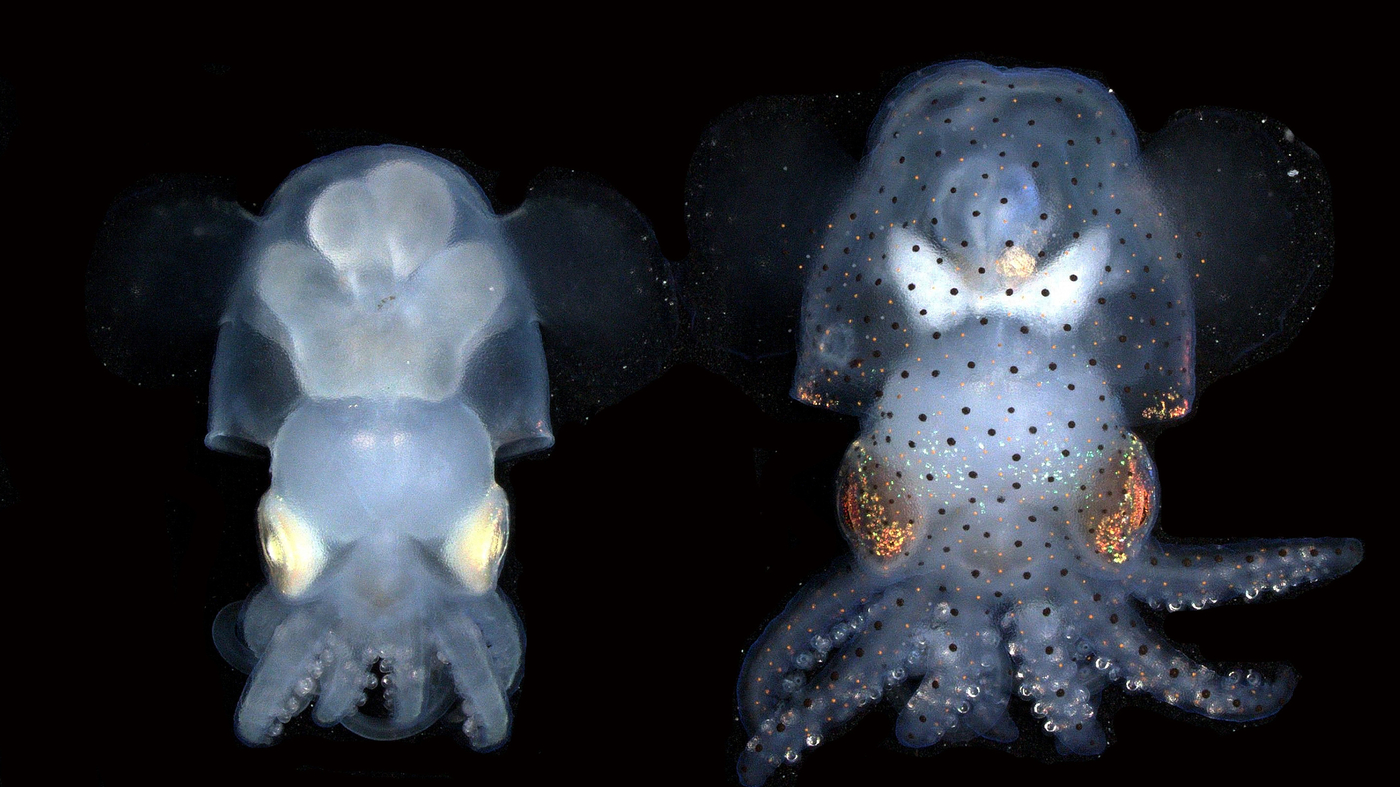
Scientists have used CRISPR gene editing technology to create a transparent version of a hummingbird bobtail squid, allowing researchers to study its biology more effectively. By removing the pigment, the squid becomes almost completely transparent, revealing its three hearts and brain when light hits it at the right angle. This breakthrough has enabled brain scientists to study the squid's brain activity by inserting a fluorescent dye and projecting images onto a screen, leading to a better understanding of cephalopods and other living creatures.

science-and-technology2 years ago

Unveiling the Secrets of the Brain: Scientists Create Transparent Squid

Scientists have used CRISPR gene editing technology to create a genetically altered, transparent version of the hummingbird bobtail squid, offering a unique opportunity to study the inner workings of its brain. The see-through squid allows researchers to observe its three beating hearts and brain activity, providing valuable insights into cephalopod biology. The success of this genetic modification has sparked interest from brain scientists who have used fluorescent dye to visualize brain activity in response to visual stimuli, leading to exciting discoveries. This breakthrough has the potential to enhance our understanding of not only cephalopods but also other living creatures.

biology2 years ago

Octopuses and Squids: Masters of Sensory Perception

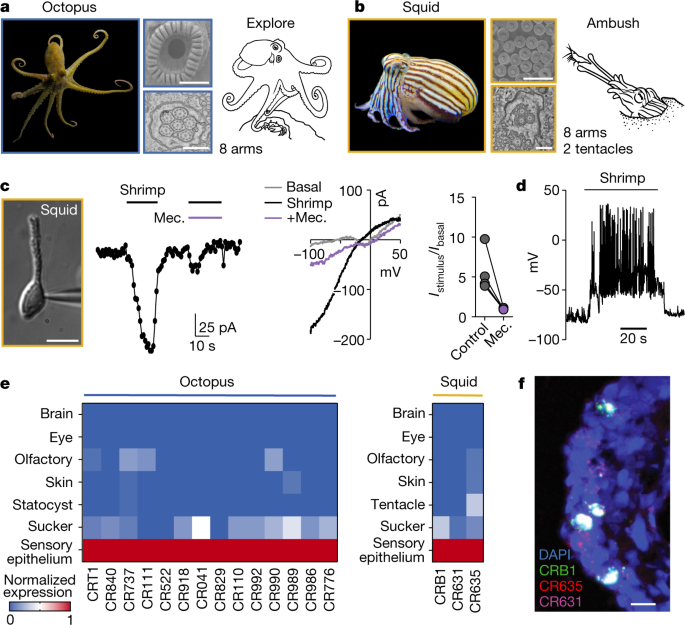
Octopuses and squids have evolved unique sensory specializations, including chemotactile sensation and ion channels, that allow them to navigate and interact with their environment. Recent studies have revealed the molecular basis of these sensory mechanisms, shedding light on the evolution of cephalopod neural and morphological novelties. These findings have implications for understanding the transition from aquatic to terrestrial life and could inspire new technologies in fields such as robotics and materials science.

science2 years ago

Learning Evolutionary Adaptation from Octopus and Squid.

Two new studies published in Nature describe how cephalopod nervous systems adapt to sense their marine environments. The first study focuses on how octopus chemotactile receptors evolved from acetylcholine neurotransmitter receptors to sense relatively insoluble, greasy molecules that stick to surfaces. The second study found that squid receptors have adapted to sense bitter molecules, which they interpret as toxic or undesirable and will release their prey. These studies provide a basis for understanding how subtle structural adaptations in cephalopod receptors can drive new behaviors suited to an animal’s specific ecological context.

science2 years ago

Hacking Human Cells for Squid Camouflage Insights

Researchers at the University of California, Irvine, have found a way to replicate the properties of squid skin cells in mammalian (human) cells in the lab, which could help unlock the key to camouflage. Squid skin is translucent and features an outer layer of pigment cells called chromatophores that control light absorption. Underneath the chromatophores, there is a separate layer of iridophores, which can be tuned to reflect different wavelengths of light. The researchers are focusing on the iridophores to achieve transparency by changing how light is scattered.