Tag

Quantumphysics

All articles tagged with #quantumphysics

Google's Quantum Chip Sparks Multiverse and Computing Revolution

Originally Published 1 year ago — by Slashdot

Featured image for Google's Quantum Chip Sparks Multiverse and Computing Revolution
Source: Slashdot

Google's new quantum computing chip, Willow, has sparked discussions about the existence of parallel universes due to its unprecedented computational speed, which far surpasses that of current supercomputers. Google Quantum AI founder Hartmut Neven suggests that the chip's performance supports the multiverse theory, a concept explored in quantum physics. While some experts find this plausible, skeptics argue that the claims are based on Google's own benchmarks and do not conclusively prove the existence of parallel universes.


Revolutionary Physics Discovery Challenges Quantum Theory

Originally Published 1 year ago — by SciTechDaily

Featured image for Revolutionary Physics Discovery Challenges Quantum Theory
Source: SciTechDaily

MIT physicists have discovered that electrons in pentalayer graphene can exhibit fractional charges without the presence of a magnetic field, a phenomenon termed the "fractional quantum anomalous Hall effect." This groundbreaking finding, explained through new theoretical models, suggests that electron interactions in confined two-dimensional spaces can lead to novel quantum states. The research, published in Physical Review Letters, provides a new mechanism for understanding fractional electron phenomena and opens up possibilities for future experiments in quantum physics.

Exploring the Quantum Mysteries of Metals

Originally Published 1 year ago — by SciTechDaily

Featured image for Exploring the Quantum Mysteries of Metals
Source: SciTechDaily

A new study led by Rice University physicist Qimiao Si explores the unusual behavior of quantum critical metals, which defy traditional physics at low temperatures. These metals, known as strange metals, experience significant changes at quantum critical points, where quasiparticles lose their identity, affecting the material's electronic structure. The research offers insights into high-temperature superconductors and suggests a universal pattern in quantum critical materials, potentially advancing the development of new superconductors.

Quantum Forces: Why Matter Feels Solid

Originally Published 1 year ago — by Big Think

Featured image for Quantum Forces: Why Matter Feels Solid
Source: Big Think

The solidity of matter, despite atoms being mostly empty space, is explained by quantum mechanics, particularly the Pauli Exclusion Principle. This principle states that no two fermions, such as electrons, can occupy the same quantum state simultaneously, preventing atoms from passing through each other and giving rise to the impenetrability of solid objects. This quantum mechanical rule, combined with quantum uncertainty and electrostatic repulsion, ensures that matter remains stable and occupies space, making everyday experiences like sitting in a chair possible.

Breakthrough in Quantum Physics Unveils Predictable Electron Paths

Originally Published 1 year ago — by SciTechDaily

Featured image for Breakthrough in Quantum Physics Unveils Predictable Electron Paths
Source: SciTechDaily

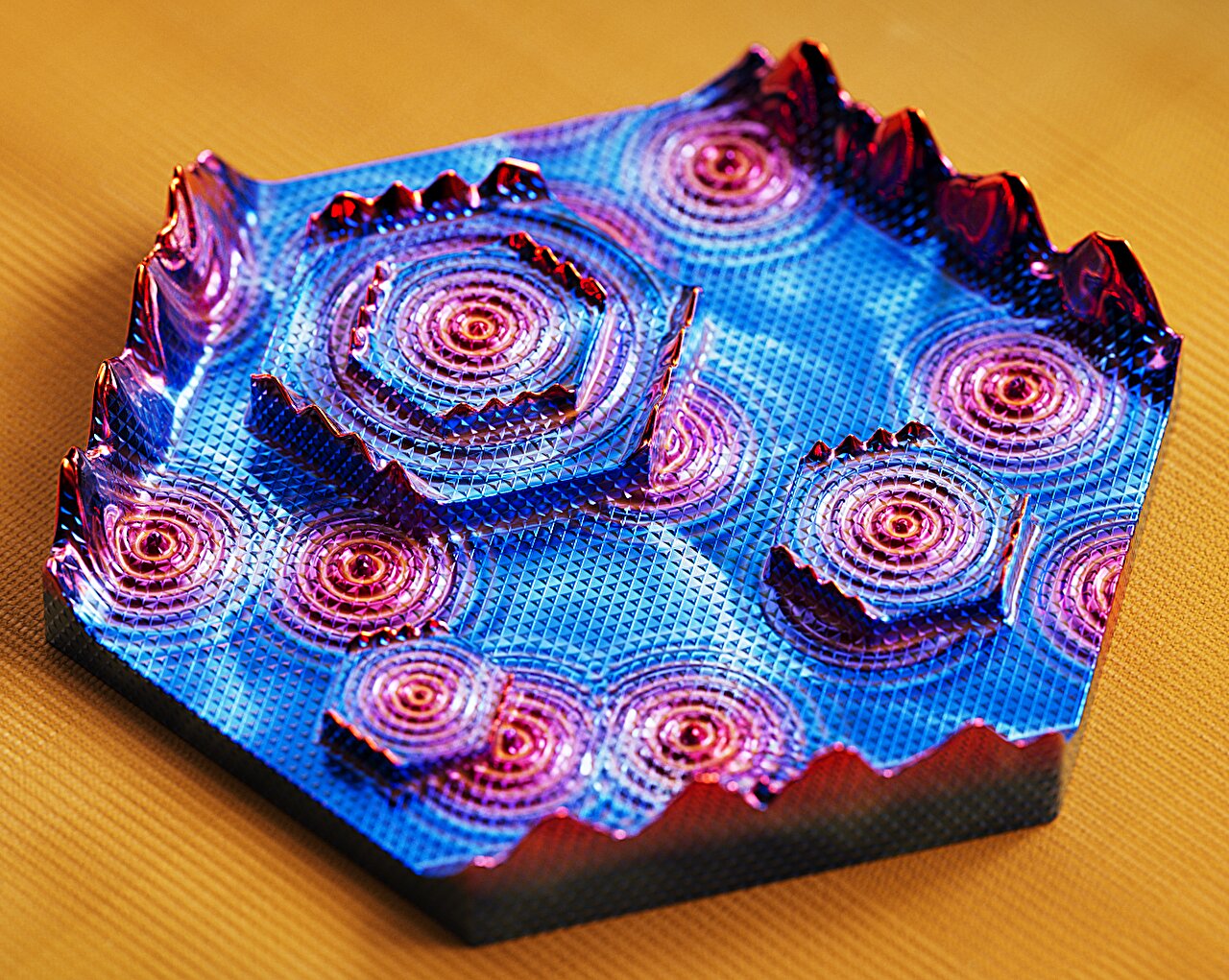
Researchers have experimentally confirmed the existence of "quantum scars," patterns formed by confined electrons, using advanced imaging techniques on graphene. This discovery validates a 40-year-old theory and could revolutionize electronics by enabling more efficient, low-power transistors and new quantum control methods. The study, co-led by UC Santa Cruz physicist Jairo Velasco, Jr., offers insights into chaotic quantum systems and bridges classical and quantum physics, potentially transforming information processing in electronic devices.

2024's Pivotal Scientific Breakthroughs and Discoveries

Originally Published 1 year ago — by Phys.org

Featured image for 2024's Pivotal Scientific Breakthroughs and Discoveries
Source: Phys.org

The top Phys.org articles of 2024 highlight significant scientific breakthroughs, including a new quantum theory defining the shape of a photon, a predicted star explosion in Corona Borealis, and a chemistry discovery challenging Bredt's rule. Other notable achievements include capturing images of Neptune and Uranus, insights into Earth's inner core dynamics, and a massive astrophysical simulation using the world's fastest supercomputer. Additionally, researchers found evidence of Greenland's ice sheet melting in the past, and a new theory on photon entanglement in brain signaling was proposed.

Researchers Achieve Breakthrough by Slowing Light to 37 mph

Originally Published 1 year ago — by Glass Almanac

Featured image for Researchers Achieve Breakthrough by Slowing Light to 37 mph
Source: Glass Almanac

Scientists have successfully slowed light to just 37 miles per hour using a Bose-Einstein condensate, a unique state of matter where atoms behave as a single wave-like entity. By cooling sodium atoms to near absolute zero and directing laser pulses at them, researchers managed to significantly reduce the speed of light and even stop it momentarily. This breakthrough has potential applications in advanced computing, secure communications, and offers insights into quantum physics, challenging our understanding of time and space.

Quantum Insights Reveal Rapid Ocean Warming Mechanism

Originally Published 1 year ago — by Phys.org

Featured image for Quantum Insights Reveal Rapid Ocean Warming Mechanism
Source: Phys.org

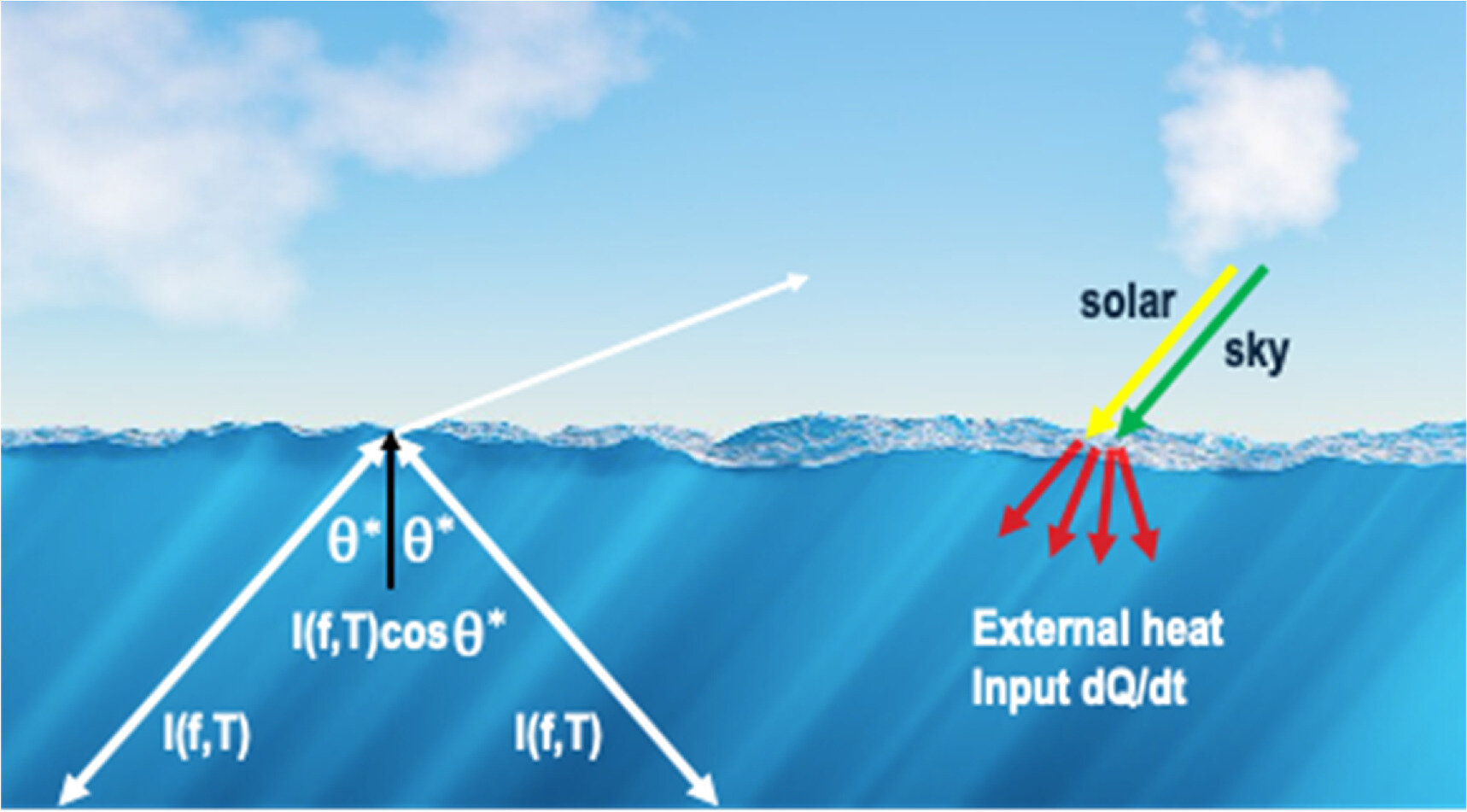
A new study by Professor Geoff Smith from the University of Technology Sydney suggests that quantum physics can explain the accelerating rise in ocean temperatures, which current climate models fail to predict. The research highlights that oceans store energy not only as heat but also as hybrid pairs of photons coupled to oscillating water molecules, a form of quantum information. This non-thermal energy contributes to the rapid increase in ocean temperatures, necessitating updates to climate models to account for these quantum effects.

Spin-Powered Crystals Enhance Hydrogen Production Efficiency

Originally Published 1 year ago — by Phys.org

Featured image for Spin-Powered Crystals Enhance Hydrogen Production Efficiency
Source: Phys.org

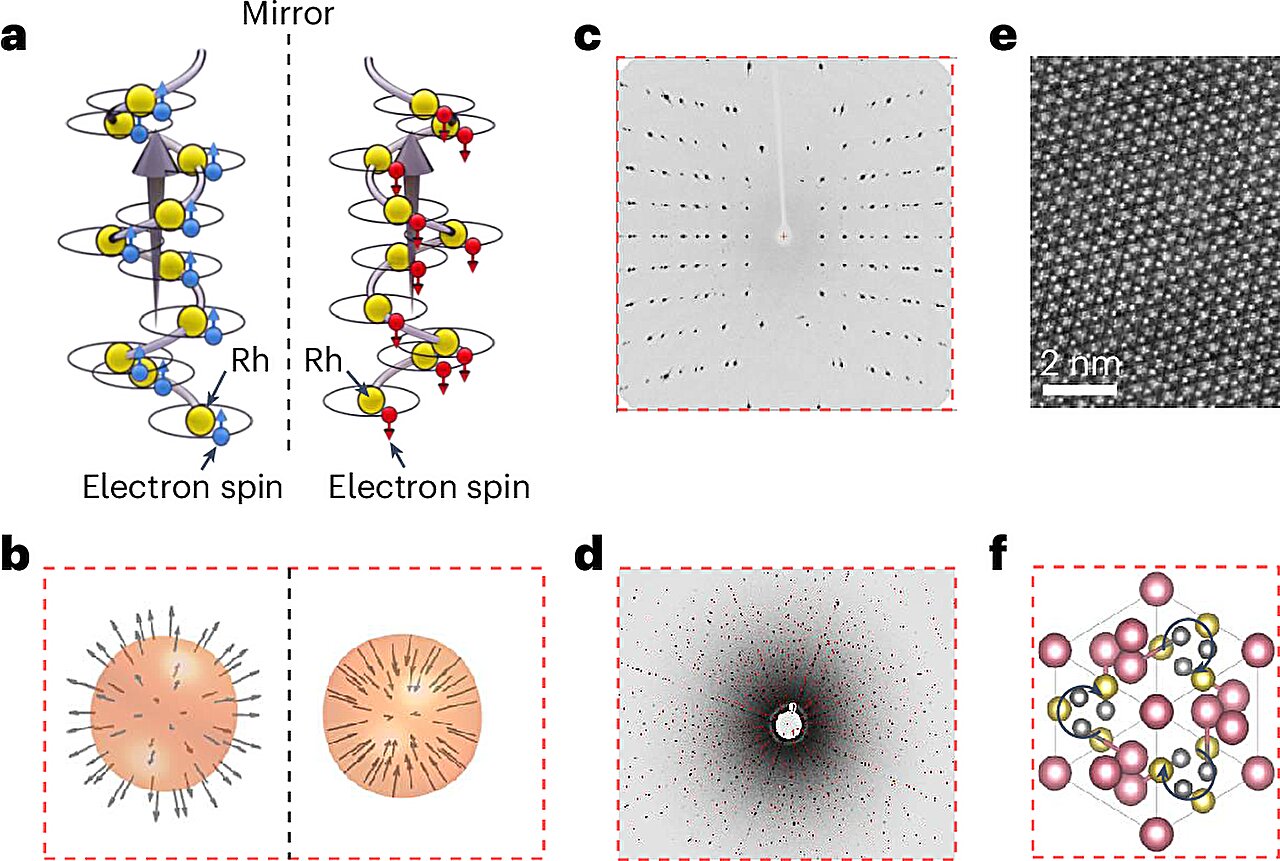
Researchers have developed a new catalyst using chiral crystals composed of rhodium and other elements, significantly enhancing the efficiency of water splitting for hydrogen production. These crystals leverage unique electron spin properties to accelerate the oxygen evolution reaction, outperforming traditional materials by a factor of 200. This advancement, published in Nature Energy, could make hydrogen production more efficient and economically viable, marking a significant step towards sustainable energy solutions.

Revolutionary Time Measurement Method Discovered by Physicists

Originally Published 1 year ago — by ScienceAlert

Featured image for Revolutionary Time Measurement Method Discovered by Physicists
Source: ScienceAlert

Researchers from Uppsala University have discovered a new method of measuring time using the interference patterns of Rydberg wave packets, which are created when atoms are excited to high energy states by lasers. This approach does not require a defined starting point, allowing for precise time measurement at the quantum scale. The technique could enhance quantum computing and other technologies by providing reliable quantum timestamps for events occurring in mere trillionths of a second.

Reevaluating Emergent Gravity: A Worthy Concept Despite Challenges

Originally Published 1 year ago — by Ars Technica

Featured image for Reevaluating Emergent Gravity: A Worthy Concept Despite Challenges
Source: Ars Technica

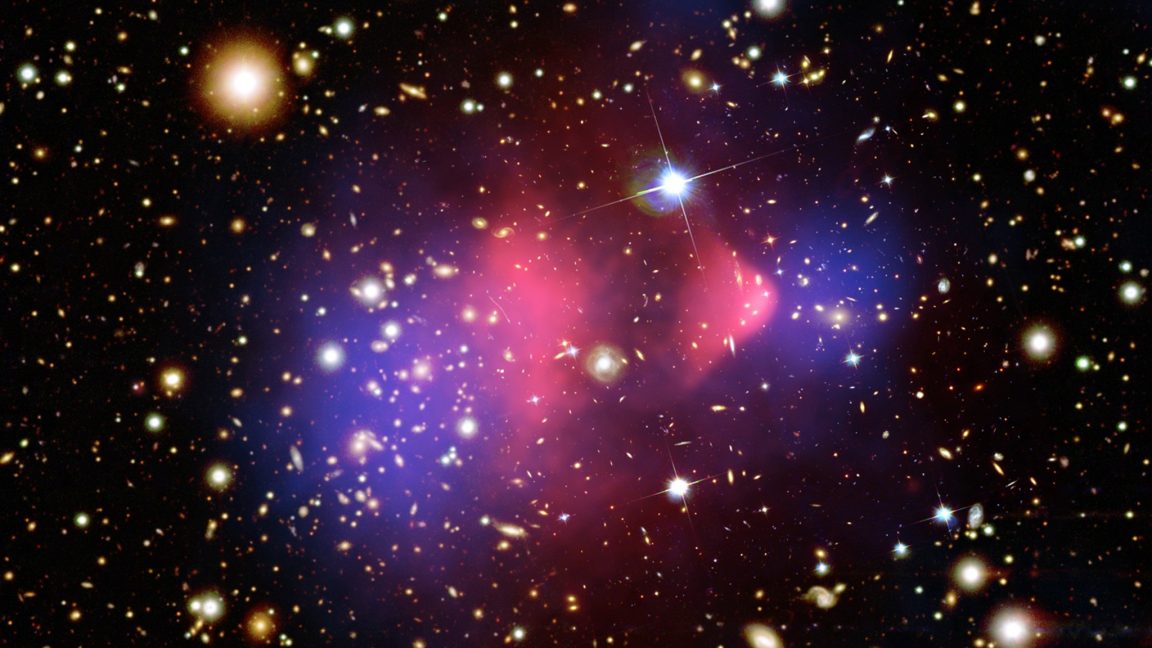
Emergent gravity, a theory suggesting gravity is an emergent property rather than a fundamental force, has faced challenges in explaining cosmic phenomena like dark matter. While it offers an innovative perspective by linking gravity to thermodynamics and quantum information, it has struggled to match the predictive power of general relativity and dark matter models. Despite its current shortcomings, emergent gravity remains a valuable concept for exploring new physics, potentially leading to future breakthroughs in understanding the universe.

Quantum Rubik's Cube: The Ultimate Puzzle Challenge

Originally Published 1 year ago — by IFLScience

Featured image for Quantum Rubik's Cube: The Ultimate Puzzle Challenge
Source: IFLScience

Physicists and mathematicians from the University of Colorado Boulder have developed a 'Quantum Rubik's Cube' as part of a bet, replacing traditional pieces with quantum particles. This quantum version allows for infinite possible states due to the unique property of 'the square root of a permutation,' making it infinitely complex yet solvable. The puzzle can be simplified by measuring the state of the particles or using special particles like identical fermions to maintain a finite state space, akin to classical puzzles with unusual geometries.

"Uncovering Unique Quantum States in Elemental Solids"

Originally Published 1 year ago — by Phys.org

Featured image for "Uncovering Unique Quantum States in Elemental Solids"
Source: Phys.org

Physicists at Princeton University have discovered a novel quantum state, termed "hybrid topology," in a crystalline material made of arsenic atoms, marking the first observation of this type of topological quantum behavior in an elemental solid. This unexpected finding opens up new possibilities for the development of efficient materials and technologies for next-generation quantum science and engineering, potentially leading to advancements in quantum information science, quantum computing devices, and spin-based electronics. The discovery, published in Nature, was made possible through innovative experimental advances and instrumentations, and it may pave the way for sustained research directions and applications in quantum technologies.

"Revolutionizing Quantum Computing: A Cutting-Edge Design Unveiled"

Originally Published 1 year ago — by Phys.org

Featured image for "Revolutionizing Quantum Computing: A Cutting-Edge Design Unveiled"
Source: Phys.org

Quantum physicist Natalia Chepiga from Delft University of Technology has developed a guide on how to upgrade quantum simulators, a type of quantum computer, to simulate more complex quantum systems. By using two lasers with different frequencies, the quantum simulator can be tuned to many different settings, allowing for the simulation of collective behavior of quantum systems with many particles. This advancement could lead to new discoveries about the smallest scales of the world and has the potential to revolutionize society in various areas such as finances, encryption, and data storage.

"Exploring Black Hole Mysteries: Size Differences and Misconceptions"

Originally Published 2 years ago — by IAI

Carlo Rovelli challenges common misconceptions about black holes, explaining that the singularity is not located at the center but rather in the future, as the funnel-shaped interior of a black hole stretches and narrows over time. Contrary to popular belief, the center of a black hole contains the collapsing star, not the singularity. The true singularity, where Einstein's equations fail and quantum effects dominate, lies in the future where the funnel's narrowing leads to infinite distortion of space-time. This insight is crucial for understanding the true nature of black holes and their singularities.