The Hundred Line: Last Defense Academy is a innovative game that explores 100 different story outcomes through a visual novel and strategy RPG hybrid, showcasing the creative potential of multiverse storytelling in video games and prompting players to reflect on their own choices and life's unpredictability.
The article discusses the leaked trailers and rumors surrounding Marvel's Avengers: Doomsday, highlighting confusion over character returns, marketing strategies, and the challenges of building hype in the digital age, with fans uncertain about the film's storyline and continuity.
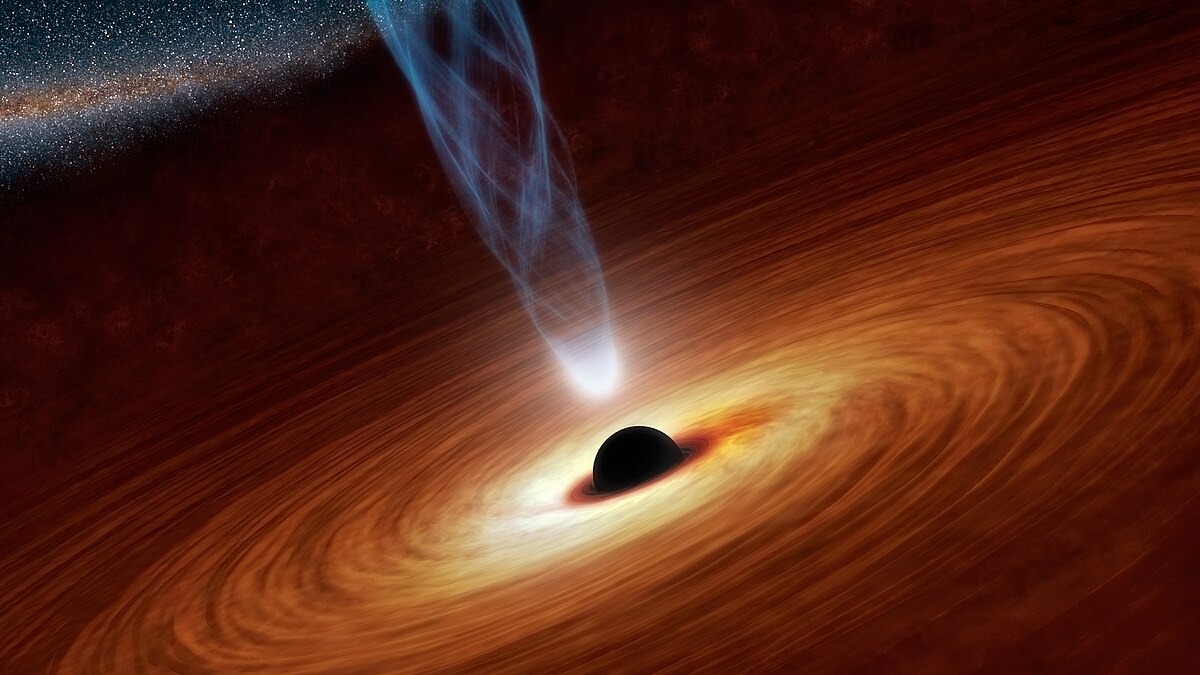
The detection of GW190521, a massive black hole merger with an unusual 'bang' signal, challenges existing black hole models and raises the possibility that it could be an echo from another universe via a collapsing wormhole, potentially providing indirect evidence of a multiverse and prompting a reevaluation of spacetime physics.
Marvel Studios' Avengers: Doomsday introduces Doctor Doom as a powerful villain wielding science and magic, aiming to unleash a crisis across the Multiverse, with the film set for release on December 18, 2026.
A survey of physicists reveals a lack of consensus on what quantum mechanics says about reality, with interpretations ranging from the Copenhagen model to the multiverse, highlighting the ongoing mystery and debate in understanding quantum phenomena.
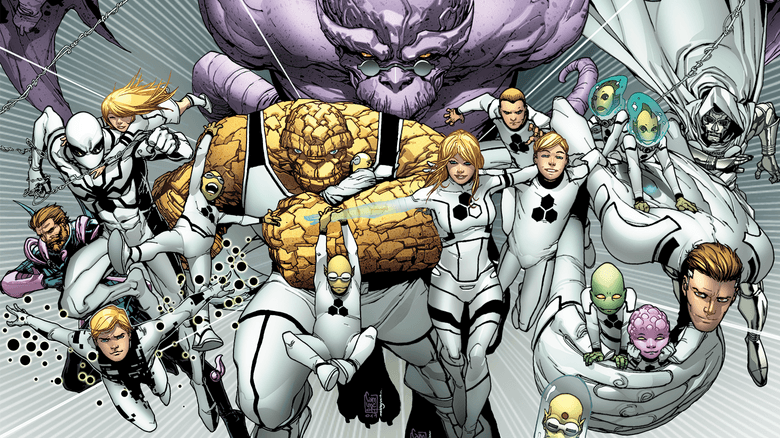
The Future Foundation is a Marvel Comics initiative led by Mister Fantastic to gather young geniuses and heroes from across the Marvel Universe to solve complex problems and rebuild the Multiverse, playing a crucial role in various crises and adventures alongside the Fantastic Four.
A CU Denver engineer has developed a groundbreaking silicon-based chip that can generate extreme electromagnetic fields, potentially enabling gamma-ray lasers for medical and scientific applications, and offering new ways to explore the universe's fundamental nature, including the multiverse theory.
HBO Max has ordered a sci-fi spin-off of The Big Bang Theory titled 'Stuart Fails To Save The Universe,' featuring characters from the original series in a multiverse adventure with extensive CGI, exploring alternate versions of beloved characters and set in the future after the original show's events.
The article discusses concerns that Marvel's upcoming 'Fantastic Four' film may explore darker, more apocalyptic themes, potentially ending with the bad guys winning, and hints at the possibility of the film's events being reset within the multiverse, leaving open the question of whether the heroes will succeed or fail.
Recent evidence suggests our universe may be rotating, which could explain dark energy and imply it is part of a multiverse, with black holes acting as gateways to other universes. This rotation might also account for the weakening of dark energy observed by scientists, aligning with theories that the universe's angular momentum decreases over time. Further research is needed to confirm these hypotheses.
A new theory suggests that the universe's rotation could explain dark energy and its apparent weakening, implying our universe is part of a multiverse connected through black holes, with recent evidence from the James Webb Space Telescope supporting the idea of a spinning universe.
Recent experiments suggest that a single photon can be detected in multiple locations simultaneously, fueling debates about the multiverse and interpretations of quantum mechanics. Using advanced weak measurement techniques, researchers observed behaviors that challenge traditional views of photon paths, raising questions about the nature of reality and the potential existence of parallel universes. These findings could impact our understanding of quantum phenomena and influence future technological developments.
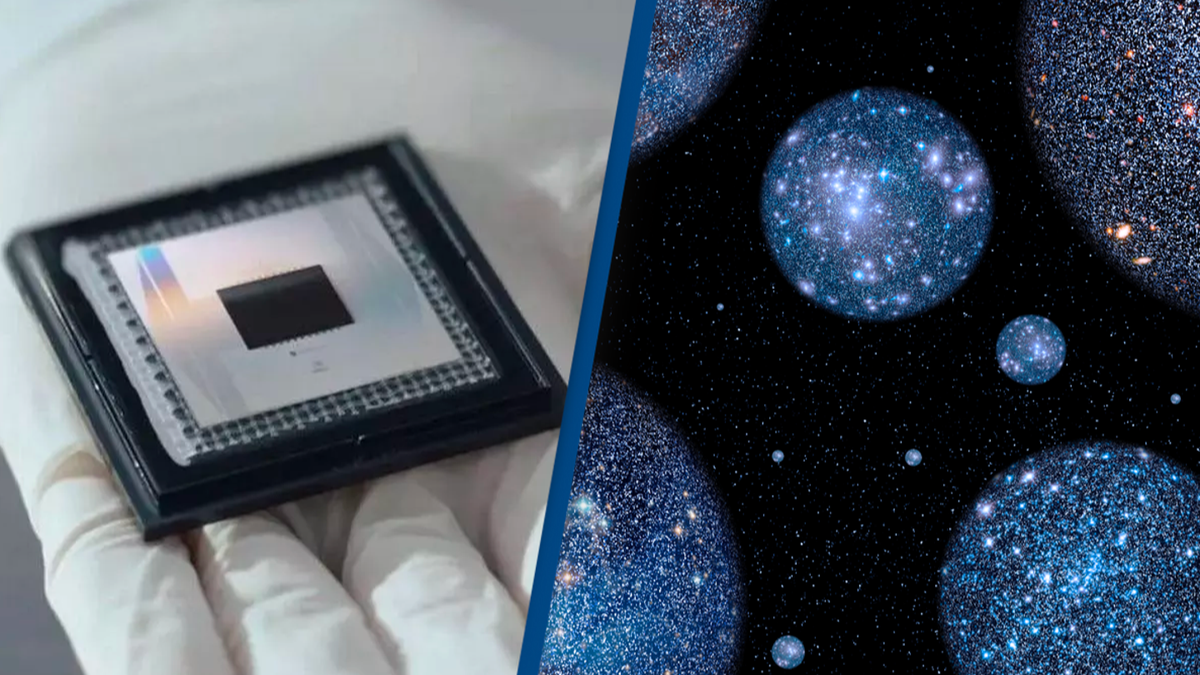
Google's new quantum computing chip, Willow, has sparked discussions about the existence of parallel universes due to its unprecedented computational speed, which far surpasses that of current supercomputers. Google Quantum AI founder Hartmut Neven suggests that the chip's performance supports the multiverse theory, a concept explored in quantum physics. While some experts find this plausible, skeptics argue that the claims are based on Google's own benchmarks and do not conclusively prove the existence of parallel universes.
Google has unveiled a revolutionary quantum computing chip named 'Willow' that reportedly performs computations in under five minutes, which would take current supercomputers ten septillion years. This unprecedented speed has led Google to suggest that quantum computation may occur across parallel universes, supporting the multiverse theory. The Willow chip marks a significant advancement in quantum computing, with potential future applications in practical, commercially-relevant algorithms that surpass the capabilities of conventional computers.
Google has claimed that its new quantum chip, Willow, may be tapping into parallel universes to achieve unprecedented computational speeds, completing tasks in minutes that would take supercomputers septillions of years. This assertion, based on the multiverse hypothesis, has drawn skepticism, as the specific calculation performed has no practical use and similar claims in the past have been contested. Despite the impressive scientific achievement, practical applications remain distant, with experts suggesting that a million qubits are needed for useful quantum computing.