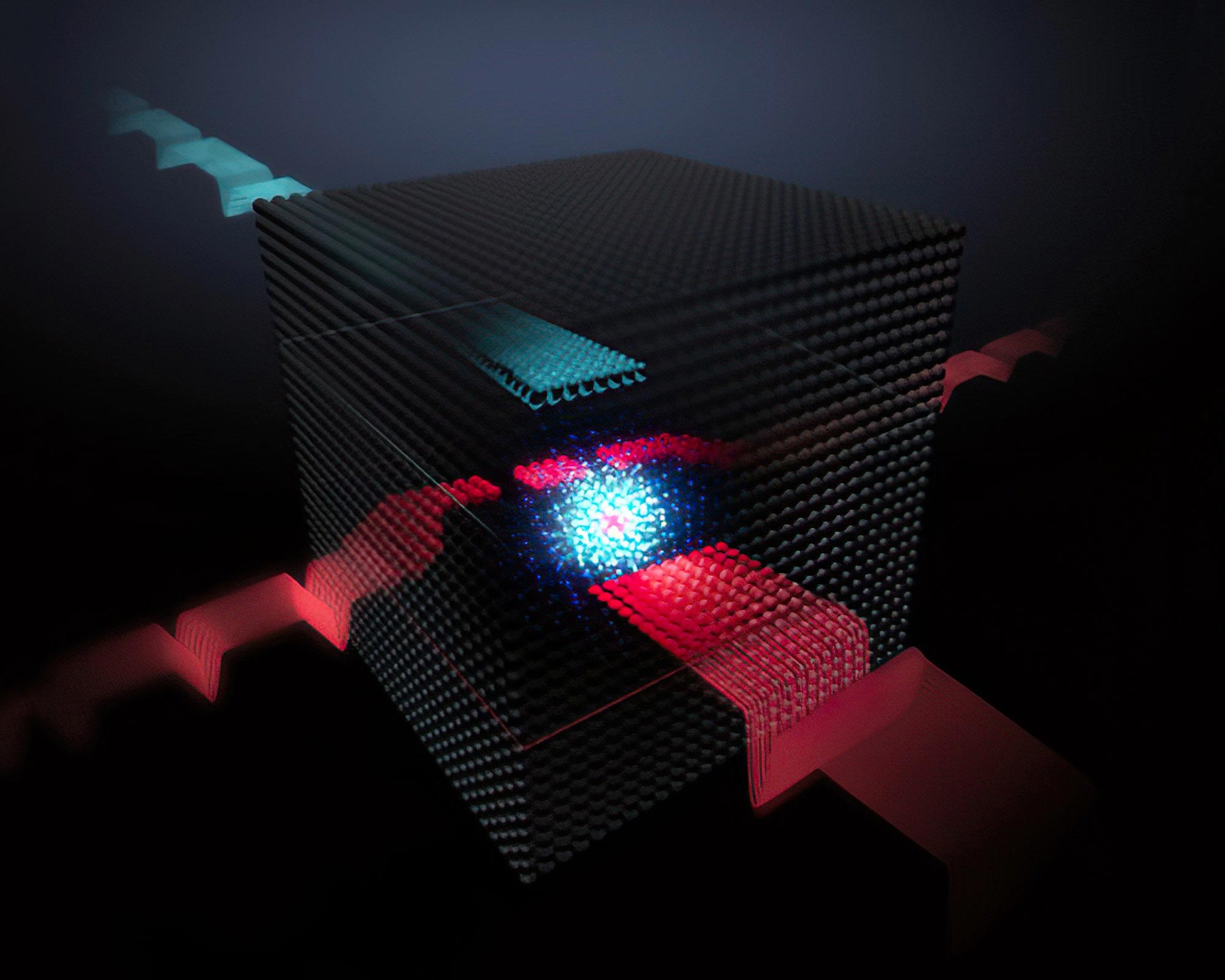
Scientists propose the concept of "virtual quantum broadcasting," which circumvents the no-cloning theorem and enables the creation of correlated copies of quantum states over time. This virtual broadcasting map offers new possibilities for quantum information processing by establishing correlations between different instances of a quantum state, allowing for the transmission of information without violating the principles of quantum mechanics. The research has significant implications for quantum computing, quantum information, and quantum cryptography, potentially enhancing security measures in quantum communication and revealing hidden structures behind quantum information technologies.
Researchers at Paderborn University have developed a method using photon detectors for homodyne detection to accurately characterize optical quantum states, a crucial advancement for quantum information processing and computing. By utilizing superconducting nanowire single photon detectors, they have demonstrated a linear response to input photon flux, potentially leading to the development of highly efficient homodyne detectors with single-photon sensitive detectors, opening up new possibilities in quantum information processing beyond qubits.
Physicists at Princeton University have successfully entangled individual molecules for the first time, a breakthrough that has significant implications for quantum information processing. Quantum entanglement allows molecules to remain correlated and interact simultaneously, even when separated by large distances. This achievement opens up possibilities for applications such as quantum computers, quantum simulators, and quantum sensors. The researchers used a carefully controlled experiment involving laser cooling and optical tweezers to manipulate and entangle the molecules. This research demonstrates the potential of molecules as a viable platform for quantum science.
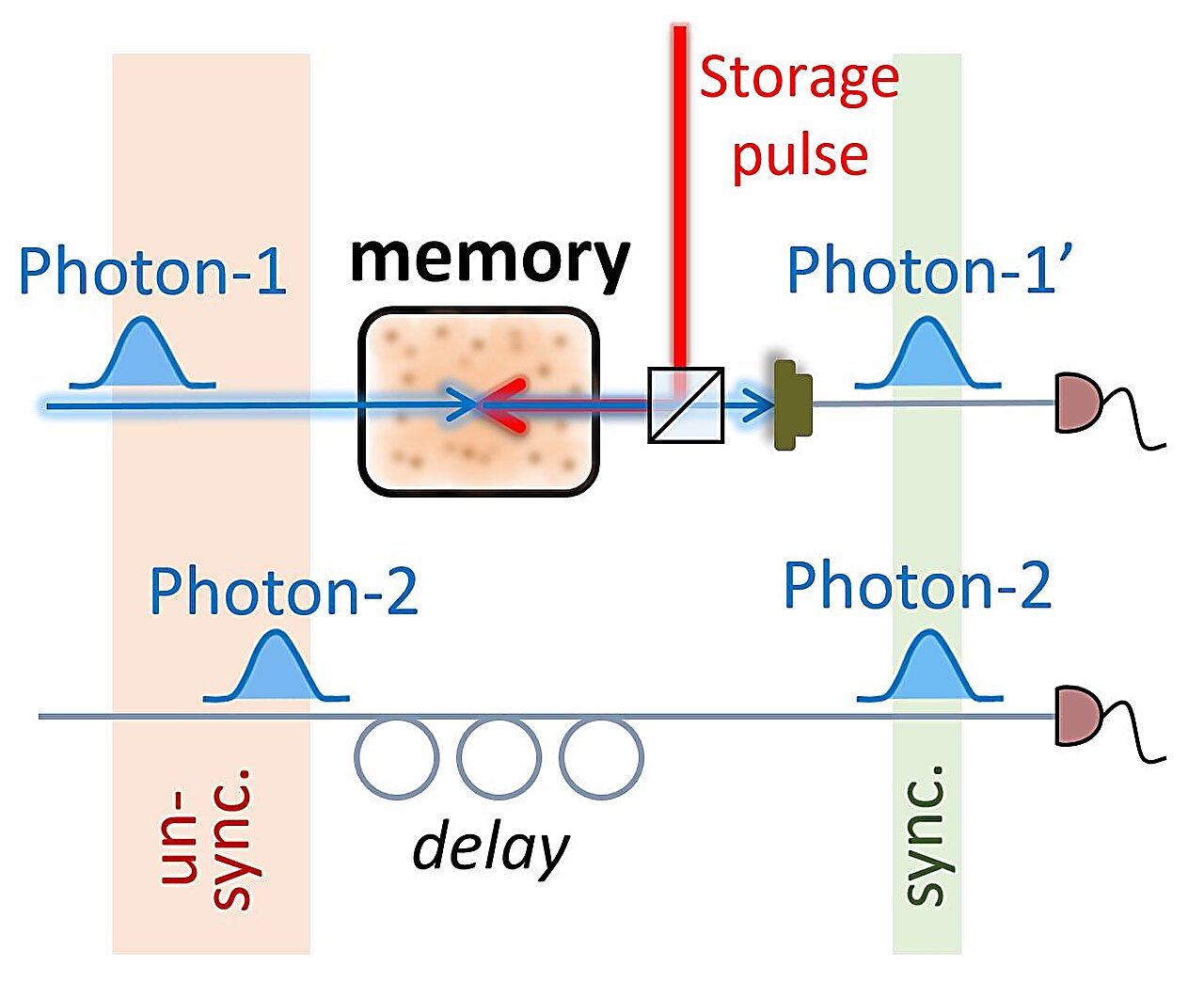
Researchers at the Weizmann Institute of Science have successfully synchronized single photons using an atomic quantum memory operating at room temperature. By storing and retrieving single photons with high efficiency, they achieved a synchronization rate over 1,000 times better than previous demonstrations. This breakthrough opens new possibilities for studying multi-photon states and their applications in quantum information processing. The researchers are now exploring the development of strong photon-photon interactions and the storage of photonic qubits, which could enable deterministic entangling gates and quantum computations using photons.
Researchers have achieved a significant milestone in quantum computing by extending the lifetime of quantum information beyond the breakeven point using Quantum Error Correction (QEC). By successfully mitigating the effects of decoherence, scientists have demonstrated that quantum information can be preserved and processed effectively in the presence of real-world noise. This experimental achievement opens up new possibilities for quantum information processing and paves the way for high-fidelity logical operations between error-corrected qubits, addressing the challenges posed by noise in quantum systems. The experiment utilized the grid code within an electromagnetic mode and was conducted at Yale University.
RIKEN physicists have developed a theoretical model to optimize semiconductor nanodevices, demonstrating that carefully designed quantum dots can create robust silicon hole-spin qubits resistant to electric noise. This research is crucial for understanding dephasing and designing large-scale quantum computers. The length of time for which the hole spin maintains its quantum state depends on the quantum dot size and shape and the magnetic and electric fields applied to it.