Tag

Pulsar Timing Array

All articles tagged with #pulsar timing array

Gravitational Wave Map Unveils Hidden Black Holes
science1 year ago

Gravitational Wave Map Unveils Hidden Black Holes

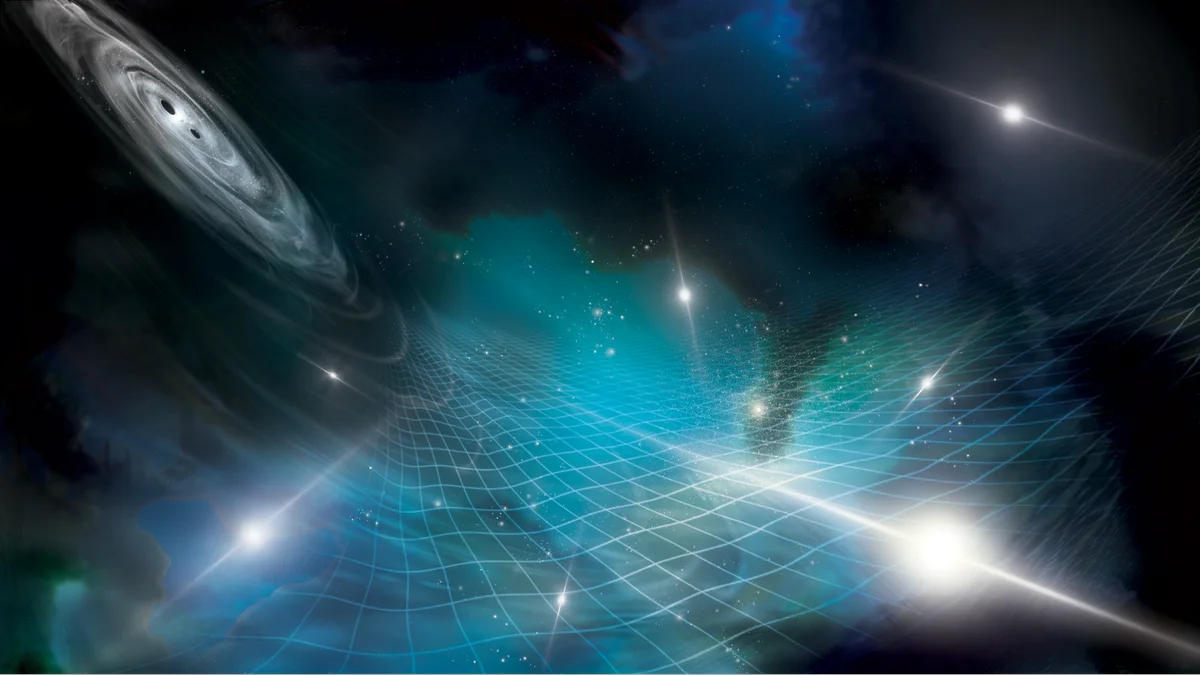
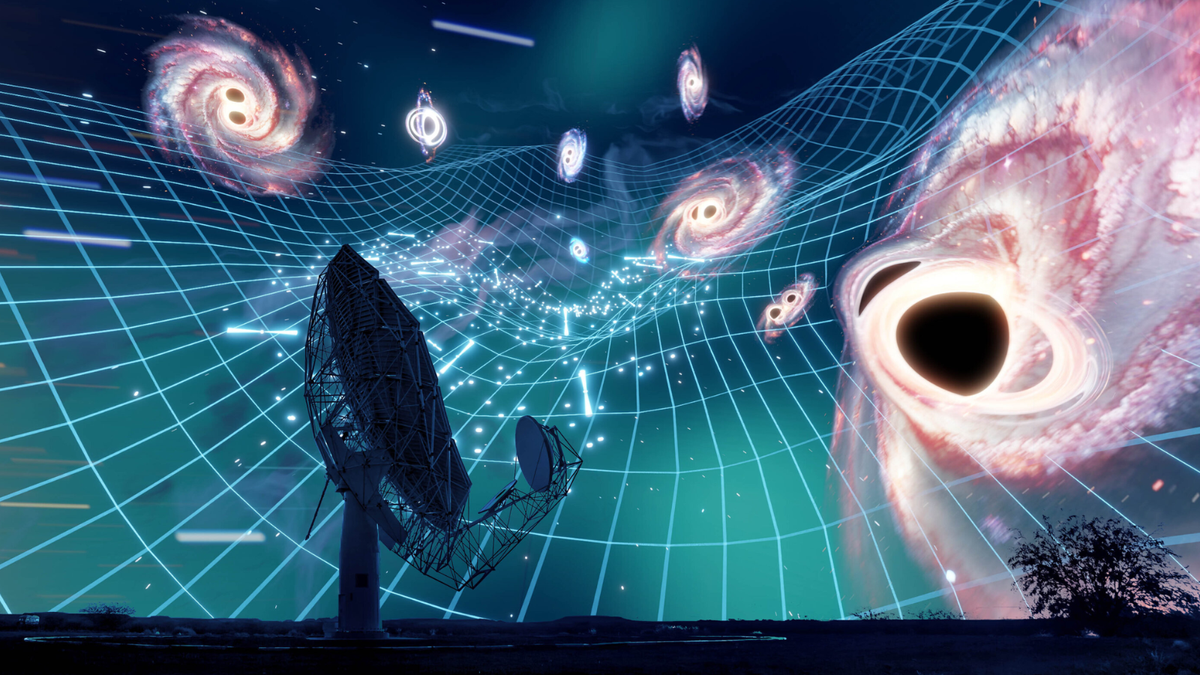
Astronomers from Swinburne University have created the most detailed gravitational wave map of the universe, potentially revealing hidden black holes and the large-scale structure of the cosmos. Utilizing the MeerKAT Pulsar Timing Array, the study detected a background "hum" of gravitational waves, offering insights into cosmic evolution and black hole mergers. The map also uncovered an unexpected "hotspot," suggesting a distinct gravitational wave source, which could lead to new discoveries about the universe's structure.
Unveiling Limits on Ultralight Dark Matter in the Milky Way
science2 years ago

Unveiling Limits on Ultralight Dark Matter in the Milky Way

The European Pulsar Timing Array has released new data that sets more stringent constraints on the presence of ultralight dark matter in the Milky Way. By assuming that dark matter only interacts with ordinary matter through gravitational effects, the study excludes the possibility that ultralight particles within a specific mass range can constitute the full amount of dark matter. These findings provide valuable insights for future research and searches for this elusive dark matter candidate.

Pulsars: Unveiling Cosmic Dark Age with Gravitational Waves
astronomy2 years ago

Pulsars: Unveiling Cosmic Dark Age with Gravitational Waves

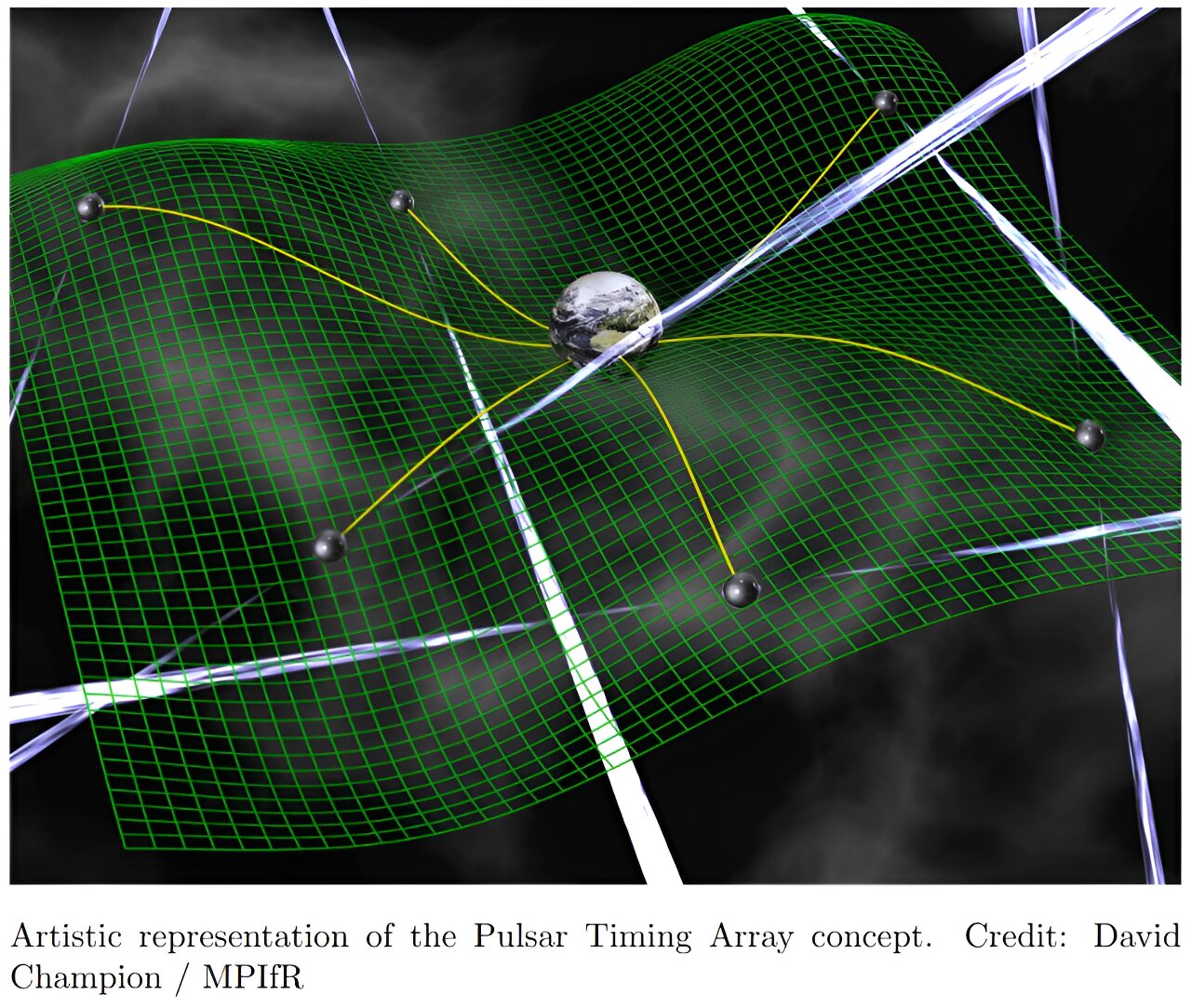
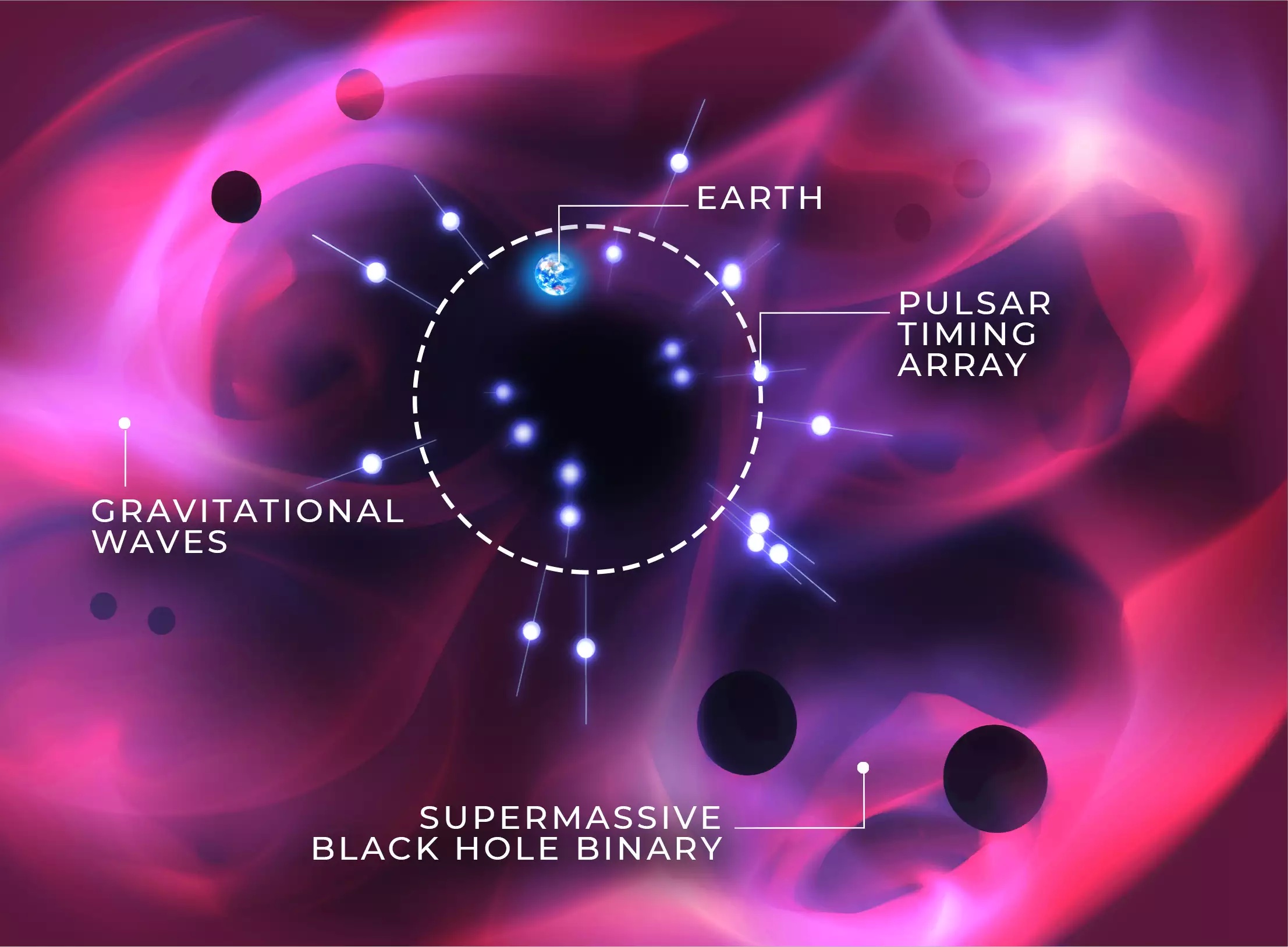
Astronomers are exploring the use of pulsars as a telescope to detect gravitational waves. Pulsars, rotating neutron stars that emit regular radio pulses, can be used as cosmic timepieces. When a gravitational wave passes through a pulsar, its pulses shift slightly, but these shifts are at the random fluctuation level. By observing an array of pulsars, researchers can measure the statistical fluctuations and pinpoint the sources of background gravitational waves. Precise distance measurements of the pulsars in the array could be obtained through observatories like the Very Long Baseline Array, allowing for triangulation of the source. This method could help determine if the background waves come from supermassive binary black holes or other unknown sources.

Unveiling the Mysteries of Colliding Primordial Black Holes and Dark Matter Using Gravitational Waves
astronomy2 years ago

Unveiling the Mysteries of Colliding Primordial Black Holes and Dark Matter Using Gravitational Waves

The North American Nanohertz Observatory for Gravitational Waves (NANOGrav) has detected long wavelength gravitational waves using pulsar timing arrays, suggesting the presence of supermassive black hole mergers. However, a new study explores the possibility that these waves could also be caused by primordial black holes. The authors find that if primordial black holes were evenly distributed, the observed waves are too strong to be attributed to their mergers. However, if the primordial black holes were clustered, they could be the source. Further data is needed to distinguish between the two sources and determine the true cause of the observed gravitational waves.

Unveiling the Cosmic Symphony: Scientists Detect Gravitational Wave Background
science-and-technology2 years ago

Unveiling the Cosmic Symphony: Scientists Detect Gravitational Wave Background

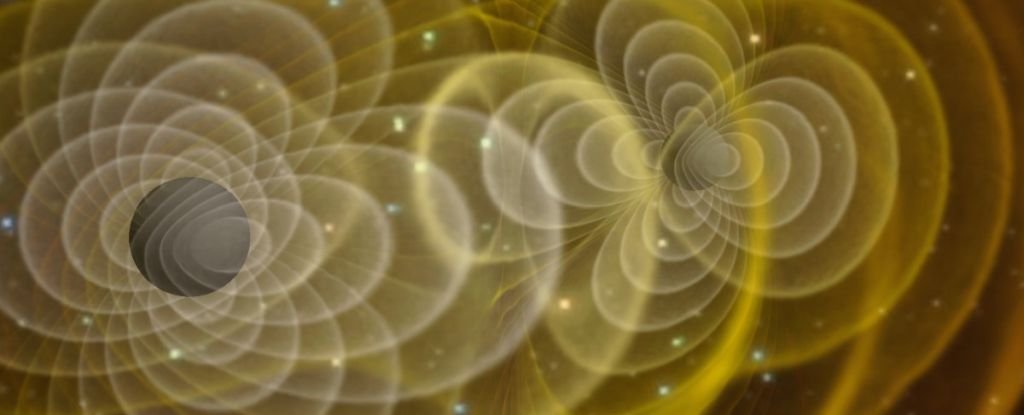
Scientists have made a historic breakthrough by detecting low-frequency gravitational waves, marking the first detection of this type. The waves are believed to originate from supermassive black hole binaries in the early universe. This discovery opens up a new window for studying how galaxies and their central black holes merge and grow over time. The detection was made possible by the North American Nanohertz Observatory for Gravitational Waves (NANOGrav), which used a pulsar timing array consisting of 68 pulsars within the Milky Way. The findings provide insights into the growth of supermassive black holes and the evolution of the universe.

Anticipation Builds for Groundbreaking Gravitational Wave Discovery Announcement
astronomy2 years ago

Anticipation Builds for Groundbreaking Gravitational Wave Discovery Announcement

The North American Nanohertz Observatory for Gravitational Waves (NANOGrav) is set to make a major announcement on June 29, 2023, regarding research conducted by the International Pulsar Timing Array. The announcement is expected to shed light on the search for the gravitational wave background, a random or 'stochastic' buzz of gravitational waves produced by the hum of many weak, independent, and unresolved astrophysical sources. The detection of the gravitational wave background could provide a wealth of information about astrophysical source populations and processes in the very early Universe, which are not accessible by any other means.